
The central core of a grapefruit is often overlooked—or outright discarded—but it plays a crucial role in the fruit’s development, structural integrity, and even its flavor profile. While most consumers focus on the juicy segments, understanding what lies at the heart of the grapefruit offers insight into proper handling, optimal eating experience, and smarter culinary use. This anatomical feature influences everything from seed distribution to bitterness levels and can determine how efficiently a grapefruit yields edible flesh. For chefs, home cooks, and citrus enthusiasts alike, recognizing the function and composition of the central core enhances both appreciation and technique when working with this tart, refreshing fruit.
Definition & Overview
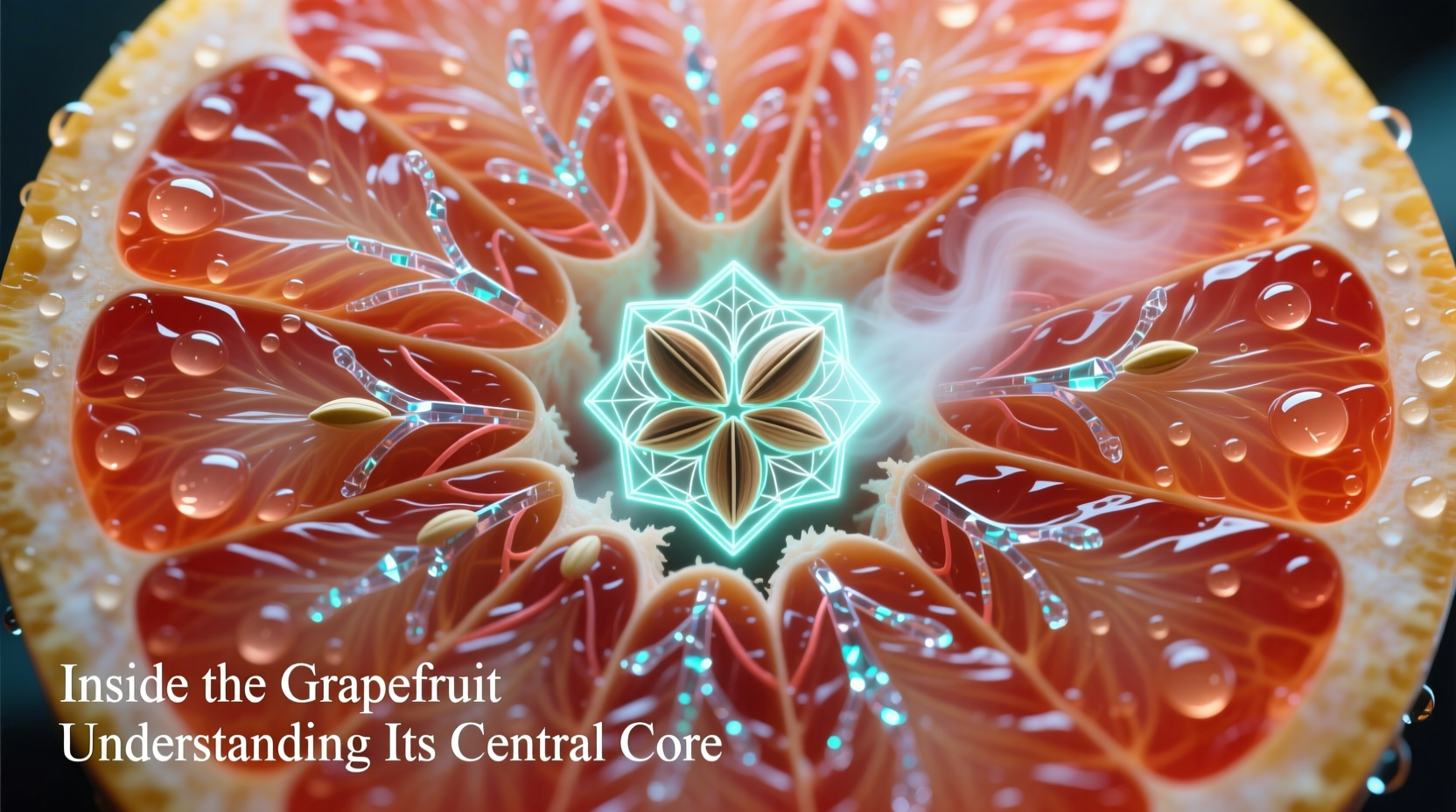
The central core of a grapefruit refers to the fibrous, membranous column that runs vertically through the center of the fruit, anchoring the individual carpels (segments) and supporting internal structures such as seeds and vascular bundles. Unlike the pulpy, juice-filled vesicles that make up the edible portion, the core is inedible and typically removed during preparation. It originates from the floral axis of the developing flower and persists through maturation, serving as a scaffold for segment alignment and nutrient transport during growth.
Grapefruits (Citrus × paradisi) are hybrid citrus fruits believed to have originated in Barbados as a cross between the sweet orange (Citrus sinensis) and the pomelo (Citrus maxima). As members of the Rutaceae family, they share structural traits with other citrus, including segmented interiors and a central axis. However, due to their larger size and denser tissue compared to lemons or limes, grapefruits exhibit a more pronounced central core that can vary significantly between cultivars.
This core is not merely structural; it contains lignified fibers, residual vascular tissues, and sometimes undeveloped ovules or aborted seeds. Its presence affects how easily the fruit segments separate and contributes to the perception of toughness or stringiness when improperly cut. In commercial processing, the core influences juicing efficiency and pulp consistency, making it relevant not only to consumers but also to food manufacturers.
Key Characteristics of the Grapefruit Core
| Characteristic | Description |
|---|---|
| Texture | Fibrous, tough, and stringy; composed of lignin-rich cellulose fibers resistant to chewing. |
| Color | Pale white to light beige, occasionally tinged with yellow near segment junctions. |
| Taste | Bitter and astringent due to high concentrations of limonoids and flavonoids. |
| Size & Shape | Cylindrical, approximately 5–8 mm in diameter, extending from stem end to blossom end. |
| Culinary Function | Structural support only; no edible or flavor-enhancing value. |
| Shelf Life Influence | Acts as a moisture barrier; deterioration begins around core in overripe specimens. |
The core's chemical composition includes elevated levels of naringin—a bitter flavonoid responsible for the characteristic sharpness of grapefruit—and small amounts of essential oils trapped in oil glands along its surface. These compounds serve as natural deterrents to pests in nature but contribute undesirable flavors if inadvertently consumed.
Practical Usage: How the Core Affects Preparation
Understanding the central core’s location and properties directly impacts how grapefruit should be prepared for consumption. Whether served fresh, sectioned into salads, or used in cooked applications, avoiding or properly removing the core ensures a better textural and sensory experience.
Cutting Techniques to Avoid the Core
- Halving and Scooping Method: Ideal for breakfast-style presentation. Cut the grapefruit horizontally across the equator. Use a serrated grapefruit knife or spoon to loosen each segment by slicing along the inner membrane wall. Rotate the fruit while working outward from the core. The central column remains intact in one half and can be discarded after scooping.
- Segmenting (Suprêming): Preferred for salads, garnishes, or desserts. Trim the top and bottom of the grapefruit to expose flesh. Stand the fruit upright and slice downward following the curve of the fruit to remove peel and pith. Once cleaned, hold the fruit over a bowl and cut each segment free from either side of the central membrane. The core will remain behind as a bundled cluster of empty membranes.
- Vertical Sectioning: Useful for grilling or broiling. Slice the grapefruit vertically into quarters or eighths. Each wedge will contain part of the core. Before serving, use a paring knife to trim the fibrous center strip from each piece, improving palatability.
Pro Tip: When segmenting grapefruit, work over a bowl to catch juice and loose vesicles. These can be strained and used in vinaigrettes, cocktails, or sauces—maximizing yield without compromising quality.
Professional Kitchen Applications
In restaurant settings, precision in citrus preparation is paramount. Chefs often suprême grapefruits to achieve clean, membrane-free segments for dishes like seafood ceviche, grain bowls, or duck salads. The central core must be fully excised to maintain elegance and texture. Some haute cuisine presentations involve hollowing out the core post-halving and refilling the cavity with complementary ingredients such as whipped goat cheese, candied ginger, or avocado mousse.
For cold-pressed juices or nectars, industrial extractors are designed to bypass the core entirely, minimizing bitterness. Home juicers, particularly centrifugal types, may inadvertently grind through the core if fruit chunks are too large, resulting in an unpleasantly harsh beverage. To prevent this, always quarter grapefruit and manually remove the central column before feeding into the machine.
Variants & Types: Core Differences Across Cultivars
Not all grapefruit cores are identical. Their size, density, and adherence to surrounding flesh vary depending on variety, ripeness, and growing conditions. Recognizing these differences helps select the best type for specific uses.
| Cultivar | Core Size | Fiber Density | Segment Adhesion | Best Use |
|---|---|---|---|---|
| Ruby Red | Medium | Moderate | Loose – easy separation | Fresh eating, juicing |
| Marsh White | Small to medium | Low | Very loose – minimal trimming needed | Salads, garnishes |
| Duncan | Large | High – very fibrous | Tight – difficult to segment | Processing, marmalade |
| Oro Blanco (Pomelo hybrid) | Very large | Coarse but less bitter | Firm attachment | Grilled, stuffed preparations |
The Duncan grapefruit, one of the oldest commercial varieties, features a notably thick and woody core, which makes it less desirable for fresh consumption but ideal for preserves where texture is broken down during cooking. In contrast, seedless varieties like Marsh and Ruby Red have been selectively bred not only for juiciness and color but also for reduced core prominence and easier segment release.
Oro Blanco, a newer low-acid hybrid resembling a large pale grapefruit, has a broad central column but with milder bitterness. Its core can be partially retained in grilled recipes where charring reduces perceived harshness and adds smoky complexity.
Comparison with Similar Ingredients
The grapefruit core is frequently confused with analogous structures in related citrus fruits. While functionally similar, key distinctions exist in form, edibility, and impact on preparation.
- Lemon/Lime Center: Smaller and less defined; often consists of just a narrow bundle of membranes. Rarely requires dedicated removal since segments separate cleanly.
- Orange Pith Column: Oranges lack a true central core. Instead, a soft, spongy albedo may persist at the center but is generally tender and non-fibrous.
- Pomelo Axis: Much larger and more rigid than grapefruit, sometimes exceeding 1 cm in diameter. Pomelos require significant trimming due to extreme toughness.
- Pomegranate Arils: Entirely different structure—pomegranates have a central spongy membrane that holds arils but lacks the linear fibrous column seen in citrus.
\"In professional citrus prep, we treat the core like cartilage—it has structural purpose but zero place on the plate. Removing it cleanly separates amateur from expert technique.\" — Chef Elena Torres, Executive Pastry Chef, Miami Culinary Institute
Practical Tips & FAQs
How do I know if a grapefruit has a tough core?
Firmness at the stem end is a reliable indicator. Gently press the top of the fruit; resistance suggests a well-developed, fibrous core. Softer ends typically correlate with thinner cores, especially in ripe, thin-skinned cultivars like Ruby Red.
Can you eat the grapefruit core?
No. The core is indigestible and intensely bitter. Consuming it may cause gastrointestinal discomfort due to high fiber and phytochemical load. Always remove before serving.
Does the core affect sweetness?
Indirectly. Bitter compounds in the core can migrate slightly into adjacent segments in damaged or overripe fruit. Cutting too close to the center increases the likelihood of tasting naringin. For maximum sweetness, cut segments cleanly along the outer membrane walls.
Is the core different in organic vs. conventional grapefruits?
Not structurally. Organic farming does not alter the anatomy of the core. However, stress-induced lignification (increased fiber production) may occur under drought or pest pressure, potentially leading to tougher cores in some organically grown specimens.
What tools are best for removing the core?
- Serrated Grapefruit Knife: Flexible blade ideal for sliding between membrane and flesh.
- Paring Knife (3–4 inch): Precision control for trimming wedges or extracting core remnants.
- Boning Knife (for chefs): Thin, sharp tip allows detailed dissection around tight spaces.
How should I store grapefruit to preserve segment quality around the core?
Store whole, uncut grapefruits at cool room temperature for up to a week or refrigerate in the crisper drawer for 2–3 weeks. Once cut, oxidation accelerates near the core. Wrap tightly or store in an airtight container; consume within 2 days for best texture.
Are there health benefits to the core?
While research has explored naringin and other flavonoids found in the core for antioxidant and cholesterol-lowering effects, these compounds are safely consumed in trace amounts from the juice and membranes—not by eating the core itself. Supplements derived from citrus bioflavonoids offer concentrated doses without the fibrous burden.
Storage Checklist:
✔ Store whole fruit stem-end down to reduce moisture loss
✔ Keep away from strong-smelling foods—citrus absorbs odors
✔ Do not wash until ready to use to prevent mold
✔ Discard if core area feels mushy or emits sour odor—signs of internal rot
Summary & Key Takeaways
The central core of a grapefruit is a defining anatomical feature that influences preparation, taste, and culinary application. Though inedible and fibrous, it plays a vital biological role during fruit development. Understanding its structure enables more effective cutting techniques, reduces waste, and improves dining quality.
Key points to remember:
- The core is a fibrous, bitter column running through the fruit’s center—always remove before serving.
- Different grapefruit varieties exhibit varying core sizes and textures; choose based on intended use.
- Use proper knife skills—especially suprêming—to isolate and discard the core cleanly.
- Never juice grapefruit chunks containing the core, as it introduces harsh bitterness.
- Compare with other citrus: grapefruit cores are more prominent than those in oranges or lemons but less extreme than in pomelos.
- While rich in bioactive compounds, the core itself is not safe or pleasant to consume.
Mastery of citrus anatomy elevates everyday cooking. By treating the grapefruit core not as an afterthought but as a critical element of food science and technique, cooks gain greater control over flavor, texture, and presentation. The next time you slice into a ruby-hued half, take a moment to observe the architecture within—the core may be discarded, but its influence lingers in every bright, tangy bite.
Challenge: Try preparing two grapefruit halves—one cutting carelessly toward the center, the other using precise membrane-severing technique. Taste the difference. You’ll notice markedly less bitterness and a cleaner mouthfeel in the properly prepped fruit.




 浙公网安备
33010002000092号
浙公网安备
33010002000092号 浙B2-20120091-4
Comments
No comments yet. Why don't you start the discussion?