
Choosing a new fragrance is more than just a shopping decision—it’s a personal expression. Yet, many walk out of stores with bottles they later regret, lured by initial impressions that fade or turn sour on the skin. The truth? Perfume behaves differently on everyone, and understanding how to test it properly is half the battle. With the right approach, you can avoid costly mistakes and find a scent that truly resonates with your chemistry, lifestyle, and mood.
Understand How Fragrance Evolves on Skin
Perfumes are composed of top, middle (heart), and base notes that unfold over time. The first impression—the top note—is often light and fleeting, lasting only 5 to 15 minutes. What follows is the heart note, which reveals the core character of the scent. Finally, the base notes emerge after an hour or more, anchoring the fragrance with depth and longevity.
This evolution means that sampling a perfume for just a few seconds at a counter gives you an incomplete picture. A citrusy opening might seem refreshing in the store but disappear within minutes, leaving behind a woody or musky trail you hadn’t anticipated.
The Step-by-Step Testing Process
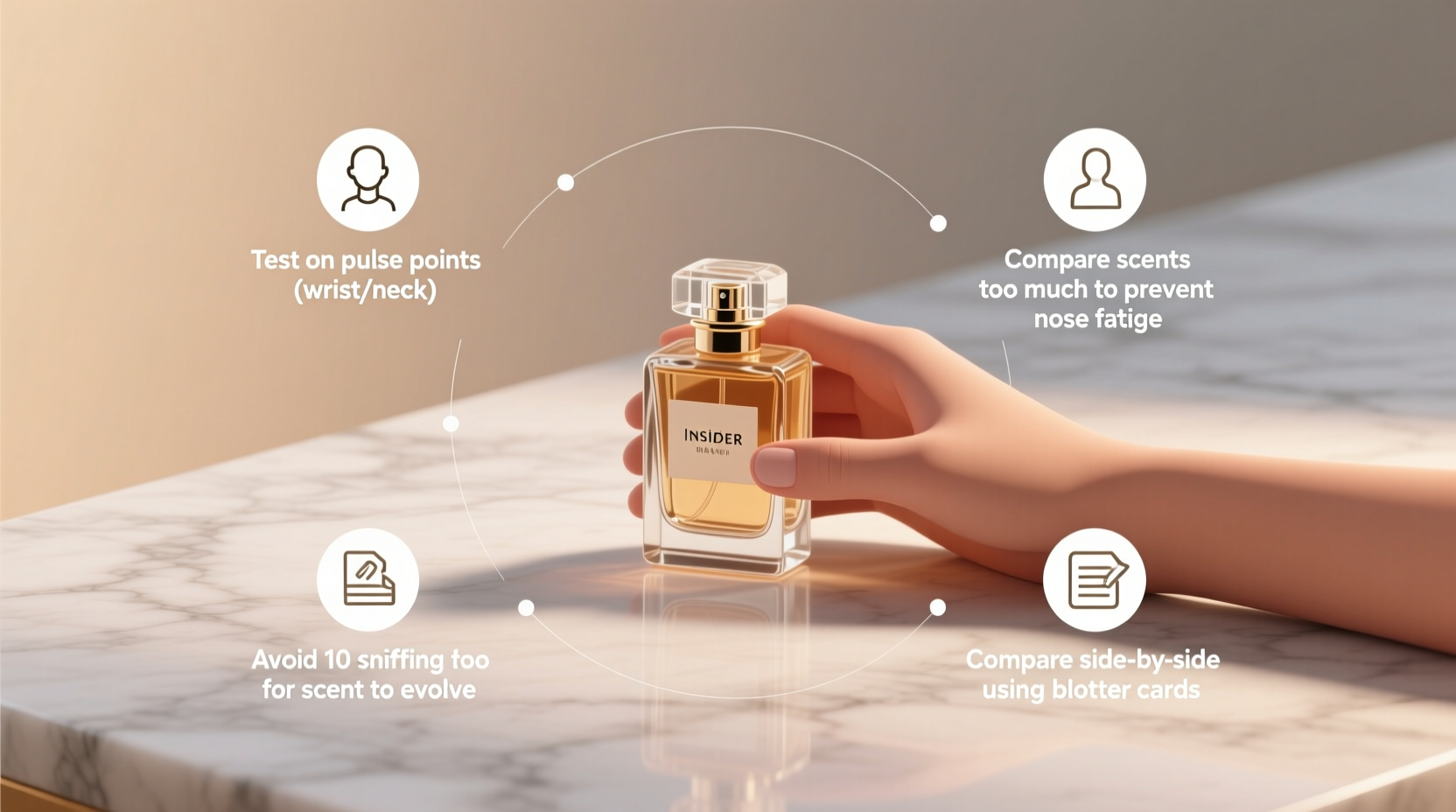
To make confident decisions, follow a structured method when trying perfumes:
- Start with a clean slate: Avoid testing fragrances over existing scents. Wear no perfume and minimal lotion on your wrists.
- Limit your options: Test no more than three scents per visit to prevent olfactory fatigue.
- Spray on skin, not paper: While blotter strips are useful for initial sniffing, they don’t reflect how a scent interacts with body chemistry.
- Apply to pulse points: Spray lightly on one wrist and the inside of your elbow. These areas generate heat, helping the scent bloom.
- Wait and observe: Let the fragrance settle and evolve. Reassess at 15, 30, and 60 minutes.
- Smell neutral surfaces: If your nose gets tired, smell coffee beans or the crook of your arm to reset your sense of smell.
- Revisit later: Return to the store the next day to retest your favorite—your perception may shift.
Avoid Common Testing Mistakes
Even experienced fragrance lovers fall into traps that skew their judgment. Awareness is key to avoiding them.
| Mistake | Why It’s Problematic | Better Approach |
|---|---|---|
| Testing too many scents at once | Olfactory fatigue dulls your ability to distinguish nuances. | Limited to 2–3 scents per session; use breaks between. |
| Rubbing wrists together after spraying | Friction breaks down delicate top notes and alters scent. | Let the fragrance air-dry naturally. |
| Deciding based on first impression | You’re only smelling alcohol and top notes, not the true character. | Wait at least 30 minutes before judging. |
| Using hand sanitizer before testing | Alcohol and artificial scents interfere with fragrance accuracy. | Wash hands with unscented soap instead. |
Expert Insight: What Perfumers Want You to Know
Fragrance creation is both science and art. Professionals emphasize patience and context when selecting a scent.
“People forget that perfume isn’t static. It’s alive on the skin. A scent that smells like roses in the bottle might become spicy amber on someone else. Trust the journey, not the snapshot.” — Clara Moreau, Master Perfumer, Grasse Institute of Perfumery
Moreau also advises testers to consider the season and occasion. “A heavy oriental fragrance might feel luxurious in winter but overwhelming in summer humidity. Match your scent to your environment, not just your mood.”
Real Example: How Sarah Found Her Signature Scent
Sarah had been searching for a signature fragrance for years. She’d bought several high-end perfumes based on quick counter tests, only to abandon them within days. One evening, she visited a boutique that offered fragrance consultations. Instead of spritzing multiple perfumes on her skin, she followed the consultant’s advice: test two scents, apply to one wrist each, and leave the store for a short walk.
An hour later, she returned. One fragrance had faded almost completely. The other had transformed—opening with bergamot, then revealing a warm sandalwood and vanilla dry-down that lingered beautifully. She wore it the next day to work and received three compliments. That was six months ago. She hasn’t worn anything else since.
Your Perfume Testing Checklist
Before your next fragrance shopping trip, print or memorize this checklist:
- ☑ Wear no competing scents (perfume, heavily scented lotions)
- ☑ Bring unscented wipes or plain water to clean skin if needed
- ☑ Limit selections to 2–3 per session
- ☑ Spray on pulse points—one scent per arm
- ☑ Wait 30+ minutes before making a decision
- ☑ Smell coffee beans or your clothing to reset your nose
- ☑ Re-test your favorite the next day
- ☑ Consider the season and typical wear occasion
Frequently Asked Questions
Can I test perfume online?
While sample sets from reputable retailers are helpful, online testing has limitations. Without immediate access to real-time scent evolution and environmental factors, it’s best used as a supplement—not a replacement—for in-person trials.
How many times should I wear a fragrance before deciding?
At minimum, wear it twice: once during the day and once in the evening. Also try it in different settings—office, outdoors, social events—to see how it performs across contexts.
Is it okay to ask for samples?
Yes, especially at specialty boutiques or department store counters. Most brands offer samples upon request. Don’t hesitate to ask—this is a normal part of the fragrance-buying process.
Conclusion: Make Your Choice with Confidence
Finding the perfect perfume isn’t about chasing trends or relying on marketing hype. It’s about tuning into your senses, respecting the complexity of fragrance chemistry, and giving yourself the time and space to make an informed choice. By following these insider strategies—from controlled testing to understanding scent evolution—you transform the experience from guesswork into a deliberate, satisfying ritual.




 浙公网安备
33010002000092号
浙公网安备
33010002000092号 浙B2-20120091-4
Comments
No comments yet. Why don't you start the discussion?