
In a market saturated with mass-produced jewelry, true distinction lies in the rarefied world of high-end niche design rings. These pieces transcend mere adornment—they are wearable art, often born from limited ateliers, master craftsmanship, and deeply personal narratives. Identifying them requires more than an eye for beauty; it demands knowledge of materials, provenance, design philosophy, and subtle cues that separate the exceptional from the merely expensive. Whether you're building a curated collection or seeking a statement piece with lasting value, understanding these nuances is essential.
Understand What Defines a Niche Design Ring
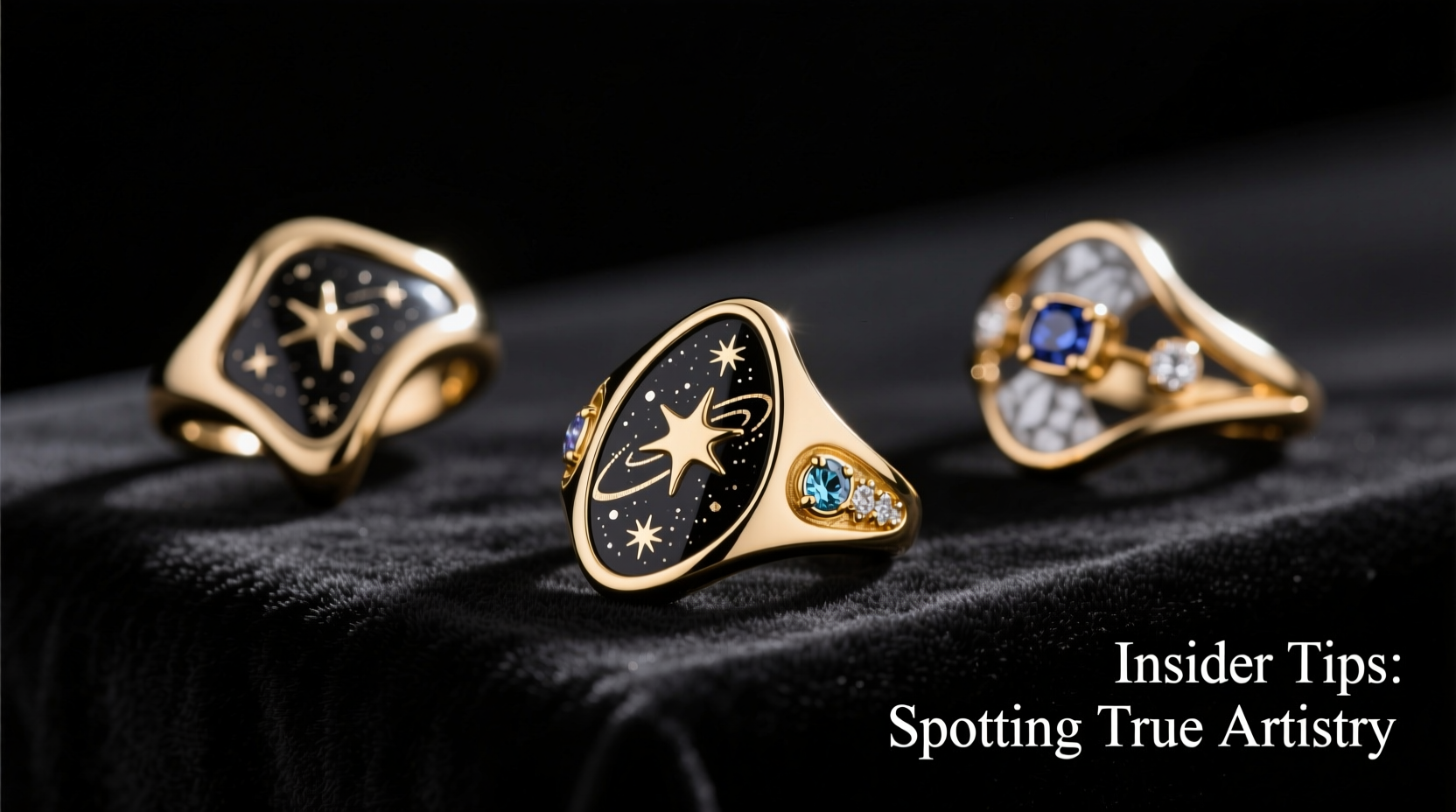
A high-end niche ring is not simply one made from gold or set with diamonds. It’s defined by exclusivity, originality, and intentionality. Unlike mainstream luxury brands that produce thousands of units annually, niche designers often create only a few dozen pieces per year. Each ring tells a story—whether inspired by architectural forms, ancient symbolism, or experimental metallurgy. These creators prioritize innovation over trends, and their work is typically sold through private appointments, boutique galleries, or select fine jewelers.
Niche doesn’t mean obscure—it means intentional. The hallmark of such designs is coherence: every element, from metal texture to stone cut, serves the designer’s vision. Look for names like JAR (Joel Arthur Rosenthal), Michelle Ong of Carnet, or Sidney Garber—designers whose work commands attention not because of branding, but because of uncompromising artistry.
Analyze Craftsmanship Beyond the Surface
Mass-market rings often rely on casting techniques that sacrifice detail for efficiency. In contrast, high-end niche rings frequently employ hand-fabrication methods—forging, chasing, repoussé—that require hundreds of hours of skilled labor. Examine the interior of the band: Is it polished smoothly? Are there visible tool marks or uneven seams? A truly premium piece will be finished to the same standard inside and out.
Pay attention to stone settings. Bezel, pavé, and tension settings in niche work are executed with microscopic precision. Stones should sit flush, without gaps or misalignment. In colored gemstones, look for thoughtful color gradation—some designers layer sapphires from pale blue to deep cornflower to create gradient effects that mimic natural light.
| Craftsmanship Feature | Niche Design Standard | Mass-Market Indicator |
|---|---|---|
| Interior Finish | Polished, engraved, or textured with intent | Rough, unfinished, or machine-marked |
| Stone Setting | Hand-set, perfectly aligned, secure | Machine-set, slight misalignments common |
| Metal Work | Forged or hand-carved details | Stamped or molded patterns |
| Production Volume | 1–50 pieces per design | Thousands per model |
Evaluate Material Integrity and Sourcing
The materials used in niche design rings reflect both aesthetic and ethical considerations. Many top-tier designers use recycled precious metals or source gold from certified fair-mining operations. They may also favor untreated gemstones—those that haven’t been heated, irradiated, or glass-filled—which retain greater rarity and authenticity.
Ask specific questions: Is the emerald oil-treated? Is the diamond Type IIa (indicating exceptional purity)? Does the designer provide a provenance report for colored stones? These details aren’t just technicalities—they signal a commitment to transparency and quality.
“True luxury in jewelry isn’t about carat weight—it’s about traceability, integrity, and the courage to leave a stone unaltered.” — Clara Wong, Gemologist & Ethical Jewelry Advocate
Recognize Signature Design Language
One of the clearest indicators of a niche designer is a consistent, recognizable design language. This goes beyond motifs—it encompasses proportions, negative space, balance, and even how light interacts with the piece. For example, a designer might specialize in asymmetrical arrangements where a single large stone is counterbalanced by a cluster of micro-pavé on the opposite side, creating dynamic tension.
Look for recurring elements across a designer’s portfolio: a preference for black rhodium accents, angular geometric forms, or organic textures like bark or coral imprints. These aren’t random choices—they are signatures, as distinctive as a painter’s brushstroke.
Mini Case Study: The Rise of Elara Voss
When Elara Voss launched her first collection in 2018, she introduced a radical concept: rings that change appearance based on finger movement. Using kinetic bands and articulated settings, her “Morphos” series allowed wearers to shift between closed and open configurations. Initially dismissed as impractical, the line gained cult status among collectors after being worn by a prominent architect at a Venice Biennale gala. Today, Voss’s pieces sell for six figures at auction—not because they’re flashy, but because they represent a fusion of engineering, art, and wearability that no mainstream brand has replicated.
Her success underscores a key truth: niche design thrives on conceptual depth. When evaluating a ring, ask: Does it invite interaction? Does it challenge conventions? If yes, you may have found something truly rare.
Follow the Provenance Trail
Ownership history matters in high-end jewelry. A ring previously owned by a notable figure—a dancer, diplomat, or designer—can enhance its narrative value. More importantly, documented exhibition history (e.g., displayed at the Victoria & Albert Museum or featured in a Sotheby’s catalog) adds credibility.
Check if the piece comes with archival materials: sketches, wax models, or letters from the designer. Some artisans include hidden engravings—coordinates of their studio, a date in Roman numerals, or a symbolic phrase in Latin. These details aren’t marketed; they’re discovered, making them powerful markers of authenticity.
Step-by-Step Guide: How to Vet a Niche Design Ring
- Research the Designer: Visit their official website, check gallery representation, and verify presence in reputable publications (e.g., Robb Report, Jewellery Editor).
- Inspect the Hallmarks: Look for maker’s mark, metal purity stamp (e.g., “750” for 18k gold), and serial number.
- Request Documentation: Ask for certificates of authenticity, gem reports (GIA, SSEF), and provenance records.
- Examine Under Magnification: Use a jeweler’s loupe to assess stone setting, surface finish, and structural integrity.
- Consult an Independent Appraiser: Especially for pieces over $10,000, get a third-party evaluation from a GIA-certified professional.
Frequently Asked Questions
How can I tell if a niche ring is truly valuable or just trendy?
Value in niche design comes from longevity of the designer’s career, consistency of vision, and recognition by institutions (museums, auctions, critics). If a designer has exhibited internationally or been collected by major museums, their work is more likely to appreciate.
Are niche rings a good investment?
Some are. Limited editions by established designers—like Wallace Chan or Hemmerle—have seen significant appreciation at auction. However, treat them primarily as art objects rather than financial assets unless backed by strong resale data.
Can I commission a custom ring from a niche designer?
Many top niche designers accept commissions, though waitlists can exceed two years. Expect prices to be 30–50% higher than ready-to-wear pieces due to development time and material sourcing.
Final Checklist Before Purchasing
- ✅ Designer has verifiable exhibitions or press features
- ✅ Metal and stones are independently certified
- ✅ Craftsmanship is consistent and refined on all surfaces
- ✅ Design reflects a coherent artistic vision
- ✅ Provenance and documentation are complete
- ✅ Purchase is made through a reputable dealer or directly from the atelier
Conclusion
Identifying high-end niche design rings isn’t about chasing labels or price tags—it’s about cultivating discernment. It’s learning to see the quiet confidence of a perfectly balanced setting, the intelligence behind an unconventional form, and the legacy embedded in ethically sourced materials. These rings don’t shout; they whisper, and those who listen are rewarded with pieces that endure far beyond fashion cycles.




 浙公网安备
33010002000092号
浙公网安备
33010002000092号 浙B2-20120091-4
Comments
No comments yet. Why don't you start the discussion?