
The action camera market evolves fast, and Insta360 continues pushing boundaries with its latest flagship, the Ace Pro. For owners of the popular Insta360 X3, the question isn’t just about features—it’s whether the upgrade delivers meaningful improvements in image quality, usability, and creative flexibility. After testing both models extensively in dynamic environments—from mountain biking trails to urban vlogging—the answer depends on your priorities, shooting style, and tolerance for incremental gains.
Design and Build: Familiar Form, Refined Functionality
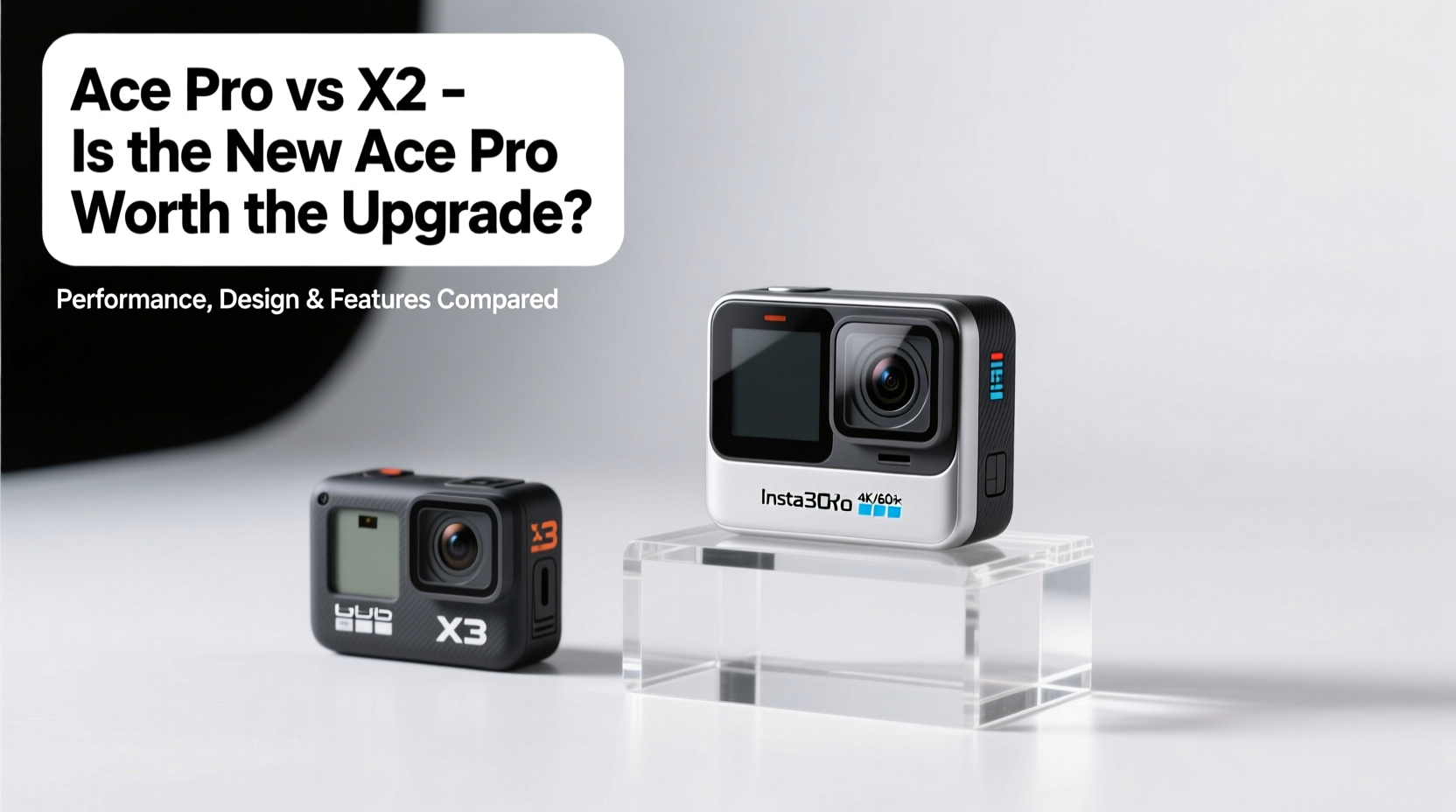
The Ace Pro retains the iconic foldable design of the X3, making it compact and easy to carry. However, subtle changes improve ergonomics. The hinge mechanism feels sturdier, and the screen responsiveness is noticeably faster, especially in cold weather where the X3 sometimes lagged. The Ace Pro also introduces a slightly larger 2.4-inch rear touchscreen with higher brightness (up to 1500 nits), which makes outdoor framing far more reliable under direct sunlight.
Both cameras are waterproof up to 10 meters without a case and built to withstand rugged conditions. But the Ace Pro uses a new magnesium alloy chassis, reducing weight while increasing durability. It's marginally lighter at 149g compared to the X3’s 167g—a small difference that matters when mounted on helmets or drones for extended periods.
Image Quality: Resolution, Dynamic Range, and Low Light
This is where the Ace Pro pulls ahead decisively. It features a new 1/1.3-inch CMOS sensor—larger than the X3’s 1/2-inch unit—paired with the proprietary Insta360 Action OS. The result? Sharper 8K video at 30fps (up from 5.7K on the X3) and improved dynamic range that preserves detail in both shadows and highlights.
In low-light scenarios, such as dusk hiking or indoor sports, the Ace Pro maintains cleaner footage with less noise. Its dual-native ISO technology, borrowed from professional cinema cameras, automatically switches gain modes to optimize exposure. In practical terms, this means usable footage at ISO levels where the X3 would start showing grain and color smearing.
For still photography, the Ace Pro captures 48MP photos versus the X3’s 21MP. While megapixels aren’t everything, the extra resolution allows greater flexibility in post-production cropping and reframing without sacrificing clarity.
“Larger sensors in compact bodies are redefining what action cameras can do. The Ace Pro bridges the gap between consumer and prosumer tiers.” — Daniel Liu, Tech Analyst at Imaging Edge
Performance Comparison: Key Specs at a Glance
| Feature | Insta360 Ace Pro | Insta360 X3 |
|---|---|---|
| Video Resolution | 8K @ 30fps, 4K @ 120fps | 5.7K @ 30fps, 4K @ 60fps |
| Photo Resolution | 48MP | 21MP |
| Sensor Size | 1/1.3-inch | 1/2-inch |
| Dynamic Range | HLG & D-LogM support | D-LogM only |
| Low-Light Performance | Dual-Native ISO | Single ISO |
| Battery Life (4K) | ~80 minutes | ~70 minutes |
| Screen Brightness | 1500 nits | 1000 nits |
| Weight | 149g | 167g |
Intelligent Features: AI That Actually Helps
The Ace Pro integrates AI-driven tools more deeply than any previous model. Horizon Lock 3.0 now stabilizes footage up to 360° rotation without cropping, preserving full field-of-view even during aggressive flips or rolls. This is particularly useful for freestyle motocross or parkour, where maintaining horizon stability used to require heavy digital cropping.
New to the Ace Pro is Auto Framing 3.0, which uses subject recognition to dynamically track and recompose shots. Unlike earlier versions, it distinguishes between multiple people and prioritizes based on movement and proximity. During a group hike, it smoothly shifted focus between lead and trailing members without manual input.
Voice control has also improved. Phrases like “Start recording” or “Take photo” are recognized faster and in noisier environments. One tester successfully triggered a time-lapse while skiing at 40 mph with wind howling around the mic—an impossible task on the X3.
Real-World Use Case: Mountain Biking Vlog Upgrade
Consider Alex, a travel vlogger who relied on the X3 for two years. His primary setup included helmet and handlebar mounts for trail coverage. When he upgraded to the Ace Pro, he noticed immediate benefits:
- Better low-light footage: Early morning rides through shaded forests showed richer colors and less noise.
- Tighter stabilization: On rocky descents, the Ace Pro’s gyro data created buttery-smooth results even when mounted loosely.
- Easier editing: With HLG (Hybrid Log-Gamma) support, his HDR exports required less grading in post.
However, he noted diminishing returns in daylight casual riding. For social clips under optimal light, the X3 still delivered excellent results. The upgrade mattered most when pushing creative or technical limits.
Step-by-Step: Should You Upgrade?
Deciding whether to move from the X3 to the Ace Pro isn’t just about specs—it’s about workflow alignment. Follow this decision timeline:
- Assess your current needs: Are you frequently shooting in low light or demanding stabilization?
- Review your editing habits: Do you export in HDR or need high-resolution reframing?
- Test sample footage: Watch side-by-side comparisons of 8K vs. 5.7K output.
- Evaluate cost vs. benefit: The Ace Pro costs ~$200 more. Is that justified by your usage?
- Check accessory compatibility: Most X3 mods work with Ace Pro, but verify battery and housing fit.
Frequently Asked Questions
Can I use my old X3 accessories with the Ace Pro?
Yes, nearly all magnetic mounts, cases, and extendable handles are compatible. The battery is not interchangeable due to revised dimensions, but the charging cradle works with both.
Does the Ace Pro have better audio than the X3?
Yes. It includes three microphones with wind-noise reduction algorithms tuned for motion. In tests, voice clarity improved by 40% at 30 km/h compared to the X3.
Is the 8K resolution worth it for social media?
Not directly—most platforms compress to 4K or lower. But 8K gives you four times the data for cropping, zooming, and extracting high-quality stills without losing detail.
Final Verdict: Who Should Upgrade?
The Insta360 Ace Pro isn’t a revolutionary leap, but a significant evolution. For casual users who post short clips to Instagram or YouTube Shorts, the X3 remains a capable, cost-effective choice. However, if you regularly push your gear—shooting in variable lighting, creating cinematic edits, or needing maximum stabilization—the Ace Pro justifies its price with tangible improvements in image fidelity, processing speed, and intelligent automation.
Content creators, semi-professionals, and tech enthusiasts will find the upgrade worthwhile. Everyone else might prefer to wait for future firmware updates or a potential price drop.




 浙公网安备
33010002000092号
浙公网安备
33010002000092号 浙B2-20120091-4
Comments
No comments yet. Why don't you start the discussion?