
For busy home cooks, the promise of a hot, satisfying meal after a long day often hinges on one appliance: either the slow cooker or the Instant Pot. Both are marketed as time-savers, but they operate in fundamentally different ways. One simmers meals over hours, while the other promises to deliver similar results in minutes. The real question isn’t just about speed—it’s whether that speed comes at the cost of depth, richness, and authenticity in flavor. When it comes to weeknight dinners, where both time and taste matter, understanding the strengths and limitations of each device can transform your kitchen routine.
How They Work: A Fundamental Difference
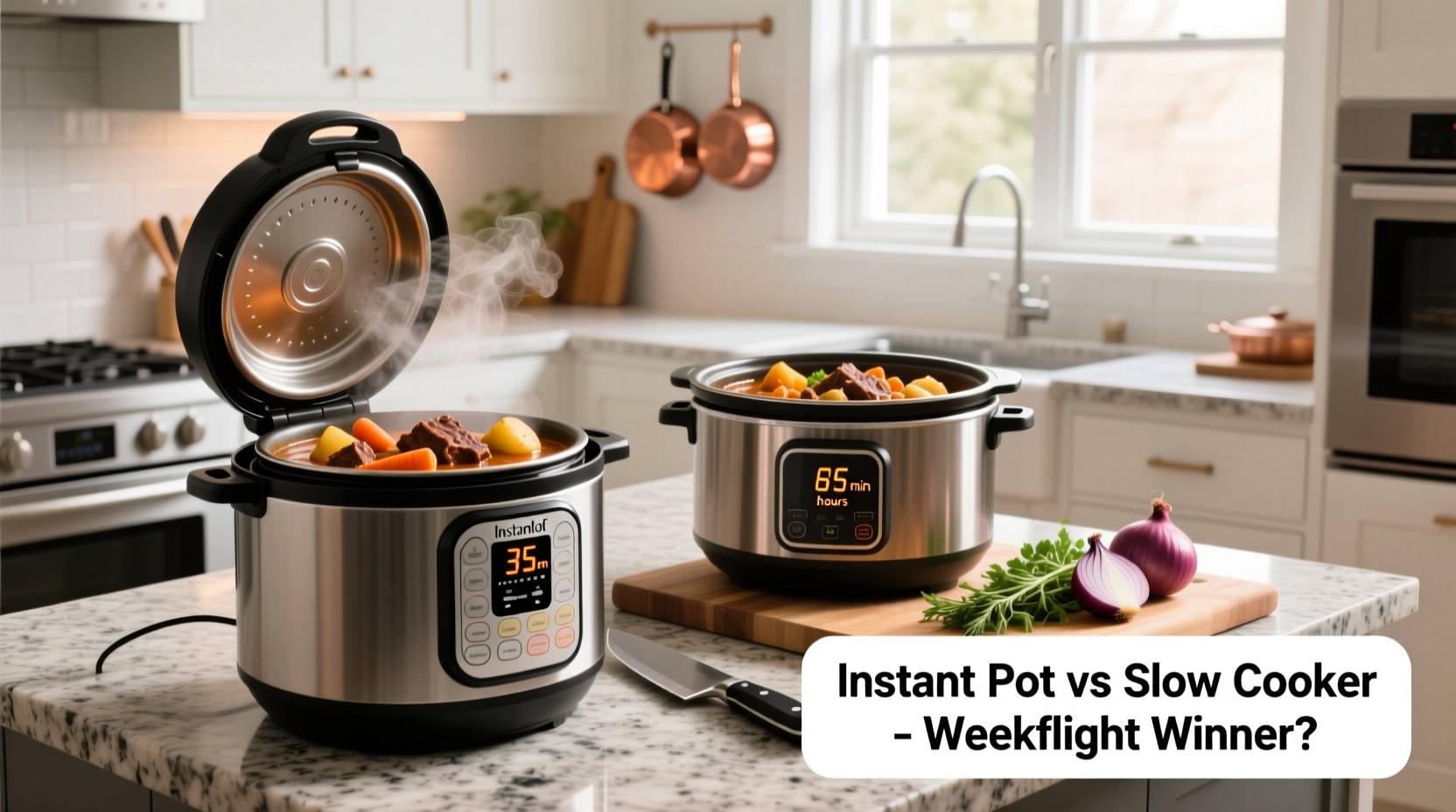
The core distinction between an Instant Pot and a slow cooker lies in their approach to heat and time. A traditional slow cooker uses low, steady heat—typically between 170°F and 280°F—to gently break down ingredients over several hours. This prolonged exposure allows connective tissues in meats to dissolve into gelatin, herbs and spices to infuse deeply, and starches to soften gradually, creating complex layers of flavor.
In contrast, the Instant Pot is a multi-functional electric pressure cooker. It traps steam to raise internal pressure, allowing water to boil at higher temperatures (up to 250°F). This accelerates chemical reactions in food, drastically reducing cooking time. What takes 6–8 hours in a slow cooker may take only 30–45 minutes under pressure.
This efficiency makes the Instant Pot ideal for last-minute decisions. But does it produce the same depth of flavor? Not always—though with technique, it can come remarkably close.
Flavor Development: Time vs. Technique
Slow cooking excels in passive flavor development. As ingredients simmer for hours, volatile compounds from onions, garlic, and herbs have time to meld. Tough cuts like chuck roast or pork shoulder become tender not just in texture, but in taste—absorbing surrounding liquids and seasonings fully. The extended cook time also allows alcohol in wine or beer to evaporate slowly, leaving behind nuanced notes rather than sharpness.
The Instant Pot, by design, compresses this timeline. While convenient, rapid cooking can result in flavors that feel “compressed” or less integrated. However, modern models with sauté functions help bridge the gap. By browning meat, caramelizing vegetables, and deglazing the pot before sealing, users can build foundational flavors that enhance the final dish.
Consider a classic beef stew. In a slow cooker, raw ingredients go in cold and develop richness over eight hours. In an Instant Pot, the same stew benefits from initial searing, followed by a 35-minute pressure cycle. The result? Equally tender meat, but with more concentrated, roasted undertones due to high-heat browning.
“Flavor isn’t just about time—it’s about temperature control and layering. Pressure cooking can replicate slow-cooked textures, but you must compensate for lost browning.” — Chef Marcus Tran, Culinary Instructor at Pacific Kitchen Institute
Speed Comparison: Real-World Weeknight Scenarios
Let’s compare actual preparation timelines for common weeknight dishes. Assume dinner starts at 6:00 PM and you arrive home at 5:30 PM.
| Dish | Appliance | Active Prep Time | Cook Time | Total Time to Table | Best For… |
|---|---|---|---|---|---|
| Chicken Tacos | Slow Cooker | 15 min (morning prep) | 6 hours | 6 hrs 15 min (must start early) | Meal prep days |
| Chicken Tacos | Instant Pot | 10 min | 15 min (pressure) + 10 min release | 35 min | Last-minute cooking |
| Pot Roast | Slow Cooker | 20 min | 8 hours | 8 hrs 20 min (requires all-day cook) | Weekend or remote workdays |
| Pot Roast | Instant Pot | 15 min | 60 min (pressure) + 15 min release | 90 min | Evening cooking with rich results |
| Black Bean Soup | Slow Cooker | 10 min | 7–8 hours | 7+ hrs (needs dry beans soaked overnight) | Planned meals |
| Black Bean Soup | Instant Pot | 10 min | 35 min (pressure) + 20 min natural release | 65 min (no soaking needed) | Impromptu vegetarian dinners |
The data shows a clear trend: the Instant Pot wins decisively when time is short. Even factoring in natural pressure release, most dishes are ready in under 90 minutes—with active involvement limited to under 20 minutes. The slow cooker, while capable of producing excellent results, demands advance planning. For true weeknight flexibility, the Instant Pot offers unmatched responsiveness.
Real-Life Example: Sarah’s Wednesday Dinner Dilemma
Sarah, a marketing manager and mother of two, used to rely on her slow cooker religiously. She’d prep chili on Tuesday night for Wednesday dinner, knowing she wouldn’t get home until 6:45 PM. But when her schedule shifted unexpectedly—meetings running late, kids’ practices rescheduled—she found herself staring at unstarted recipes too often.
After switching to an Instant Pot, her routine changed. Now, she chops vegetables and seasons chicken at 5:40 PM, uses the sauté function to brown everything, adds broth, seals the lid, and walks away. By 6:30 PM, a creamy Tuscan chicken soup is ready. “I don’t have to choose between convenience and taste anymore,” she says. “It’s not just faster—it feels more reliable.”
Her only adjustment? Learning to manage pressure release times. She now keeps a small notebook of cook times for staples like lentils, rice, and pulled pork, so she doesn’t overcook anything during the rush.
Step-by-Step Guide: Maximizing Flavor in Minimal Time
To get the best results from your Instant Pot—especially when aiming for slow-cooker-level depth—follow this sequence:
- Sauté aromatics: Use the “Sauté” function to cook onions, garlic, carrots, and celery until softened and lightly golden. This builds a flavor base.
- Brown proteins: Season meat and sear on all sides. Don’t skip this step—even 5 minutes creates fond (browned bits) that enrich the sauce.
- Scrape the bottom: Deglaze with broth, wine, or tomato paste, scraping any stuck bits. This prevents burn errors and incorporates flavor.
- Add remaining ingredients: Include liquids, grains, legumes, and herbs. Ensure liquid covers at least half the ingredients for safe pressure cooking.
- Select program and time: Use “Manual” or “Pressure Cook” mode. Refer to trusted charts for accurate timing (e.g., 35 minutes for dried beans, 20 minutes for chicken thighs).
- Natural release when possible: Allow pressure to drop naturally for 10–15 minutes before quick-releasing. This prevents overcooking and improves texture.
- Finish with fresh elements: Stir in lemon juice, cream, parsley, or cheese after opening. These brighten the dish and add complexity missing from rapid cooking.
This method mimics the layered development of slow cooking, even within a compressed window.
Checklist: Choosing the Right Tool for Your Weeknights
- ✅ Do you often decide what to cook less than an hour before eating? → Choose Instant Pot
- ✅ Are you cooking tough cuts of meat (chuck roast, pork shoulder)? → Both work, but Instant Pot requires browning first
- ✅ Do you forget to turn appliances on or off? → Slow cooker is safer for unattended use
- ✅ Do you want hands-off cooking with minimal cleanup? → Slow cooker wins for simplicity
- ✅ Are you cooking dried beans or grains frequently? → Instant Pot saves hours and doesn’t require pre-soaking
- ✅ Do you value deep, rounded flavors over speed? → Slow cooker edges ahead, but Instant Pot can match with technique
Frequently Asked Questions
Can I leave the Instant Pot unattended like a slow cooker?
While modern Instant Pots have safety locks and automatic shutoffs, they should not be left completely unattended during pressurization and depressurization. Steam release is loud and requires monitoring to prevent burns or messes. Slow cookers are safer for full-day, unsupervised operation.
Does pressure cooking destroy nutrients?
No—in fact, studies show that pressure cooking preserves more water-soluble vitamins (like vitamin C and B-complex) than boiling, due to shorter cook times and less liquid exposure. It’s one of the most nutrient-efficient cooking methods available.
Why does my Instant Pot stew taste “flat” compared to slow cooker versions?
Rapid cooking limits flavor integration. To fix this, finish dishes with acid (lemon juice, vinegar), umami boosters (soy sauce, fish sauce), or fresh herbs. Simmer uncovered for 5–10 minutes after pressure cooking to concentrate flavors.
Final Verdict: Which Is Better for Fast, Flavorful Weeknight Dinners?
The answer depends on your lifestyle—but for most modern households, the Instant Pot holds a decisive edge. It delivers restaurant-quality meals in under an hour without requiring morning prep. With smart techniques like searing, deglazing, and finishing touches, it produces dishes that rival—or even surpass—slow-cooked versions in both texture and taste.
The slow cooker still has its place: for all-day braises, holiday meals, or when you want to set it and forget it. But if you're choosing based on weeknight practicality, consistency, and flavor control, the Instant Pot is the superior tool. It respects your time without asking you to sacrifice quality.
Ultimately, the best appliance is the one you’ll actually use. And for those nights when dinner feels impossible, the Instant Pot turns “I’ll just order pizza” into “I can make something real—and fast.”




 浙公网安备
33010002000092号
浙公网安备
33010002000092号 浙B2-20120091-4
Comments
No comments yet. Why don't you start the discussion?