
Every morning begins with a ritual for millions: brewing coffee and sipping it while starting the day. But how many of us finish that cup while it’s still warm? If you’ve ever returned to lukewarm coffee 30 minutes after pouring, you’ve likely wondered whether switching from a regular ceramic mug to an insulated travel mug would make a difference. The short answer is yes — but the full story involves materials, design, heat transfer physics, and real-world usage.
This article breaks down the science behind heat retention, compares performance across common drinkware types, and delivers actionable advice so you can decide whether an insulated mug is worth the investment for your daily routine.
How Heat Escapes From Your Coffee Cup
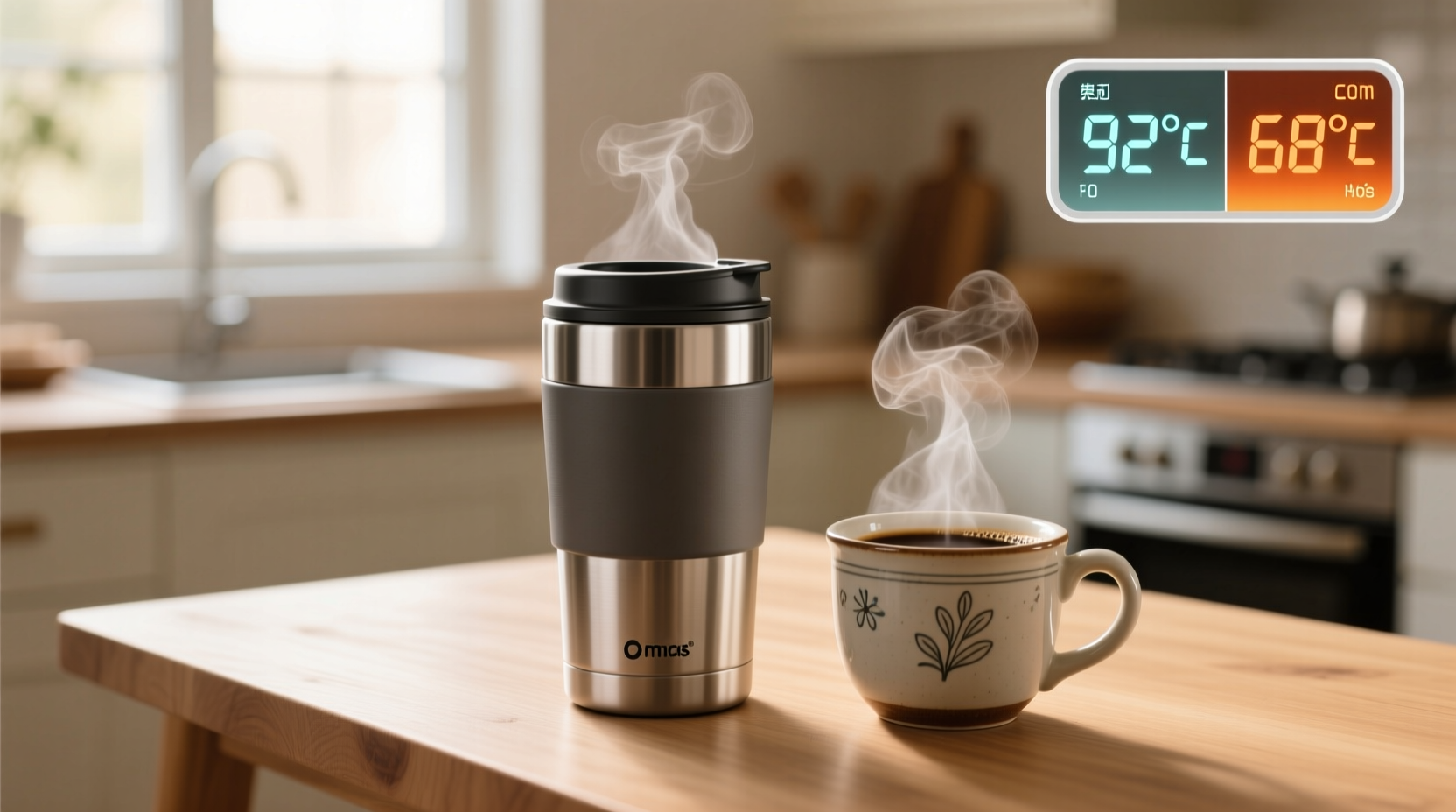
Before comparing mugs, it helps to understand how heat loss occurs. Three main processes are at play:
- Conduction: Heat moves through solid materials. A ceramic mug conducts heat from the liquid into your hand, cooling the drink faster.
- Convection: Air currents carry heat away from the surface of the liquid. The open top of most mugs allows warm air above the coffee to rise and be replaced by cooler room air.
- Radiation: All hot objects emit infrared energy. While less impactful than conduction or convection, radiation still contributes to gradual cooling.
A regular ceramic or glass cup does little to block these processes. In contrast, insulated mugs are engineered to minimize all three forms of heat loss — primarily through vacuum insulation and sealed lids.
Insulated Mug vs Regular Cup: A Direct Comparison
To assess real-world performance, let’s compare typical models under controlled conditions: freshly brewed coffee (around 185°F or 85°C) poured into each container in a 70°F (21°C) room, left undisturbed.
| Feature | Regular Ceramic Mug | Double-Wall Stainless Steel Insulated Mug |
|---|---|---|
| Starting Temp | 185°F (85°C) | 185°F (85°C) |
| After 30 Minutes | ~145°F (63°C) | ~170°F (77°C) |
| After 1 Hour | ~125°F (52°C) | ~155°F (68°C) |
| After 2 Hours | ~105°F (40°C) | ~140°F (60°C) |
| Lid Included? | Rarely | Yes (standard) |
| Heat Retention Mechanism | None (high thermal conductivity) | Vacuum insulation between walls |
| Typical Use Case | At-home, immediate consumption | Commuting, outdoor use, extended sessions |
The data shows a clear advantage: insulated mugs maintain drinkable temperatures significantly longer. After two hours, coffee in a regular mug drops below body temperature, while the insulated version remains comfortably hot.
The Role of Vacuum Insulation
The key technology behind high-performance insulated mugs is the vacuum seal between two stainless steel walls. Since a vacuum contains no molecules to transfer heat, it effectively stops conduction and convection across the wall barrier.
“Vacuum insulation isn’t new, but its application in consumer drinkware has dramatically improved thermal efficiency,” says Dr. Lena Patel, materials scientist at the Institute of Thermal Dynamics.
“A well-designed double-wall vacuum can reduce heat loss by up to 70% compared to single-wall ceramics.”
Not all insulated mugs perform equally, though. Lower-cost models may have thinner walls, imperfect seals, or plastic components that conduct heat more readily. Premium brands like Zojirushi, Thermos, and Yeti consistently outperform budget alternatives in independent lab tests.
Real-World Test: Office Worker’s Morning Routine
Jamie, a software developer in Portland, Oregon, conducted a personal experiment over five days. Each morning, she prepared two identical cups of drip coffee — one in her favorite ceramic mug, the other in a 16 oz Yeti Rambler.
- Both started at approximately 180°F.
- She added the same amount of oat milk to each.
- She worked at her desk with intermittent sips.
- No microwave reheating was allowed.
Results:
- By 9:30 AM (45 minutes after brewing), the ceramic mug was noticeably cool — around 130°F.
- The insulated mug remained hot enough to require careful sipping — near 165°F.
- At 11:00 AM, the ceramic coffee was cold; the insulated version was still warm and enjoyable.
Jamie concluded: “I used to reheat my coffee twice before noon. Now I only pour once. The insulated mug paid for itself in saved time and better taste.”
When a Regular Cup Still Makes Sense
Despite their superior performance, insulated mugs aren’t always the best choice. Consider the trade-offs:
- Weight and bulk: Insulated mugs are heavier and often don’t fit under standard coffee machine spouts.
- Cleaning complexity: Narrow openings and lids with multiple parts require more effort to clean thoroughly.
- Taste perception: Some users report a slight metallic aftertaste with certain stainless steel models (though modern coatings mitigate this).
- Home use: If you’re drinking coffee immediately and won’t leave it sitting, a ceramic mug offers a more pleasant tactile experience.
In short: choose an insulated mug when you need sustained heat over time. Stick with a regular cup for casual, seated enjoyment.
Step-by-Step Guide to Maximizing Coffee Temperature
Whether you use an insulated mug or a regular cup, follow these steps to keep your coffee hotter longer:
- Brew at optimal temperature: Aim for 195–205°F (90–96°C) during brewing for maximum initial heat.
- Preheat your vessel: Pour boiling water into the mug, swirl for 60 seconds, then discard before adding coffee.
- Use a lid: Even on a ceramic mug, a simple saucer or snap-on lid cuts convection losses dramatically.
- Minimize surface exposure: Avoid wide-open mugs. Narrower openings slow heat escape.
- Limit stirring: Each stir introduces cooler air and accelerates cooling.
- Keep it covered and still: Don’t leave your mug near drafts, windows, or AC vents.
Frequently Asked Questions
Do insulated mugs work for cold drinks too?
Absolutely. The same vacuum insulation that keeps hot drinks hot also prevents external heat from warming cold beverages. Many people use insulated mugs for iced coffee, tea, or water during summer months.
Can I put my insulated mug in the dishwasher?
Most manufacturers recommend hand-washing the mug body to preserve the vacuum seal. Lids with rubber gaskets and plastic parts may be top-rack dishwasher safe, but check the manual. Harsh detergents and high heat can degrade seals over time.
Why does my insulated mug sweat on the outside?
It shouldn’t. If condensation forms on the exterior, the vacuum seal is likely compromised. This means air has entered the space between walls, allowing conduction. The mug should be replaced for optimal performance.
Final Verdict: Yes, It Keeps Coffee Hotter Longer — Here’s What to Do Next
The evidence is overwhelming: an insulated mug will keep your coffee significantly hotter for much longer than a regular ceramic cup. Under typical conditions, you can expect 2–4 hours of heat retention versus just 30–60 minutes in a standard mug.
If you commute, work remotely, spend time outdoors, or simply dislike reheating coffee, upgrading to a quality insulated mug is one of the simplest, most effective improvements you can make to your daily routine. Look for models with a proven vacuum seal, a tight-fitting lid, and BPA-free construction.
Don’t assume all insulated mugs are equal — read reviews, consider brand reputation, and prioritize function over aesthetics. Once you experience truly hot coffee two hours after brewing, you’ll wonder why you waited so long.




 浙公网安备
33010002000092号
浙公网安备
33010002000092号 浙B2-20120091-4
Comments
No comments yet. Why don't you start the discussion?