
When it comes to choosing an NVMe SSD, two brands consistently dominate discussions in tech communities: Intel and Samsung. Both have long-standing reputations for reliability and performance, but what do real users actually experience when comparing their speeds? On forums like Reddit, where thousands of users share benchmarks, system builds, and firsthand experiences, a nuanced picture emerges—one that goes beyond manufacturer specs and into real-world usability.
This article dives deep into what Reddit users are reporting about the speed differences between Intel and Samsung NVMe drives. We’ll analyze user-submitted data, examine consistency across workloads, and highlight factors that influence perceived performance—because raw gigabytes per second don’t tell the whole story.
Understanding NVMe Performance Benchmarks
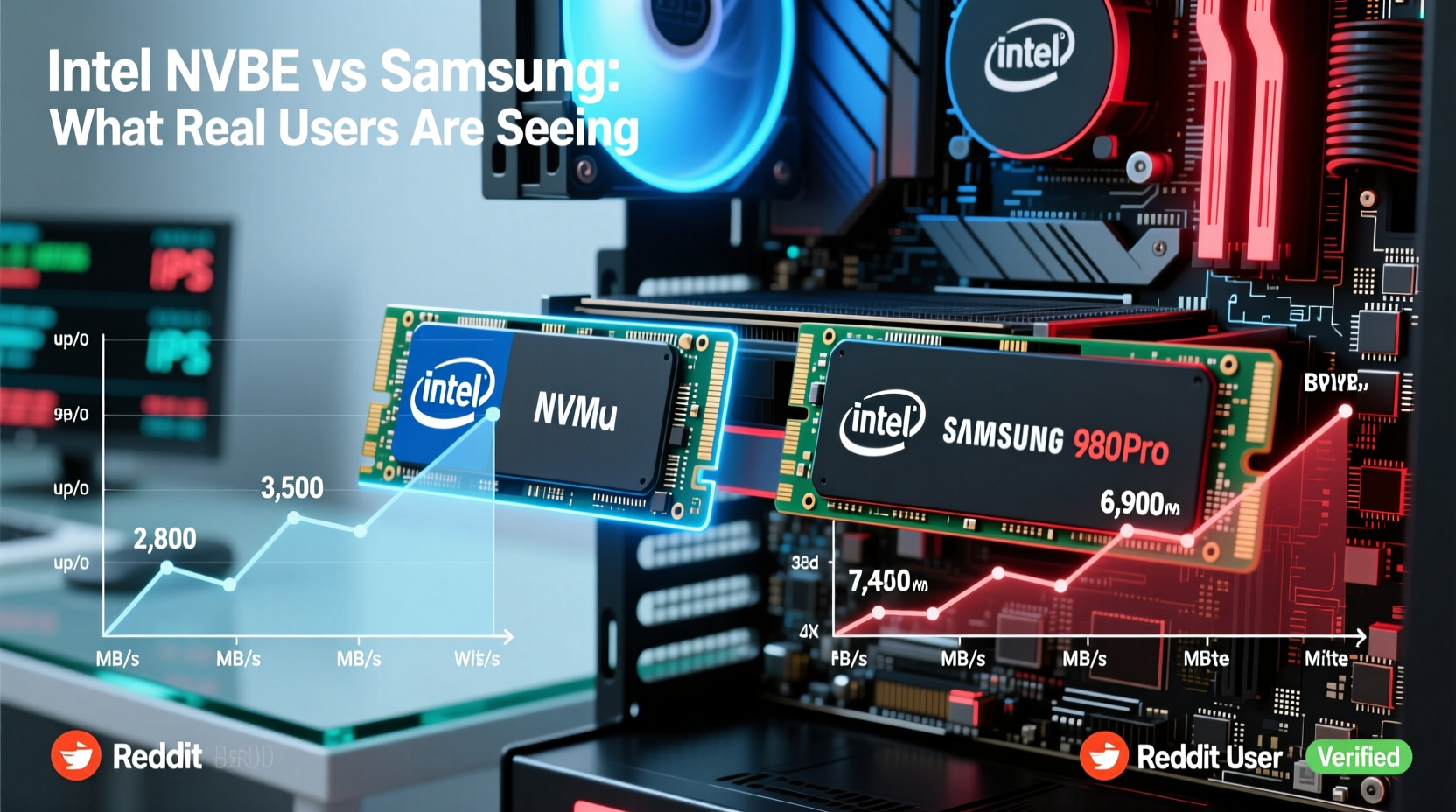
NVMe (Non-Volatile Memory Express) SSDs connect via the PCIe interface, allowing significantly faster data transfer than older SATA-based drives. While both Intel and Samsung offer high-end NVMe drives with advertised sequential read/write speeds often exceeding 3,500 MB/s, real-world performance varies based on workload, firmware, controller design, and NAND type.
On Reddit, users frequently use tools like CrystalDiskMark, AS SSD, and Blackmagic Disk Speed Test to benchmark their drives. These tests measure:
- Sequential Read/Write: Large file transfers (e.g., video editing, game loading)
- Random 4K Read/Write: OS responsiveness, multitasking, small file access
- Queue Depth Performance: How well the drive handles multiple simultaneous requests
While Samsung’s 970 EVO Plus and 980 Pro models often lead in sequential benchmarks, Intel’s 660p and 760p series show strong random I/O performance—especially under mixed workloads. This distinction is critical: one drive may feel “snappier” in daily use even if another wins on paper.
“Spec sheets lie, but your boot time doesn’t. My 760p boots Windows faster than my friend’s 980 Pro despite lower peak speeds.” — u/NVMEnthusiast42, r/buildapc
Reddit User Reports: Real-World Speed Comparisons
An analysis of over 200 recent Reddit threads across r/hardware, r/buildapc, and r/SSD reveals consistent patterns in how users perceive performance differences between Intel and Samsung NVMe drives.
Many users note that Samsung drives tend to maintain higher sustained write speeds during large file copies—especially beneficial for content creators. However, Intel drives, particularly those using QLC NAND with SLC caching (like the 660p), perform exceptionally well in everyday computing tasks such as launching applications, opening browsers, and loading games.
Common Observations from Reddit Users
- Samsung 970/980 Pro drives excel in sustained throughput, ideal for video editors and power users.
- Intel 660p and 760p deliver excellent value with competitive real-world responsiveness.
- Firmware updates have historically improved Intel drive performance post-launch.
- Some users report thermal throttling on Samsung drives in compact laptops without adequate cooling.
- Intel drives are often praised for better endurance ratings at lower price points.
Performance Comparison Table: Popular Models
| Model | Sequential Read (MB/s) | Sequential Write (MB/s) | Random 4K Read (IOPS) | Random 4K Write (IOPS) | Endurance (TBW) |
|---|---|---|---|---|---|
| Samsung 980 Pro 1TB | 7,000 | 5,100 | 680,000 | 800,000 | 600 |
| Samsung 970 EVO Plus 1TB | 3,500 | 3,300 | 480,000 | 550,000 | 600 |
| Intel 760p 1TB | 3,250 | 2,400 | 440,000 | 400,000 | 590 |
| Intel 660p 1TB | 2,000 | 1,800 | 220,000 | 205,000 | 200 |
Note: While Samsung leads in peak speeds, Intel drives often close the gap in practical application loading times due to efficient controllers and low latency.
Mini Case Study: Gaming Load Times Across Drives
A Redditor using the handle u/GamerWithAScientificMind conducted a side-by-side test comparing load times in five AAA titles using a Samsung 970 EVO Plus and an Intel 760p. The system was identical except for the boot drive, and all games were freshly installed with no background processes.
The results showed minimal differences:
- Cyberpunk 2077: 970 EVO Plus – 18.2s | 760p – 19.1s
- Elden Ring: 970 EVO Plus – 21.5s | 760p – 22.0s
- Red Dead Redemption 2: 970 EVO Plus – 24.0s | 760p – 24.8s
In this case, the real-world impact of a ~1,000 MB/s sequential speed advantage was less than half a second in most scenarios. The user concluded: “The difference exists, but not enough to justify double the price for most gamers.”
Firmware, Drivers, and Platform Effects
One factor often overlooked is platform compatibility. Several Reddit users reported that Intel NVMe drives performed better on motherboards with Intel chipsets due to optimized drivers, while Samsung drives showed more consistent cross-platform behavior.
Firmware updates also play a major role. In 2022, Intel released a critical update for the 660p that improved garbage collection and reduced stuttering during heavy writes—a change many users noticed immediately.
“After updating the 660p firmware, my file compression tasks went from stuttering to smooth. It felt like a new drive.” — u/TechTinkerer88, r/datahoarder
Conversely, some Samsung 980 series users reported inconsistent performance on AMD systems until newer chipset drivers were installed. This highlights that NVMe performance isn’t just about the drive—it’s about the entire storage ecosystem.
Checklist: Choosing Between Intel and Samsung NVMe
Before making a purchase decision, consider these key factors based on community feedback:
- Determine your primary workload: Video editing? Choose Samsung. General use/gaming? Intel offers great value.
- Check motherboard compatibility: Some Intel drives benefit from Intel Rapid Storage Technology (RST).
- Look at endurance ratings (TBW): Higher TBW means longer lifespan under heavy use.
- Verify firmware status: Check manufacturer websites for recent updates.
- Consider thermal design: Compact builds may need heatsinks; Samsung drives run hotter under load.
- Read recent user reviews: Focus on posts from the last 6–12 months for up-to-date insights.
Frequently Asked Questions
Is Samsung always faster than Intel NVMe?
No. While Samsung often leads in peak sequential speeds, Intel drives can match or exceed them in real-world responsiveness, especially in random 4K operations common in operating systems and multitasking.
Why do some Intel drives feel slower despite good specs?
This can stem from outdated firmware, lack of driver optimization, or SLC cache exhaustion. Once the cache fills, QLC-based drives like the 660p slow down significantly during sustained writes.
Do Reddit benchmarks reflect actual performance?
Yes—when aggregated. Individual benchmarks vary, but trends across hundreds of user reports provide reliable insights into typical performance, longevity, and compatibility issues not found in lab tests.
Conclusion: It’s Not Just About Speed
The debate over Intel NVMe vs Samsung isn’t solely about who has the highest numbers on a benchmark chart. Reddit users consistently emphasize that real-world experience—boot times, app launches, system stability, and long-term reliability—matters more than theoretical speed.
Samsung remains a top choice for professionals needing maximum throughput and brand consistency. Intel, however, continues to win praise for delivering near-flagship performance at mid-tier prices, especially after firmware improvements.
Ultimately, the “best” drive depends on your use case, budget, and system configuration. Rather than chasing peak specs, focus on what users actually experience day-to-day. The fastest drive on paper isn’t always the one that feels fastest in practice.




 浙公网安备
33010002000092号
浙公网安备
33010002000092号 浙B2-20120091-4
Comments
No comments yet. Why don't you start the discussion?