
When outfitting a garage, basement, gym, or playroom, two popular flooring options stand out: interlocking floor tiles and carpet mats. Both offer distinct advantages in terms of comfort, protection, and installation ease. However, choosing between them depends on your specific needs—whether it’s durability under heavy equipment, resistance to moisture, ease of cleaning, or simply staying within budget. Understanding the strengths and limitations of each will help you make an informed decision that balances performance with long-term value.
Durability and Long-Term Performance
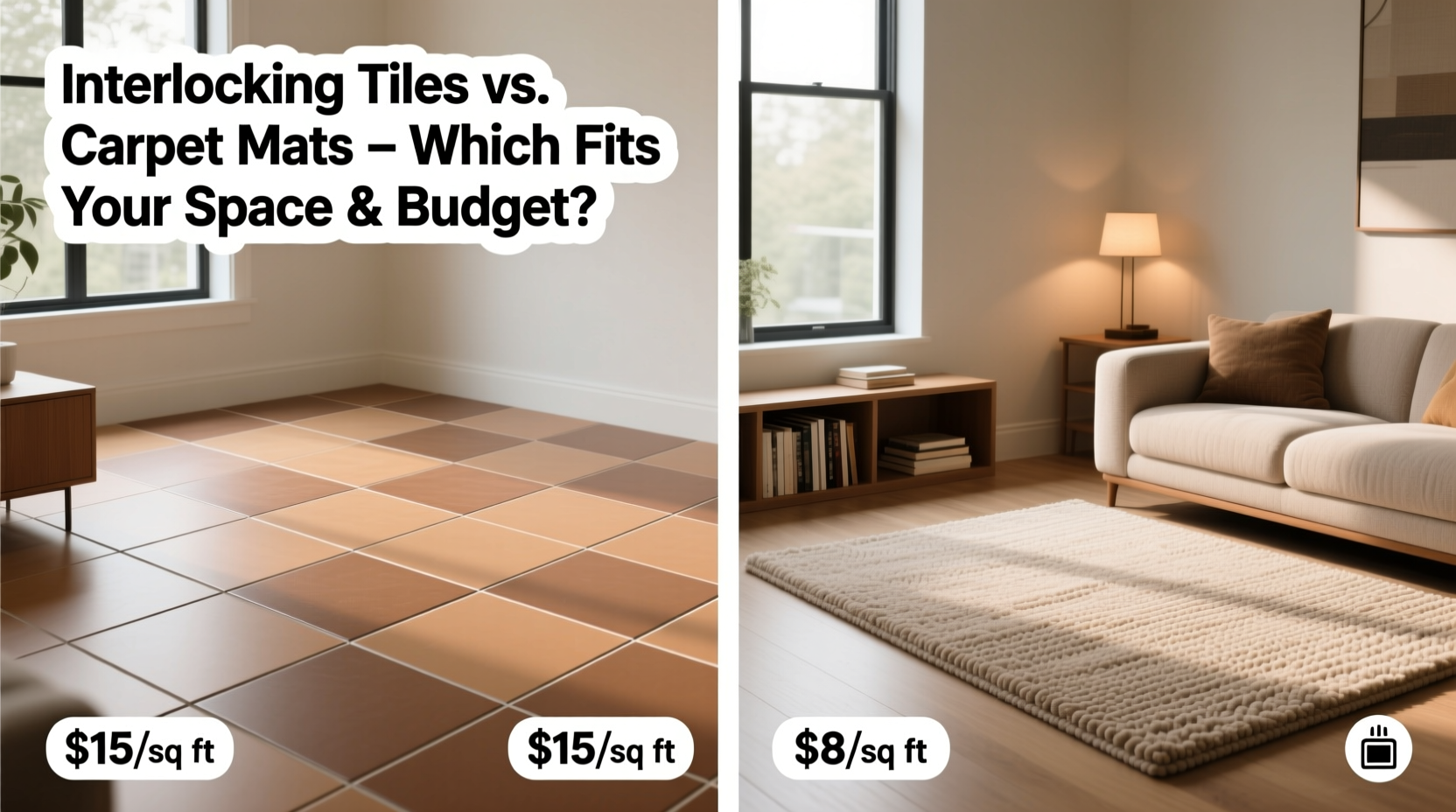
One of the most critical factors in flooring selection is how well it holds up over time. Interlocking floor tiles, typically made from EVA foam, rubber, PVC, or polypropylene, are engineered for high-impact environments. They resist cracking, fading, and deformation under heavy weights, making them ideal for home gyms or workshops where dropped weights or rolling tools are common.
Carpet mats, often constructed from synthetic fibers like nylon or polyester with a foam backing, provide cushioning and warmth but are more prone to wear in high-traffic zones. Over time, fraying edges, mat flattening, and fiber shedding can occur—especially if exposed to moisture or abrasive debris. While some premium carpet mats include anti-slip coatings and reinforced borders, they generally don’t match the structural resilience of interlocking tiles.
“Rubber interlocking tiles can last over a decade in garages and gyms when properly maintained, whereas carpet mats may need replacement every 3–5 years under similar conditions.” — Marcus Lin, Commercial Flooring Consultant
Installation and Flexibility
Both flooring types are marketed as DIY-friendly, but their installation processes differ significantly. Interlocking tiles use a tongue-and-groove design that allows them to snap together without adhesives or tools. This modular system enables quick setup and easy reconfiguration. If one tile gets damaged, it can be replaced individually—without disturbing the entire floor.
Carpet mats, especially roll-style versions, require precise measuring and cutting. Seams between sections can lift or trap dirt, and adhesive tape used to secure edges may lose grip over time. Some carpet tiles exist, but they lack the tight seal of interlocking systems and are more likely to shift during use.
The flexibility of interlocking tiles also makes them suitable for uneven subfloors. Their slight give accommodates minor imperfections, whereas carpet mats laid over cracked or sloped concrete may develop air pockets or become tripping hazards.
Cost Comparison: Upfront and Long-Term
Initial price is often the deciding factor for homeowners. Carpet mats tend to have a lower upfront cost per square foot—especially basic foam or low-pile varieties. A standard 4’x6’ carpet mat might range from $30 to $70, while comparable interlocking tile coverage could cost $80 to $150 depending on material quality.
However, long-term value shifts the balance. Interlocking tiles typically outlast carpet mats by several years and require less frequent replacement. Maintenance costs also favor tiles: they’re easier to clean, resistant to mold, and unaffected by oil or coolant spills common in garages.
| Feature | Interlocking Floor Tiles | Carpet Mats |
|---|---|---|
| Avg. Cost per sq ft | $2.50 – $6.00 | $1.00 – $3.50 |
| Lifespan (years) | 8–15 | 3–7 |
| Water Resistance | High (rubber/PVC) | Low to Moderate |
| Maintenance Effort | Low | Moderate to High |
| DIY Installation | Easy (snap-together) | Moderate (cutting/sealing) |
| Cushioning/Comfort | Moderate | High |
Maintenance and Cleanliness
Cleanliness is crucial in spaces like garages, laundry rooms, or children’s play areas. Interlocking tiles excel here. Most types can be hosed down, scrubbed with mild detergent, and left to dry quickly due to gaps between tiles that promote airflow. Spills, pet accidents, or motor oil leaks can be wiped or rinsed away without soaking into the subfloor.
Carpet mats absorb liquids unless treated with waterproof backing. Even then, trapped moisture beneath the mat can lead to mildew and unpleasant odors. Regular vacuuming is necessary to prevent dust buildup, and deep cleaning requires specialized equipment or professional services. In households with pets or young children, this added maintenance burden can become a daily chore.
Real-World Scenario: Home Gym Transformation
Consider James, a fitness enthusiast converting his basement into a functional workout area. He initially chose thick carpet mats for their softness underfoot. Within six months, dumbbell drops caused visible tears, and sweat absorption led to persistent dampness and odor despite regular cleaning. After replacing the mats twice in two years, he switched to ½-inch rubber interlocking tiles.
The transformation was immediate. The new floor absorbed impact effectively, remained odor-free, and cleaned with a simple wipe-down. Though the initial investment was higher, James estimated he saved over $400 in replacement and cleaning costs over five years. More importantly, the floor stayed safe and stable—no shifting or curling at the edges.
Step-by-Step Guide to Choosing the Right Option
Follow this decision-making process to determine which flooring suits your space:
- Assess the room’s primary function: Is it a gym, playroom, garage, or lounge area? High-impact uses favor interlocking tiles.
- Evaluate foot traffic and weight load: Frequent movement or heavy objects demand durable, non-compressible materials.
- Check for moisture exposure: Basements or garages prone to leaks or condensation benefit from water-resistant tiles.
- Measure the space accurately: Account for irregular shapes or obstacles when calculating material needs.
- Compare total lifecycle cost: Factor in expected lifespan, maintenance, and potential replacements over 5–10 years.
- Test samples: Lay small sections of both options in the space to evaluate comfort, appearance, and noise levels.
Frequently Asked Questions
Can I install interlocking tiles over carpet?
No. Doing so compromises stability and may cause tiles to crack or dislodge. Always install interlocking tiles on a hard, flat surface like concrete, wood, or tile.
Are carpet mats safe for indoor gyms?
Only if they are specifically designed for fitness use with dense padding and anti-slip backing. Standard carpet mats compress quickly under barbells and increase injury risk due to instability.
Do interlocking tiles reduce noise?
Yes, especially rubber or foam variants. They absorb impact sound and minimize echo in basements or multi-level homes, though not as effectively as thick carpet with underlayment.
Final Recommendation and Action Plan
For most utility-focused spaces—garages, gyms, workshops, and utility rooms—interlocking floor tiles deliver superior durability, easier maintenance, and better long-term value. While carpet mats offer plush comfort and lower initial cost, their susceptibility to wear, moisture damage, and frequent replacement makes them less economical over time.
If comfort is a top priority and the space sees light use—such as a kids’ playroom or media lounge—a high-quality carpet mat with antimicrobial treatment and a non-slip base can still be a viable choice. However, always prioritize proper ventilation and routine drying to extend its life.
Start by defining your space’s demands. Then, compare products based on material, thickness, warranty, and user reviews. Order sample pieces, test them under real conditions, and calculate the 5-year ownership cost—not just the sticker price. Your future self will appreciate a floor that performs as well as it looks.




 浙公网安备
33010002000092号
浙公网安备
33010002000092号 浙B2-20120091-4
Comments
No comments yet. Why don't you start the discussion?