
Jewelry is more than adornment—it carries meaning, emotion, and personal style. Among the most cherished pieces are heart-shaped necklaces, especially those designed with interlocking hearts or a single solid heart. While both styles symbolize love and connection, a growing concern among buyers is whether the intricate interlocking design sacrifices durability compared to its solid counterpart. The answer isn’t straightforward and depends on materials, craftsmanship, and wear patterns.
This article explores the structural integrity of interlocking versus solid heart necklaces, evaluates real-world performance, and provides practical guidance for choosing and caring for these sentimental pieces.
Understanding the Designs: Interlocking vs Solid Heart Necklaces
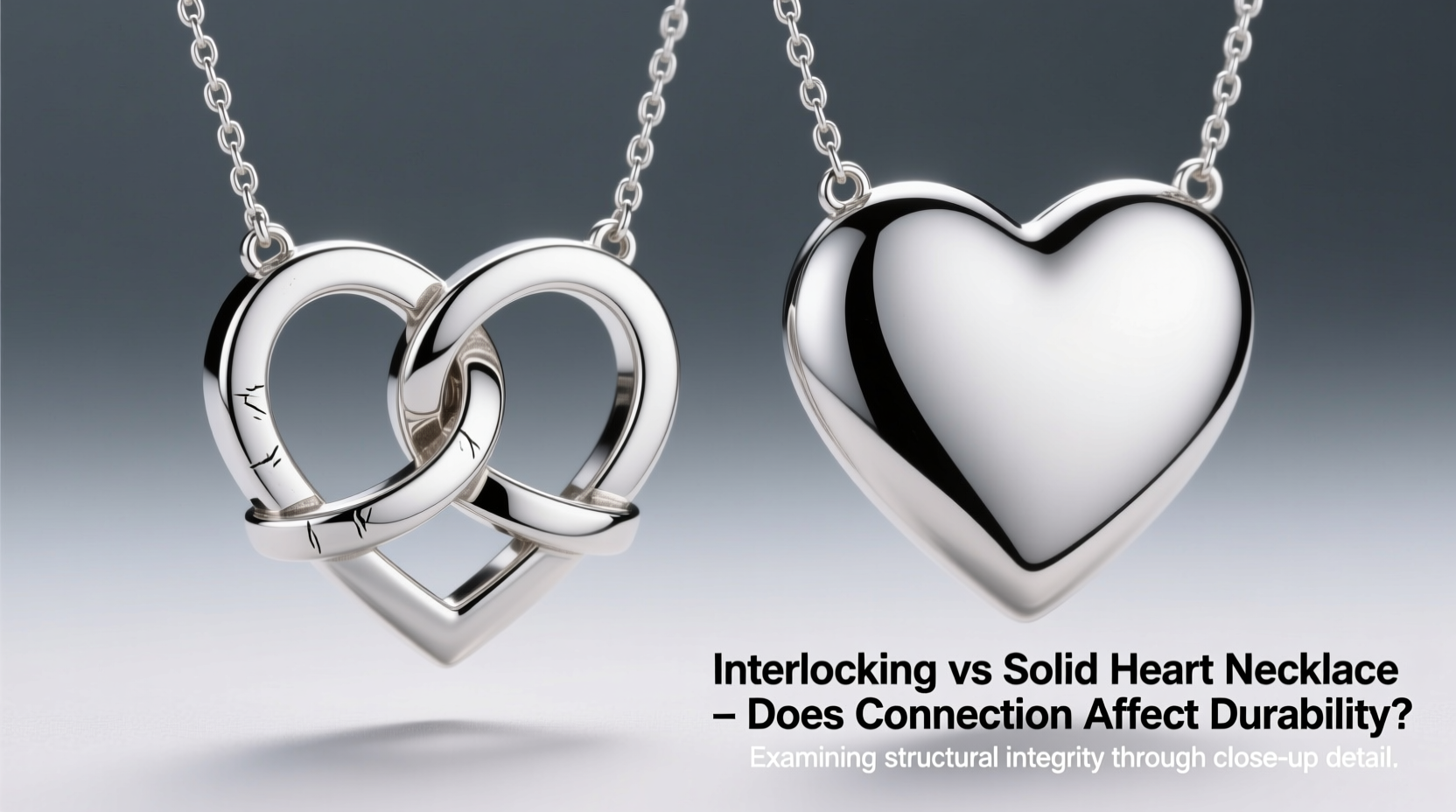
The visual distinction between interlocking and solid heart necklaces is clear, but their structural differences go deeper than aesthetics.
Solid heart necklaces feature a single, continuous heart shape—often symmetrical and closed. These are typically cast as one piece, minimizing weak points. They range from minimalist outlines to fully filled hearts, depending on the design.
Interlocking heart necklaces, on the other hand, consist of two separate hearts that appear fused or linked together. In some versions, the hearts overlap at a narrow point; in others, they’re mechanically joined with tiny connectors or hinges. This design emphasizes connection, often symbolizing romantic or familial bonds.
Because the interlocking style involves multiple components or thin junctions, it introduces potential stress points where breakage can occur over time.
Durability Factors: What Makes a Necklace Last?
Durability in fine jewelry isn’t just about how thick the metal is—it’s a combination of material strength, design integrity, and daily use conditions.
- Metal Type: 14k gold is more durable than 18k due to higher alloy content. Sterling silver is softer and prone to tarnish and bending.
- Thickness & Gauge: Thicker chains and pendants withstand stress better. Delicate chains paired with detailed pendants increase vulnerability.
- Craftsmanship: Poorly soldered joints or uneven casting can create micro-fractures that worsen with time.
- Wear Frequency: Daily wear exposes jewelry to friction, chemicals, and impact, accelerating wear on fragile designs.
In interlocking hearts, the point where the two hearts meet is structurally thinner and under constant tension when worn. Over months or years, this area may develop cracks, especially if the wearer frequently tugs at the necklace or sleeps in it.
“Any jewelry with moving parts or tight connections will naturally have a shorter lifespan than a solid, monolithic piece—if subjected to regular stress.” — Daniel Ruiz, Master Goldsmith & Jewelry Appraiser
Comparative Analysis: Interlocking vs Solid Hearts
| Feature | Interlocking Heart Necklace | Solid Heart Necklace |
|---|---|---|
| Structural Integrity | Moderate – dependent on joint strength | High – single-piece construction |
| Vulnerable Areas | Connection point between hearts | Clasp, chain links (minimal pendant risk) |
| Average Lifespan (Daily Wear) | 3–5 years (with care) | 7+ years |
| Symbolic Meaning | Union, partnership, connection | Love, devotion, self-love |
| Repair Complexity | High – may require re-soldering or reconstruction | Low – minor polishing or chain replacement |
The data shows that while interlocking hearts offer deeper symbolic resonance, they come with trade-offs in longevity. Solid hearts, being simpler in form, are inherently more resilient to everyday wear and tear.
Real-World Example: A Case of Repeated Breakage
Consider Sarah, a 34-year-old teacher who received an interlocking heart necklace from her sister as a 10th anniversary gift. She wore it daily, showering and exercising with it on, believing “it’s just a little water.” Within 18 months, the connection between the hearts cracked twice. Each time, she paid $65 for repair.
After the third fracture, she consulted a jeweler who explained that constant movement and moisture exposure weakened the already narrow joint. He recommended switching to a solid heart pendant or reserving the interlocking piece for special occasions.
Sarah opted for a new solid 14k gold heart on a sturdier cable chain. Two years later, it remains flawless despite regular wear. Her experience underscores a key truth: emotional value doesn’t negate physical limitations.
How to Maximize Durability: A Step-by-Step Care Guide
Whether you own an interlocking or solid heart necklace, proper care significantly extends its life. Follow this timeline-based maintenance plan:
- Daily: Remove before sleeping, swimming, or applying lotions. Store flat in a fabric-lined box.
- Weekly: Wipe gently with a microfiber cloth. Check for loose connections or dark spots (early tarnish).
- Monthly: Soak in lukewarm water with mild dish soap for 10 minutes. Use a soft toothbrush to clean crevices—especially around interlocking joints.
- Every 6 Months: Inspect the clasp and chain under magnification. Take to a jeweler for professional cleaning and structural check.
- Annually: Consider re-polishing or rhodium plating (for white gold/silver) to restore luster and protect surface integrity.
Buying Smart: Checklist Before Purchase
Before investing in a heart necklace, ask yourself these questions to ensure long-term satisfaction:
- ✅ Will I wear this every day, or only occasionally?
- ✅ Is the interlocking joint visibly reinforced or seamless?
- ✅ What metal is used? (Opt for 10k–14k gold for durability)
- ✅ Is the chain thickness proportional to the pendant weight?
- ✅ Does the jeweler offer a warranty or repair service?
- ✅ Can I see a hallmark or purity stamp (e.g., 14K, 925)?
If you prioritize symbolism and wear the piece mostly for events, an interlocking design can be a meaningful choice. But if you want a heirloom-quality item for daily wear, a solid heart is the safer bet.
Frequently Asked Questions
Can an interlocking heart necklace be repaired if it breaks?
Yes, most breaks can be fixed through soldering or laser welding, especially in gold or platinum. However, repeated repairs weaken the metal further. After two or three fixes, consider replacing the pendant.
Is there a middle-ground design that offers both symbolism and strength?
Yes—some jewelers offer “semi-interlocked” hearts where the two hearts are fused into a single solid piece with the appearance of connection. These maintain the aesthetic without the mechanical weakness.
Does plating affect durability?
Plated finishes (like gold over silver) wear off over time, especially on high-contact areas. Once the base metal is exposed, corrosion can accelerate, particularly in humid environments. Solid metal pieces last longer and retain value.
Final Thoughts: Beauty Meets Longevity
The choice between an interlocking and solid heart necklace ultimately balances emotion and engineering. Interlocking designs capture the beauty of connection but demand careful handling. Solid hearts offer timeless elegance and resilience, making them ideal for lifelong wear.
There’s no universal “better” option—only what suits your lifestyle and values. If you choose an interlocking piece, treat it as a delicate treasure. If you opt for solid, you gain peace of mind without sacrificing sentiment.




 浙公网安备
33010002000092号
浙公网安备
33010002000092号 浙B2-20120091-4
Comments
No comments yet. Why don't you start the discussion?