
For millions of healthcare workers, factory operators, security personnel, and others working through the night, maintaining metabolic health can be a daily challenge. One increasingly popular strategy—intermittent fasting—is often dismissed as incompatible with night shifts. However, with careful planning and an understanding of circadian biology, it’s entirely possible to adapt fasting protocols to non-traditional schedules. The key lies in aligning eating windows not just with the clock, but with your body’s internal rhythm and real-world demands.
Night shift work disrupts natural circadian rhythms, increasing risks for insulin resistance, weight gain, and cardiovascular issues. Intermittent fasting, when tailored correctly, may help mitigate some of these effects by improving insulin sensitivity, supporting cellular repair, and promoting consistent energy levels. But choosing the right fasting window requires more than copying a daytime protocol—it demands personalization based on shift length, sleep patterns, and meal logistics.
Understanding Circadian Rhythms and Night Shift Challenges
The human body operates on a roughly 24-hour cycle governed by the suprachiasmatic nucleus in the brain. This internal clock regulates hormone release, digestion, body temperature, and sleep-wake cycles. Light exposure is the primary cue that synchronizes this system. When you work at night and sleep during the day, your light exposure and meal timing become misaligned with your biological expectations.
Eating late at night—especially high-carbohydrate or processed meals common in hospital cafeterias or convenience stores—can impair glucose metabolism. A 2020 study published in The American Journal of Clinical Nutrition found that night eaters had up to 30% lower insulin sensitivity compared to those who ate earlier in the day, even when calorie intake was identical.
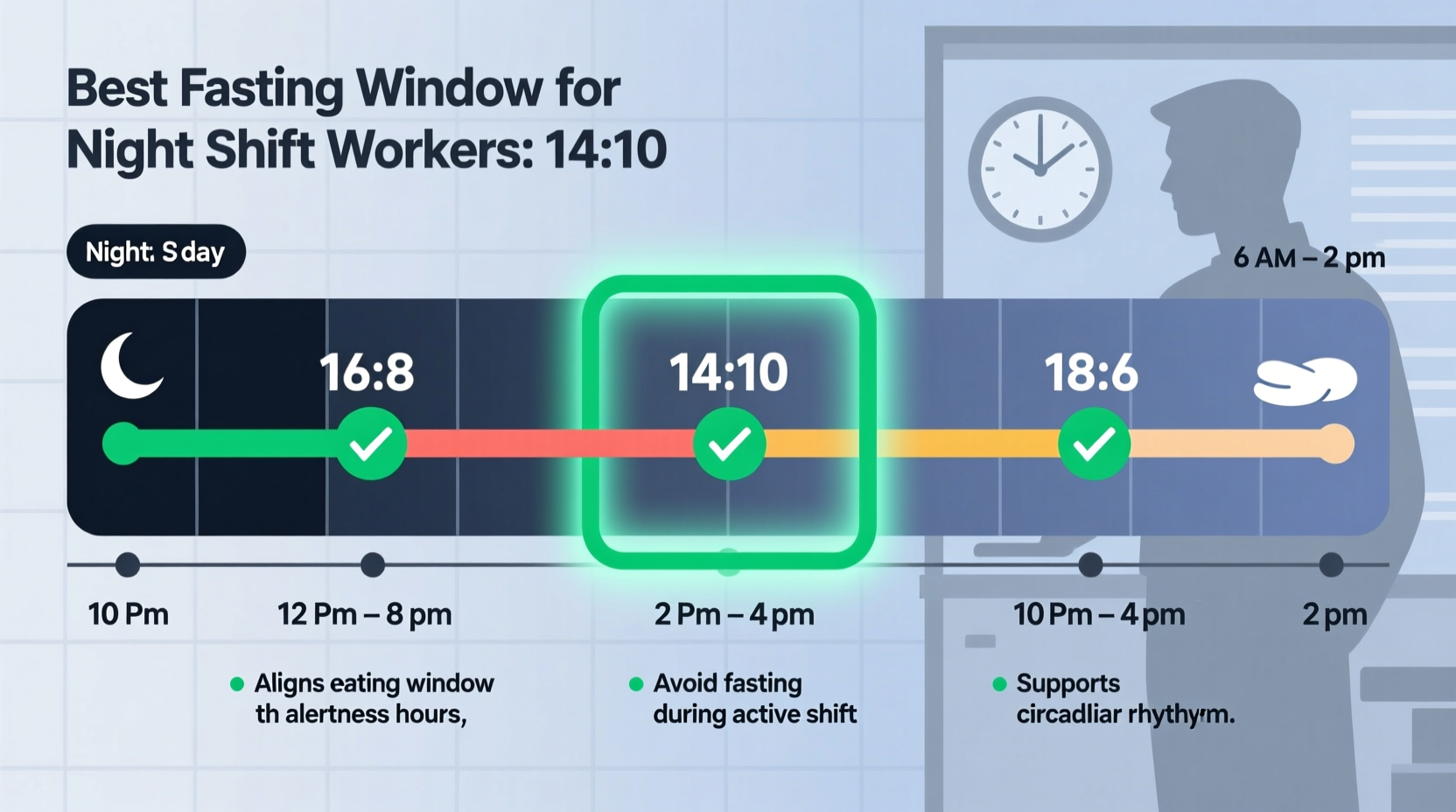
Intermittent fasting introduces structure to eating behavior, potentially counteracting some of the metabolic downsides of night work. However, simply applying a standard 16:8 fasting window (e.g., eating between 12 PM and 8 PM) will likely backfire for someone starting their shift at 11 PM.
“Fasting isn’t about rigid time blocks—it’s about creating metabolic coherence. For night workers, that means anchoring food intake around wakefulness and activity, not sunrise.” — Dr. Lena Torres, Chronobiologist and Sleep Researcher at Stanford University
Popular Fasting Schedules and Their Night Shift Adaptations
Below is a comparison of common intermittent fasting models and how they can be modified for night shift workers. The goal is to compress eating into a window that supports alertness during work and allows digestive rest during sleep.
| Fasting Method | Standard Schedule | Night Shift Adaptation | Best For |
|---|---|---|---|
| 16:8 (Leangains) | 12 PM – 8 PM eating; fast until noon | 3 AM – 11 AM eating; fast from 11 AM to 3 AM | Day sleepers with stable routines |
| 18:6 | 1 PM – 7 PM eating | 5 AM – 11 AM eating | Those seeking deeper autophagy |
| 20:4 (Warrior Diet) | 2 PM – 6 PM one large meal | 6 AM – 10 AM one large meal | Minimalist eaters comfortable with one meal |
| 14:10 | 9 AM – 7 PM eating | 1 AM – 3 PM eating | Beginners or rotating shift workers |
| OMAD (One Meal a Day) | One meal at dinner | Single meal post-shift (e.g., 8 AM – 9 AM) | Experienced fasters with strong discipline |
The most effective adaptation depends on individual lifestyle factors. For example, a nurse working 7 PM to 7 AM might find it easiest to eat a substantial meal before work (5 PM), a light snack during the shift (2 AM), and finish eating by 8 AM. This creates a de facto 16-hour fast from 8 AM to midnight, aligning with waking hours and avoiding late-day digestion.
Step-by-Step Guide: Designing Your Night Shift Fasting Plan
Creating a sustainable fasting routine as a night worker involves several deliberate steps. Follow this timeline to build a personalized plan over the course of one week.
- Day 1–2: Track Current Habits
Record every meal, snack, caffeine intake, and sleep period. Note energy crashes and hunger spikes. This baseline reveals when you actually consume calories and how it correlates with alertness. - Day 3: Define Your Ideal Eating Window
Based on your shift end time and sleep schedule, choose a 6–8 hour window that avoids the last 2–3 hours before bed. Example: If you finish work at 7:30 AM and sleep by 9 AM, aim to finish eating by 8:30 AM. - Day 4: Adjust Meal Composition
Front-load protein and healthy fats. Avoid sugary snacks during shifts—they cause energy crashes and increase hunger. Opt for boiled eggs, nuts, Greek yogurt, or avocado-based meals. - Day 5: Begin Compression
Gradually shorten your eating window. If you currently eat from 5 PM to 10 AM, reduce it to 6 PM to 9 AM. Use herbal tea or sparkling water during transition periods to manage cravings. - Day 6–7: Monitor and Refine
Track sleep quality, focus at work, and digestive comfort. If you feel sluggish, consider adding 100–150 extra calories of complex carbs (e.g., sweet potato) during your pre-shift meal.
This gradual approach minimizes shock to the system and increases long-term adherence. Rushing into OMAD or 20:4 without preparation often leads to binge-eating or quitting altogether.
Real-World Example: Maria, ER Nurse on Rotating Shifts
Maria, a 42-year-old emergency room nurse in Chicago, works three consecutive night shifts (7 PM – 7 AM) followed by two days off. She struggled with weight gain and acid reflux for years, blaming her reliance on vending machine snacks and late breakfasts.
After consulting a nutritionist, she adopted a flexible 14:10 protocol. On night shift days, she eats:
- 5:30 PM: Grilled chicken salad with olive oil dressing (600 kcal)
- 2:00 AM: Handful of almonds and a hard-boiled egg (200 kcal)
- 8:00 AM: Protein smoothie with spinach and chia seeds (400 kcal)
Her eating window closes by 8:30 AM, allowing 3.5 hours of digestion before her 11:30 AM bedtime. On days off, she shifts to a 12 PM – 8 PM window, syncing with family meals.
Within three months, Maria lost 9 pounds, reported fewer heartburn episodes, and noticed improved mental clarity during her shifts. Her success came not from strict rules, but from consistency within flexibility.
Checklist: Optimizing Intermittent Fasting for Night Shift Success
Use this checklist to ensure your fasting plan supports both performance and health:
- ✅ Align your first meal with wake-up time (even if it's mid-morning)
- ✅ Finish eating at least 2–3 hours before planned sleep
- ✅ Prioritize protein (at least 25–30g per meal) to sustain fullness
- ✅ Stay hydrated with electrolyte-enhanced water during shifts
- ✅ Avoid high-sugar, ultra-processed foods—even during fasting breaks
- ✅ Use caffeine strategically: limit intake after the first third of your shift
- ✅ Reassess every two weeks; adjust based on energy, sleep, and appetite
One common mistake is treating all night shifts the same. Rotating schedules require adaptive windows. If you switch from nights to days weekly, avoid rigid time stamps. Instead, use relative timing: “I eat within 6 hours of waking,” regardless of whether that’s 6 AM or 6 PM.
Frequently Asked Questions
Can I drink coffee during my fasting window?
Yes—black coffee, unsweetened tea, or sparkling water with lemon are generally acceptable and won’t break a fast. However, avoid loading coffee with sugar or cream. A splash of heavy cream (under 15 calories) is usually fine, but larger amounts may trigger insulin response and reduce autophagy benefits.
What if I get hungry during my night shift?
Hunger pangs often peak in the first few days of adjusting. Combat them with zero-calorie fluids like herbal tea or salted water. Also, ensure your pre-shift meal includes enough fat and fiber. A meal rich in avocado, eggs, and vegetables keeps you fuller longer than a carb-heavy dinner.
Is intermittent fasting safe for people with diabetes or blood sugar issues?
Caution is essential. Night shift work already affects glucose regulation. Anyone with type 1 or type 2 diabetes should consult a physician before starting a fasting regimen. Regular blood sugar monitoring is crucial, especially during adaptation. Fasting may require medication adjustments to prevent hypoglycemia.
Final Recommendations and Sustainable Practices
The best intermittent fasting window for night shift workers isn’t a one-size-fits-all solution. It’s a dynamic framework that respects your work demands, sleep quality, and metabolic signals. The most successful practitioners don’t obsess over exact hours—they focus on consistency, nutrient density, and listening to their bodies.
Start with a manageable 14:10 or 16:8 adapted to your wake time. Gradually refine based on how you feel—not just weight changes, but also mental clarity, mood stability, and digestive comfort. Pair fasting with other circadian-supportive habits: morning melatonin-free darkness, strategic light exposure during shifts, and consistent sleep hygiene.
Remember, the goal isn’t perfection. It’s progress toward better metabolic resilience in a challenging environment. Night shift work won’t disappear, but its health toll doesn’t have to be inevitable.




 浙公网安备
33010002000092号
浙公网安备
33010002000092号 浙B2-20120091-4
Comments
No comments yet. Why don't you start the discussion?