
After a long social event, meeting, or even a day filled with back-to-back conversations, some people feel energized and uplifted. Others—particularly introverts—feel drained, irritable, mentally foggy, or emotionally raw. This isn’t just fatigue. It’s what many refer to as an “introvert hangover,” a state of emotional and cognitive exhaustion that follows overstimulation. Unlike physical tiredness, this kind of depletion doesn’t always respond to sleep. It requires intentional solitude and recovery. Recognizing the signs early can prevent burnout, emotional outbursts, and prolonged mental strain.
Understanding the introvert hangover is not about labeling oneself as antisocial or overly sensitive. It’s about acknowledging how different nervous systems process stimulation. Introverts typically gain energy from quiet reflection and lose it through external engagement. When they exceed their social threshold without adequate recovery, the consequences ripple through mood, focus, relationships, and productivity.
What Is an Introvert Hangover?
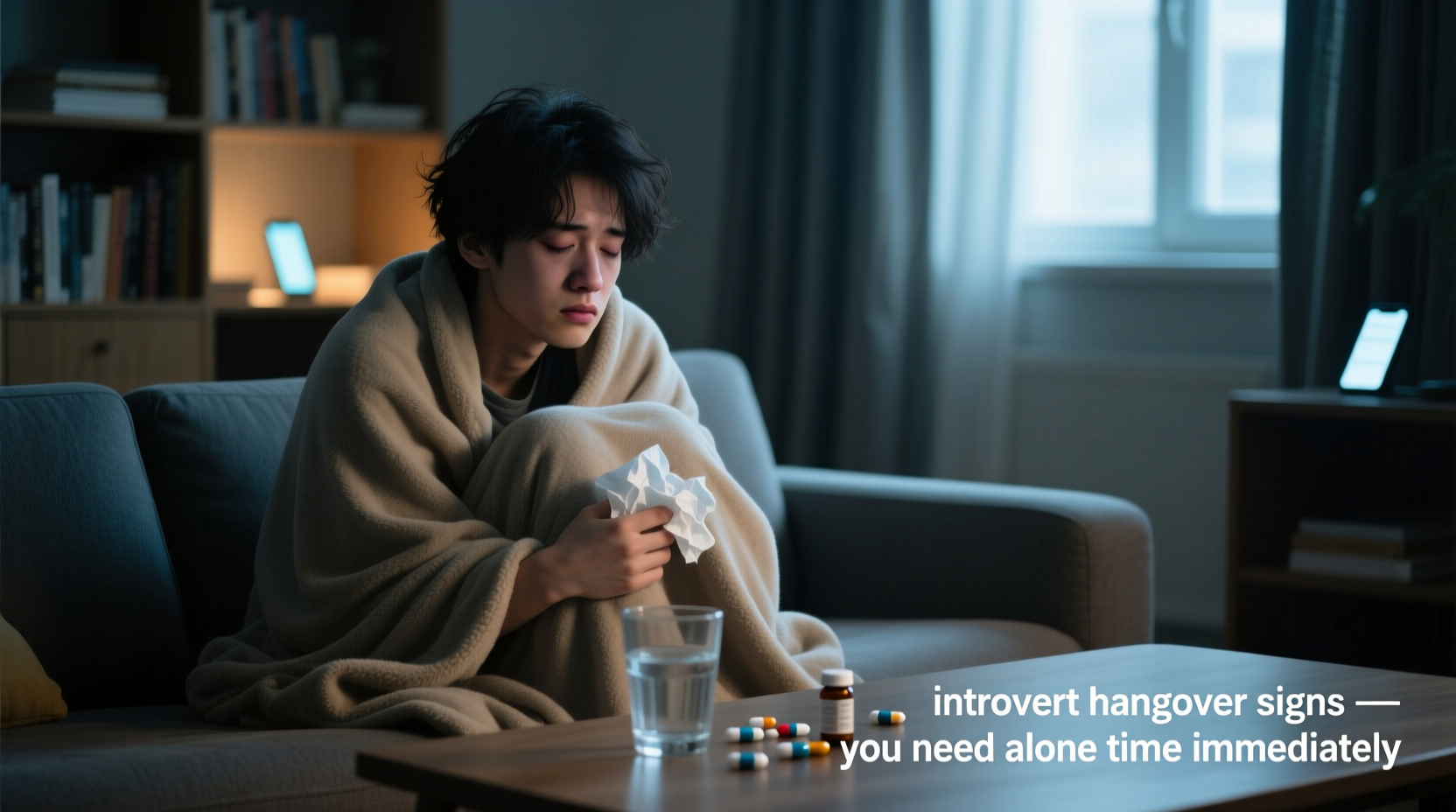
An introvert hangover isn't a clinical term, but it's widely used in psychology-adjacent communities to describe the aftermath of excessive social interaction for individuals who recharge through solitude. Think of it like filling a cup: extroverts pour energy into others and get refilled by being around people; introverts give energy in social settings and refill by being alone.
When an introvert spends too much time in stimulating environments—networking events, crowded workplaces, family gatherings, or even virtual meetings—their mental resources deplete. The result? A post-social slump marked by irritability, brain fog, emotional sensitivity, and a strong desire to withdraw. Ignoring these signals often leads to deeper exhaustion, anxiety spikes, or even physical symptoms like headaches.
“Introversion isn’t shyness or dislike of people—it’s a preference for lower levels of stimulation. When that threshold is crossed, the nervous system needs downtime to recalibrate.” — Dr. Laurie Helgoe, psychologist and author of *Introvert Power*
7 Key Signs You’re Experiencing an Introvert Hangover
Not all fatigue after socializing is equal. Here are seven unmistakable signs that your system is signaling an urgent need for solitude:
- Mental Fog and Reduced Focus: You struggle to concentrate on simple tasks. Reading emails feels overwhelming, and your thoughts move slower than usual. This cognitive sluggishness is your brain asking for reduced input.
- Heightened Irritability: Small inconveniences—like a coworker’s loud phone call or someone interrupting you—trigger disproportionate frustration. Your emotional buffer has worn thin.
- Physical Exhaustion Despite Rest: You may have slept well, yet still feel drained. This isn’t muscle fatigue; it’s neural fatigue from sustained attention and emotional labor.
- Desire to Cancel Plans: Even previously exciting commitments now feel burdensome. The thought of another conversation, no matter how pleasant, brings dread.
- Emotional Sensitivity: You’re more easily moved to tears, anger, or anxiety. Emotional regulation becomes harder because your nervous system is already taxed.
- Impaired Decision-Making: Choosing what to eat or which route to take suddenly feels overwhelming. Cognitive bandwidth is limited during recovery phases.
- Craving Silence and Solitude: Loud environments feel unbearable. You instinctively seek quiet spaces, dim lighting, or isolation—even if only for 20 minutes.
Why Alone Time Is Non-Negotiable for Recovery
Solitude isn’t selfish or antisocial—it’s a biological necessity for many introverts. Research in neuroscience suggests that introverts tend to have higher baseline activity in brain regions linked to internal processing, such as the prefrontal cortex. This means they process information more deeply, which is cognitively taxing over time.
Alone time allows the brain to shift from external monitoring to internal restoration. During solitude:
- The default mode network (DMN) activates, supporting self-reflection, memory consolidation, and creativity.
- Cortisol levels stabilize, reducing stress responses triggered by prolonged social engagement.
- Mental clutter clears, improving clarity and emotional resilience.
Without this reset, chronic overstimulation can mimic symptoms of anxiety disorders or depression—even in otherwise healthy individuals. The key difference? Symptoms subside with proper recovery, not medication or therapy alone.
Mini Case Study: Recovering From a Work Conference
Sophie, a 32-year-old UX designer and self-identified introvert, attended a three-day industry conference. While professionally rewarding, each day included keynote speeches, networking lunches, panel discussions, and evening mixers. By the final morning, Sophie found herself snapping at colleagues over minor miscommunications. She left early, overwhelmed, and spent the next two days in near-total silence—no calls, no social media, just walks, reading, and journaling.
Within 48 hours, her mood stabilized, her ideas flowed freely again, and she was able to synthesize insights from the event. “I used to feel guilty for needing so much downtime,” she said. “Now I schedule ‘recovery blocks’ after any major social exposure. It’s part of my professional hygiene.”
How to Respond: A Step-by-Step Recovery Plan
When you recognize the signs of an introvert hangover, immediate action prevents further depletion. Follow this timeline to restore balance efficiently.
- Step 1: Acknowledge the State (0–30 minutes)
Don’t dismiss your feelings as weakness. Name it: “I’m experiencing an introvert hangover.” Acceptance reduces guilt and enables proactive care. - Step 2: Remove Stimuli (30 minutes)
Exit noisy environments. Turn off notifications. Put up a do-not-disturb sign if needed. Reduce sensory input—dim lights, wear noise-canceling headphones, or retreat to a quiet room. - Step 3: Engage in Low-Effort Solitude (1–3 hours)
Choose restorative activities: journaling, walking in nature, listening to calming music, or simply sitting in silence. Avoid screens if possible, especially social media. - Step 4: Replenish Physically (Ongoing)
Hydrate, eat something light and nutritious, and consider gentle movement like stretching. Physical wellness supports mental recovery. - Step 5: Reflect and Reset (Next 24 hours)
Journal about what triggered the hangover. Was it duration, intensity, lack of breaks? Use this insight to plan better boundaries for future events.
Do’s and Don’ts During Recovery
| Do | Don’t |
|---|---|
| Seek quiet environments | Force yourself into more social interaction |
| Practice deep breathing or mindfulness | Consume caffeine or alcohol to “recover” |
| Engage in creative, low-pressure activities | Scroll endlessly through social media |
| Communicate your needs politely (“I need some downtime”) | Apologize excessively for needing space |
| Plan recovery time after known social events | Wait until you’re completely drained to act |
Preventing Future Introvert Hangovers
While recovery is essential, prevention is more sustainable. Proactive strategies help maintain energy equilibrium, especially for those in socially demanding roles.
Checklist: Preventing Social Overload
- Block “buffer time” before and after social events in your calendar
- Limit attendance to high-value interactions; skip optional gatherings
- Take micro-breaks during events (step outside, visit the restroom, sit quietly)
- Use earbuds or reading as polite disengagement tools in group settings
- Communicate boundaries early: “I’ll be leaving by 8 PM to recharge”
- Carry a comfort object—a book, notebook, or fidget tool—to ground yourself
- Schedule regular solitude, even on low-interaction days, as maintenance
“Boundaries aren’t walls—they’re gates. They allow you to engage meaningfully without burning out.” — Susan Cain, author of *Quiet: The Power of Introverts in a World That Can’t Stop Talking*
FAQ: Common Questions About Introvert Hangovers
Is an introvert hangover the same as social anxiety?
No. Social anxiety involves fear of judgment and persistent worry about social performance. An introvert hangover occurs after socializing, regardless of enjoyment. You might have loved the event but still feel drained afterward. The distinction lies in cause: anxiety stems from fear, while a hangover stems from overstimulation.
Can extroverts experience something similar?
Yes, though less commonly. Extroverts can become overstimulated, especially in forced or emotionally intense interactions. However, their recovery needs differ—many regain energy through selective socializing rather than solitude. The key is recognizing personal thresholds, regardless of personality type.
How long does an introvert hangover last?
Duration varies. Mild cases resolve in a few hours with proper rest. Severe or neglected hangovers may require 24–48 hours of low stimulation. Chronic cases—where recovery time exceeds social time—signal a need for lifestyle adjustments, such as remote work options or reduced social obligations.
Conclusion: Honor Your Need for Solitude
An introvert hangover is not a flaw—it’s feedback. It reveals the cost of engagement in a world that often values visibility over depth, speed over stillness, and connection over contemplation. Recognizing the signs isn’t indulgent; it’s intelligent self-management.
If you’re feeling mentally foggy, emotionally frayed, or physically drained after social interaction, don’t push through. Pause. Withdraw. Recharge. Your clarity, creativity, and emotional stability depend on it. Solitude isn’t escape—it’s return. Return to yourself, to your center, to the quiet strength that fuels meaningful contribution.




 浙公网安备
33010002000092号
浙公网安备
33010002000092号 浙B2-20120091-4
Comments
No comments yet. Why don't you start the discussion?