
Burnout doesn’t discriminate—but it does manifest differently depending on your personality. While both introverts and extroverts can experience emotional, mental, and physical exhaustion from chronic stress, the root causes and recovery paths vary significantly. The key lies in understanding how each personality type gains and depletes energy. Misunderstanding this dynamic often leads people to apply ineffective or even counterproductive recovery methods. Recognizing whether you’re recharging in alignment with your natural tendencies is crucial to long-term resilience.
Introverts typically gain energy through solitude and quiet reflection, while extroverts thrive on social interaction and external stimulation. When their energy systems are overdrawn without proper replenishment, burnout sets in—often subtly at first. Yet many attempt to recover using generic advice that ignores these fundamental differences. This article explores the distinct signs of burnout in introverts and extroverts, explains why one-size-fits-all recovery fails, and provides science-backed, personality-specific strategies to restore balance.
The Energy Dynamics Behind Burnout
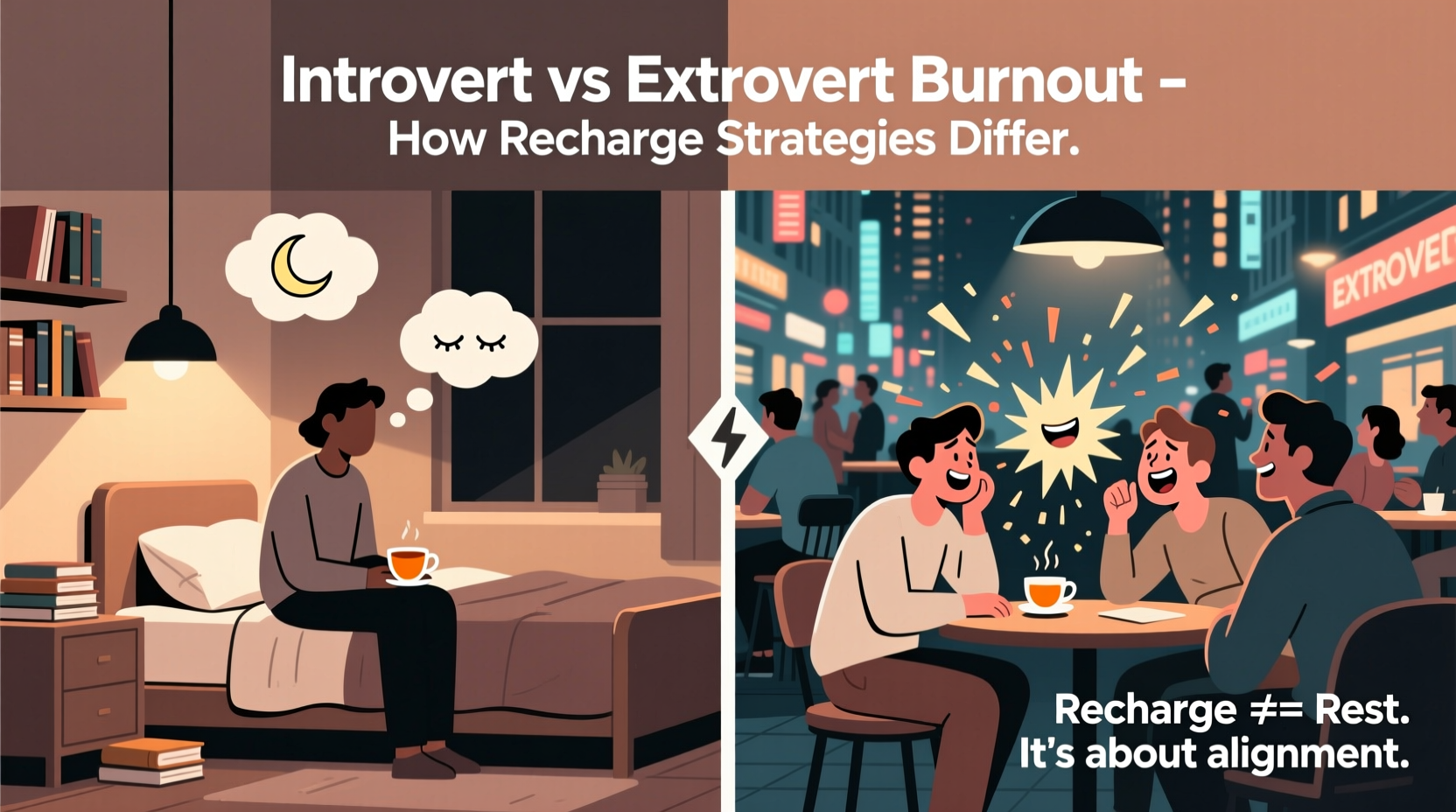
At the core of the introvert-extrovert divide is how individuals process stimulation. According to Carl Jung’s original typology, introverts are inwardly focused, drawing energy from internal thoughts and feelings. Extroverts, conversely, are oriented outward, energized by engagement with people and environments. Modern neuroscience supports this: studies using fMRI scans show that introverts tend to have higher blood flow in areas linked to internal processing, while extroverts exhibit greater activity in regions associated with reward and external stimuli.
This neurological distinction shapes how burnout develops. For an introvert, prolonged exposure to crowded spaces, back-to-back meetings, or constant digital interruptions drains their cognitive reserves rapidly. Their nervous system becomes overloaded, leading to irritability, withdrawal, and decision fatigue. An extrovert, however, may feel drained not from too much interaction, but from too little. Isolation, lack of meaningful conversations, or working remotely without team engagement can trigger a different kind of depletion—one marked by restlessness, low motivation, and emotional flatness.
“Burnout in introverts often looks like sensory overload; in extroverts, it resembles emotional starvation. Treating them the same way only deepens the problem.” — Dr. Lena Torres, Clinical Psychologist & Personality Researcher
Recognizing Burnout: Signs That Differ by Personality Type
While both types may report fatigue, insomnia, or difficulty concentrating, the context and accompanying symptoms diverge.
Introvert Burnout: The Overstimulation Spiral
- Feeling mentally “foggy” after social events, even enjoyable ones
- Increased sensitivity to noise, light, or small talk
- Withdrawing from responsibilities or canceling plans last minute
- Experiencing anxiety when anticipating group settings
- Needing significantly more alone time than usual to feel functional
Extrovert Burnout: The Stimulation Deficit
- Feeling listless or “flat” despite adequate sleep
- Struggling to initiate tasks without external accountability
- Craving spontaneous interactions but feeling too drained to reach out
- Losing interest in projects that once excited them
- Using social media compulsively as a substitute for real connection
Recharge Strategies That Work: A Comparative Guide
Effective recovery isn't about doing more—it's about doing what aligns with your energy architecture. Below is a detailed comparison of recharge strategies based on personality type.
| Factor | Introvert Recharge Strategy | Extrovert Recharge Strategy |
|---|---|---|
| Primary Need | Solitude and low sensory input | Social engagement and shared energy |
| Ideal Environment | Quiet room, nature walk alone, dim lighting | Coffee shop with friends, team meetup, lively space |
| Best Activity | Reading, journaling, meditating | Group workout, brainstorming session, casual hangout |
| Duration | Longer, uninterrupted blocks (2+ hours) | Frequent, shorter bursts (30–60 mins) |
| Risk of Misapplication | Forcing social outings to “cheer up” | Isolating to “rest,” which worsens lethargy |
One common mistake is assuming that rest means the same thing for everyone. Introverts may feel pressured to attend networking events or team dinners during recovery, mistaking obligation for self-care. Extroverts might isolate themselves, believing solitude is universally restorative. Both approaches exacerbate burnout because they contradict intrinsic energy patterns.
A Step-by-Step Recharge Plan by Personality Type
Recovery should be intentional and structured. Follow these steps to rebuild energy effectively.
For Introverts: The Quiet Reset Protocol
- Assess Your Stimulation Load: Track activities over three days. Note which ones leave you drained versus calm. Identify high-overload triggers (e.g., open-office work, video calls).
- Create Recharge Zones: Designate specific times and places for uninterrupted solitude. Even 20 minutes daily in a quiet space helps reset the nervous system.
- Limit Digital Intrusion: Silence notifications, use website blockers, and avoid multitasking. Cognitive fragmentation intensifies introvert burnout.
- Engage in Reflective Practices: Journaling, sketching, or walking in nature allows internal processing without external demands.
- Gradually Re-engage: After 2–3 days of deep rest, reintroduce social contact slowly. Start with one-on-one conversations before returning to group settings.
For Extroverts: The Connection-Based Recovery
- Evaluate Social Nutrition: Not all interaction is energizing. Distinguish between meaningful exchanges and superficial chatter. Prioritize quality connections.
- Schedule Energizing Interactions: Book coffee dates, join a club, or co-work with colleagues. Structure social fuel like you would meals.
- Use Movement with Others: Group fitness classes, dance sessions, or team sports combine physical exertion with social stimulation—dual recharge.
- Express Emotionally: Talk through frustrations with a trusted friend. Verbal processing helps extroverts regulate stress.
- Avoid Passive Substitutes: Replace scrolling through social media with live calls or in-person meetups. Real-time feedback loops are essential.
Real-Life Example: Two Managers, One Deadline
Consider two marketing managers, Maya and Jordan, leading a high-pressure campaign launch. Both worked 70-hour weeks under tight deadlines. After the project ended, both reported exhaustion—but their recovery paths diverged.
Maya, an introvert, immediately booked a solo weekend cabin trip. She disconnected from email, read novels, and took silent hikes. By Monday, she felt mentally clear and ready to plan her next quarter. Jordan, an extrovert, tried the same approach—staying home, avoiding calls, and “resting.” By Sunday night, he felt worse: restless, unmotivated, and emotionally dull. He realized isolation wasn’t helping. Instead, he met a colleague for brunch, joined a trivia night, and volunteered to lead a team debrief. Within 48 hours, his energy returned.
Their experiences highlight a critical truth: recovery isn’t universal. What restores one person may drain another. Understanding your energy source is the first step toward sustainable well-being.
Checklist: Are You Recharging Correctly?
Use this checklist to evaluate your current recovery habits:
- ✅ I understand whether I gain energy from solitude or socializing
- ✅ My downtime activities align with my natural energy preferences
- ✅ I don’t confuse obligation (e.g., parties, calls) with genuine recharge
- ✅ I schedule regular micro-recharges, not just occasional long breaks
- ✅ I adjust my environment to support my needs (quiet space or social access)
- ✅ I communicate my recharge needs to family, friends, or coworkers
- ✅ I notice improvements in mood and focus after my chosen downtime
If fewer than five boxes are checked, your recharge strategy may need refinement.
Frequently Asked Questions
Can someone be both introverted and extroverted?
Yes—many people are ambiverts, falling near the middle of the spectrum. They may draw energy from both solitude and socializing, depending on context. Ambiverts should experiment to identify their dominant mode in stressful periods and tailor recovery accordingly.
What if my job requires constant interaction, but I’m an introvert?
Structure your day to include protected downtime. Use lunch breaks to sit alone, wear noise-canceling headphones between meetings, and negotiate “focus hours” with your team. Micro-recharges throughout the day prevent cumulative depletion.
How long does it take to recover from personality-based burnout?
Acute burnout can improve within 3–5 days of aligned rest. Chronic cases may require weeks of lifestyle adjustments. Consistency matters more than intensity—small, daily practices sustain energy better than occasional grand gestures.
Conclusion: Recharge With Intention, Not Assumption
Burnout recovery isn’t about pushing through or resting harder—it’s about resting smarter. The difference between effective and ineffective recharge lies in self-awareness. Introverts must honor their need for stillness without guilt. Extroverts should seek connection without viewing it as indulgence. When workplaces, relationships, and personal routines respect these distinctions, resilience grows naturally.
Start today: reflect on your last bout of exhaustion. Did your recovery method match your energy type? If not, adjust. Implement one small change—whether it’s blocking 30 minutes of solo time or scheduling a weekly coffee chat. Small shifts compound into lasting vitality. Your nervous system isn’t broken; it’s speaking a language. Learn to listen, and you’ll never have to burn out the same way twice.




 浙公网安备
33010002000092号
浙公网安备
33010002000092号 浙B2-20120091-4
Comments
No comments yet. Why don't you start the discussion?