
The distinction between introverts and extroverts is often reduced to social preferences: one likes parties, the other prefers quiet nights in. But the real difference runs deeper than behavior—it lies in how each type generates and sustains mental and emotional energy. Understanding this internal mechanism reveals why introverts feel drained after group gatherings while extroverts come alive in them. It's not about liking or disliking people; it's about where energy originates and how it’s replenished.
This fundamental divergence shapes daily routines, career choices, relationships, and long-term well-being. When individuals misinterpret their energy patterns—pushing themselves to conform to an opposite temperament—they risk burnout, anxiety, and chronic fatigue. Recognizing whether you draw energy from within or from external stimuli allows for more intentional living, improved self-awareness, and sustainable personal growth.
The Core Difference: Internal vs. External Energy Sources
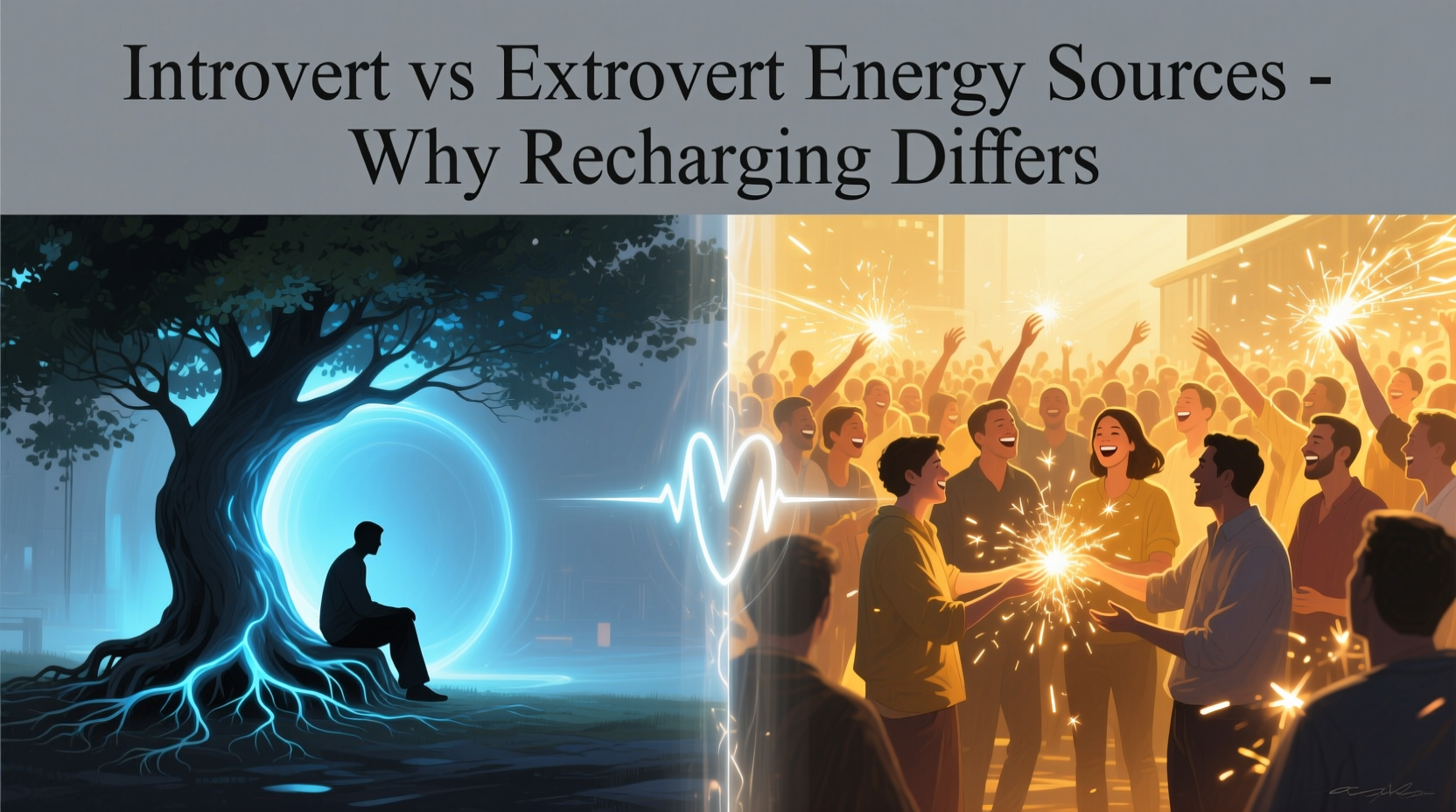
At the heart of the introvert-extrovert spectrum is the direction of energy flow. Carl Jung, who first introduced these concepts in the early 20th century, described introverts as being oriented inward, drawing vitality from internal reflection, solitude, and deep thought. Extroverts, by contrast, are outwardly oriented—energized by interaction, movement, and sensory input from the external world.
This isn’t merely a preference; it’s a neurological tendency. Studies using brain imaging have shown that introverts tend to have higher blood flow in areas linked to internal processing, such as the frontal cortex, which governs planning, problem-solving, and self-reflection. Extroverts show greater activity in regions tied to reward-seeking behavior and external stimuli, particularly the dopamine system, which responds strongly to novelty and social engagement.
Because of this, two people can attend the same networking event and walk away with entirely different energy levels. The extrovert may feel invigorated, eager to plan the next meetup. The introvert might need hours—or even a full day—of solitude to recover. Neither experience is wrong. Both reflect valid, biologically rooted ways of engaging with the world.
How Recharging Works: Solitude vs. Stimulation
Recharging isn't just about rest—it's about alignment with your natural energy source. For introverts, recharging means minimizing external input and returning to a state of internal focus. This often involves quiet time alone, reading, journaling, walking in nature, or engaging in creative work without interruption. These activities don’t “do nothing”—they allow the mind to process, integrate experiences, and restore cognitive resources depleted by social exposure.
Extroverts recharge through connection and stimulation. Being around others, attending events, or participating in dynamic conversations doesn’t drain them—it refills their reserves. A phone call with a friend, a spontaneous coffee date, or even bustling environments like cafes or concerts serve as fuel. Without sufficient external engagement, extroverts may feel restless, under-stimulated, or emotionally flat.
Misunderstanding this leads to poor self-care. An introvert who forces themselves into constant socializing to appear “more outgoing” will eventually crash. An extrovert who isolates for days trying to “be more introspective” may spiral into boredom or low mood. The key isn’t changing your nature but designing a lifestyle that honors it.
Energy Management Strategies by Type
| Energy Type | Primary Source | Recharge Method | Risk of Misalignment |
|---|---|---|---|
| Introvert | Internal reflection, deep focus | Solitude, low-stimulation environments | Burnout from over-socializing |
| Extrovert | Social interaction, external stimulation | Engagement, conversation, movement | Restlessness from prolonged isolation |
| Ambivert | Balance of both | Mixed schedule: social + downtime | Overcommitting or under-scheduling |
“Energy isn’t created equally across personalities. Trying to force an introvert to recharge socially is like asking a plant that thrives in shade to grow under direct sunlight.” — Dr. Lena Torres, Cognitive Psychologist
Real-Life Implications: Work, Relationships, and Daily Rhythms
The impact of energy differences extends far beyond weekend plans. In the workplace, introverts often excel in roles requiring deep concentration—research, writing, coding, or strategic planning—but may struggle in open-office environments or back-to-back meetings. Extroverts thrive in collaborative settings, sales, public speaking, or team leadership, yet may find solitary tasks tedious or draining.
Consider Sarah, a software developer and self-described introvert. She works remotely three days a week and schedules her most complex coding tasks in the early morning when her home is quiet. After a client meeting, she blocks out the afternoon for no meetings, often taking a long walk or listening to instrumental music to reset. Her productivity soars because she protects her energy cycles.
In contrast, Mark, a sales manager and extrovert, starts his day by checking messages and calling colleagues. He finds energy in hallway chats and team huddles. When forced into a silent, isolated workday, he reports feeling “mentally sluggish” and less motivated. His performance improves when he builds in brief social interactions—even quick video calls—throughout the day.
In relationships, mismatched energy needs can cause friction. An introverted partner may retreat to read after dinner, interpreting this as relaxation. Their extroverted spouse might see it as rejection, craving conversation instead. Without mutual understanding, resentment builds. But when both recognize that one recharges by talking and the other by being quiet, they can negotiate compromises—like a 20-minute chat before separate downtime.
Step-by-Step Guide to Aligning with Your Energy Type
Whether you're confirming your temperament or optimizing your routine, follow this practical sequence to align your lifestyle with your natural energy flow:
- Track your energy for one week. Note times of high and low energy, social interactions, work demands, and recovery periods. Use a simple journal or app.
- Identify patterns. Do you feel energized after conversations? Or exhausted? Does solitude restore you, or make you feel lonely?
- Categorize your activities. Label each major daily task as energy-giving or energy-draining based on your experience, not assumptions.
- Adjust your schedule. Place draining tasks (e.g., presentations, networking) when you’re naturally strongest. Follow them with appropriate recovery time.
- Create boundaries. Learn to say no to events that deplete you without offering renewal. Schedule recharging activities as non-negotiable appointments.
- Communicate your needs. Explain to family, coworkers, or partners how you recharge. Offer alternatives rather than just declining.
- Reassess monthly. Life changes—new job, relationship, health shifts—can alter energy demands. Stay flexible and observant.
Tips for Introverts and Extroverts Living Together
- Design shared spaces with zones: a lively common area and a quiet retreat corner.
- Use signals: a closed door means “recharging,” not “angry.”
- Schedule joint activities that balance both needs—like a short hike followed by coffee at a quiet café.
- Debrief separately: one person may want to talk about an event immediately; the other may need hours or days to process.
- Avoid labeling behaviors as “antisocial” or “needy.” Reframe them as “different energy rhythms.”
Frequently Asked Questions
Can someone be both introverted and extroverted?
Yes—many people are ambiverts, falling near the middle of the spectrum. They gain energy from both solitude and socializing, depending on context and intensity. Ambiverts often adapt well to different environments but must still balance their inputs to avoid overextension.
Does culture influence whether someone is introverted or extroverted?
Culture shapes expression, not core temperament. Western societies often reward extroverted traits—assertiveness, charisma, visibility—which can pressure introverts to perform extroversion. Eastern cultures may value introspection and restraint more highly, allowing introverts to thrive. However, the underlying energy mechanics remain consistent across cultures.
Can introverts learn to enjoy large social events?
Enjoyment isn’t the issue—energy cost is. An introvert can love people deeply and enjoy meaningful conversations but still pay a physiological price for prolonged exposure. With preparation (like scheduling breaks) and recovery time, they can participate successfully—but it won’t inherently become energizing.
Conclusion: Honor Your Energy, Not Expectations
The divide between introvert and extrovert isn’t about superiority or social skill—it’s about biology and energy dynamics. Recognizing that recharging differs based on internal wiring frees individuals from guilt, comparison, and unsustainable habits. You don’t need to become more extroverted to succeed, nor must you isolate completely to be true to yourself.
True well-being comes from designing a life that respects your natural rhythm. Whether you light up in crowds or find strength in silence, your energy source is valid. Protect it. Nurture it. Build your days around it—not around someone else’s definition of what’s “normal” or “productive.”




 浙公网安备
33010002000092号
浙公网安备
33010002000092号 浙B2-20120091-4
Comments
No comments yet. Why don't you start the discussion?