
Energy isn’t just about sleep or caffeine. For many, the deeper source of mental and emotional fatigue lies in how they interact with the world—and how they recover from it. The distinction between introverts and extroverts isn’t just about social preference; it’s rooted in neurobiology. Where one draws energy from solitude, the other gains it from engagement. Yet, modern life often forces both types into mismatched recovery routines, leading to burnout, irritability, and chronic low-grade exhaustion.
Understanding how your personality type processes stimulation allows you to tailor your recharge strategies effectively. Not all rest is equal. A crowded coffee shop may energize one person while draining another. The key to faster restoration isn’t more downtime—it’s the right kind of downtime. This article breaks down evidence-based, practical recharge techniques that align with your natural energy flow, whether you're an introvert or extrovert.
The Science Behind Energy Drain and Recharge
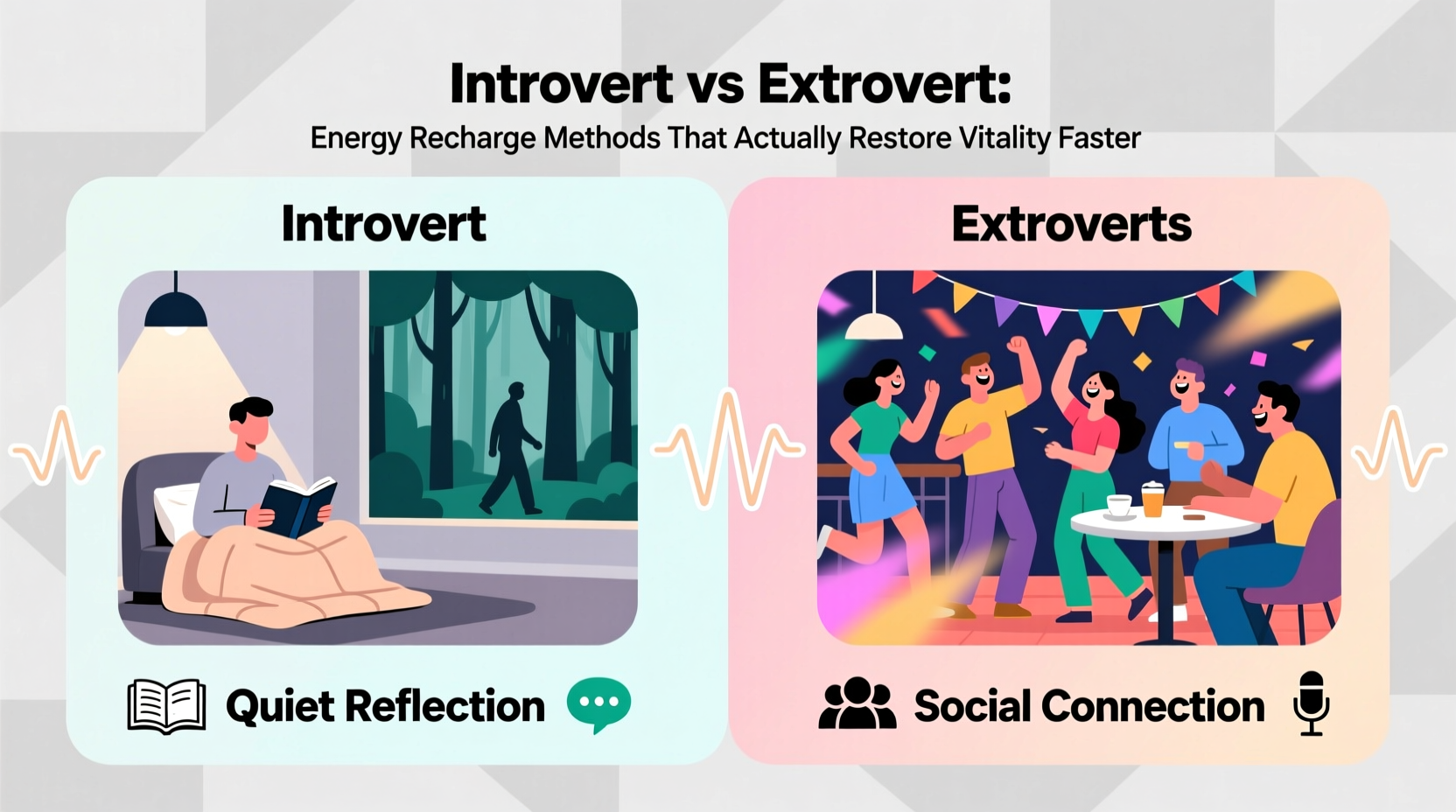
Psychologist Carl Jung first introduced the concepts of introversion and extroversion as fundamental orientations of the psyche. Modern neuroscience has since supported these ideas with findings on dopamine sensitivity and cortical arousal. Extroverts tend to have lower baseline levels of cortical arousal, meaning they seek external stimulation—conversation, music, activity—to reach optimal alertness. Introverts, conversely, have higher baseline arousal and are more sensitive to dopamine, making excessive stimulation overwhelming.
This neurological difference explains why an evening at a party might leave an introvert mentally exhausted but invigorate an extrovert. It also clarifies why generic advice like “get more rest” fails. Rest must be personalized. Forced silence won’t help an extrovert recharge any more than a networking event will restore an introvert.
“Recharging isn’t about doing less. It’s about doing what aligns with your brain’s natural rhythm.” — Dr. Laurie Helgoe, psychologist and author of *Introvert Power*
Misunderstanding this leads to poor self-care choices. An introvert might push through fatigue by attending yet another team lunch, believing socializing is “good for them,” only to crash later. An extrovert might isolate after work, thinking solitude is universally restorative, not realizing their energy tanks without meaningful interaction.
Introvert Recharge: Depth Over Volume
For introverts, true restoration comes from minimizing external input and creating space for internal processing. Their nervous systems thrive on quiet, predictability, and autonomy. But not all quiet activities are equally effective. Passive scrolling or background noise still demands cognitive effort. Real recharging requires intentional disengagement.
Effective Introvert Recharge Methods
- Solitary nature walks: Walking alone in nature, especially in green spaces, reduces rumination and lowers cortisol. Unlike urban walks, natural environments require less directed attention, allowing the mind to wander freely.
- Reading physical books: Digital reading introduces blue light and notifications. A paper book, especially fiction, provides immersive focus without sensory overload.
- Manual creative tasks: Activities like journaling, sketching, or knitting engage the hands and quiet the mind. They offer structure without social demand.
- Controlled digital detox: Scheduling specific times to disconnect from devices—even 90 minutes—can significantly reduce mental clutter.
Avoid These Common Mistakes
- Confusing solitude with isolation—loneliness doesn’t restore energy.
- Using social media as “quiet time”—it still involves social comparison and input.
- Over-scheduling downtime—trying to “optimize” rest defeats its purpose.
Extrovert Recharge: Connection as Fuel
Extroverts gain energy through interaction. Their brains respond positively to external stimuli, particularly social engagement. However, not all socializing is recharging. Superficial small talk or obligatory gatherings can drain even extroverts. The key is meaningful connection—not quantity, but quality of interaction.
After a long day of solitary work, an extrovert may feel flat not because they’re tired physically, but because they haven’t engaged socially. A quick call with a close friend, a lively team meeting, or even a brief conversation with a barista can shift their energy state dramatically.
Effective Extrovert Recharge Methods
- One-on-one conversations: Deep, focused talks with trusted individuals provide emotional resonance and mental uplift.
- Group fitness classes: Exercising in a group setting combines movement with social rhythm, boosting endorphins and dopamine.
- Live events: Concerts, comedy shows, or community gatherings offer shared emotional experiences that energize extroverts.
- Voice notes instead of texts: Sending or receiving voice messages adds vocal tone and presence, making communication feel more alive than typing.
“Social interaction isn’t distraction for extroverts—it’s regulation. It helps them stabilize mood and focus.” — Dr. Adam Kaplin, neuropsychiatrist specializing in motivation and energy
What Doesn’t Work (Despite Assumptions)
- Isolating after work “to relax”—often leads to lethargy.
- Watching TV alone—passive consumption lacks reciprocal engagement.
- Back-to-back meetings without informal check-ins—professional interaction isn’t always energizing.
Comparison Table: Recharge Methods That Actually Work
| Method | Best For | Why It Works | Time Required |
|---|---|---|---|
| Silent reading (print) | Introverts | Reduces sensory input, promotes mindfulness | 20–45 min |
| Coffee chat with a friend | Extroverts | Provides social validation and emotional exchange | 30 min |
| Nature walk (alone) | Introverts | Lowers stress hormones, encourages reflection | 45 min |
| Group workout class | Extroverts | Combines movement, rhythm, and shared energy | 60 min |
| Creative journaling | Introverts | Facilitates internal processing without pressure | 15–30 min |
| Open-mic night attendance | Extroverts | Offers communal joy and spontaneous interaction | 90 min |
Mini Case Study: Two Coworkers, Same Job, Different Recovery
Maya and Jordan are project managers at the same tech company. Both work 40-hour weeks, lead teams, and attend daily meetings. After a high-pressure product launch, both felt drained—but their paths to recovery diverged.
Maya, an introvert, booked a solo weekend cabin trip. No phone service, no guests. She read novels, walked forest trails, and wrote in her journal. By Sunday evening, she felt mentally clear and ready to return.
Jordan, an extrovert, spent the same weekend hosting a backyard barbecue, attending a trivia night, and calling three old friends. While physically busier, Jordan reported feeling “recharged” and emotionally balanced on Monday.
When their manager suggested they swap strategies—“Jordan should try silence, Maya should get more social”—both attempted it. Jordan sat through two hours of silent meditation and felt restless and irritable. Maya forced herself to a loud networking event and needed two days to recover. The lesson? Recharge methods aren’t interchangeable. Effectiveness depends on personality wiring.
Step-by-Step Guide: Build Your Personalized Recharge Routine
Follow this five-step process to identify and implement the fastest, most effective recharge method for your type.
- Self-assess your energy patterns: For one week, track when you feel energized versus drained. Note activities, settings, and social context. Look for patterns: Do you feel better after alone time or socializing?
- Identify your core recharge triggers: Introverts: Is it silence, control, or deep focus? Extroverts: Is it laughter, collaboration, or being seen? Pinpoint what truly restores you—not what you think should.
- Design micro-recharge moments: You don’t need hours. Introverts: 15 minutes with a book post-work. Extroverts: A 10-minute call with a friend during lunch. Embed these into your routine.
- Optimize your environment: Introverts: Create low-stimulus zones. Extroverts: Add elements of connection—photos, upbeat music, communal spaces.
- Protect your recharge time: Treat it like a critical appointment. Say no when necessary. Communicate your needs to housemates or coworkers.
Checklist: Optimize Your Recharge Strategy
- ☐ Identify whether you’re primarily introverted or extroverted in energy needs
- ☐ Track your energy levels for 7 days to spot patterns
- ☐ List 3 activities that genuinely restore you (not just distract)
- ☐ Eliminate one false recharge habit (e.g., social media for introverts, forced isolation for extroverts)
- ☐ Schedule at least one real recharge session per day for the next week
- ☐ Share your needs with someone close to gain support
- ☐ Evaluate results after 7 days and adjust
Frequently Asked Questions
Can someone be both introverted and extroverted?
Yes—these traits exist on a spectrum. Some people are ambiverts, drawing energy from both solitude and socializing depending on context. The key is recognizing which mode dominates your default state. If you’re unsure, reflect: After a full day of social interaction, do you feel energized or depleted? After a full day alone, do you feel refreshed or restless?
How long does it take to recharge using these methods?
True restoration can begin in as little as 15–20 minutes if the activity aligns with your type. Introverts may notice mental clarity returning quickly in quiet environments. Extroverts often feel a shift within minutes of engaging conversation. Chronic fatigue may require longer periods—up to a full day—but consistency speeds up recovery over time.
What if my job forces me into the wrong recharge pattern?
Many jobs demand behaviors counter to your nature—introverts in constant meetings, extroverts in isolated remote roles. In such cases, strategic compensation is essential. Introverts should build in short solitude breaks between meetings. Extroverts should schedule informal check-ins or use collaborative tools that simulate interaction. Advocate for flexibility where possible, and protect off-hours rigorously.
Conclusion: Recharge Smarter, Not Harder
Energy restoration isn’t about escaping life—it’s about aligning with it. Introverts don’t need to become more social, nor do extroverts need to sit in silence. The fastest way to regain energy is to honor your natural rhythm, not fight it. When you understand whether you’re refueled by stillness or synergy, you stop wasting time on ineffective recovery tactics.
Start small. Replace one draining habit with a true recharge method. Notice the difference. Over time, these shifts compound into greater resilience, focus, and emotional balance. You don’t need more hours in the day—just better use of the ones you have.




 浙公网安备
33010002000092号
浙公网安备
33010002000092号 浙B2-20120091-4
Comments
No comments yet. Why don't you start the discussion?