
The way people restore their energy isn't one-size-fits-all. For decades, psychologists have explored the fundamental differences between introverts and extroverts—not just in social behavior, but in how they recover from mental and emotional fatigue. While extroverts often gain energy from being around others, introverts typically require solitude to replenish their inner reserves. This divergence goes beyond preference; it's rooted in neurobiology, cognitive processing, and psychological resilience. More importantly, emerging research shows that periods of solitude—especially for introverts—don’t just restore balance. They unlock deep thinking, enhance problem-solving, and serve as a fertile ground for creativity. Understanding these dynamics can transform how individuals structure their days, manage stress, and cultivate innovation.
The Science Behind Energy Recharge: How Brains Differ
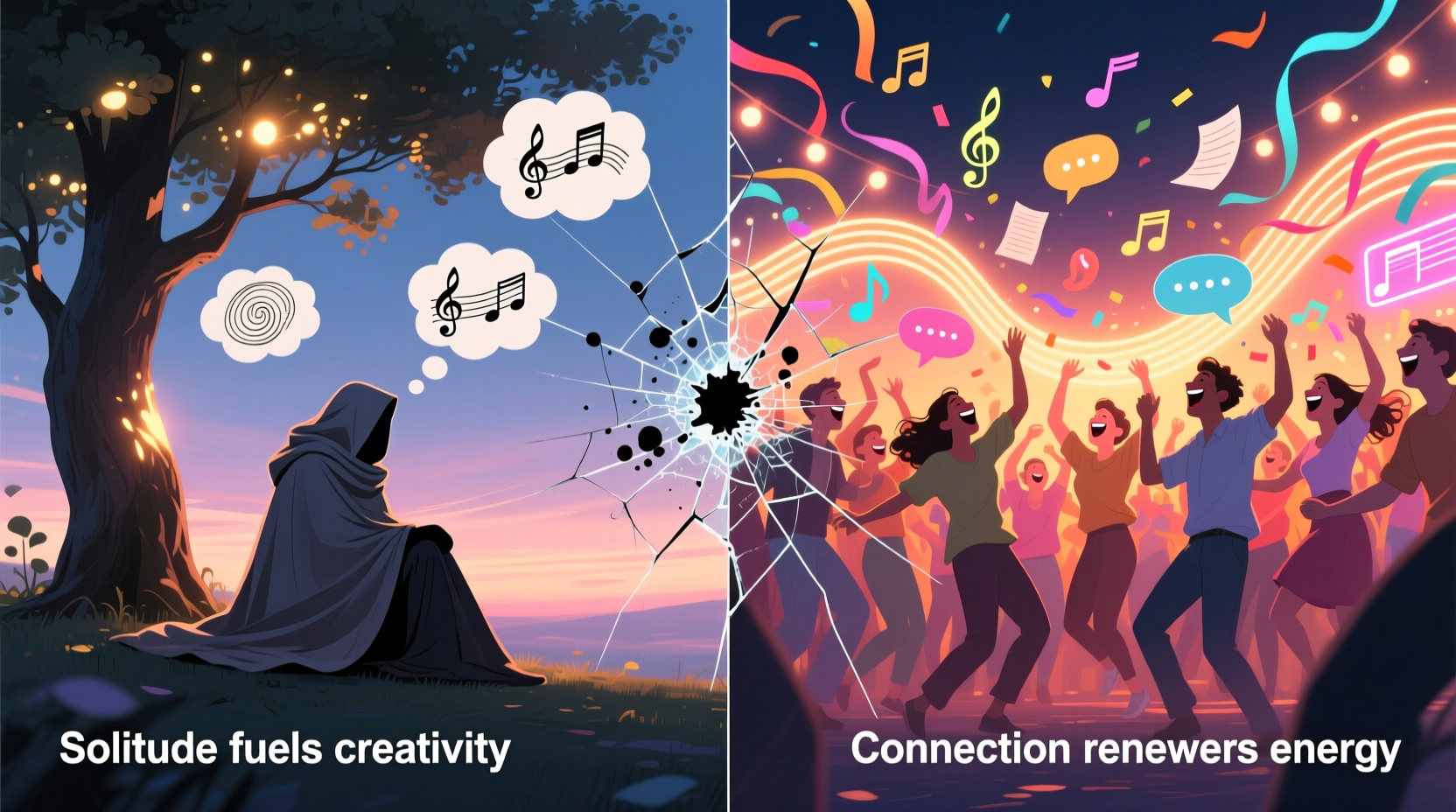
At the core of the introvert-extrovert divide lies dopamine sensitivity and neural pathway activity. Extroverts tend to have a more active dopamine reward system, meaning they experience pleasure and motivation from external stimuli—conversation, movement, novelty, and social engagement. When an extrovert attends a party or leads a team meeting, their brain releases dopamine in a way that feels energizing and reinforcing.
Introverts, on the other hand, are more sensitive to dopamine. Their brains respond strongly even to moderate levels of stimulation, which means too much social interaction can lead to overstimulation. Instead, introverts rely more on the acetylcholine pathway, which promotes calm, focused attention, and internal reflection. This neurological difference explains why sitting quietly with a book or walking alone through a forest feels restorative to an introvert—it aligns with their brain’s natural rhythm.
“Introverts aren’t antisocial—they’re differently social. Their energy flows inward, not outward.” — Dr. Marti Olsen Laney, author of *The Introvert Advantage*
This isn’t about shyness or social anxiety. It’s about where energy is sourced and how it’s depleted. An extrovert may feel drained after a day spent working alone at home, while an introvert might feel exhausted after a single networking event—even if both enjoyed the experience.
Recharge Methods Compared: What Works for Whom
Different temperaments call for different recovery strategies. Recognizing what truly recharges you—rather than what society expects—is key to sustained productivity and emotional health.
| Recharge Method | Best For | Why It Works |
|---|---|---|
| Social gatherings (dinners, events) | Extroverts | Provides external stimulation and emotional connection that boosts mood and energy |
| Solitude (reading, journaling, walking) | Introverts | Reduces sensory input, allowing nervous system to reset and mind to process deeply |
| Creative solo work (writing, painting) | Both (especially introverts) | Engages flow state, which is easier to access in low-distraction environments |
| Group exercise (classes, team sports) | Extroverts | Combines physical exertion with social bonding—double energy boost |
| Meditation or mindfulness practice | Both (highly effective for introverts) | Encourages internal focus and reduces mental clutter |
It’s important to note that most people fall somewhere on the spectrum rather than fitting neatly into one category. Ambiverts—those who exhibit both introverted and extroverted traits—may need a balanced mix of social and solitary time. The key is self-awareness: tracking how you feel before and after certain activities to determine what genuinely restores you.
Why Solitude Fuels Creativity and Deep Work
Solitude is often misunderstood as loneliness, but in reality, it’s a powerful cognitive tool. When uninterrupted by external demands, the brain enters a state known as the default mode network (DMN)—a neural system active during introspection, memory consolidation, and imaginative thinking. This is where creative insights emerge, problems are solved subconsciously, and new ideas take shape.
Studies from the University of British Columbia show that individuals in quiet, solitary environments generate significantly more original ideas than those in high-stimulation settings. Solitude allows for divergent thinking—the ability to explore multiple solutions to a problem—which is essential for innovation.
Many history’s most creative minds were known for their retreats into solitude. Author Virginia Woolf famously wrote about the necessity of “a room of one’s own” for women writers to thrive. Mathematician Grigori Perelman secluded himself for years while solving the Poincaré conjecture, one of the most complex problems in topology. These examples aren’t anomalies—they reflect a pattern: deep creativity requires space, silence, and freedom from interruption.
“Solitude is the soil in which genius is planted, creativity grows, and legends bloom.” — Lonely Entrepreneur, modern thought leader
In today’s hyper-connected world, constant notifications, meetings, and social obligations fragment attention. Solitude acts as a counterbalance—a chance to reclaim cognitive autonomy. Whether it’s 20 minutes of morning silence or a weekend digital detox, intentional solitude enables clarity, insight, and breakthrough thinking.
A Mini Case Study: The Artist Who Found Her Voice in Silence
Lena, a mixed-media artist based in Portland, found herself creatively blocked after two years of nonstop gallery shows, collaborations, and public appearances. Despite her success, she felt empty and uninspired. On the advice of a mentor, she took a month-long sabbatical in a remote cabin with no internet, limited phone access, and only basic supplies.
At first, the silence was uncomfortable. She missed the buzz of conversation and feedback. But by the second week, something shifted. She began sketching without pressure, experimenting with materials she’d abandoned years ago. One evening, while watching rain fall on the lake, she had a sudden vision for a new series combining water reflections with fragmented text. That series went on to win critical acclaim and reignited her passion for art.
Lena’s experience illustrates a universal truth: creativity doesn’t flourish under constant demand. It needs stillness to breathe.
Practical Steps to Harness Solitude for Creative Growth
Integrating solitude into daily life doesn’t require dramatic lifestyle changes. Small, consistent practices can yield profound results. Here’s a step-by-step guide to building a solitude routine that enhances creativity:
- Identify your peak focus hours. Are you sharpest in the morning or late at night? Schedule solitude during these windows.
- Start small—5 to 15 minutes daily. Use this time for journaling, free drawing, or simply sitting in silence.
- Eliminate distractions. Turn off notifications, close unnecessary tabs, and inform others not to disturb you.
- Create a dedicated space. Even a corner of a room with a comfortable chair and good lighting can become a sanctuary for deep thought.
- Engage in low-stimulus activities. Walking, sketching, reading poetry, or listening to ambient music can ease the mind into a reflective state.
- Reflect weekly. Ask: What ideas emerged during my quiet time? Did I solve a problem or gain new perspective?
- Scale up gradually. Once comfortable, extend solitude sessions to 30–60 minutes or plan quarterly retreats.
Common Misconceptions About Introversion and Solitude
- Misconception: Introverts dislike people.
Truth: Many introverts value deep, meaningful relationships but prefer fewer, higher-quality interactions. - Misconception: Wanting alone time means you’re depressed or withdrawn.
Truth: Solitude is a proactive choice for restoration, not a symptom of disengagement. - Misconception: Extroverts can’t be creative without collaboration.
Truth: While extroverts thrive socially, they also benefit from quiet time to process and innovate. - Misconception: Solitude is unproductive.
Truth: Some of the most impactful ideas—from scientific discoveries to literary masterpieces—were born in solitude.
Frequently Asked Questions
Can extroverts benefit from solitude too?
Absolutely. While extroverts may need less solitude than introverts, even short periods of quiet reflection improve focus, decision-making, and emotional regulation. The key is balance—using solitude strategically rather than avoiding it altogether.
How do I explain my need for solitude to friends or coworkers?
Frame it as a performance and well-being strategy. Say something like, “I do my best thinking when I have some quiet time. If I step away for a bit, it helps me come back sharper and more present.” Most people respect honesty when it’s tied to effectiveness.
Is there such a thing as too much solitude?
Yes. While healthy solitude is intentional and rejuvenating, isolation—especially when driven by avoidance or fear—can lead to loneliness and stagnation. The difference lies in intent and outcome. If solitude leaves you feeling refreshed and inspired, it’s serving you. If it leads to rumination or disconnection, it may be time to seek balance.
Checklist: Building a Sustainable Solitude Practice
- ☐ Assess your current energy patterns—what drains you, what restores you
- ☐ Block out 10–15 minutes daily for undisturbed quiet time
- ☐ Designate a physical space for reflection or creative work
- ☐ Reduce digital interruptions during solitude periods
- ☐ Experiment with different solitary activities (writing, walking, meditating)
- ☐ Track your creative output and mental clarity over time
- ☐ Communicate your needs to family, partners, or colleagues
- ☐ Schedule longer solitude sessions (half-day or full-day) quarterly
Conclusion: Embrace Your Natural Rhythm
Understanding the difference between introvert and extrovert recharge methods isn’t about labeling yourself—it’s about honoring how you function at your best. Whether you thrive in crowds or crave quiet corners, the goal is alignment: structuring your life so that energy is restored, not depleted. For introverts, solitude isn’t escape—it’s essential fuel. For extroverts, it’s a valuable tool for depth. And for everyone, intentional solitude is a gateway to creativity, insight, and enduring innovation.




 浙公网安备
33010002000092号
浙公网安备
33010002000092号 浙B2-20120091-4
Comments
No comments yet. Why don't you start the discussion?