
Many people use the terms “introverted” and “socially anxious” interchangeably, but they describe fundamentally different experiences. One is a personality trait; the other, a mental health condition. Understanding the distinction isn’t just academic—it can shape how you manage your relationships, career choices, and emotional well-being. Mislabeling your experience as mere shyness when you're actually dealing with social anxiety can delay access to effective support. Conversely, pathologizing natural introversion may lead to unnecessary self-doubt. This article breaks down the psychological, behavioral, and emotional differences between being an introvert, being shy, and living with social anxiety—so you can better understand yourself and take meaningful steps forward.
Understanding Introversion: A Personality Trait
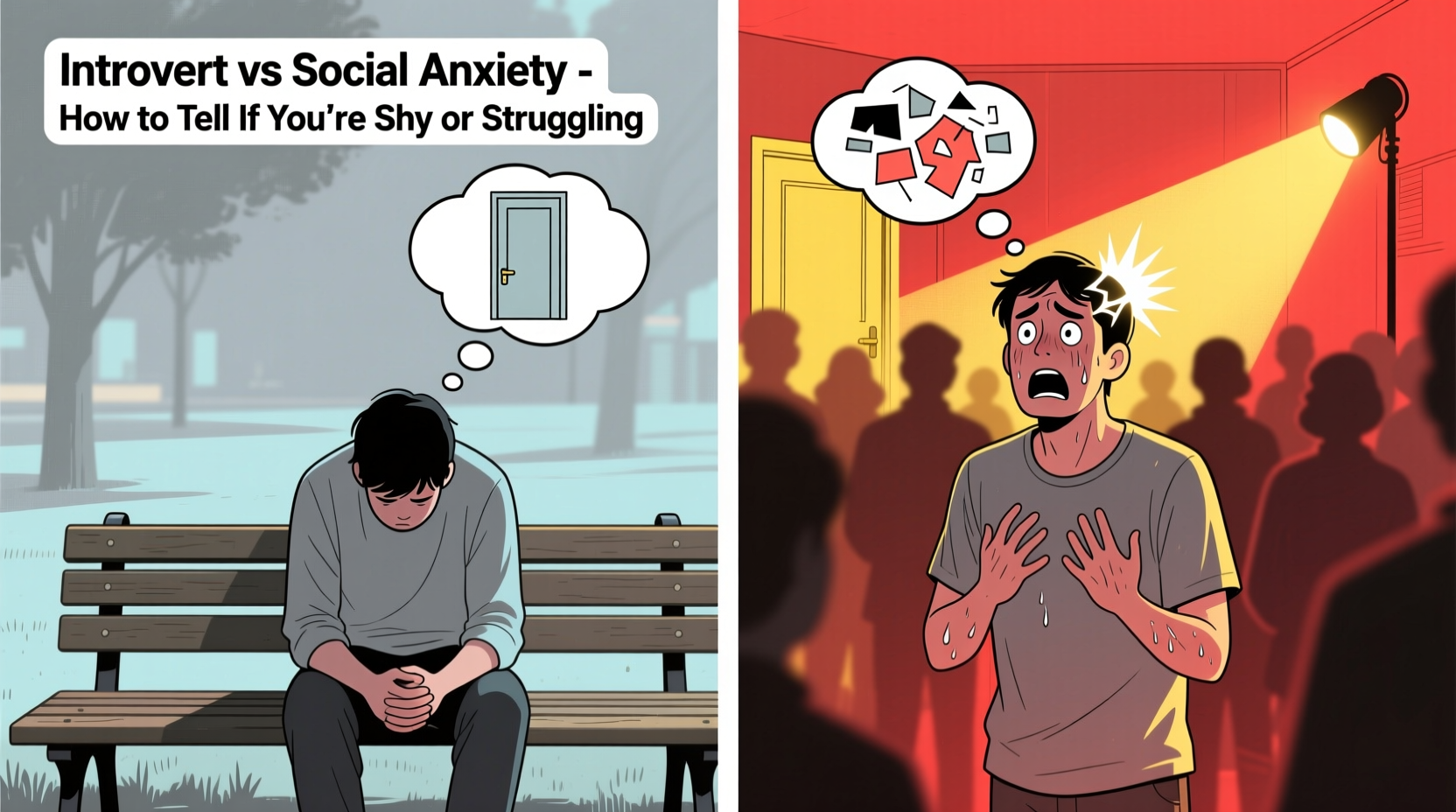
Introversion is one of the core dimensions in personality psychology, most commonly measured through models like the Big Five. It reflects how individuals gain energy and process external stimuli. Introverts tend to feel energized by solitude or small, meaningful interactions rather than large gatherings. They often prefer deep conversations over small talk and need time alone to recharge after social events.
It’s important to emphasize that introversion is not inherently negative. Many highly successful leaders, artists, and thinkers identify as introverts. Susan Cain, author of *Quiet: The Power of Introverts in a World That Can't Stop Talking*, argues that modern culture overvalues extroversion while undervaluing the strengths of quiet contemplation, focus, and deep listening.
“Introverts bring enormous strengths to the table. They’re thoughtful, they listen well, they focus, they make great leaders.” — Susan Cain
Introverts may avoid large parties or public speaking, but this avoidance typically stems from preference, not fear. When asked to participate, many introverts can do so competently and even enjoy themselves—afterward, they simply need downtime to recover.
Shyness: A Temporary Discomfort
Shyness is a common human emotion characterized by hesitation or discomfort in new social situations. Unlike introversion, which is stable across time and contexts, shyness is situational. A shy person might feel nervous introducing themselves at a networking event but relax once conversation flows. Shyness tends to diminish with familiarity and repeated exposure.
Children often display shyness when meeting strangers, and some adults carry mild shyness into professional or romantic settings. But crucially, shyness doesn’t usually interfere with long-term functioning. People who are shy don’t generally avoid opportunities—they may just approach them more cautiously.
The key difference between shyness and social anxiety lies in intensity and impact. Shyness causes momentary discomfort; social anxiety can cause persistent distress that disrupts daily life.
Social Anxiety Disorder: More Than Just Nervousness
Social anxiety disorder (SAD), also known as social phobia, is classified in the DSM-5 as a chronic mental health condition. It involves an intense, persistent fear of being watched, judged, embarrassed, or humiliated in social or performance situations. This fear goes beyond typical nervousness and often leads to avoidance behaviors that significantly limit personal and professional growth.
People with social anxiety may experience physical symptoms such as trembling, sweating, rapid heartbeat, nausea, or blushing—even when thinking about upcoming interactions. These reactions aren’t just unpleasant; they reinforce the belief that social situations are dangerous, creating a cycle of fear and avoidance.
According to the Anxiety & Depression Association of America (ADAA), social anxiety affects approximately 15 million U.S. adults, with symptoms often beginning in adolescence. Left untreated, it can lead to depression, substance abuse, and underachievement in education or work.
Key Differences: Introversion, Shyness, and Social Anxiety
To clarify where you might fall on this spectrum, consider the following comparison. While there can be overlap—someone can be both introverted and socially anxious—the underlying motivations and consequences differ significantly.
| Aspect | Introversion | Shyness | Social Anxiety Disorder |
|---|---|---|---|
| Nature | Personality trait | Emotional response | Clinical condition |
| Motivation for Avoidance | Preference for low stimulation | Fear of awkwardness | Fear of judgment/humiliation |
| Energy After Socializing | Drained, needs rest | Mixed, may feel relieved | Exhausted, often ruminates |
| Physical Symptoms | Rare | Mild (e.g., blushing) | Severe (shaking, nausea, panic) |
| Impact on Life Goals | Minimal; chooses roles accordingly | Occasional hesitation | Significant avoidance (jobs, dates, calls) |
| Response to Exposure | Consistent preference | Improves with repetition | Persistent fear despite experience |
This table highlights that while all three involve some level of social withdrawal, only social anxiety is marked by debilitating fear and functional impairment.
Real-Life Example: Two People, Same Situation
Consider two individuals attending a company holiday party.
- Alice is an introvert. She attends because she values her team. She chats with a few colleagues, enjoys a quiet corner with a book later, and leaves early. She feels tired the next day but satisfied she showed up. No rumination follows.
- Ben has social anxiety. He debates skipping the event for days. His heart races upon arrival. He avoids eye contact, fears saying something foolish, and leaves abruptly after 20 minutes. For days afterward, he replays moments in his mind, convinced others noticed his anxiety and judged him harshly.
Both may appear similar externally—limited interaction, early departure—but their internal experiences and long-term consequences differ drastically. Alice exercised personal preference; Ben was responding to overwhelming fear.
How to Assess Your Own Experience
If you're unsure whether your discomfort in social settings is part of your personality or something more serious, ask yourself the following questions honestly:
- Do I avoid social situations because I find them draining—or because I’m afraid of being judged?
- After social interactions, do I feel tired but content, or ashamed and hyper-critical of myself?
- Would I enjoy connecting with others more if I didn’t fear embarrassment?
- Have I turned down promotions, invitations, or relationships due to social fears?
- Do physical symptoms (sweating, shaking, nausea) occur regularly in social settings?
- Has this pattern persisted for six months or longer?
If most of your answers point toward fear, avoidance, and significant distress, you may be experiencing social anxiety rather than introversion or simple shyness.
Actionable Checklist: Steps to Clarify Your Experience
- ✅ Track your emotions before, during, and after social events for one week
- ✅ Note any physical symptoms (racing heart, blushing, dizziness)
- ✅ Identify whether avoidance is based on preference or fear
- ✅ Reflect on missed opportunities due to social discomfort
- ✅ Consult a licensed therapist for formal assessment if patterns persist
Treatment and Support: What Works
If you recognize signs of social anxiety, know that effective treatments exist. Unlike personality traits, which don’t require “fixing,” clinical anxiety responds well to evidence-based interventions.
Cognitive Behavioral Therapy (CBT) is considered the gold standard for social anxiety. It helps individuals identify distorted thoughts (“Everyone will laugh at me”) and replace them with balanced perspectives. Gradual exposure techniques allow patients to face feared situations in a structured, supportive way.
Medications such as SSRIs (e.g., sertraline, paroxetine) may be prescribed for moderate to severe cases, particularly when anxiety interferes with daily functioning. However, therapy alone is often sufficient, especially when started early.
Lifestyle changes also play a supportive role. Regular exercise, mindfulness meditation, and reducing caffeine intake can reduce baseline anxiety levels. Joining low-pressure social groups (like book clubs or hobby classes) provides safe environments to practice skills without high stakes.
“Social anxiety thrives in isolation. The most powerful antidote is compassionate confrontation—facing fears with support, not shame.” — Dr. Lisa Wong, Clinical Psychologist
When Being Quiet Is Misunderstood
Society often equates silence with disinterest or lack of confidence. Introverts and those with social anxiety alike may face pressure to “speak up” or “get out there.” But conflating quietness with weakness overlooks the value of reflective presence.
The danger arises when introverts start doubting themselves because they don’t perform extroversion well—and when people with social anxiety assume their fear is just a quirk to endure. Both deserve clarity: introversion is valid; anxiety is treatable.
Self-awareness is the first step. Once you understand your tendencies, you can design a life that honors your nature while addressing genuine barriers.
Frequently Asked Questions
Can someone be both introverted and have social anxiety?
Yes. Introversion and social anxiety are not mutually exclusive. An introvert might prefer solitude and still feel anxious in unavoidable social settings. The key is identifying which behaviors stem from preference and which come from fear. Treatment focuses on reducing the fear component, not changing personality.
Is shyness just a mild form of social anxiety?
Not necessarily. Shyness is a normal emotional reaction, while social anxiety is a diagnosable disorder involving persistent fear and avoidance. Many shy people adapt over time without clinical intervention. Social anxiety, however, typically persists without targeted treatment and causes significant distress.
Do children outgrow social anxiety?
Some children with early shyness mature into confident adults. But untreated social anxiety disorder rarely resolves on its own. Early identification and support—such as school counseling or family therapy—can prevent long-term complications like academic underperformance or social isolation.
Conclusion: Know Yourself, Then Move Forward
Distinguishing between introversion, shyness, and social anxiety isn’t about labeling yourself—it’s about empowerment. Understanding your inner world allows you to respond with compassion and intention. If you’re an introvert, honor your need for quiet and depth. If you’re shy, know that comfort grows with practice. And if you’re struggling with social anxiety, recognize it as a treatable condition, not a character flaw.
Take one step today. Journal your next social interaction. Notice what you felt before, during, and after. Or reach out to a mental health professional for a confidential conversation. Clarity begins with curiosity, not crisis.




 浙公网安备
33010002000092号
浙公网安备
33010002000092号 浙B2-20120091-4
Comments
No comments yet. Why don't you start the discussion?