
Many people use the terms “introvert” and “social anxiety” interchangeably, but they describe fundamentally different experiences. One is a personality trait rooted in how you gain energy; the other is a mental health condition involving fear and avoidance of social situations. Confusing the two can lead to misdiagnosis, unnecessary self-doubt, or missed opportunities for support. Understanding where you fall on this spectrum is essential for building confidence, improving relationships, and living authentically.
This article breaks down the core distinctions between introversion and social anxiety, explores their overlapping behaviors, and provides actionable guidance for navigating social interactions with clarity and self-awareness.
What Is Introversion? A Natural Preference
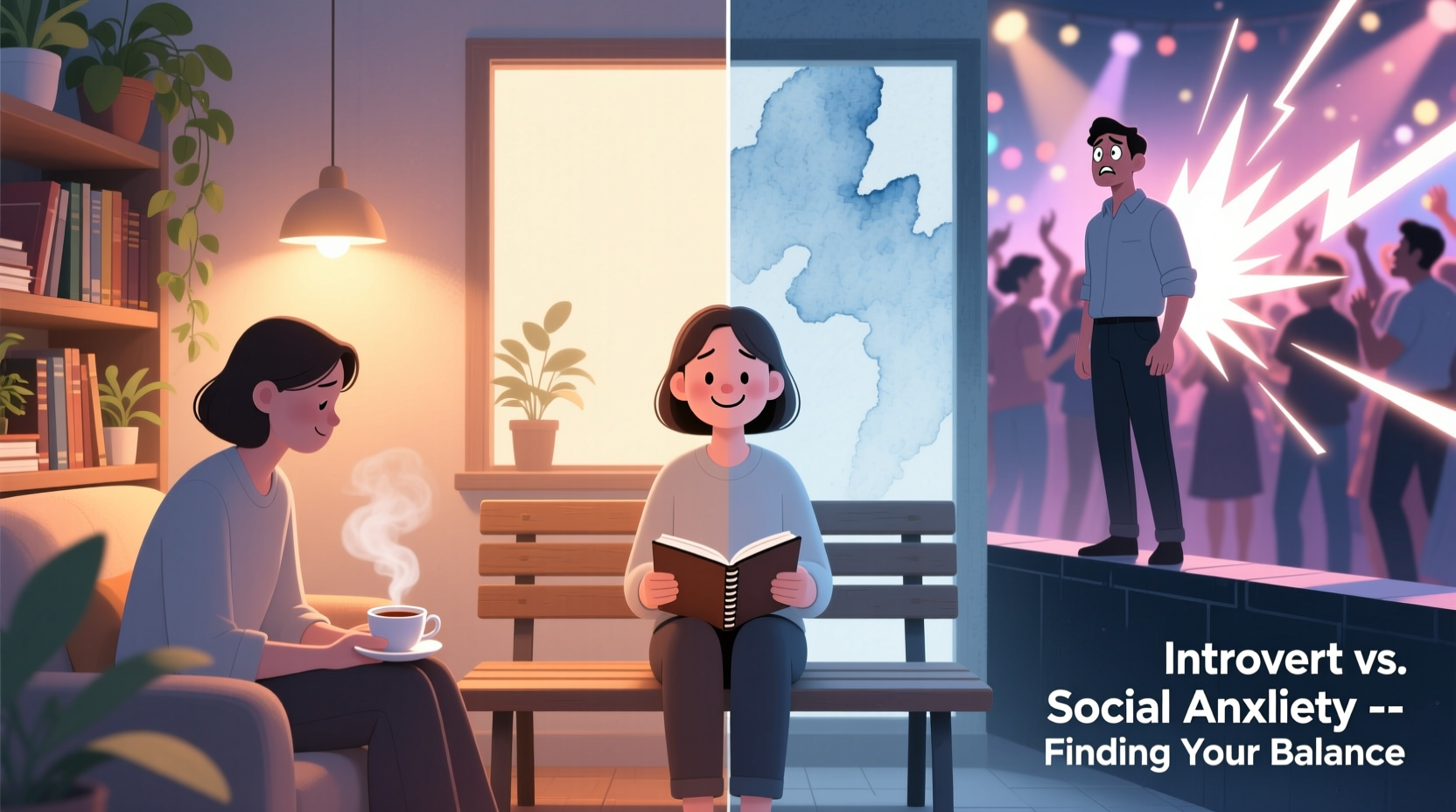
Introversion is a personality trait characterized by a preference for quieter, more minimally stimulating environments. Introverts often feel most energized when spending time alone or in small, meaningful gatherings. They tend to reflect deeply, listen attentively, and process thoughts internally before speaking.
Carl Jung first introduced the concept of introversion as part of his psychological typology, describing it as an inward orientation of energy. Unlike extroverts, who recharge through external interaction, introverts replenish their mental and emotional reserves through solitude.
Being an introvert isn’t about shyness or discomfort—it’s about energy management. An introvert might enjoy a dinner with close friends but need several hours of quiet time afterward to recover. This isn’t avoidance; it’s self-regulation.
Common Traits of Introverts
- Prefer deep conversations over small talk
- Think before speaking
- Enjoy working independently
- Feel drained after prolonged social interaction
- Need time alone to recharge
- Are observant and reflective
What Is Social Anxiety? A Clinical Condition
Social anxiety disorder (also known as social phobia) is a recognized mental health condition marked by intense fear of being judged, embarrassed, or scrutinized in social settings. The American Psychiatric Association defines it as persistent fear lasting six months or more, leading to significant distress or impairment in daily functioning.
Unlike introversion, social anxiety isn’t just about preference—it’s about fear. People with social anxiety may avoid eye contact, skip events despite wanting to attend, or experience physical symptoms like trembling, sweating, or nausea when anticipating social interaction.
The root of social anxiety often lies in negative self-perception and catastrophic thinking—believing that others are constantly evaluating them negatively, even without evidence.
“Social anxiety is less about enjoying solitude and more about fearing rejection. It's not a personality type—it's a treatable condition.” — Dr. Lena Patel, Clinical Psychologist
Key Symptoms of Social Anxiety
- Intense fear of judgment or embarrassment
- Avoidance of social situations
- Rapid heartbeat, shaking, or blushing during interactions
- Overanalyzing performance after social events
- Difficulty speaking or initiating conversations
- Physical symptoms like nausea or dizziness
Spotting the Difference: Introversion vs. Social Anxiety
Because both introverts and people with social anxiety may avoid parties or decline invitations, the distinction can seem blurred. But the motivation behind the behavior reveals the truth.
An introvert might say, “I had a great time at the gathering, but I’m ready to go home now—I’ve reached my social limit.” In contrast, someone with social anxiety might think, “Everyone must think I’m awkward. I shouldn’t have come. I’ll never fit in.”
The key difference lies in emotional response: introversion brings calm after solitude; social anxiety brings relief from fear.
Comparison Table: Introversion vs. Social Anxiety
| Aspect | Introversion | Social Anxiety |
|---|---|---|
| Nature | Personality trait | Mental health condition |
| Motivation for Avoidance | Energy conservation | Fear of judgment or embarrassment |
| Emotional Aftermath | Peaceful, restored | Relief, rumination, shame |
| Desire to Connect | Often present, on own terms | May want connection but fears it |
| Response to Solitude | Rejuvenating | Safe but isolating |
| Treatment Needed? | No—natural preference | Yes, if impairing function |
Real-Life Example: Maya’s Story
Maya, a 28-year-old graphic designer, always declined team lunches and worked remotely when possible. Her colleagues assumed she was unfriendly or insecure. Over time, she began questioning herself: “Am I broken? Should I force myself to be more outgoing?”
After speaking with a therapist, Maya realized she wasn’t anxious—she was simply introverted. She enjoyed her coworkers’ company in one-on-one settings and contributed thoughtfully in meetings. Her avoidance wasn’t fear-based; it was strategic. She felt overwhelmed in loud group settings and needed quiet to focus.
With this clarity, Maya started setting boundaries. She joined smaller work events, communicated her needs respectfully, and scheduled solo time after collaborative days. Her productivity and mood improved. She wasn’t fixing herself—she was aligning her environment with her nature.
In contrast, her friend James, who also avoided social events, experienced panic attacks before presentations and believed his peers disliked him. Therapy revealed he had social anxiety. His avoidance stemmed from fear, not preference. With cognitive behavioral therapy (CBT), James learned to challenge negative thoughts and gradually face feared situations.
Same behavior—different roots. Same outcome goal—greater well-being—but different paths.
Strategies to Find Your Balance
Whether you’re introverted, managing social anxiety, or somewhere in between, finding balance means honoring your authentic self while building resilience. Here’s how to move forward intentionally.
Step-by-Step Guide: Building Confidence in Social Settings
- Self-Assessment: Journal for a week. Note when you withdraw from social interaction. Ask: Am I tired, or am I afraid?
- Identify Triggers: For anxiety, list specific fears (e.g., public speaking, meeting new people). For introversion, identify energy drains (e.g., crowded spaces, back-to-back meetings).
- Set Micro-Goals: If anxious, aim to make eye contact and smile at one person daily. If introverted, commit to attending a short event with an exit plan.
- Practice Self-Talk: Replace “They’ll think I’m boring” with “I don’t need to impress anyone. I belong here.”
- Recharge Strategically: Schedule recovery time. Read, walk, or meditate after socializing.
- Seek Support When Needed: Consider therapy if fear limits your life. For introversion, seek communities that value depth over volume.
Action Checklist: Know Yourself, Own Your Space
- ✅ Reflect on your motivations for avoiding social events
- ✅ Distinguish fatigue from fear
- ✅ Communicate your needs clearly (e.g., “I’d love to meet, but let’s keep it low-key”)
- ✅ Limit exposure to draining environments
- ✅ Practice grounding techniques (e.g., box breathing) if anxiety arises
- ✅ Celebrate small wins—speaking up, attending an event, saying no without guilt
When to Seek Help
Introversion doesn’t require treatment. It’s a normal, healthy variation of human temperament. However, if social fear causes significant distress—such as missing work, avoiding relationships, or experiencing panic attacks—professional support is crucial.
Cognitive Behavioral Therapy (CBT) is the gold standard for treating social anxiety. It helps individuals identify distorted thinking patterns and gradually confront feared situations through exposure exercises. Medications like SSRIs may also be prescribed in moderate to severe cases.
Even without a diagnosis, talking to a counselor can clarify whether you're dealing with anxiety or simply needing space. A professional can help you build tools tailored to your needs.
“Understanding yourself isn’t self-indulgence—it’s the foundation of mental wellness.” — Dr. Alan Reyes, Cognitive Therapist
Frequently Asked Questions
Can an introvert also have social anxiety?
Yes. While introversion and social anxiety are distinct, they can coexist. An introvert may naturally prefer solitude but also experience irrational fear of judgment in social settings. The combination can make social navigation especially complex, requiring both self-acceptance and therapeutic tools.
Is it bad to avoid social events if I’m an introvert?
No—avoidance isn’t inherently unhealthy. What matters is the reason. If you’re skipping events to protect your energy and feel at peace afterward, it’s likely self-care. If you avoid them due to fear and feel ashamed or isolated, it may signal anxiety needing attention.
How can I explain my needs without seeming rude?
Use clear, kind language. Try: “I really value our connection, but large groups drain me. Would you be open to meeting for coffee instead?” Most people respect honesty when it’s paired with warmth and intention.
Conclusion: Embrace Your Truth, Build Your Confidence
Understanding the difference between introversion and social anxiety isn’t just academic—it’s liberating. It allows you to stop pathologizing your natural tendencies while recognizing when fear is holding you back. You don’t have to become an extrovert to succeed, nor should you dismiss real anxiety as mere shyness.
Your social well-being depends on self-knowledge, compassion, and intentional action. Whether you thrive in stillness or struggle with fear, you deserve strategies that honor your reality. Start by listening to yourself—without judgment. Then, take one small step toward balance.




 浙公网安备
33010002000092号
浙公网安备
33010002000092号 浙B2-20120091-4
Comments
No comments yet. Why don't you start the discussion?