
In an era where smartphones boast foldable displays, 5G connectivity, and AI-powered cameras, it’s almost surreal to witness online forums and social media threads still dissecting the differences between the iPad 3 and iPhone 6 Plus—devices released over a decade ago. These gadgets were groundbreaking in their time, but today they’re technological fossils. Yet, the debate persists. Why? The answer lies not in performance or utility, but in nostalgia, misremembered history, and the curious way digital communities romanticize obsolete technology.
The iPad (3rd generation), released in March 2012, was Apple’s first tablet with a Retina display—a major leap forward in screen clarity. The iPhone 6 Plus followed in September 2014, introducing larger screens to the iPhone lineup and setting the stage for the modern smartphone form factor. By any objective measure, these devices have long been surpassed. So why do discussions comparing them resurface in 2024 and beyond?
Nostalgia as a Cultural Force
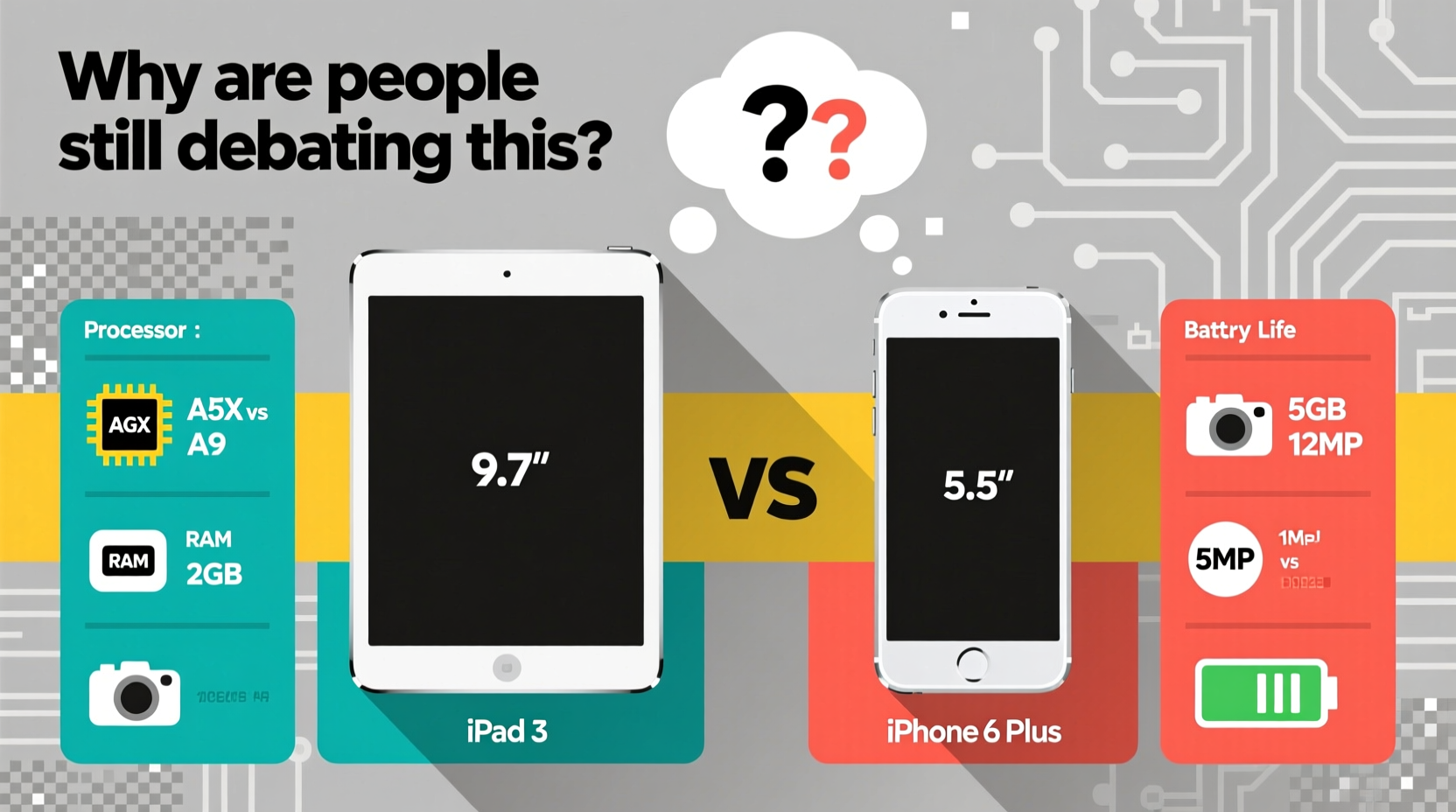
One of the strongest drivers behind the continued debate is nostalgia. For many users, the iPad 3 and iPhone 6 Plus represent pivotal moments in personal tech adoption. The iPad 3 was among the first tablets capable of delivering a magazine-quality reading experience, while the iPhone 6 Plus marked Apple’s official embrace of phablets—a shift that redefined mobile interaction.
People don’t just remember these devices; they associate them with life stages: college years, early careers, parenting toddlers, or traveling solo for the first time. When someone says, “I still think the iPad 3 had better battery life,” what they often mean is, “That was the device I used to read novels on weekend trips before life got busy.”
“Nostalgia distorts memory. Users recall emotional satisfaction more vividly than technical specs.” — Dr. Lena Torres, Digital Culture Researcher at Stanford University
Misconceptions About Device Capabilities
Another reason the debate lingers is widespread confusion about what each device was designed to do. The iPad 3 and iPhone 6 Plus were never direct competitors. One is a tablet optimized for media consumption and light productivity; the other is a phone built for communication, mobility, and apps.
Yet, some users continue to compare them as if choosing between two phones or two tablets. This misunderstanding often stems from oversimplified online discussions where headlines like “iPad 3 vs iPhone 6 Plus: Which Was Better?” spark engagement without context.
The truth is, they served different purposes:
- iPad 3: Best for watching videos, reading e-books, browsing the web, and using creative apps with a larger canvas.
- iPhone 6 Plus: Ideal for calling, texting, photography, navigation, and on-the-go app usage.
Comparing them directly is like debating whether a bicycle or a skateboard is “better”—it depends entirely on the terrain and the rider’s goal.
Performance and Hardware: A Reality Check
To put the capabilities of these devices in perspective, here’s a side-by-side comparison based on original specs and real-world use in 2024:
| Feature | iPad 3 (2012) | iPhone 6 Plus (2014) |
|---|---|---|
| Processor | A5X (dual-core) | A8 (dual-core) |
| RAM | 1GB | 1GB |
| Display Size | 9.7 inches | 5.5 inches |
| Resolution | 2048 x 1536 | 1920 x 1080 |
| Battery Life (Original) | Up to 10 hours | Up to 24 hours audio, ~12 video |
| Latest Supported OS | iOS 9.3.5 | iOS 12.5.7 |
| Current Usability (2024) | Limited: no app updates, poor web compatibility | Slightly better, but most apps no longer support iOS 12 |
Even at launch, these devices weren’t meant to compete. By today’s standards, neither can reliably run modern applications, access secure websites, or support essential services like banking apps or messaging platforms.
A Mini Case Study: The Reddit Thread That Wouldn’t Die
In early 2023, a thread titled “Still think the iPad 3 was ahead of its time” appeared on a popular Apple subreddit. Within days, it sparked heated replies, with users passionately arguing that the iPad 3 “felt more premium” or that the iPhone 6 Plus “had the best camera Apple ever made at that point.”
One user shared: “I used my iPad 3 all through grad school. It lasted four years without slowing down. My new iPad feels faster, but somehow less durable.” Another countered: “The iPhone 6 Plus was my first big-screen phone. I could finally text without squinting.”
What began as a retrospective turned into a full-blown comparison—despite zero practical relevance. No one was shopping for either device. No developer was optimizing for them. Yet, the conversation thrived, fueled by sentiment rather than substance.
This case illustrates how online communities transform personal memories into collective myths. Over time, flaws are forgotten—like the iPad 3’s notorious heat issues or the iPhone 6 Plus’s “bendgate” scandal—and only the highlights remain.
Why This Debate Matters Beyond Nostalgia
While seemingly trivial, the persistence of such debates reveals broader trends in consumer behavior and digital culture:
- Technology lifespan perception: People are beginning to question the planned obsolescence of modern devices. When someone praises a 2012 iPad, they might really be saying, “Today’s gadgets don’t last as long.”
- Resistance to upgrade fatigue: With new models released annually, some users feel overwhelmed. Looking back at older devices offers a sense of stability and simplicity.
- Digital preservation concerns: As apps and services drop support for older systems, users mourn the loss of accessibility. Devices like the iPad 3 and iPhone 6 Plus symbolize a time when software didn’t expire so quickly.
FAQ: Common Questions About the iPad 3 vs iPhone 6 Plus Debate
Can either the iPad 3 or iPhone 6 Plus still be used in 2024?
Possibly, but with severe limitations. Neither supports modern iOS versions, leaving them vulnerable to security risks and incompatible with most current apps. Basic functions like offline reading or music playback may work, but web browsing and communication apps will likely fail.
Was the iPad 3 more powerful than the iPhone 6 Plus?
No. While the iPad 3 had a high-resolution screen, the iPhone 6 Plus featured a newer A8 chip, better GPU efficiency, improved camera, and LTE support. In raw performance and longevity, the iPhone 6 Plus was superior.
Why do some people say the iPad 3 had better build quality?
This is largely perceptual. The iPad 3’s aluminum unibody felt substantial, and its matte coating aged well. However, the iPhone 6 Plus introduced a sleeker design and thinner profile. Build quality evolved—not regressed—between the two.
How to Move Forward Without Romanticizing the Past
Appreciating older technology is healthy. It reminds us how far we’ve come. But clinging to outdated comparisons can distort expectations and hinder adoption of better tools. Here’s a checklist to help separate nostalgia from practicality:
📋 **Checklist: Evaluating Old Tech Objectively**- Ask: Is this device still functional for my current needs?
- Check: Does it receive security updates or app support?
- Test: Can it handle basic tasks like email, maps, and video calls?
- Compare: How does it stack up against entry-level modern alternatives?
- Decide: Am I holding onto it for utility, or for emotional reasons?
Conclusion: Letting Go Without Forgetting
The debate between the iPad 3 and iPhone 6 Plus isn’t really about which device was better. It’s about what they represented: innovation, transition, and personal milestones. But in 2024, continuing to treat them as viable options does a disservice to both users and the progress of technology.
Instead of debating obsolete hardware, let’s celebrate these devices as pioneers—the ones that helped shape the mobile world we now take for granted. Preserve them as collectibles, share stories about how they changed your life, but don’t let sentimentality prevent you from embracing what’s next.




 浙公网安备
33010002000092号
浙公网安备
33010002000092号 浙B2-20120091-4
Comments
No comments yet. Why don't you start the discussion?