
For many smartphone users, the camera is the deciding factor when considering an upgrade. If you're still using the iPhone 11 Pro Max—released in 2019—and eyeing the Galaxy S22 Ultra from 2022, the leap in camera technology may seem compelling. But is it substantial enough to justify the cost and change in ecosystem? The answer depends on how you use your phone, what kind of photos you take, and whether Android’s flexibility outweighs iOS familiarity.
The iPhone 11 Pro Max was a flagship leader in its time, offering triple-lens photography with Night mode, Deep Fusion, and strong video capabilities. The Galaxy S22 Ultra, however, represents Samsung’s most advanced mobile imaging system to date, packing a 108MP main sensor, dual telephoto lenses, advanced AI processing, and superior zoom performance. Let’s break down the real differences—not just in specs, but in practical photography.
Camera Hardware: A Generational Leap
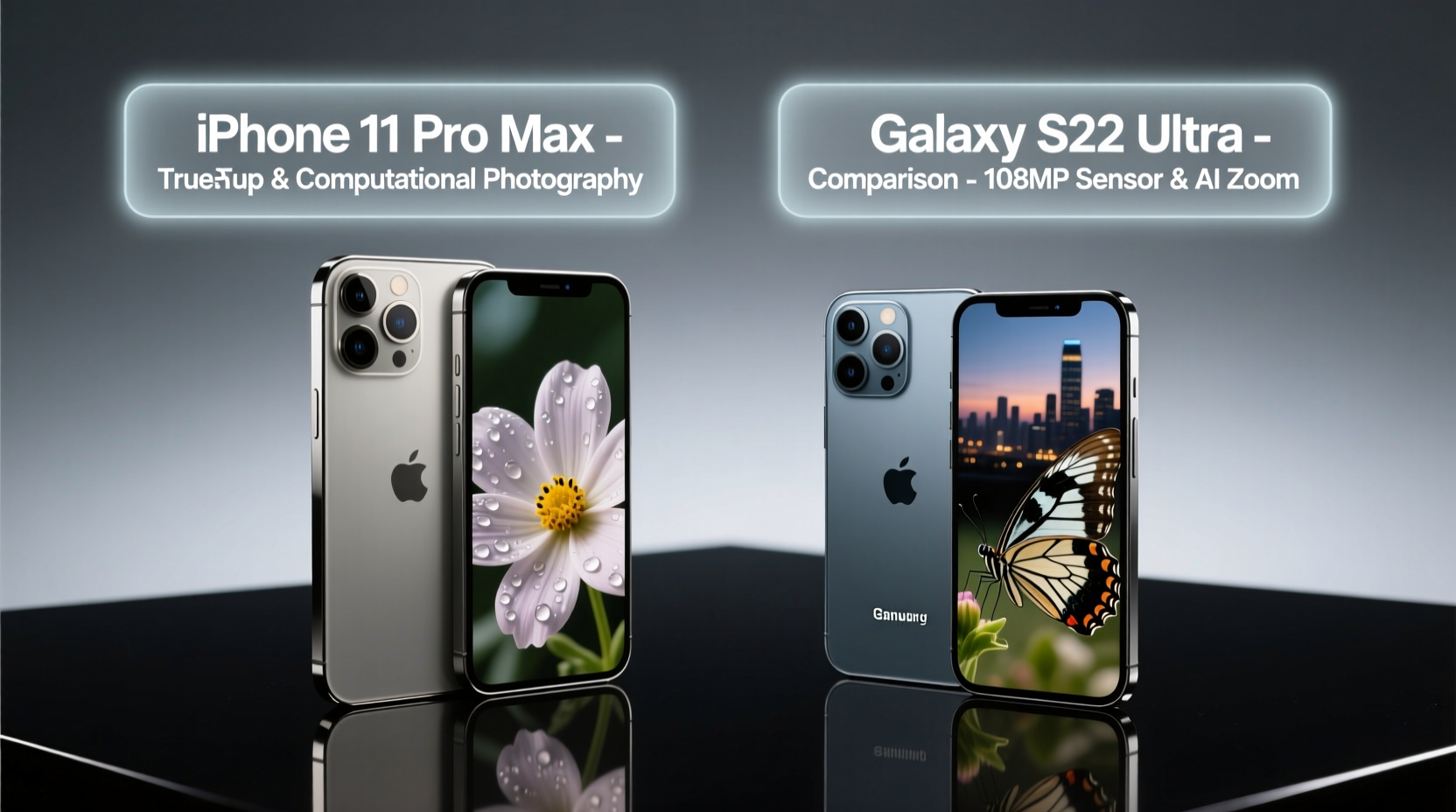
The hardware gap between these two devices spans three years of rapid innovation in computational photography. While both phones feature multiple rear cameras, their capabilities diverge significantly.
| Feature | iPhone 11 Pro Max | Galaxy S22 Ultra |
|---|---|---|
| Main Sensor | 12MP, f/1.8, 26mm (wide) | 108MP, f/1.8, 24mm (wide) |
| Ultra-Wide | 12MP, f/2.4, 13mm | 12MP, f/2.2, 13mm |
| Telephoto | 12MP, f/2.0, 52mm (2x optical) | 10MP, f/2.4, 70mm (3x) + 10MP, f/4.9, 240mm (10x periscope) |
| Zoom Capabilities | 2x optical, 10x digital | 3x & 10x optical, up to 100x Space Zoom (digital) |
| Night Mode | Yes (all lenses) | Enhanced Nightography with AI denoising |
| Video Recording | 4K@60fps, Dolby Vision HDR | 8K@24fps, Super Steady stabilization |
The S22 Ultra's quad-camera setup includes a periscope lens—a first for Samsung’s mainstream lineup—which enables true 10x optical zoom. This alone makes it a standout for travel, wildlife, or concert photography. Meanwhile, the iPhone 11 Pro Max is limited to 2x optical zoom, forcing digital cropping beyond that point, which degrades image quality.
Image Quality and Real-World Performance
On paper, megapixels don’t tell the whole story. Apple has long prioritized image processing over raw sensor size, relying on Deep Fusion and Smart HDR to enhance detail and dynamic range. The iPhone 11 Pro Max produces natural color tones, excellent skin rendering, and consistent exposure across lighting conditions.
However, the Galaxy S22 Ultra leverages its larger sensor and AI-powered processing to capture more light, especially in low-light environments. Samsung’s “Nightography” enhances brightness without excessive noise, often producing brighter night shots than the iPhone—even at higher zoom levels.
“Modern Android flagships like the S22 Ultra have closed the consistency gap with iPhones while pushing ahead in zoom and low-light versatility.” — David Kim, Mobile Imaging Analyst at DXOMARK
In daylight, both phones deliver sharp, well-balanced images. The iPhone tends to favor realism, while the S22 Ultra applies a slightly more contrasted, saturated look—closer to Instagram-ready out of the box. Some photographers prefer this punchier style; others find it less authentic.
Where the S22 Ultra pulls ahead is in flexibility. With dedicated 3x and 10x lenses, you can switch between focal lengths seamlessly. The iPhone forces digital zoom after 2x, resulting in softer details. For creative framing or capturing moments from a distance, this difference is tangible.
Video Capabilities: Beyond Still Photos
If you shoot video, the iPhone 11 Pro Max still holds one major advantage: Dolby Vision HDR recording at 4K/60fps. No Android phone natively supports Dolby Vision, meaning the S22 Ultra records in HDR10+—a high-quality format, but less widely supported in editing software and streaming platforms.
That said, the S22 Ultra offers 8K video at 24fps, giving filmmakers four times the resolution of 4K for cropping and reframing in post-production. Its Super Steady mode also improves stabilization during action shots, making it better suited for vlogging or handheld movement.
- iPhone 11 Pro Max: Best for seamless editing in Final Cut Pro, natural tone, reliable autofocus.
- S22 Ultra: Superior stabilization, higher resolution options, better low-light video clarity.
If your primary goal is social media content or professional-grade video work within the Apple ecosystem, the iPhone remains a strong contender. But if you want maximum resolution and shake reduction, the S22 Ultra offers tools the older iPhone simply lacks.
Mini Case Study: Travel Photography Upgrade
Consider Sarah, a frequent traveler who used her iPhone 11 Pro Max for two years. She loved its reliability but struggled to capture clear shots of mountain peaks or cultural performances from the back of a crowd. After switching to the S22 Ultra, she found that the 10x zoom allowed her to photograph temple carvings from a legal distance and capture stage performers without intrusive cropping.
She also noticed improved low-light performance during evening markets in Southeast Asia. Her night photos required less editing, and the AI-enhanced clarity helped preserve fine textures in fabrics and food. While she missed iMessage and some app integrations, the camera improvement alone made the transition worthwhile for her use case.
Is the Upgrade Worth It Just for the Camera?
The short answer: yes, if you value zoom, low-light performance, and high-resolution video. The longer answer depends on your priorities.
For casual shooters who mostly take portraits, landscapes, and family photos in good lighting, the iPhone 11 Pro Max still performs admirably. Its colors are accurate, its interface intuitive, and its videos are industry-standard. Upgrading solely for marginal improvements in daylight photos may not be cost-effective.
But for enthusiasts—those who shoot concerts, wildlife, architecture, or content in dim conditions—the S22 Ultra’s camera system offers meaningful advantages. The periscope zoom alone transforms what’s possible with a smartphone. Combined with enhanced AI processing and larger sensor size, it captures more data, more consistently, across diverse scenarios.
Checklist: Should You Upgrade?
- Do you regularly shoot subjects beyond 2x zoom? → S22 Ultra wins
- Do you take many photos in low light (restaurants, nightscapes)? → S22 Ultra improves clarity
- Do you edit video in Final Cut or rely on Dolby Vision? → Stick with iPhone
- Are you invested in iMessage, AirDrop, and Apple ecosystem? → Weigh convenience vs. camera gains
- Do you want future-proof hardware (5G mmWave, longer software support)? → S22 Ultra offers newer platform
Frequently Asked Questions
Can the Galaxy S22 Ultra replace a DSLR for travel?
While no smartphone fully replaces a DSLR, the S22 Ultra comes closer than most. Its 108MP sensor and 10x optical zoom allow for highly detailed shots, and AI enhancements help compensate for lack of manual controls. For non-professionals, it’s a capable standalone option.
Does the iPhone 11 Pro Max still take good photos in 2024?
Absolutely. In daylight and moderate lighting, its photos remain sharp and color-accurate. It lacks modern AI enhancements and zoom capability, but for everyday use, it’s far from obsolete.
Will switching from iPhone to Android affect photo quality?
The camera hardware is superior on the S22 Ultra, but the software experience differs. Google Photos and Samsung Gallery offer robust editing, but iCloud integration and automatic syncing with Macs will be lost. Consider your workflow before switching.
Final Verdict: A Calculated Decision
Upgrading from the iPhone 11 Pro Max to the Galaxy S22 Ultra purely for the camera is a smart move—if your photography demands exceed casual snapshots. The S22 Ultra delivers tangible improvements in zoom, low-light performance, and video resolution. It opens creative doors that the older iPhone simply can’t match.
However, if you prioritize ecosystem cohesion, natural color science, and seamless video editing, and rarely push beyond standard shooting conditions, the upgrade may feel underwhelming. In that case, consider waiting for newer models or investing in accessories like external lenses or tripods to extend your current device’s life.
Technology evolves fast, but value is personal. Assess not just the specs, but how they align with your habits. The best camera is the one that empowers you to capture what matters—clearly, confidently, and consistently.




 浙公网安备
33010002000092号
浙公网安备
33010002000092号 浙B2-20120091-4
Comments
No comments yet. Why don't you start the discussion?