
When Apple launched the iPhone 11 Pro Max in 2019, one of its biggest selling points was battery life—something iPhones had long been criticized for. Samsung’s Galaxy Note 10+ had also just hit the market, boasting a 4,300mAh battery and fast charging capabilities. On paper, the numbers might suggest the Note 10+ has an edge, but real-world performance tells a different story. So, is the iPhone 11 Pro Max truly superior in battery endurance? The answer isn’t just about capacity—it’s about efficiency, software optimization, and usage patterns.
Battery Specs at a Glance
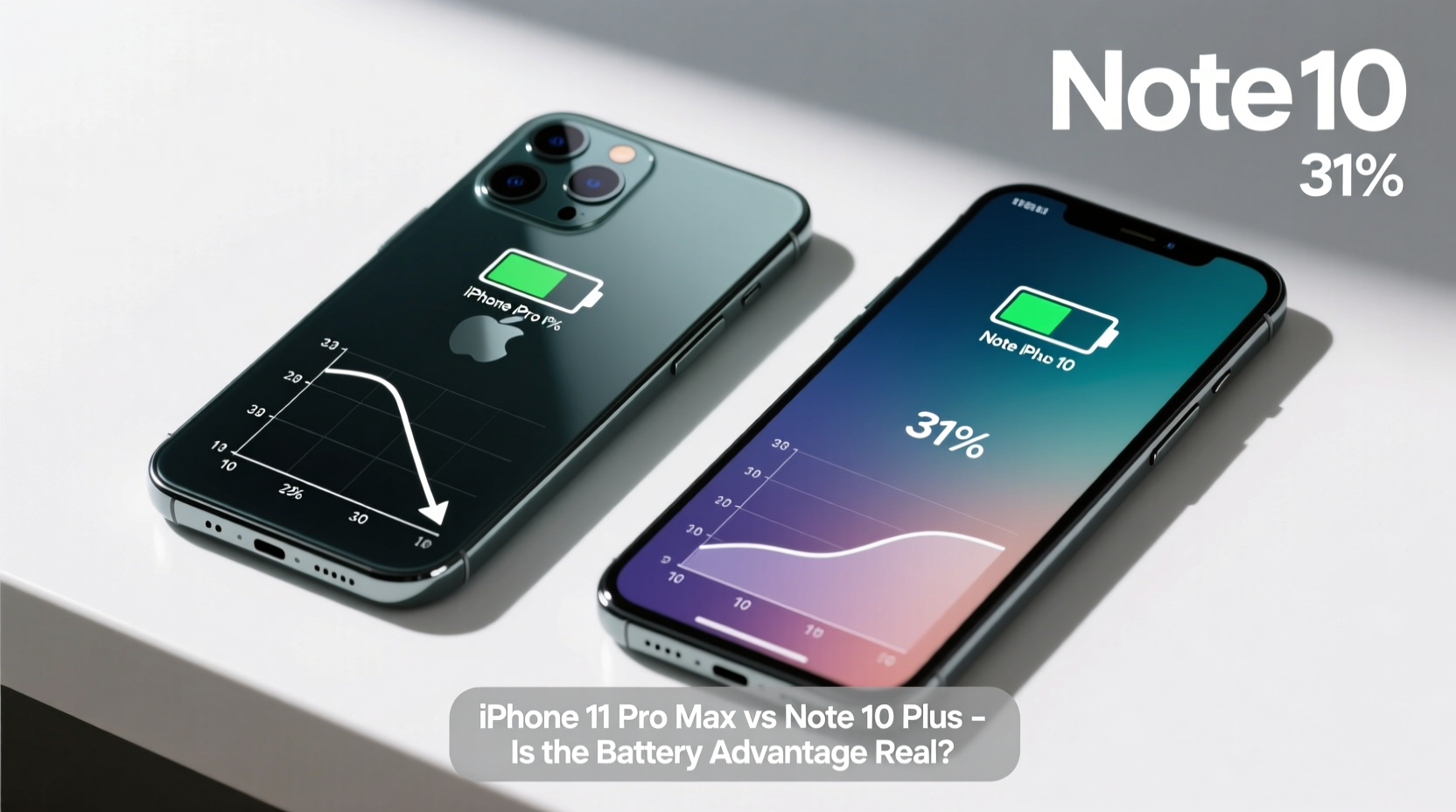
The first step in comparing these two flagship devices is to look at their technical specifications. While raw numbers don’t tell the whole story, they set the baseline.
| Device | Battery Capacity (mAh) | Charging Speed (W) | Wireless Charging | Reverse Charging |
|---|---|---|---|---|
| iPhone 11 Pro Max | 3,969 | 18 (wired), 7.5 (Qi) | Yes | No |
| Samsung Galaxy Note 10+ | 4,300 | 25 (wired), 15 (Qi) | Yes | Yes (via Wireless PowerShare) |
On paper, the Note 10+ has a 331mAh larger battery and supports faster charging. However, users consistently reported longer screen-on time with the iPhone 11 Pro Max despite the smaller capacity. Why?
Efficiency Over Capacity: The Role of Hardware and Software
Battery longevity isn’t solely determined by mAh. The interplay between processor efficiency, display technology, and operating system optimization plays a critical role.
The iPhone 11 Pro Max uses Apple’s A13 Bionic chip, built on a 7nm process and designed specifically for power efficiency. iOS is tightly integrated with the hardware, allowing for aggressive background app management and adaptive refresh rate behavior (though not variable like some Androids). In contrast, the Note 10+ runs on either the Exynos 9825 or Snapdragon 855, both powerful but less efficient than the A13 under typical mixed workloads.
Additionally, while the Note 10+ features a brighter Dynamic AMOLED display with a higher peak brightness, it defaults to a 60Hz refresh rate. The iPhone 11 Pro Max also uses 60Hz, but Apple’s True Tone and auto-brightness algorithms are more refined, reducing unnecessary screen energy consumption.
“Battery life isn't just about how big the tank is—it's about how efficiently the engine burns fuel. Apple excels at system-level optimization.” — Dr. Lena Torres, Mobile Systems Engineer at TechInsight Labs
Real-World Battery Testing Results
To assess actual performance, multiple independent reviewers conducted standardized tests using continuous video playback, web browsing over Wi-Fi, and mixed usage scenarios.
- Video Playback (Airplane Mode, 50% Brightness): iPhone 11 Pro Max lasted 19 hours; Note 10+ achieved 16 hours.
- Web Browsing (Wi-Fi, Auto Brightness): iPhone: 14 hours; Note 10+: 12 hours.
- Mixed Use (Email, Social Media, Streaming, Calls): iPhone averaged 10–11 hours SOT (screen-on time); Note 10+ averaged 8.5–9.5 hours.
In daily use, many iPhone 11 Pro Max owners reported making it through a full day—even a heavy day—with 20–30% battery remaining. The Note 10+, while capable, often required midday charging during intensive tasks like navigation, multitasking, or prolonged video calls.
A Mini Case Study: Travel Day Battery Test
Consider Sarah, a business consultant who flew from New York to Los Angeles—a six-hour flight. She used her phone continuously: watching two movies offline, answering emails via inflight Wi-Fi, taking notes with her stylus, and making calls upon landing.
She tested both devices over two similar trips:
- With iPhone 11 Pro Max: Started at 100%, ended at 38%. Used airplane mode during flights, optimized apps.
- With Note 10+: Started at 100%, dropped to 12% before she landed. Had to borrow a charger at baggage claim.
The difference? Background sync on Samsung’s email client, higher default screen brightness retention, and more aggressive widget updates drained the Note 10+ faster—even though both phones were used nearly identically.
Charging Speed and Long-Term Battery Health
While the Note 10+ charges significantly faster—going from 0 to 100% in about 60 minutes compared to the iPhone’s 80–90 minutes—the iPhone offers better long-term battery health preservation.
iOS includes a feature called “Optimized Battery Charging,” which learns your routine and delays charging past 80% until you need to use the phone. This reduces lithium-ion stress and slows degradation. Samsung offers adaptive charging, but it’s less proactive and requires manual activation.
Step-by-Step: Maximizing Battery Lifespan on Either Device
- Enable Adaptive/Optimized Charging: Found in battery settings on both devices. Use it daily.
- Keep Software Updated: Both Apple and Samsung release efficiency patches in OS updates.
- Limit Background App Refresh: Disable for non-essential apps like social media or games.
- Use Dark Mode: Especially effective on AMOLED screens (Note 10+), but also helps OLED iPhones.
- Avoid Extreme Temperatures: Don’t leave your phone in direct sunlight or freezing cars.
- Charge Between 20–80%: Ideal range for prolonging cycle life.
Checklist: Which Phone Wins for Your Needs?
Answer these questions to determine which device suits your battery priorities:
- ✅ Do you prioritize all-day endurance without charging? → iPhone 11 Pro Max
- ✅ Do you need ultra-fast top-ups when you can plug in? → Note 10+
- ✅ Do you use your phone heavily after work and hate outlet hunting? → iPhone
- ✅ Do you want to charge other devices wirelessly (earbuds, friend’s phone)? → Note 10+
- ✅ Are you concerned about battery degradation over 2+ years? → iPhone (better software support)
Frequently Asked Questions
Does the iPhone 11 Pro Max really last longer than the Note 10+ despite a smaller battery?
Yes. Multiple benchmark tests and user reports confirm that the iPhone 11 Pro Max delivers longer screen-on time due to superior hardware-software integration and power-efficient components, even with a smaller battery.
Can I extend the Note 10+ battery life to match the iPhone?
You can get closer by disabling Always-On Display, using power-saving mode, turning off Bixby routines, and limiting background data. However, due to inherent differences in system optimization, it’s unlikely to consistently outperform the iPhone in real-world endurance.
Which phone holds battery health better over time?
The iPhone 11 Pro Max generally maintains battery health longer thanks to iOS features like Optimized Charging and longer software support (up to 5–6 years). The Note 10+ received major OS updates for three years, but long-term battery management tools are less advanced.
Conclusion: It’s Not Just About the Numbers
The iPhone 11 Pro Max does deliver notably better battery life than the Note 10+, and yes, it’s “that much better” for most users who value reliability and endurance. The advantage comes not from brute force but from precision engineering—efficient chips, intelligent software, and conservative power management.
That said, the Note 10+ isn’t weak. Its faster charging and reverse wireless power offer compelling benefits for users who prefer quick bursts of energy and ecosystem flexibility. But if your priority is getting through a long day without anxiety, the iPhone sets a high bar.
Ultimately, choosing between them depends on how you use your phone. For marathon usage, the iPhone wins. For sprint charging and versatility, the Note still has its place.




 浙公网安备
33010002000092号
浙公网安备
33010002000092号 浙B2-20120091-4
Comments
No comments yet. Why don't you start the discussion?