
When choosing between flagship smartphones, the debate often narrows down to ecosystem loyalty versus raw value. The iPhone 11 Pro Max, released in 2019, represented Apple’s premium offering with a triple-camera system, OLED display, and industry-leading build quality. Meanwhile, OnePlus has built its reputation on delivering near-flagship specs at lower price points—offering Android users high performance without the premium price tag. But nearly five years later, is the iPhone 11 Pro Max still worth it compared to modern OnePlus devices?
This isn’t just about specs or benchmarks. It’s about longevity, user experience, ecosystem integration, and real-world usability. For someone considering an upgrade—or holding onto an older device—the decision hinges on more than just camera megapixels.
Performance and Longevity: Beyond the Processor
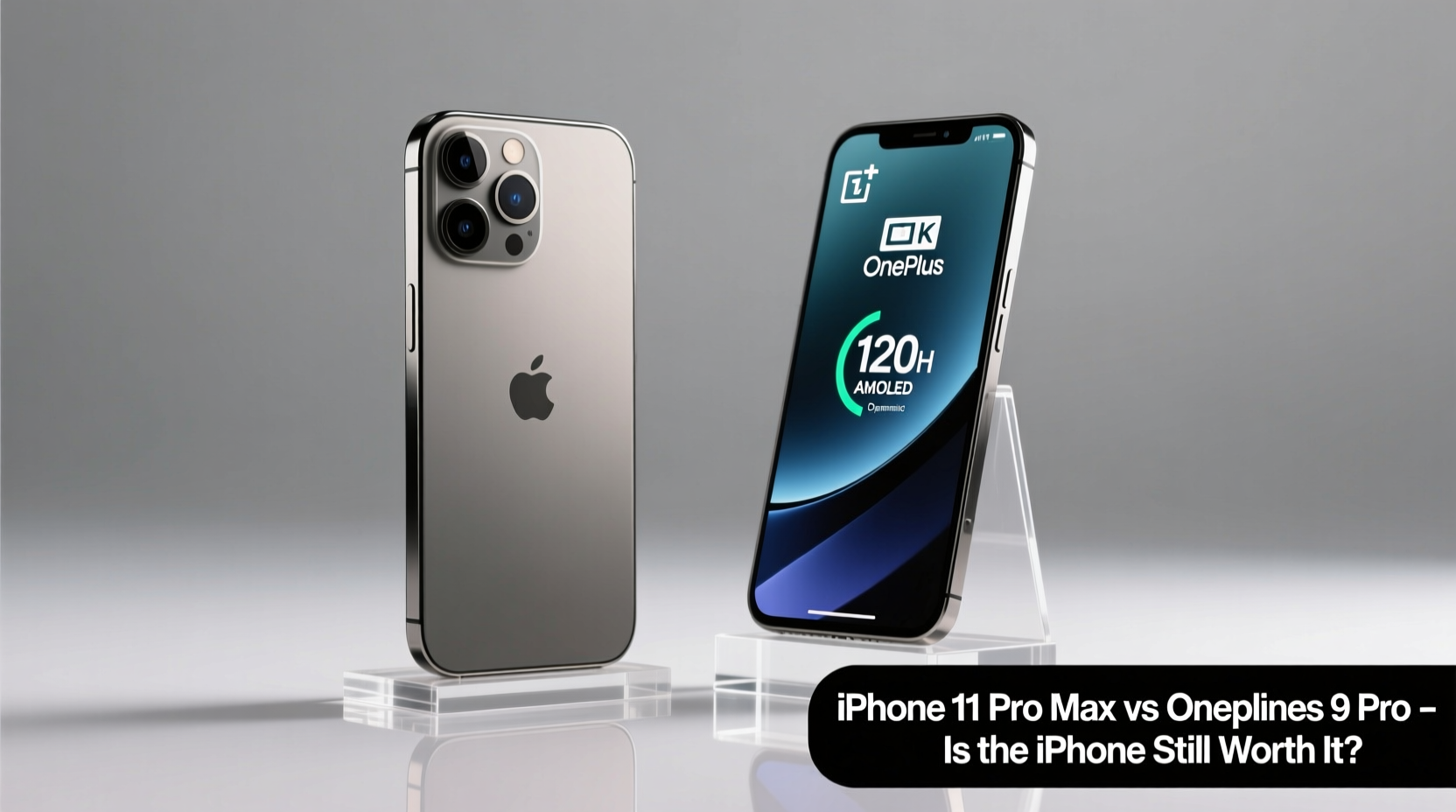
The iPhone 11 Pro Max runs on Apple’s A13 Bionic chip, which was groundbreaking at launch. Even today, thanks to iOS optimization, it handles daily tasks with ease. Apps open quickly, multitasking remains smooth, and even demanding games run well. However, newer OnePlus models like the OnePlus 12 use the Qualcomm Snapdragon 8 Gen 3, a significantly more powerful processor by paper specs.
Yet raw power doesn’t tell the whole story. Apple’s tight integration between hardware and software means the A13 still delivers a responsive experience despite being older. In contrast, Android phones—even high-end ones—can show signs of lag after two to three years due to background bloat and OS fragmentation.
Apple guarantees five years of iOS updates for the iPhone 11 Pro Max, meaning it received updates through late 2024. Most OnePlus devices receive only three major Android updates and four years of security patches. This makes the iPhone a stronger choice for users who prioritize long-term reliability over immediate performance peaks.
Camera Quality: Consistency vs Flexibility
The iPhone 11 Pro Max features a triple 12MP rear camera setup: wide, ultra-wide, and telephoto. Its strength lies not in megapixel count but in consistency. Apple’s computational photography—especially Smart HDR and Deep Fusion—delivers balanced exposures, accurate colors, and excellent dynamic range across lighting conditions.
OnePlus cameras have improved dramatically. Models like the OnePlus 11 and 12 feature higher-resolution sensors (up to 50MP), larger image sensors, and advanced AI processing. In ideal daylight, they can produce sharper images with more detail. However, color science has been inconsistent—sometimes oversaturating skies or underexposing shadows.
“Apple prioritizes natural-looking photos that require no editing. OnePlus pushes for resolution and zoom, but consistency lags.” — David Lin, Mobile Photography Analyst
Night mode performance also differs. The iPhone’s Night Mode, while introduced later than competitors’, produces clean, noise-free low-light shots with minimal processing artifacts. OnePlus uses aggressive multi-frame stacking, which can result in ghosting or over-sharpened textures in moving scenes.
Software Experience: iOS vs OxygenOS
iOS offers a streamlined, secure, and predictable interface. Updates roll out simultaneously to all supported devices. Features like iMessage, FaceTime, AirDrop, and iCloud integration create a seamless ecosystem—especially valuable if you own a Mac, iPad, or Apple Watch.
OnePlus uses OxygenOS (now merged with Oppo’s ColorOS), which is based on Android. While historically praised for its clean design and speed, recent versions have added bloat and ads in system apps. Some users report intrusive notifications from pre-installed services—a stark contrast to iOS’s privacy-first approach.
On the other hand, OxygenOS allows greater customization: theming, gesture controls, sideloading apps, and deeper file management. For tech-savvy users, this flexibility is a major advantage.
| Feature | iPhone 11 Pro Max (iOS) | Modern OnePlus (OxygenOS) |
|---|---|---|
| Update Frequency | Annual major updates for 5+ years | 3 major OS updates, ~4 years total |
| System Bloat | Minimal; no ads in core apps | Moderate; some preloads and ads |
| Customization | Limited (widgets, app library) | High (themes, gestures, icons) |
| Ecosystem Integration | Excellent (AirDrop, Handoff, iCloud) | Basic (Google services only) |
Battery Life and Charging: Real-World Usage
The iPhone 11 Pro Max has a 3,969mAh battery. Apple claims up to 20 hours of video playback, which aligns with moderate real-world use. With normal usage—email, social media, streaming—it lasts a full day. Heavy users may need a top-up by evening.
Newer OnePlus phones pack larger batteries (5,000–5,500mAh) and support ultra-fast charging—some going from 0% to 100% in under 30 minutes via proprietary Warp Charge. The iPhone 11 Pro Max supports only 18W fast charging (charger sold separately) and lacks wireless reverse charging found in some Android flagships.
However, iOS power management is highly efficient. Even as batteries degrade, iOS throttles performance intelligently rather than crashing unexpectedly. Android devices, particularly those with high-refresh-rate displays, tend to drain faster under sustained load.
Mini Case Study: Sarah’s Upgrade Dilemma
Sarah used her iPhone 11 Pro Max for four years before considering a switch. She valued the consistent camera quality for family photos and relied on iMessage for communication. When she tested a OnePlus 11, she loved the fast charging and smoother 120Hz screen—but missed the simplicity of iOS. Messages didn’t sync with her iPad, and photo organization in Google Photos felt clunky. After two weeks, she returned the OnePlus and opted for an iPhone 14 instead, citing ecosystem cohesion as the deciding factor.
Is the iPhone Still Worth It? A Practical Checklist
Deciding whether the iPhone 11 Pro Max remains competitive against current OnePlus models depends on your priorities. Use this checklist to guide your decision:
- ✅ Do you already own other Apple devices (Mac, iPad, AirPods)?
- ✅ Do you prefer reliable, long-term software updates?
- ✅ Is consistent photo quality more important than zoom or resolution?
- ✅ Do you dislike dealing with bloatware or system ads?
- ✅ Are you willing to pay more upfront for longer device lifespan?
If you answered “yes” to most of these, the iPhone—especially a used or refurbished 11 Pro Max—remains a compelling option. If you prioritize charging speed, screen refresh rate, and lower cost, a OnePlus phone may suit you better—even if it won’t last as long.
Frequently Asked Questions
Can the iPhone 11 Pro Max run iOS 17?
Yes, the iPhone 11 Pro Max is fully compatible with iOS 17, which launched in September 2023. It continues to receive security updates and feature improvements, though some newer AI-driven features may be limited or absent.
How does OnePlus compare in resale value?
OnePlus phones depreciate faster than iPhones. A used iPhone 11 Pro Max retains around 40–50% of its original value after three years, while a comparable OnePlus model drops to 20–30%. This affects long-term cost efficiency, especially if you upgrade frequently.
Is the iPhone 11 Pro Max waterproof?
Yes, it has an IP68 rating, meaning it can survive submersion in up to 4 meters of water for 30 minutes. However, water resistance diminishes over time due to wear and tear, so caution is advised.
Conclusion: Value Isn’t Just About Price
The question isn’t whether the iPhone 11 Pro Max has better specs than current OnePlus phones—because it doesn’t. But value extends beyond gigahertz and gigabytes. For users who prioritize software longevity, ecosystem integration, and consistent performance, the iPhone remains a strong investment—even years after release.
OnePlus excels in delivering cutting-edge hardware at accessible prices, but trade-offs exist in update support, long-term reliability, and user experience polish. If you’re choosing between holding onto your iPhone 11 Pro Max or switching to a new Android alternative, consider not just what the phone can do today—but how well it will serve you in two or three years.




 浙公网安备
33010002000092号
浙公网安备
33010002000092号 浙B2-20120091-4
Comments
No comments yet. Why don't you start the discussion?