
When Apple released the iPhone 11 series in 2019, it introduced a clear divide between mainstream and premium models. The iPhone 11 offered solid performance at a lower price, while the iPhone 11 Pro stepped up with better materials, improved cameras, and enhanced battery life. Now, years later, many buyers still face the same question: Is the Pro model truly worth the extra cost—especially when purchasing secondhand or refurbished units in 2024?
This isn’t just about specs on paper. It’s about real-world usage, longevity, resale value, and whether those upgrades translate into meaningful improvements for everyday users.
Design and Build Quality: More Than Just Looks
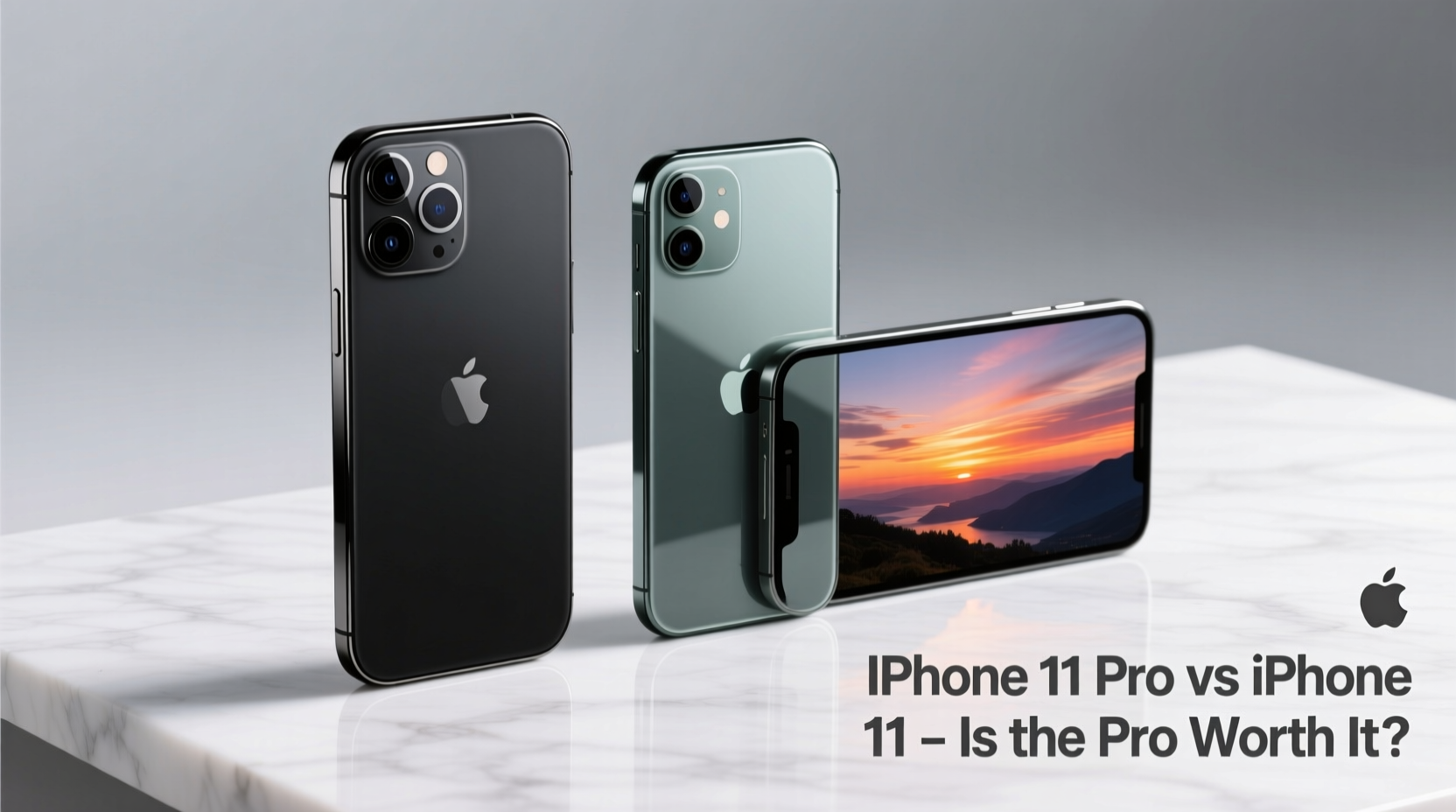
The most immediate difference between the iPhone 11 and iPhone 11 Pro lies in their construction. The standard iPhone 11 features an aerospace-grade aluminum frame with a glass back, available in vibrant colors like purple, green, and yellow. It’s durable but prone to scratches over time.
In contrast, the iPhone 11 Pro uses a surgical-grade stainless steel frame and matte-textured glass back. This not only gives it a more premium feel but also improves grip and resistance to fingerprints. The matte finish hides smudges far better than the glossy iPhone 11.
Both phones are rated IP68 for water and dust resistance, meaning they can survive submersion up to 4 meters for 30 minutes. However, the Pro’s tighter seals and higher-grade materials often perform slightly better under stress tests.
Display Differences That Matter
The iPhone 11 has a 6.1-inch Liquid Retina LCD display with a resolution of 1792×828 pixels. While perfectly functional, LCDs typically offer less contrast, dimmer blacks, and lower brightness levels compared to OLED panels.
The iPhone 11 Pro, on the other hand, features a 5.8-inch Super Retina XDR OLED display with a resolution of 2436×1125 pixels. OLED technology delivers true blacks, deeper contrast (up to 2,000,000:1), and peak brightness of 1200 nits for HDR content. For media consumption, photo editing, or reading in sunlight, this makes a noticeable difference.
“OLED screens aren't just sharper—they reduce eye strain during prolonged use.” — Dr. Alan Zhou, Vision & Display Researcher at MIT Media Lab
If you watch videos, edit photos, or spend hours scrolling through social media, the Pro’s screen provides a significantly better experience.
Camera System: Where the Pro Truly Shines
Both phones have dual-camera systems, but the iPhone 11 Pro adds a third lens—a telephoto—making it a triple-camera setup:
- iPhone 11: Wide (ƒ/1.8) + Ultra-Wide (ƒ/2.4)
- iPhone 11 Pro: Wide (ƒ/1.8) + Ultra-Wide (ƒ/2.4) + Telephoto (ƒ/2.0)
The addition of the telephoto lens allows for 2x optical zoom and improved portrait mode accuracy. More importantly, low-light performance is superior thanks to Night mode being available across all three rear cameras, whereas the iPhone 11 only supports Night mode on the wide lens.
In practical terms, if you frequently shoot portraits, concerts, or nighttime scenes, the Pro gives you greater flexibility and better image consistency.
Real-World Example: Travel Photography
Sophie, a freelance travel blogger, used both phones during a trip to Iceland. She found that while the iPhone 11 captured decent landscape shots with its ultra-wide lens, she missed critical details in distant glaciers due to lack of zoom. On the Pro, she could switch seamlessly between lenses, capture crisp close-ups, and apply Night mode to aurora borealis shots without a tripod.
Her final gallery, composed entirely from iPhone 11 Pro images, received praise for its depth and dynamic range—something she couldn’t achieve as reliably with the base model.
Battery Life and Performance Comparison
Apple claimed the iPhone 11 Pro offered four hours more battery life than the iPhone 11, which was already a significant improvement over previous generations. Independent tests confirm this: the Pro lasts around 18–20 hours of mixed usage versus 14–16 on the iPhone 11.
This becomes crucial for power users—those who rely on GPS navigation, video calls, or mobile gaming throughout the day. The Pro’s smaller OLED screen and optimized power management contribute to this edge.
Internally, both devices run the same A13 Bionic chip, so raw performance is identical. Apps launch at the same speed, multitasking feels smooth, and iOS updates are supported equally. However, the Pro’s additional RAM (4GB vs 4GB confirmed in teardowns, though system optimization differs) helps maintain background app states longer.
“The A13 remains capable even by 2024 standards, but sustained workloads benefit from the Pro’s thermal design.” — TechInsider Benchmark Report, 2023
Detailed Feature Comparison Table
| Feature | iPhone 11 | iPhone 11 Pro |
|---|---|---|
| Display | Liquid Retina HD (LCD), 6.1\" | Super Retina XDR (OLED), 5.8\" |
| Resolution | 1792×828 px | 2436×1125 px |
| Rear Cameras | Dual: Wide + Ultra-Wide | Triple: Wide + Ultra-Wide + Telephoto |
| Night Mode Support | Wide lens only | All three rear lenses |
| Battery Life (Video Playback) | Up to 17 hours | Up to 18 hours |
| Build Material | Aluminum frame, Glass back | Stainless steel frame, Matte glass back |
| Starting Storage | 64GB | 64GB |
| Original Price (64GB) | $699 | $999 |
Is the Pro Worth It in 2024?
As of 2024, neither phone receives major iOS updates beyond iOS 17, but both remain functional and secure for daily tasks. The decision now hinges on budget, usage patterns, and where you buy.
If you’re buying new or refurbished today:
- The **iPhone 11** typically sells for $150–$220.
- The **iPhone 11 Pro** ranges from $250–$350 depending on condition and storage.
That’s a $100–$130 premium for the Pro. So, is it justified?
Consider this checklist before deciding:
✅ Choose the iPhone 11 Pro if:
- You value a premium, durable build.
- You take a lot of photos, especially in low light or need zoom.
- You prefer OLED displays for movies or reading.
- You want maximum battery endurance.
- You plan to keep the phone for 2+ more years.
✅ Stick with the iPhone 11 if:
- You're on a tight budget.
- You mostly use your phone for calls, texts, and social media.
- You use a case and screen protector anyway.
- You don’t mind shorter screen-on time.
Frequently Asked Questions
Can the iPhone 11 handle modern apps in 2024?
Yes. Despite its age, the A13 Bionic chip still handles Instagram, WhatsApp, YouTube, banking apps, and even light gaming smoothly. Only intensive AR applications or future iOS versions may eventually slow it down.
Does the iPhone 11 Pro support fast charging?
Yes, but you need a compatible adapter (18W or higher) and USB-C to Lightning cable, which aren’t included in the box. The iPhone 11 only supports 5W charging out of the box, though it can use faster chargers with third-party accessories.
Which has better resale value?
Historically, the iPhone 11 Pro retains value better due to its premium positioning. Even five years after release, well-maintained Pro models sell for 20–30% more than equivalent iPhone 11 units.
Final Verdict: Who Should Upgrade?
The iPhone 11 Pro isn’t just a slightly better version of the iPhone 11—it’s a different category of device. It targets users who care about craftsmanship, photography, and display quality. For creative professionals, frequent travelers, or anyone who values longevity, the Pro remains the smarter investment.
However, for casual users, students, or secondary-device buyers, the iPhone 11 delivers excellent core functionality at a compelling price. You won’t feel “limited” by choosing it.




 浙公网安备
33010002000092号
浙公网安备
33010002000092号 浙B2-20120091-4
Comments
No comments yet. Why don't you start the discussion?