
For many iPhone users, the camera is the deciding factor when considering an upgrade. The jump from the iPhone 11 Pro to the iPhone 13 brought significant changes under the hood — especially in imaging technology. But does that translate into a meaningful difference for everyday photographers? If you're still satisfied with your iPhone 11 Pro, is spending hundreds on a newer model justified by camera improvements alone?
The answer isn’t a simple yes or no. It depends on how you use your phone, what kind of photos matter most to you, and whether the incremental gains in dynamic range, night mode, and computational photography are enough to sway your decision.
Camera Hardware: What Changed Between Models
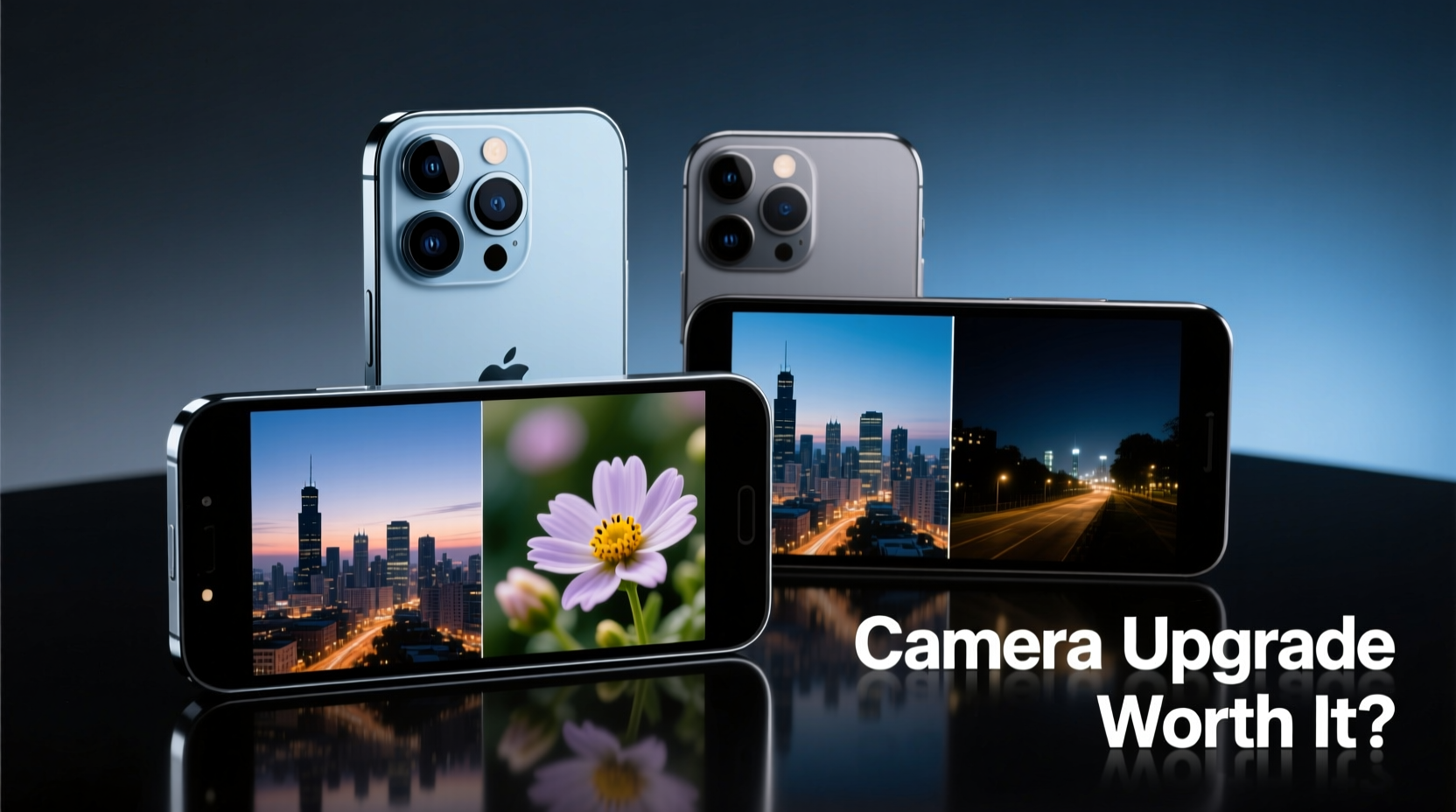
The iPhone 11 Pro launched in 2019 with a triple-camera system: 12MP wide, ultra-wide, and telephoto lenses. At the time, it set a new standard for mobile photography, offering Night Mode, Deep Fusion, and Smart HDR. Two years later, the iPhone 13 arrived with updated sensors, larger apertures, sensor-shift stabilization (on the main lens), and improved computational photography powered by the A15 Bionic chip.
The key hardware upgrades include:
- Larger main sensor: The iPhone 13’s primary sensor captures 47% more light than the 11 Pro’s.
- Better aperture: f/1.6 on the 13 vs f/1.8 on the 11 Pro — crucial for low-light performance.
- Sensor-shift optical image stabilization: Found only in the 13’s main camera, this improves sharpness during handheld shooting.
- Cinematic Mode: A new video feature exclusive to the 13 series, using depth mapping for focus transitions.
While both phones have the same megapixel count across their cameras, the underlying sensor improvements and processing power make a tangible difference — particularly in challenging lighting conditions.
Image Quality Comparison: Real-World Performance
In daylight, both devices produce excellent results. Colors are accurate, dynamic range is strong, and detail retention is impressive. However, the iPhone 13 pulls ahead in consistency. Its Smart HDR 4 and Photographic Styles allow for better skin tone rendering and scene recognition, adjusting contrast and saturation based on subject type — such as greenery in landscapes or warmth in portraits.
Low-light performance shows the most dramatic improvement. Thanks to the larger sensor and wider aperture, the iPhone 13 delivers brighter Night Mode shots with less noise and more shadow detail. In side-by-side comparisons, the 11 Pro often produces darker images with slightly muddier textures, especially in ultra-low light like dimly lit restaurants or nighttime cityscapes.
“Even small sensor improvements, when paired with advanced software, can redefine what’s possible in mobile photography.” — David Kim, Mobile Imaging Analyst at TechLens Review
Portrait mode also benefits from enhanced edge detection and depth estimation. The 13 applies bokeh effects more naturally, reducing halos around hair and improving background separation. This is partly due to machine learning models trained on billions of images, which the A15 chip can run efficiently in real time.
Detailed Feature Breakdown: Camera Capabilities Side by Side
| Feature | iPhone 11 Pro | iPhone 13 |
|---|---|---|
| Main Sensor Size | 1/2.55\" | 1/1.85\" (larger) |
| Main Aperture | f/1.8 | f/1.6 |
| Optical Image Stabilization | Standard OIS | Sensor-shift OIS |
| Night Mode | Yes (all lenses) | Improved algorithm, faster processing |
| Smart HDR | Smart HDR (Gen 1) | Smart HDR 4 + Photographic Styles |
| Video Recording | 4K up to 60fps | 4K up to 60fps + Cinematic Mode (1080p) |
| Front Camera | 12MP f/2.2 | 12MP f/2.2 with Night Mode & Smart HDR |
| Processing Chip | A13 Bionic | A15 Bionic (5-core GPU, better ML performance) |
This table highlights that while both phones share core features, the iPhone 13 benefits from generational leaps in sensor design and AI-driven enhancements that affect every photo taken.
Real Example: Portrait Photographer’s Experience
Jessica Lin, a freelance portrait photographer who used her iPhone 11 Pro for client previews and social media content, upgraded to the iPhone 13 in late 2022. She noticed immediate differences during outdoor shoots at golden hour.
\"The iPhone 13 captured smoother gradients in the sky and preserved highlight details in backlit scenes where my 11 Pro would blow them out,\" she said. \"I also started relying on Cinematic Mode for short reels — it adds a professional touch without extra gear.\"
More importantly, the improved autofocus tracking allowed her to capture candid moments more reliably. \"With the 11 Pro, I’d sometimes get soft focus if the subject moved. The 13 locks on faster and stays locked,\" she added.
For creatives using iPhones as secondary or even primary cameras, these refinements reduce post-processing time and increase shot success rates.
Is the Upgrade Worth It? A Practical Checklist
Before making the switch, consider the following checklist to determine if the camera improvements justify the cost:
- Do you often take photos in low light? – If yes, the 13’s brighter sensor and superior Night Mode are compelling upgrades.
- Are you frustrated by inconsistent HDR results? – The 13’s Smart HDR 4 handles high-contrast scenes more gracefully.
- Do you record videos regularly? – Cinematic Mode and Dolby Vision HDR recording at 4K60fps add creative flexibility.
- Have you maxed out your 11 Pro’s storage? – Upgrading allows access to higher base storage options (128GB+), essential for high-res photo libraries.
- Is battery life a concern? – The iPhone 13 lasts nearly two hours longer per charge, giving you more shooting time on trips.
Frequently Asked Questions
Can the iPhone 13 zoom better than the 11 Pro?
No, both phones offer the same 2x optical zoom via the telephoto lens. Digital zoom performance is slightly better on the 13 due to improved processing, but don't expect a major leap in reach.
Does the iPhone 13 have a better front camera?
Yes. While both have 12MP sensors, the iPhone 13’s front camera supports Night Mode, Smart HDR 4, and better autofocus. Selfies and video calls look sharper and more balanced, especially in dim settings.
Will my old accessories work with the iPhone 13?
Most cases, chargers, and docks are compatible, though some snug-fitting 11 Pro cases may not fit due to slight dimensional changes and repositioned camera bump.
Final Verdict: When to Upgrade and When to Wait
If you’re deeply invested in mobile photography — capturing family moments, creating social media content, or documenting travel — the iPhone 13 offers measurable improvements that enhance both convenience and quality. The combination of better low-light performance, smarter HDR, and advanced video tools makes it a worthwhile upgrade for visually focused users.
However, if your current iPhone 11 Pro meets your needs and you mostly shoot in good lighting, the upgrade may feel subtle rather than transformative. Apple’s iterative approach means each generation refines rather than reinvents, so the biggest gains go to those pushing the limits of their device’s camera.
Ultimately, the decision comes down to how much you value photographic headroom. The iPhone 13 doesn’t just take better photos — it gives you more confidence that every shot will turn out well, even in suboptimal conditions.




 浙公网安备
33010002000092号
浙公网安备
33010002000092号 浙B2-20120091-4
Comments
No comments yet. Why don't you start the discussion?