
When Apple launched the iPhone 11 Pro and iPhone 11 Pro Max in 2019, it introduced a new tier of power and premium design to its lineup. Both devices shared the same core features—triple-camera system, Super Retina XDR display, and A13 Bionic chip—but one key difference stood out: battery life. The Pro Max offered significantly longer endurance, but came with added weight and size. For many users, the central question became: does the extended battery justify the extra bulk?
This isn’t just about numbers on a spec sheet. It’s about how the phone feels in your hand, fits in your pocket, and lasts through your day. Whether you're a frequent traveler, a mobile professional, or someone who simply hates charging midday, understanding the real-world trade-offs between these two models is essential.
Battery Capacity and Official Ratings
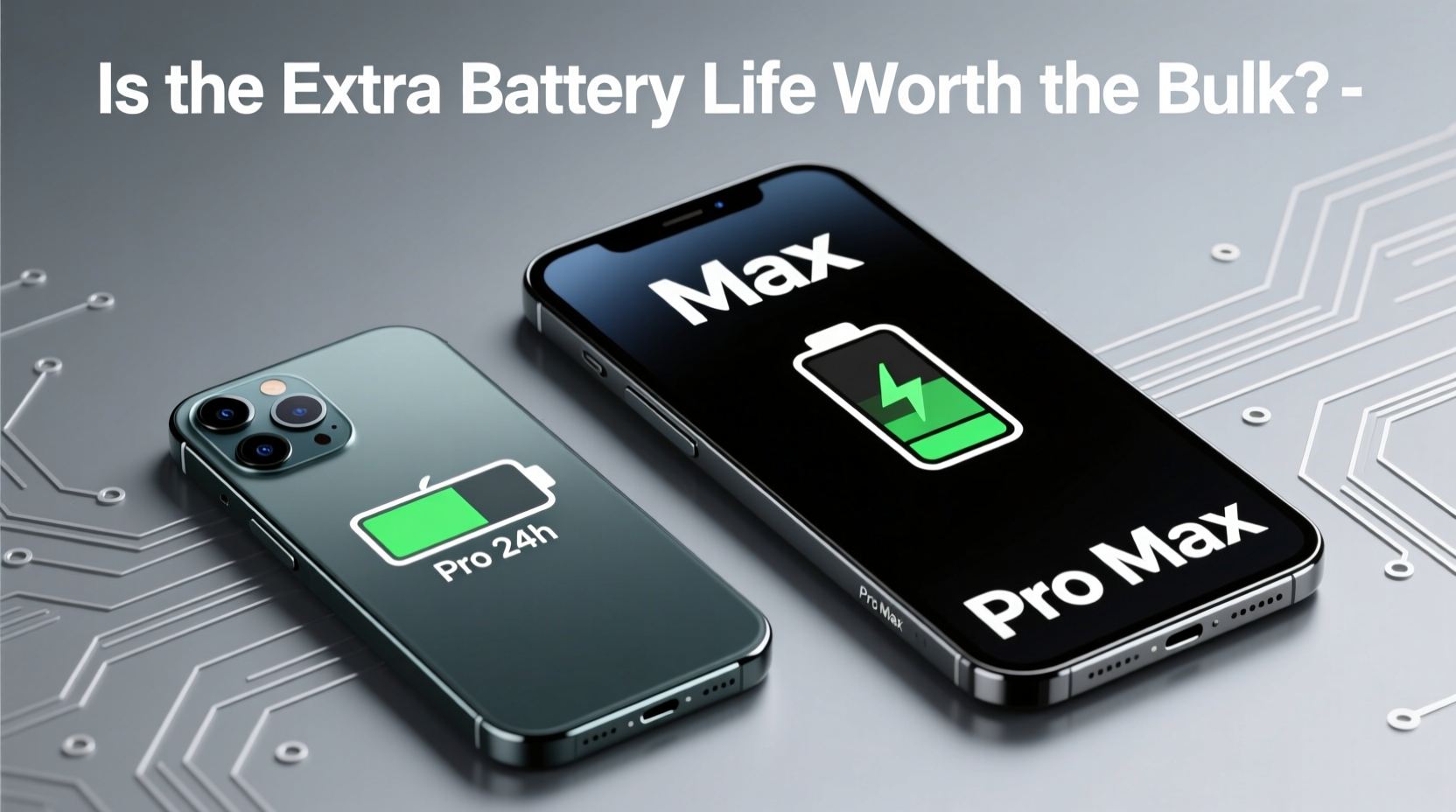
The most obvious distinction between the iPhone 11 Pro and iPhone 11 Pro Max lies in their battery capacity. Apple doesn’t publish exact mAh ratings, but internal teardowns reveal that the iPhone 11 Pro packs a 3,046mAh battery, while the Pro Max houses a much larger 3,969mAh unit—a difference of over 30%.
Apple’s official battery estimates reflect this gap:
| Model | Video Playback (hours) | Audio Playback (hours) | Internet Use (Wi-Fi) |
|---|---|---|---|
| iPhone 11 Pro | 18 | 11 | 10 |
| iPhone 11 Pro Max | 20 | 12 | 12 |
On paper, the Pro Max offers two additional hours of video playback and two more hours of internet use. While that may not sound dramatic, in practice, those extra hours can be the difference between needing a midday charge and making it through a long flight or workday without plugging in.
Real-World Battery Performance
Lab conditions don’t always reflect reality. In daily use, factors like screen brightness, app usage, network signal, and background activity heavily influence battery drain.
Independent testing by outlets such as Tom's Guide and CNET consistently showed the Pro Max lasting around 10–11 hours of continuous screen-on time, compared to roughly 8–9 hours for the Pro. That two-hour buffer often translates into tangible benefits:
- Completing a full workday with heavy email, messaging, and browser use without anxiety.
- Streaming music or podcasts during long commutes or workouts without carrying a charger.
- Navigating unfamiliar cities using GPS for extended periods.
“Battery life is no longer a luxury—it’s a necessity. For professionals on the move, every extra hour counts.” — David Kim, Mobile Tech Analyst at GadgetInsight
Size, Weight, and Usability Trade-Offs
The Pro Max measures 6.22 x 3.06 x 0.33 inches and weighs 7.97 oz (226g), while the Pro is noticeably more compact at 5.67 x 2.81 x 0.33 inches and 6.84 oz (194g). That nearly 1.2-ounce difference may seem minor, but it becomes noticeable during prolonged one-handed use or when carrying the phone in tight pockets.
The larger device also has a 6.5-inch OLED display versus the Pro’s 5.8-inch screen. While the bigger screen enhances media consumption and multitasking, it demands more from the battery—even though efficiency gains from the A13 chip help offset some of the draw.
For users prioritizing portability—especially those with smaller hands or minimalist lifestyles—the Pro’s balance of performance and form factor remains appealing. However, if your routine involves extended screen time, travel, or reliance on navigation, the Pro Max’s size starts to feel justified.
Mini Case Study: Travel Photographer’s Experience
Consider Sarah Lin, a freelance travel photographer who used both models over six months. During a two-week trip across Southeast Asia, she relied on her iPhone 11 Pro for GPS navigation, photo editing, and uploading content. By mid-afternoon each day, she was down to 20%, forcing her to carry a portable charger.
Switching to the Pro Max on her next trip, she found she could shoot, edit, and upload photos throughout the day and still have 30–40% left by bedtime. “The extra weight?” she said. “Worth it. I stopped worrying about finding an outlet in cafes or guesthouses.”
Charging and Efficiency Considerations
Both phones support fast charging (up to 50% in 30 minutes with an 18W adapter or higher) and wireless charging via Qi. Since they share the same internal components, charging speed and efficiency are identical when using the same accessories.
However, because the Pro Max has a larger battery, it takes longer to fully charge—approximately 1 hour 40 minutes compared to 1 hour 20 minutes for the Pro. If you rely on quick top-ups between meetings or during short breaks, the smaller model regains charge faster.
That said, the Pro Max’s ability to go longer between charges often outweighs the slightly slower recharge time for most users. Fewer charging sessions per week mean less wear on the port and battery cycle count over time.
Checklist: Choosing Between iPhone 11 Pro and Pro Max
Ask yourself these questions before deciding:
- Do I regularly run out of battery before the end of the day?
- Do I use my phone for navigation, streaming, or photography?
- Am I comfortable with a larger, heavier device?
- Do I frequently travel or spend long stretches away from outlets?
- Is one-handed use important to me?
If you answered “yes” to the first four, the Pro Max is likely the better fit. If the last question is critical, the Pro offers superior ergonomics.
Long-Term Value and Future-Proofing
Battery longevity is another factor. Larger batteries typically endure fewer full charge cycles over time, which can contribute to slower degradation. Combined with optimized iOS power management, the Pro Max tends to maintain usable daily battery life longer over a 2–3 year ownership period.
In terms of resale value, both models depreciate similarly, but the Pro Max often retains a slight edge due to higher demand among power users. For those planning to upgrade in 2+ years, this small premium can add up.
Frequently Asked Questions
Does the iPhone 11 Pro Max battery really last that much longer?
Yes. Real-world tests confirm the Pro Max delivers 1.5 to 2.5 more hours of active use than the Pro. For heavy users, this means going from needing a midday charge to making it through the day comfortably.
Is the iPhone 11 Pro Max too big for average users?
It depends on personal preference. Many users adapt quickly to the size, especially if they prioritize screen space and battery. However, those with smaller hands or who prefer minimalism may find it cumbersome for one-handed use.
Can I extend battery life on the iPhone 11 Pro to match the Max?
You can optimize settings—lower brightness, disable background app refresh, use Wi-Fi over cellular—but physics limits capacity. No software tweak will make the Pro last as long as the Max under identical usage.
Final Verdict: Is the Extra Bulk Worth It?
The answer hinges on your lifestyle. If your day involves constant connectivity, media consumption, or being away from power sources, the iPhone 11 Pro Max’s superior battery life justifies its size. The extra hours reduce dependency on chargers and alleviate battery anxiety—a significant quality-of-life improvement.
But if you value pocketability, one-handed control, and a lighter carry, the iPhone 11 Pro remains a powerful, capable device. Its battery is sufficient for moderate to average use, especially with good charging habits.
In essence, the Pro Max isn’t just “more phone”—it’s a tool designed for endurance. The bulk isn’t a flaw; it’s the cost of capability. For users who push their devices hard, that trade-off is not only acceptable—it’s essential.




 浙公网安备
33010002000092号
浙公网安备
33010002000092号 浙B2-20120091-4
Comments
No comments yet. Why don't you start the discussion?