
When Apple released the iPhone 11 Pro and iPhone 11 Pro Max in 2019, they introduced a new tier of flagship devices with enhanced performance, improved cameras, and longer battery life. The key difference between the two models? Screen size. While both share nearly identical hardware and design, the Pro Max features a 6.5-inch display compared to the Pro’s more compact 5.8-inch screen. But does that extra screen real estate justify the higher price tag and added bulk? For many users, the answer depends on how they use their phones daily.
Design and Physical Differences
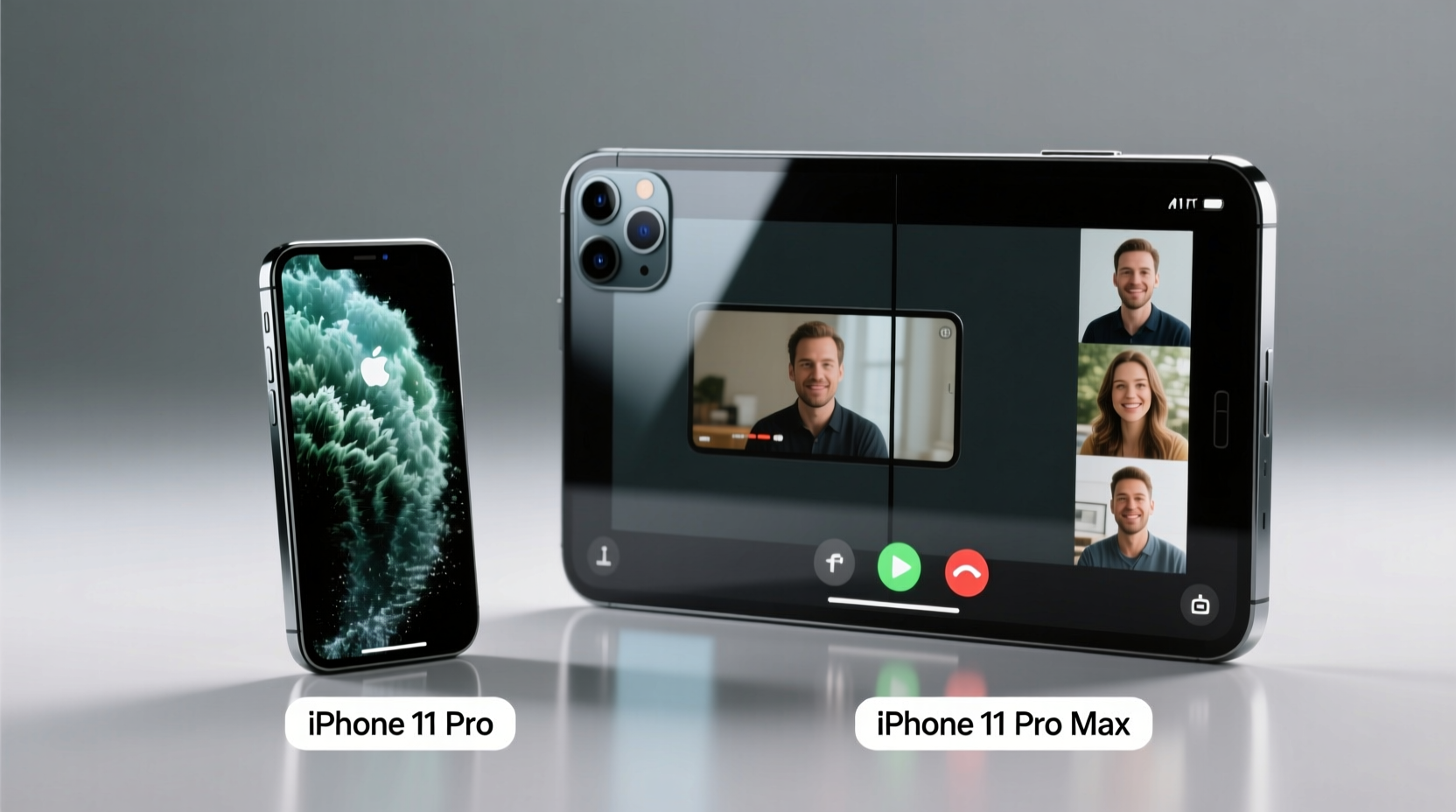
The most immediate distinction between the iPhone 11 Pro and Pro Max lies in their dimensions. The Pro Max is taller, wider, and slightly heavier. It measures 158 x 77.8 x 8.1 mm and weighs 226 grams, while the 11 Pro comes in at 144 x 71.4 x 8.1 mm and 188 grams. That 38-gram difference may not sound significant, but over time, it affects one-handed usability and pocket comfort.
Both phones feature the same surgical-grade stainless steel frame, matte glass back, and IP68 water resistance. They’re available in the same finishes—Midnight Green, Space Gray, Silver, and Gold—and deliver the same premium feel in hand. However, the Pro Max’s larger footprint makes it less ideal for users with smaller hands or those who prioritize portability.
Display Comparison: Bigger Isn’t Always Better
The Pro Max’s 6.5-inch Super Retina XDR OLED display provides 26% more screen area than the 11 Pro’s 5.8-inch panel. Both have a resolution of 458 pixels per inch and support HDR10 and Dolby Vision, ensuring crisp text, vibrant colors, and deep blacks. For media consumption—watching movies, browsing photos, or reading e-books—the larger screen enhances immersion.
However, increased screen size also means increased power consumption. While the Pro Max compensates with a larger battery, the visual experience isn’t drastically different in day-to-day tasks like messaging, email, or social media. Most apps scale similarly across both devices, so UI elements don’t feel cramped on the Pro.
If you regularly edit videos, review documents, or multitask using Split View (on iPadOS-like workflows), the Pro Max’s screen becomes more valuable. But for average users, the benefits are marginal.
Battery Life: Where the Pro Max Shines
One of the strongest arguments in favor of the Pro Max is its superior battery life. Apple rated the 11 Pro for up to 18 hours of video playback, while the 11 Pro Max could last up to 20 hours—an extra two hours under similar conditions. In real-world usage, this often translates to an additional 1.5 to 3 hours of screen-on time.
This difference matters most for heavy users: travelers, professionals on back-to-back calls, or anyone who relies on their phone throughout the day without easy access to charging. The Pro Max consistently delivers through full workdays and evening entertainment, whereas the 11 Pro might require a midday top-up under intense use.
“Battery endurance can be a deciding factor when choosing between similarly equipped smartphones. The Pro Max gives peace of mind for users who can’t afford to run out of charge.” — David Lin, Senior Mobile Analyst at TechPulse Insights
Camera Performance: Nearly Identical, But Not Quite
Both models feature the same triple-camera system: 12MP wide, ultra-wide, and telephoto lenses with Night mode, Deep Fusion, and 4K video recording. Image quality, dynamic range, and low-light performance are indistinguishable in direct comparisons.
However, the Pro Max includes one subtle advantage: optical image stabilization (OIS) on the wide and telephoto lenses uses sensor-shift technology, which offers slightly better stabilization during video recording and handheld shooting. This improvement is minor but appreciated by videographers and content creators.
In everyday photography, the difference is negligible. Whether you’re capturing landscapes, portraits, or family moments, both phones produce professional-grade results. The larger screen on the Pro Max does offer a better preview when framing shots, especially in bright sunlight.
Performance and Software: No Difference Whatsoever
Under the hood, both phones are powered by the A13 Bionic chip, the same 4GB of RAM, and identical storage options (64GB, 256GB, 512GB). iOS runs equally smoothly on both, with no lag, stutter, or app compatibility issues. Whether you choose the Pro or Pro Max, you're getting the same processing power, machine learning capabilities, and long-term software support.
This parity means that any decision should be based on physical preferences rather than performance expectations. Neither device will outpace the other in speed, gaming, or multitasking.
Real-World Usage: A Day in the Life
Consider Sarah, a freelance graphic designer who uses her iPhone for client communication, photo editing, and occasional video calls. She initially leaned toward the Pro Max for its larger screen, thinking it would help with reviewing design mockups. After testing both in-store, she found the Pro Max too bulky to comfortably use while commuting or sketching on her iPad simultaneously. She opted for the iPhone 11 Pro instead and paired it with a tablet for detailed work. Her productivity didn’t suffer, and she appreciated the lighter daily carry.
On the other hand, James, a sales executive who travels weekly, chose the Pro Max. He values the extended battery life during long flights and finds the larger screen helpful for reviewing contracts and presentations on the go. For him, the trade-off in size is justified by functionality.
Comparison Table: iPhone 11 Pro vs Pro Max
| Feature | iPhone 11 Pro | iPhone 11 Pro Max |
|---|---|---|
| Screen Size | 5.8 inches | 6.5 inches |
| Resolution | 2436 x 1125 | 2688 x 1242 |
| Battery Life (Video Playback) | Up to 18 hours | Up to 20 hours |
| Weight | 188 g | 226 g |
| Camera Stabilization | OIS (Telephoto & Wide) | Sensor-Shift OIS (Wide), OIS (Telephoto) |
| Price (Launch) | $999 | $1099 |
Frequently Asked Questions
Is the iPhone 11 Pro Max worth the extra $100?
It depends on your priorities. If you value longer battery life, a larger display for media, and don’t mind the added weight, the Pro Max justifies the cost. For those focused on portability and one-handed use, the 11 Pro offers the same core experience at a lower price.
Can I use the same case for both phones?
No. Due to differences in size and button placement, cases are not interchangeable. You must purchase a model-specific case.
Does the bigger screen affect app performance?
No. Apps render identically in terms of speed and functionality. Some may utilize the extra screen space (e.g., wider keyboard, expanded sidebars), but performance remains consistent.
Final Verdict: Who Should Choose Which?
The iPhone 11 Pro Max is best suited for users who:
- Consume a lot of video or read extensively on their phone
- Need all-day battery without carrying a charger
- Prefer larger displays for typing, navigation, or multitasking
- Have larger hands or carry their phone in bags rather than pockets
The iPhone 11 Pro is ideal for those who:
- Prioritize comfort and one-handed operation
- Want flagship performance in a more compact form
- Aren’t heavy media consumers
- Want to save $100 without sacrificing core features
Conclusion: Make the Choice That Fits Your Life
The iPhone 11 Pro and Pro Max are remarkably similar in performance, camera quality, and build. The choice ultimately comes down to personal preference in size and battery needs. The Pro Max’s larger screen and extended battery offer tangible benefits, but they come with trade-offs in portability and handling. There’s no universal “better” option—only what works best for your lifestyle.




 浙公网安备
33010002000092号
浙公网安备
33010002000092号 浙B2-20120091-4
Comments
No comments yet. Why don't you start the discussion?