
When Apple released the iPhone 11 Pro and iPhone 11 Pro Max in 2019, it marked a pivotal moment in smartphone design—offering consumers two premium models with nearly identical internals but different screen sizes and battery capacities. The $150 price difference between the two raised a legitimate question: Is the larger Pro Max truly worth the extra investment? For many buyers, especially those upgrading from older iPhones or switching from Android, this decision isn’t just about specs—it’s about daily usability, comfort, and long-term satisfaction.
The answer depends on how you use your phone, your hand size, and what trade-offs you’re willing to make for better battery life or a more immersive display. Let’s break down the key differences and similarities to determine whether the Pro Max delivers enough added value to justify its higher price tag.
Design and Physical Differences
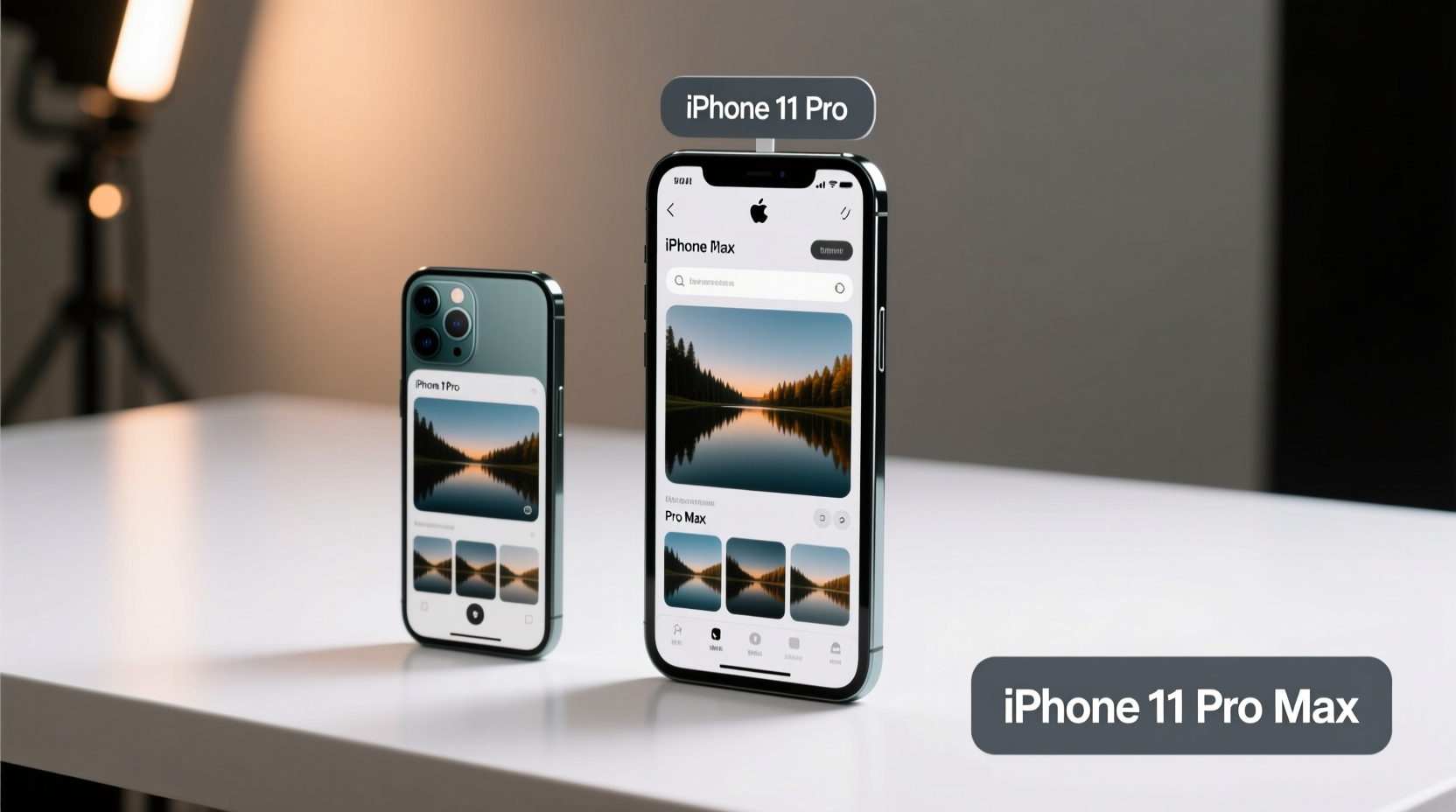
At first glance, both phones share the same industrial design language: stainless steel frames, matte glass backs, IP68 water resistance, and triple-camera arrays housed in a square module. However, the most noticeable difference lies in their dimensions.
| Feature | iPhone 11 Pro | iPhone 11 Pro Max |
|---|---|---|
| Screen Size | 5.8 inches | 6.5 inches |
| Dimensions | 144 x 71.4 x 8.1 mm | 158 x 77.8 x 8.1 mm |
| Weight | 188 grams | 226 grams |
| Resolution | 2436 x 1125 pixels | 2688 x 1242 pixels |
| Battery Life (Apple claim) | All-day (up to 18 hours video playback) | Longer all-day (up to 20 hours video playback) |
The Pro Max is significantly larger and heavier. While the taller display offers more screen real estate for videos, multitasking, and gaming, it comes at the cost of one-handed usability. Users with smaller hands may find the Pro Max difficult to operate without shifting grip or using both hands frequently.
Battery Life: Where the Pro Max Shines
If there’s one area where the Pro Max clearly outperforms the Pro, it’s battery life. Despite sharing the same A13 Bionic chip and software efficiency, the Pro Max packs a substantially larger battery—approximately 3969 mAh compared to the Pro’s 3046 mAh.
In real-world usage, this translates to:
- Up to 5–6 hours of screen-on time for the Pro Max vs. 4–5 for the Pro
- Extended video streaming sessions (up to 12 hours vs. 10)
- One additional charge cycle over a two-day weekend trip
For frequent travelers, mobile professionals, or heavy social media users, that extra endurance can be a game-changer. You’re less likely to scramble for a charger during long flights or meetings. Battery anxiety diminishes noticeably with the Pro Max.
“Battery life is often the deciding factor for power users. The Pro Max doesn’t just last longer—it changes how people interact with their phones.” — David Lin, Senior Mobile Analyst at TechPulse Insights
Camera Performance: Nearly Identical, But Nuanced
Both models feature the same triple-camera system: 12MP wide, ultra-wide, and telephoto lenses. Image quality, dynamic range, low-light performance, and Night Mode capabilities are indistinguishable across stills and video. Whether you're capturing landscapes, portraits, or action shots, the results are consistent regardless of which device you choose.
However, due to its larger body, the Pro Max has slightly better thermal management during extended 4K video recording. This means it can sustain peak performance longer before throttling occurs—a subtle but meaningful advantage for content creators.
Additionally, the bigger screen enhances framing accuracy when shooting video or using third-party camera apps. More pixels mean finer control over focus points and exposure adjustments.
Real Example: Photographer’s Weekend Shoot
Sarah, a freelance travel photographer, used both models during a weekend assignment in Portland. She found the Pro Max’s screen made manual focusing easier in bright sunlight, and the extra battery allowed her to shoot continuously through golden hour without swapping chargers. While image quality was identical, she noted fewer interruptions thanks to less frequent charging. “I didn’t miss a shot because my phone died,” she said. “That alone made the Pro Max worth it for me.”
Performance and Software Experience
Under the hood, both phones are identical. They run the same A13 Bionic chip, have 4GB of RAM, and support iOS updates on the same schedule. There’s no performance gap in app launches, gaming, or multitasking—even under heavy loads like editing 4K footage in LumaFusion or running AR applications.
Software experience is also identical. Face ID works equally well on both, and haptic feedback remains precise. Even storage options (64GB, 256GB, 512GB) are mirrored across models.
The only minor difference is screen real estate. On the Pro Max, you get more visible content in Messages threads, Safari tabs, and split-view multitasking (when supported by apps). Reading e-books, browsing Reddit, or managing emails feels slightly more spacious.
Is the Extra $150 Worth It? A Value Breakdown
To assess whether the Pro Max is worth the premium, consider your priorities:
- You prioritize battery life – If you regularly drain your phone by midday, the Pro Max offers tangible relief.
- You consume a lot of media – Larger screen = better movie and gaming experience.
- You create content professionally – Longer recording times and improved viewing aid workflow.
- You dislike charging frequently – Fewer top-ups mean greater convenience.
On the flip side, if you value pocketability, one-handed operation, or simply don’t push your phone hard each day, the iPhone 11 Pro delivers the same core experience in a more compact form.
Frequently Asked Questions
Does the iPhone 11 Pro Max charge faster than the Pro?
No. Both models support the same fast charging speeds (up to 50% in 30 minutes with an 18W adapter or higher), and neither includes a charger in the box. Wireless charging performance is also identical.
Can I notice the screen resolution difference?
Not easily. Both displays are Super Retina XDR OLED with 458 PPI. The Pro Max has more pixels due to its size, but pixel density is nearly the same. Most users won’t perceive a sharpness difference in daily use.
Are cases interchangeable between models?
No. Due to size and camera cutout positioning, cases are not cross-compatible. Always purchase a case specifically designed for your model.
Final Verdict: Who Should Choose Which?
The iPhone 11 Pro remains an excellent choice for users who want flagship performance in a manageable size. It fits comfortably in pockets, works well one-handed, and still delivers all-day battery for moderate users.
The iPhone 11 Pro Max, meanwhile, caters to those who demand maximum utility: longer battery, a cinematic display, and enhanced usability for productivity and media. The $150 premium buys measurable improvements—not revolutionary ones, but meaningful ones.
Ultimately, the decision hinges on lifestyle. If you spend hours on your phone each day, travel often, or rely on it for work, the Pro Max justifies its price. If you prefer elegance, portability, and don’t mind charging nightly, the Pro is the smarter pick.
“Choosing between these two isn't about which is better overall—it's about which fits *your* life better.” — Maria Tran, UX Researcher at Mobile Futures Lab
Conclusion: Make the Right Choice for Your Daily Routine
The iPhone 11 Pro and Pro Max represent two sides of the same coin—equally powerful, beautifully built, and packed with innovation. The Pro Max isn’t objectively “better” in every way, but it excels where it counts for specific users: battery longevity, screen immersion, and sustained performance.
Rather than defaulting to the larger model because it sounds superior, take stock of how you actually use your phone. Try both in person. Weigh comfort against capability. Then decide whether that extra $150 translates into real-world benefit for *you*.




 浙公网安备
33010002000092号
浙公网安备
33010002000092号 浙B2-20120091-4
Comments
No comments yet. Why don't you start the discussion?