
In 2024, Apple’s latest iPhones boast impressive features, but not everyone needs — or wants — to pay top dollar. The iPhone 11, iPhone 12 mini, and iPhone SE (2nd or 3rd gen) remain popular choices on the used and refurbished market. They offer solid iOS experiences at accessible price points. But with three distinct models, each serving different user priorities, how do you decide which one still makes sense for your lifestyle?
The answer depends on what you value most: screen size, camera quality, 5G connectivity, battery life, or raw performance. Let’s break down each model’s strengths and limitations to help you make a confident choice.
Design and Display: Size Matters More Than You Think
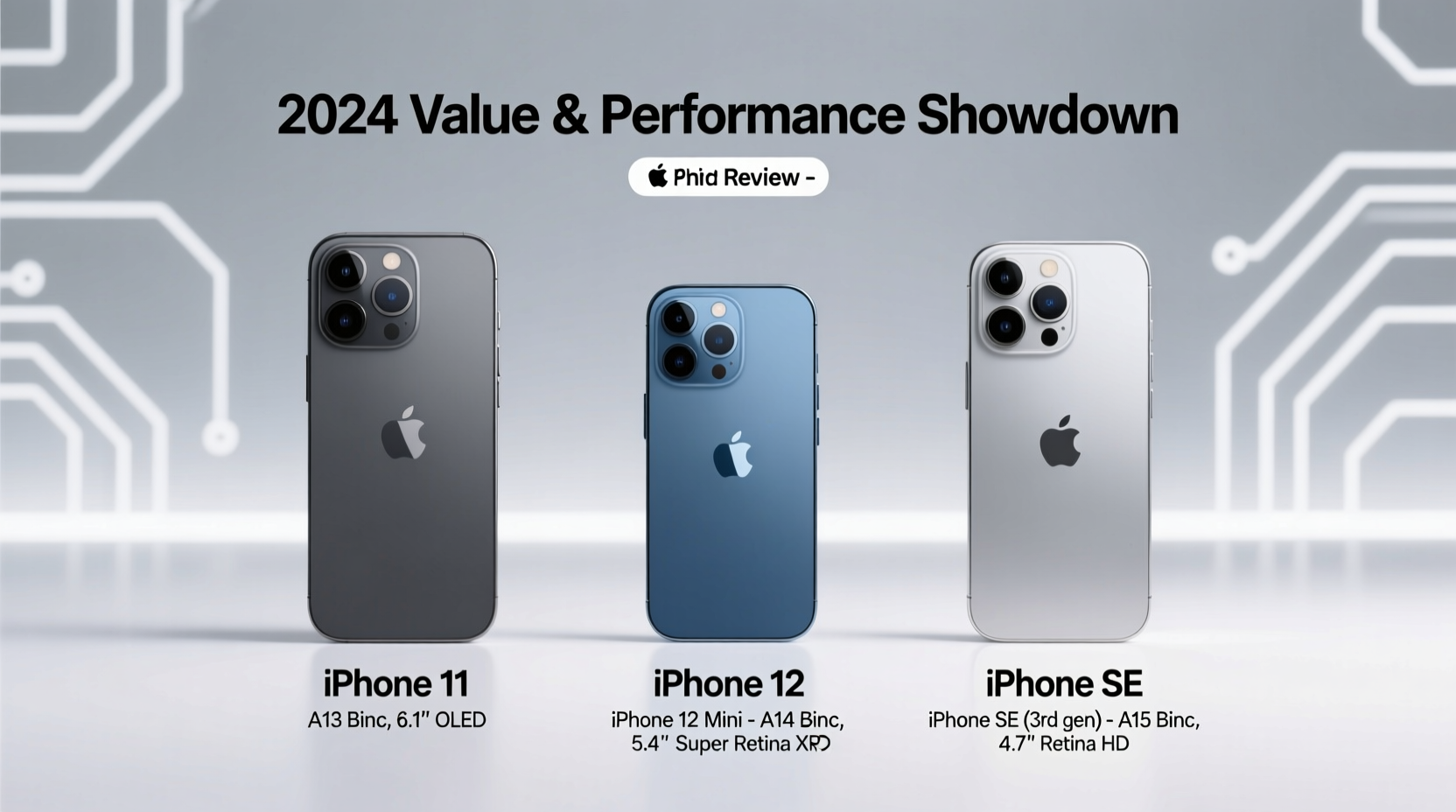
The physical design of a phone influences daily usability more than specs alone. The iPhone 11 and iPhone 12 mini both feature 6.1-inch displays, but their designs differ significantly.
The iPhone 11 uses a Liquid Retina LCD display with a resolution of 1792x828 pixels. It’s bright enough for indoor use but lacks the contrast and deep blacks of OLED. Its rounded aluminum frame and glass back give it a familiar, comfortable feel — though it’s slightly thicker and heavier than the 12 mini.
The iPhone 12 mini, despite its “mini” label, packs an edge-to-edge Super Retina XDR OLED display (2532x1170), delivering sharper visuals, better color accuracy, and improved outdoor visibility. Its flat aluminum edges and compact 5.4-inch form factor make it uniquely pocketable — a rare trait in today’s oversized smartphone market.
In contrast, the iPhone SE (2nd or 3rd gen) sticks with a retro 4.7-inch Retina HD LCD display and a home button with Touch ID. While this appeals to users who prefer single-handed operation or dislike Face ID, the small screen feels cramped by modern standards, especially for video or web browsing.
Performance and Software Longevity
All three phones run iOS 17 smoothly in 2024, but their underlying chips reveal key differences in future-proofing.
- iPhone 11: Powered by the A13 Bionic chip. Still capable for everyday tasks like messaging, social media, and light gaming. However, it may struggle with demanding apps or future iOS updates beyond 2025.
- iPhone 12 mini: Features the A14 Bionic, a significant leap over the A13. It handles multitasking, AR apps, and graphics-intensive games with ease. Likely to receive iOS updates through at least 2026.
- iPhone SE (3rd gen): Equipped with the A15 Bionic (same as iPhone 13). This gives it superior processing power, making it the performance king in this trio. Expected to stay supported into 2027 or later.
“Performance isn’t just about speed today — it’s about how long your phone will keep up with evolving software demands.” — David Lin, Mobile Analyst at TechPulse Insights
If you plan to keep your phone for 3+ years, the iPhone SE (3rd gen) is the clear winner. The 12 mini follows closely, while the iPhone 11 shows its age in sustained workloads.
Camera Comparison: Photos That Reflect Your Priorities
Cameras are often the deciding factor. Here’s how they stack up:
| Model | Rear Cameras | Front Camera | Key Strengths |
|---|---|---|---|
| iPhone 11 | Dual: 12MP Wide + 12MP Ultra-Wide | 12MP | Natural colors, Night mode, excellent video |
| iPhone 12 mini | Dual: 12MP Wide + 12MP Ultra-Wide | 12MP | Better low-light, Smart HDR 3, Dolby Vision video |
| iPhone SE | Single: 12MP Wide | 7MP | Solid daylight shots, no ultra-wide or Night mode (on 2nd gen) |
The iPhone 11 and 12 mini deliver nearly identical photo quality, but the 12 mini benefits from improved computational photography and sensor-shift stabilization in the wide lens (on some units). Its ability to record 4K Dolby Vision HDR video is unmatched in this group.
The iPhone SE (especially the 2nd gen) lags behind with only a single rear camera. No ultra-wide means less flexibility in framing, and older models lack Night mode. The 3rd-gen SE adds Night mode and better HDR, closing the gap slightly — but it still can’t match the versatility of dual-camera systems.
Real Example: Urban Photographer’s Choice
Maria, a freelance photographer in Chicago, needed a backup phone for candid street shots. She chose the iPhone 12 mini over the SE because the ultra-wide lens allowed her to capture architectural details without stepping back in narrow alleys. “The extra lens and better low-light performance made all the difference during evening shoots,” she said.
Battery Life and Charging: Practical Real-World Use
Battery performance varies dramatically across these models.
- iPhone 11: Lasts around 17–19 hours of mixed usage. Supports fast charging (up to 50% in 30 mins with 18W adapter) and wireless charging.
- iPhone 12 mini: Despite its size, lasts about 12–14 hours. Fast charging and MagSafe compatibility are included, but the tiny battery depletes quickly under heavy load.
- iPhone SE: Smallest battery of the three. Lasts 10–12 hours with moderate use. The 3rd gen supports fast and wireless charging; the 2nd gen does not.
If you’re out all day without access to charging, the iPhone 11 remains the most reliable. The 12 mini’s poor battery life was a common criticism at launch and hasn’t improved. The SE, while efficient due to its smaller screen, still falls short for power users.
Connectivity and Future-Proofing
This is where the iPhone 12 mini and iPhone SE (3rd gen) pull ahead.
The iPhone 11 only supports LTE. In 2024, that means slower download speeds and limited compatibility with emerging network-dependent services. Meanwhile, both the iPhone 12 mini and iPhone SE (3rd gen) include 5G support — crucial for faster streaming, cloud gaming, and future app ecosystems.
Additionally, the 12 mini and SE (3rd gen) support Wi-Fi 6, improving connection stability in crowded networks. The iPhone 11 is limited to Wi-Fi 5.
Checklist: Which iPhone Fits Your Lifestyle?
- Need 5G and longest software support? → iPhone SE (3rd gen)
- Want compact size and modern display? → iPhone 12 mini
- Prioritize battery life and balanced performance? → iPhone 11
- Use your phone for photography? → Avoid SE; choose 11 or 12 mini
- Prefer Touch ID over Face ID? → Only iPhone SE offers this
- Plan to keep the phone until 2027? → Pick SE (3rd gen) or 12 mini
Frequently Asked Questions
Is the iPhone 12 mini worth buying in 2024?
Yes, if you value a compact design and modern features like 5G, OLED display, and strong performance. Just be prepared for below-average battery life. It’s ideal for secondary phones or users who charge midday.
Can the iPhone SE replace a flagship iPhone?
For basic tasks — calls, messaging, browsing, light photography — yes. But it lacks advanced camera features, a modern display, and has a smaller screen. Power users will feel limited, but minimalists may love its simplicity.
Which of these holds resale value best?
The iPhone 12 mini has depreciated the most due to low initial demand and short production run. The iPhone 11 maintains steady resale value thanks to broad appeal. The iPhone SE (3rd gen) retains value well due to its powerful chip and ongoing demand in emerging markets.
Final Verdict: Which One Makes Sense in 2024?
The “best” phone depends on your priorities.
The iPhone 11 is the most balanced option for average users seeking reliability, good cameras, and solid battery life. It’s aging gracefully and remains a smart pick for first-time iPhone buyers or parents getting a phone for teens.
The iPhone 12 mini is for enthusiasts who miss small phones. Its OLED display and 5G capability make it feel modern, but the weak battery is a real compromise. Best suited as a secondary device or for light users.
The iPhone SE (3rd gen) is the performance and future-proofing champion. With the A15 chip and 5G, it will likely outlast the others in terms of software support. However, its outdated design and small screen limit its appeal.
“If you want the longest usable lifespan from a budget iPhone, the SE (3rd gen) is the only one that truly feels ready for the next few years of iOS evolution.” — Sarah Kim, Senior Editor at MobileEdge Review
Take Action: Choose Based on Your Real Needs
Don’t buy based on nostalgia or brand loyalty. Ask yourself: How long do I plan to keep this phone? Do I need 5G? Is camera flexibility important? Will I miss a larger screen?
Test them if possible. Hold a 4.7-inch SE next to a 6.1-inch 11 and feel the difference. Consider your daily routine — commuting, working, parenting — and pick the device that fits seamlessly into your life.




 浙公网安备
33010002000092号
浙公网安备
33010002000092号 浙B2-20120091-4
Comments
No comments yet. Why don't you start the discussion?