
For many iPhone users clinging to the reliable iPhone 8 Plus, the decision to upgrade has become increasingly complex. Released five years apart—2017 for the 8 Plus and 2019 for the iPhone 11—the devices represent two distinct eras of Apple design and technology. In 2024, with newer models dominating headlines, the question remains: is moving from the 8 Plus to the iPhone 11 still a worthwhile leap? The answer depends on your usage, expectations, and how much future-proofing you need.
Design and Display Evolution
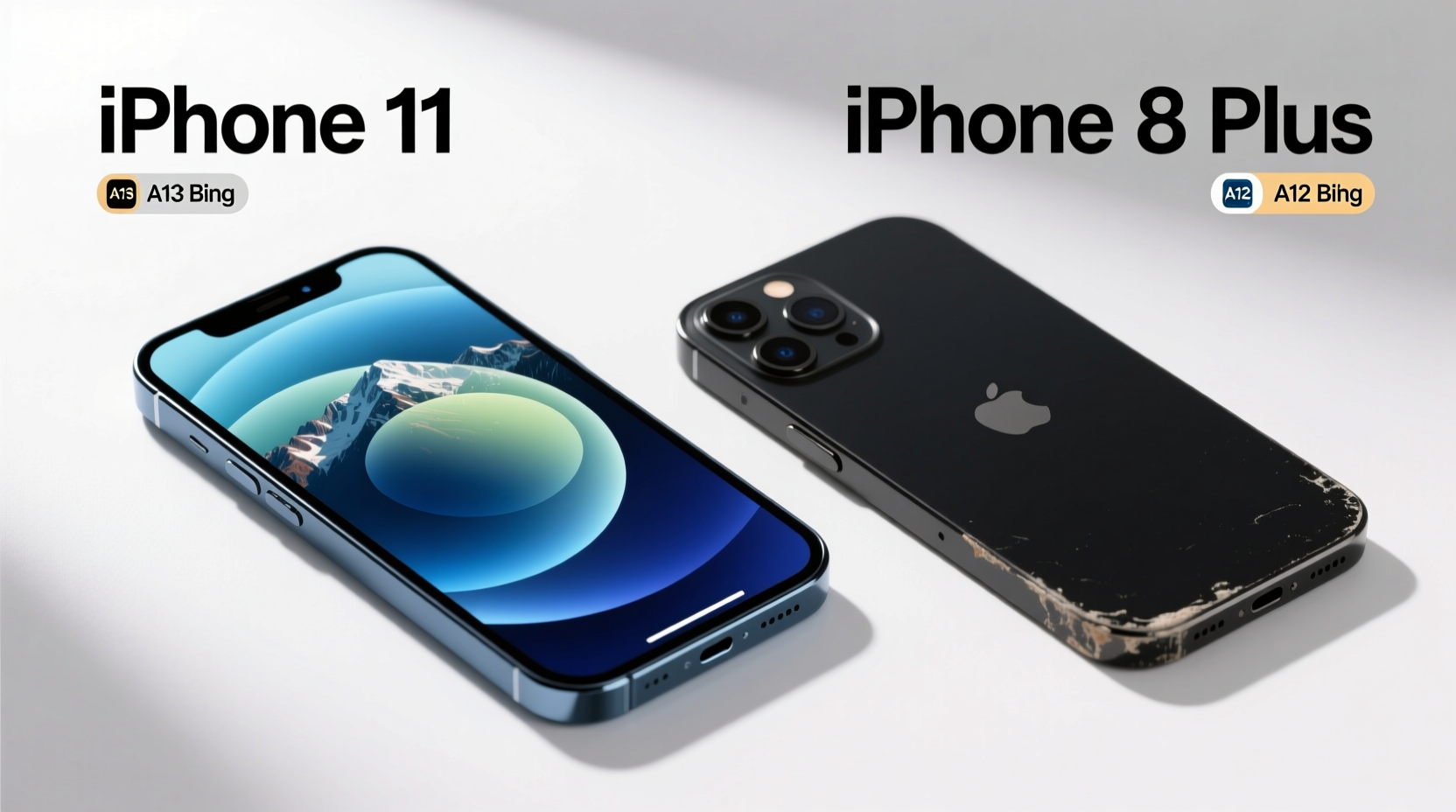
The most immediate difference between the iPhone 8 Plus and the iPhone 11 lies in their design language. The 8 Plus sticks to Apple’s pre–Face ID era: a thick bezel-heavy design with a home button and Touch ID. Its 5.5-inch LCD screen delivers solid color accuracy but lacks the vibrancy and contrast of modern displays. At 16% larger by volume and slightly heavier, the 8 Plus feels substantial—some might say outdated—in one hand.
In contrast, the iPhone 11 embraces the all-screen aesthetic introduced with the iPhone X. It features thinner bezels, Face ID, and a more compact 6.1-inch Liquid Retina LCD display. While both use LCD technology (not OLED), the iPhone 11’s screen offers better brightness, improved color calibration, and True Tone support. Despite being slightly smaller in footprint than the 8 Plus, the iPhone 11 provides a more immersive viewing experience thanks to its edge-to-edge design.
Performance and Software Longevity
Under the hood, the jump from the A11 Bionic chip (8 Plus) to the A13 Bionic (iPhone 11) is transformative. The A13 isn’t just faster—it’s dramatically more efficient. Real-world tasks like app launches, multitasking, and gaming see noticeable improvements. Apps like Instagram, TikTok, and mobile games load quicker and run smoother on the iPhone 11, even in 2024.
More importantly, software support is a critical factor. The iPhone 8 Plus received its final major iOS update with iOS 16. While it still functions, it no longer gets new feature updates and will face increasing compatibility issues with future apps. The iPhone 11, however, continues to receive full iOS updates—including iOS 17 and expected support through iOS 18 and possibly beyond—making it far more future-proof.
“Devices running outdated operating systems are not only missing features but also become security liabilities over time.” — Dr. Alan Reyes, Mobile Security Analyst at TechShield Labs
Camera Comparison: From Dual to Smarter Dual
Both phones feature dual rear cameras, but the implementation differs significantly. The iPhone 8 Plus includes a 12MP wide and 12MP telephoto setup, enabling 2x optical zoom and Portrait mode. It was excellent in its time, but lacks Night mode, Deep Fusion, and advanced computational photography.
The iPhone 11 upgrades to a 12MP wide + 12MP ultra-wide system. This means you can capture landscapes, architecture, and group shots with a broader field of view—a practical advantage the 8 Plus simply can’t match. More crucially, the iPhone 11 introduces Night mode, Smart HDR, and Deep Fusion, allowing for vastly superior low-light photos and dynamic range.
Front cameras also see a leap: the 8 Plus uses a basic 7MP sensor, while the iPhone 11 steps up to 12MP with 4K video recording and QuickTake video (hold the shutter to record video instantly). For social media users and casual photographers, this represents a meaningful improvement.
Camera Feature Comparison
| Feature | iPhone 8 Plus | iPhone 11 |
|---|---|---|
| Rear Cameras | 12MP Wide + 12MP Telephoto | 12MP Wide + 12MP Ultra-Wide |
| Night Mode | No | Yes |
| Smart HDR | HDR (basic) | Smart HDR 3 |
| Front Camera | 7MP | 12MP with 4K video |
| Video Recording | 4K at 30fps | 4K at 60fps with extended dynamic range |
Battery Life and Charging Experience
Battery life is where expectations often clash with reality. Apple rated the iPhone 11 for one hour longer of video playback than the 8 Plus. In practice, most users report the iPhone 11 lasts noticeably longer—especially under mixed usage involving social media, navigation, and streaming.
The reason? The A13 chip’s power efficiency, combined with optimized background processes in newer iOS versions, reduces drain. Additionally, the iPhone 11 supports fast charging (up to 50% in 30 minutes with an 18W adapter, sold separately) and Qi wireless charging—both absent on the 8 Plus unless using third-party accessories.
However, if you’ve maintained your 8 Plus well—with a healthy battery cycle count—its endurance may still suffice for light users. Heavy users, especially those relying on GPS or video calls, will appreciate the iPhone 11’s stamina.
Real-World Example: Sarah’s Upgrade Journey
Sarah had used her iPhone 8 Plus since 2018. By late 2023, she noticed apps freezing, slow camera focusing, and frequent prompts that her device wasn’t compatible with new features. Her daughter’s school app required iOS 15+, which her phone couldn’t support. After hesitating due to cost, she upgraded to a refurbished iPhone 11 in early 2024.
The change was immediate. Her maps loaded faster, photos of her kids at night were clear instead of grainy, and Face ID made unlocking seamless. Most importantly, she regained access to essential apps and services. “It felt like I’d been driving a car with the emergency brake on,” she said. “Now everything just flows.”
Is the Upgrade Worth It in 2024?
The short answer: yes—for most 8 Plus users, the iPhone 11 upgrade remains valuable in 2024. Here’s why:
- Software Support: The iPhone 11 will likely receive updates through 2025 or later; the 8 Plus won’t.
- Security: Older iOS versions lack critical patches, making them vulnerable.
- App Compatibility: Newer apps optimize for A12 and above chips, leaving A11 devices behind.
- Camera & Video Needs: Social sharing, video calls, and content creation benefit greatly from the iPhone 11’s capabilities.
That said, if your usage is minimal—calls, texts, occasional web browsing—and your 8 Plus battery holds charge well, holding on may still be feasible. But for anyone who relies on their phone daily, the iPhone 11 offers tangible, lasting benefits.
Upgrade Checklist: Are You Ready?
- Check your iPhone 8 Plus battery health (Settings > Battery > Battery Health). Replace if below 80%.
- Verify app compatibility—can your essential apps still run smoothly?
- Assess your photo and video needs—do you take pictures in low light or share often?
- Determine budget—refurbished iPhone 11s start around $200–$250, offering strong value.
- Back up your data via iCloud or computer before switching.
Frequently Asked Questions
Can the iPhone 8 Plus still be used in 2024?
Yes, but with limitations. It runs iOS 16, lacks new features, and some apps may stop working or perform poorly. It’s suitable for very light use but not ideal for modern smartphone demands.
Does the iPhone 11 have better durability?
Yes. The iPhone 11 features improved water resistance (IP68, up to 6 feet for 30 minutes) compared to the 8 Plus (IP67, up to 3 feet). It also uses a more durable front glass and better internal sealing.
Is buying a used iPhone 11 safe in 2024?
Yes, provided you purchase from a reputable seller, check the IMEI status, verify battery health, and ensure it’s not iCloud locked. Many carriers and retailers offer certified refurbished models with warranties.
Final Thoughts
Moving from the iPhone 8 Plus to the iPhone 11 isn’t just about newer hardware—it’s about staying connected, secure, and capable in a world that increasingly expects more from smartphones. The iPhone 11 delivers significant gains in performance, camera quality, battery life, and long-term usability. Even in its fifth year, it remains a competent, supported device.
If you’re still on an 8 Plus and feeling the strain, now is a practical time to upgrade. The iPhone 11 strikes a rare balance: affordable, functional, and ready for the next few years of iOS evolution. Don’t wait until your phone stops working—make the move while the 11 still offers a smooth bridge to modern mobile experiences.




 浙公网安备
33010002000092号
浙公网安备
33010002000092号 浙B2-20120091-4
Comments
No comments yet. Why don't you start the discussion?