
In 2025, the smartphone market has evolved dramatically, but older models like the iPhone 11 and budget newcomers like the Samsung Galaxy A16 remain relevant for different reasons. The iPhone 11, released in 2019, continues to receive software updates and enjoys a loyal user base. Meanwhile, the Galaxy A16, launched as an entry-level Android device, promises modern design and connectivity at a fraction of the cost. But when comparing these two phones across real-world usage, longevity, and ecosystem value, one question stands out: Is the iPhone 11 still worth choosing over the newer, cheaper Galaxy A16?
Performance and Longevity: Beyond Raw Specs
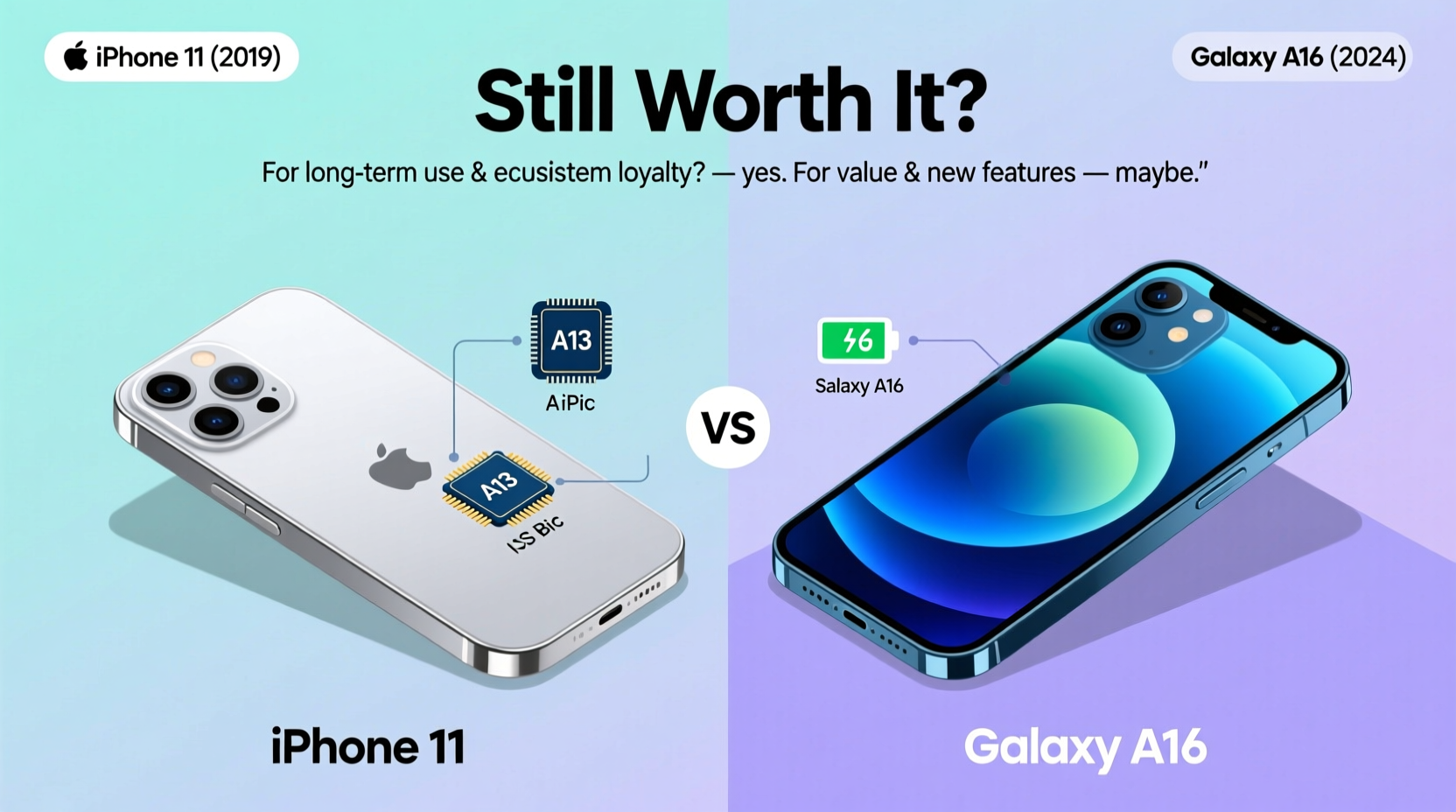
On paper, the Galaxy A16 features a newer MediaTek or Exynos processor, 4GB of RAM, and runs on Android 14 with Samsung’s One UI 6. However, raw specs don’t tell the full story. The iPhone 11, powered by Apple’s A13 Bionic chip, remains impressively capable in 2025. Despite being five years old, the A13 handles everyday tasks—browsing, social media, video streaming, and even mid-tier gaming—with ease.
Apple’s tight integration between hardware and software ensures that even older iPhones run smoothly. iOS updates are optimized specifically for each supported device, minimizing bloat and maximizing efficiency. In contrast, budget Android phones like the Galaxy A16 often suffer from inconsistent optimization, background app drain, and slower performance over time due to software fragmentation.
Software Updates and Security: A Critical Advantage
This is where the iPhone 11 pulls significantly ahead. As of 2025, Apple continues to provide iOS updates and critical security patches for the iPhone 11. It supports iOS 17 and is expected to receive iOS 18, giving it six major OS updates since launch—a rarity in the smartphone industry.
The Galaxy A16, while new, is limited by Samsung’s update policy for its A-series devices. It will likely receive only two major Android OS upgrades and four years of security updates. By 2027, it may no longer be supported, leaving users exposed to security vulnerabilities and without access to new features.
“Long-term software support is one of the most underrated aspects of smartphone ownership. It directly impacts safety, usability, and resale value.” — David Lin, Mobile Security Analyst at TechShield Labs
For users who plan to keep their phone beyond two years, this difference is crucial. The iPhone 11 offers a more secure, future-proof experience despite its age.
Camera Comparison: Quality vs. Quantity
The Galaxy A16 comes with a triple-camera setup: 50MP main, 5MP ultrawide, and 2MP macro. On the surface, higher megapixel counts suggest better photos. But image quality isn’t just about sensor size—it’s about processing.
The iPhone 11 features a dual 12MP camera system (wide and ultrawide), but Apple’s computational photography—especially Smart HDR, Deep Fusion, and Night mode—delivers consistently balanced, natural-looking images. Even in low light, the iPhone 11 produces cleaner shots with accurate colors and dynamic range that often surpass the Galaxy A16’s noisier, over-sharpened output.
Videos are another area where the iPhone dominates. The iPhone 11 records stabilized 4K video at 60fps, with excellent audio capture and seamless editing compatibility across Apple devices. The Galaxy A16 tops out at 1080p and lacks advanced stabilization or pro-grade editing tools.
| Feature | iPhone 11 | Galaxy A16 |
|---|---|---|
| Main Camera | 12MP, f/1.8 | 50MP, f/1.8 |
| Ultrawide | 12MP, f/2.4 | 5MP, f/2.2 |
| Video Recording | 4K@60fps, Dolby Vision | 1080p@30fps |
| Night Mode | Yes (both lenses) | Limited (main only) |
| Front Camera | 12MP, TrueDepth | 5MP, f/2.0 |
Battery Life and Charging: Real-World Endurance
The Galaxy A16 holds a 5000mAh battery, significantly larger than the iPhone 11’s 3110mAh. Yet, real-world endurance tells a different story. Thanks to iOS efficiency and adaptive refresh rate management (even without ProMotion), the iPhone 11 regularly achieves 12–14 hours of screen-on time under moderate use.
The Galaxy A16, while boasting longer standby times, suffers from inefficient background processes and aggressive ad tracking in pre-installed apps. Many users report needing to charge by late afternoon, especially with GPS navigation or video streaming.
Charging is another point of divergence. The iPhone 11 supports 18W fast charging (with adapter sold separately) and wireless charging. The Galaxy A16 includes 25W fast charging but lacks wireless charging entirely—common in its price tier.
Ecosystem and Resale Value: The Hidden Benefits
If you own other Apple devices—Mac, iPad, AirPods, or Apple Watch—the iPhone 11 integrates seamlessly. Features like AirDrop, Handoff, Universal Clipboard, and iCloud Keychain enhance productivity and convenience. These ecosystem benefits compound over time, making switching costly in terms of both money and workflow disruption.
Samsung offers similar features through Smart Switch and Quick Share, but cross-device integration is less refined, especially outside the Galaxy ecosystem.
Resale value is another decisive factor. After three years, a well-maintained iPhone 11 can retain up to 40–50% of its original value. The Galaxy A16, starting at a lower price point, depreciates faster and is rarely sought after in the secondhand market.
Mini Case Study: Sarah’s Upgrade Dilemma
Sarah, a freelance photographer, needed a reliable phone for client communication, portfolio sharing, and quick edits. She considered the Galaxy A16 due to its low price ($229) but ultimately chose a refurbished iPhone 11 ($299) because she already used a MacBook and iPad. The ability to instantly AirDrop sample images, edit them in Lightroom on her tablet, and sync notes via iCloud made the iPhone the smarter choice. Three years later, she sold it for $130—enough to offset nearly half her initial cost.
Step-by-Step Guide: Choosing Between iPhone 11 and Galaxy A16
- Assess your usage needs: Are you a heavy multitasker, gamer, or media consumer? The iPhone 11 handles intensive tasks better.
- Check software support: Verify how many OS updates each phone will receive. Prioritize long-term security.
- Evaluate your ecosystem: Do you use Apple or Samsung devices? Integration matters for daily convenience.
- Test real-world performance: Read user reviews focusing on slowdowns after 6–12 months.
- Calculate long-term cost: Factor in resale value, durability, and potential repair costs.
Frequently Asked Questions
Can the iPhone 11 still run popular apps in 2025?
Yes. The iPhone 11 runs iOS 17 and supports all current apps, including Instagram, TikTok, Zoom, and mobile games. Most developers continue optimizing for A12/A13 chips due to their large user base.
Is the Galaxy A16 a better value for first-time smartphone users?
Possibly, if budget is the primary concern. It offers a large screen, modern design, and decent battery life. However, users should expect slower performance over time and limited future updates.
Does the iPhone 11 have 5G?
No, the iPhone 11 only supports 4G LTE. The Galaxy A16 includes 5G support, which may matter in areas with expanding next-gen networks. However, 5G coverage remains spotty in many regions, and battery drain from 5G can offset its benefits.
Conclusion: Is the iPhone 11 Still Worth It?
In 2025, the iPhone 11 remains a compelling option—not because it’s the newest or cheapest, but because it delivers consistent performance, long-term software support, superior camera quality, and strong ecosystem integration. While the Galaxy A16 offers modern features at a tempting price, it falls short in longevity, optimization, and overall user experience.
For users who value reliability, security, and lasting value, the iPhone 11 is still worth the investment. It proves that in smartphones, longevity and refinement often outweigh novelty and spec sheets. If you can find a well-maintained model, especially unlocked, it may be one of the smartest mobile decisions you make this year.




 浙公网安备
33010002000092号
浙公网安备
33010002000092号 浙B2-20120091-4
Comments
No comments yet. Why don't you start the discussion?