
Released just months apart in 2019, the iPhone 11 and Samsung Galaxy Note 10 Plus represented two flagship philosophies: Apple’s focus on ecosystem integration and long-term support, versus Samsung’s emphasis on hardware innovation and productivity features. Now in 2024, both devices are well past their prime, yet they continue to surface in secondhand markets and budget-conscious upgrade discussions. But with newer models dominating the landscape, is the Galaxy Note 10 Plus still a viable choice compared to the iPhone 11 — or has time finally caught up with it?
This isn’t just about nostalgia. For users considering affordable premium phones, understanding how these devices hold up today matters. We’ll examine build quality, performance, cameras, software updates, battery life, and real-world usability to determine whether the Note 10 Plus still justifies its lingering reputation.
Design and Build: Premium Materials, Different Priorities
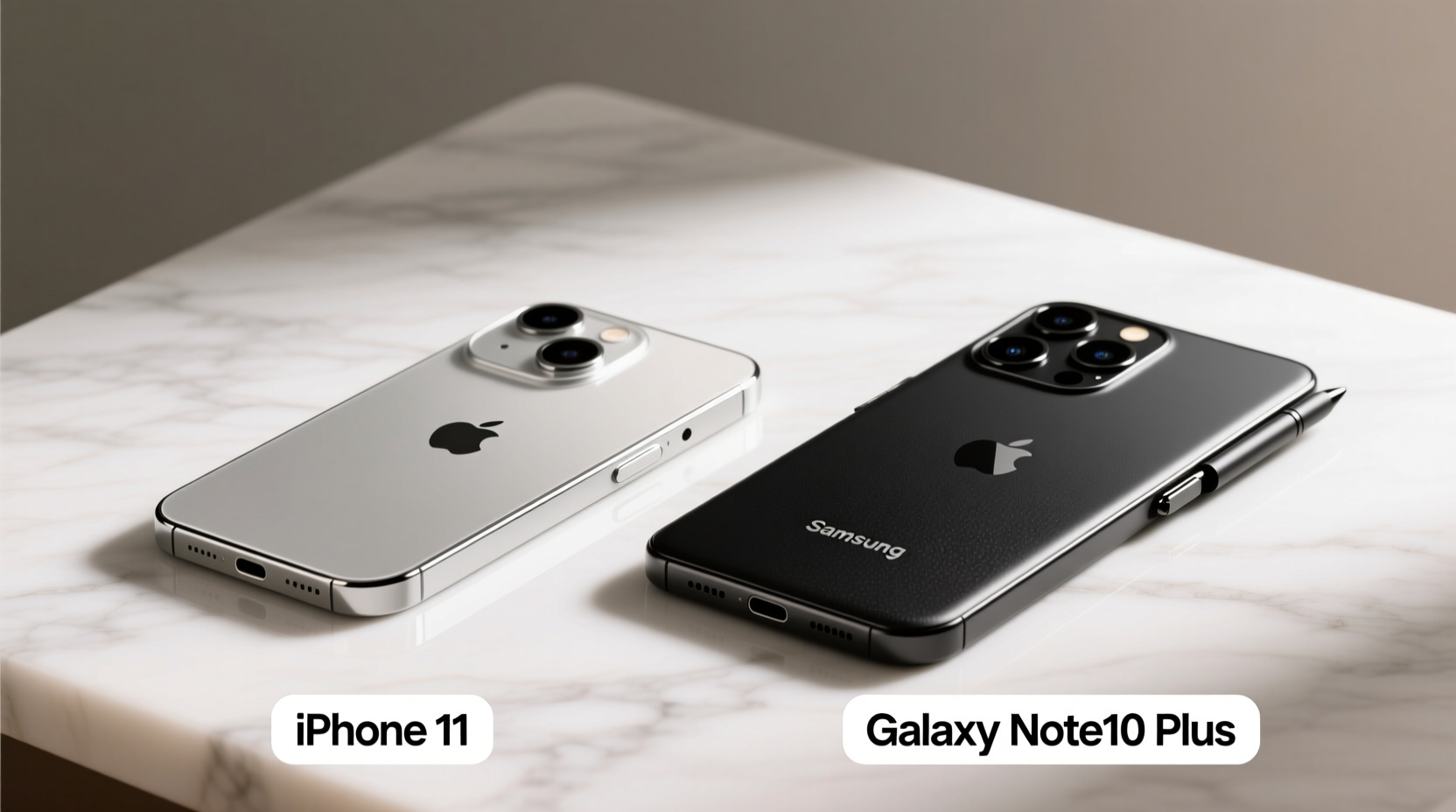
The iPhone 11 features a matte glass back with an aluminum frame, offering a compact and durable design. Its smaller size makes it easier to handle with one hand, though the 6.1-inch LCD screen lacks the vibrancy of OLED competitors. In contrast, the Galaxy Note 10 Plus boasts a 6.8-inch Dynamic AMOLED display with minimal bezels and a hole-punch front camera — a design that still feels modern in 2024.
Samsung’s device includes the S Pen, which fundamentally changes how you interact with the phone. From jotting quick notes to controlling presentations remotely, the stylus adds tangible utility, especially for creatives or professionals. The iPhone 11 has no equivalent feature, relying instead on third-party accessories.
However, the Note 10 Plus is larger and heavier (196g vs. 194g), making it less pocketable. Both phones are IP-rated for water resistance — IP68 for both — so neither sacrifices durability in daily use.
Performance and Software Longevity
Under the hood, the iPhone 11 runs Apple’s A13 Bionic chip, a 7nm processor known for exceptional efficiency and sustained performance. Even in 2024, it handles most apps smoothly, including demanding games and multitasking workflows. iOS continues to support the iPhone 11 with security updates and new features — as of this year, it’s compatible with iOS 17, a testament to Apple’s industry-leading five-year software commitment.
The Galaxy Note 10 Plus uses either the Exynos 9825 or Snapdragon 855, depending on region. While powerful at launch, these chips show signs of aging. Multitasking can lag, app reloads are more frequent, and background processes are less efficient than on the iPhone. More critically, Samsung ended major Android version updates for the Note 10 series after Android 11, with security patches ceasing in late 2023.
“Software longevity is now a key differentiator in smartphone value. After four years, only Apple consistently delivers meaningful updates.” — David Lin, Mobile Analyst at TechInsight Weekly
This divergence is crucial. In 2024, the iPhone 11 receives regular OS improvements and app compatibility, while the Note 10 Plus runs outdated software with growing security risks and limited access to new app features.
Camera Comparison: Strengths on Both Sides
The iPhone 11 introduced Apple’s dual-camera system: a 12MP wide and 12MP ultra-wide lens. Its strength lies in consistency — excellent dynamic range, natural color science, and superior video stabilization. Night mode is effective, and portrait mode reliably separates subjects from backgrounds. Video recording remains top-tier at 4K@60fps, a feature still unmatched by many mid-range phones today.
The Note 10 Plus goes further with four rear cameras: 12MP wide, 16MP ultra-wide, 12MP telephoto, and a DepthVision VGA sensor. It also includes a 10MP front camera with autofocus. While pixel counts don’t tell the whole story, Samsung’s camera excels in versatility. The telephoto lens enables 2x optical zoom, useful for portraits and distant subjects. Its AI-powered scene optimizer enhances colors dramatically, appealing to social media users.
However, image processing can oversaturate skies and skin tones. Low-light performance trails behind the iPhone, with noisier results and slower focusing. Video maxes out at 4K@30fps without the advanced stabilization found in iPhones.
Real-World Example: Travel Photography
Consider a user capturing a sunset at the beach. The iPhone 11 preserves the golden hues naturally, balancing highlights and shadows without over-processing. The Note 10 Plus boosts reds and oranges aggressively, creating a vivid but less accurate representation. Later, when editing photos on a laptop, the iPhone’s HEIF files require conversion for Windows users, while Samsung’s JPEGs are universally compatible — a small but practical trade-off.
Battery Life and Charging: Practical Endurance
The Note 10 Plus holds a 4,300mAh battery, slightly larger than the iPhone 11’s 3,110mAh unit. However, battery capacity doesn’t tell the full story. Thanks to the efficient A13 chip and iOS optimization, the iPhone 11 often lasts a full day under moderate use — around 10–12 hours of screen-on time. The Note 10 Plus, despite its bigger battery, tends to last 8–10 hours due to higher display power consumption and less optimized background processes.
Charging is another differentiator. The Note 10 Plus supports 25W wired fast charging and even 4.5W reverse wireless charging (to power earbuds or watches). The iPhone 11 ships with a 5W charger and supports only 18W fast charging with a separate purchase. Neither supports modern standards like USB-C PD natively in the box.
Detailed Feature Comparison Table
| Feature | iPhone 11 | Galaxy Note 10 Plus |
|---|---|---|
| Release Year | 2019 | 2019 |
| Display | 6.1\" Liquid Retina (LCD) | 6.8\" Dynamic AMOLED |
| Processor | A13 Bionic | Snapdragon 855 / Exynos 9825 |
| Rear Cameras | 12MP Wide + 12MP Ultra-Wide | 12MP Wide + 16MP Ultra-Wide + 12MP Telephoto + VGA Depth |
| Front Camera | 12MP | 10MP (with autofocus) |
| Software Support (2024) | iOS 17, ongoing updates | Android 11, no major updates |
| Battery Capacity | 3,110 mAh | 4,300 mAh |
| Charging | 18W Fast Charging (adapter sold separately) | 25W Fast Charging, Reverse Wireless Charging |
| S Pen | No | Yes |
| Water Resistance | IP68 | IP68 |
Is the Note 10 Plus Worth It in 2024?
The answer depends on your priorities. If you value productivity tools, a large high-quality display, and the S Pen for creative work, the Note 10 Plus still offers unique functionality. Its multimedia capabilities, particularly screen quality and stereo speakers, remain impressive.
But for most users, the iPhone 11 is the smarter long-term choice. Ongoing software support ensures better security, app compatibility, and overall reliability. The A13 chip remains responsive, and iOS 17 introduces new accessibility and privacy features absent on the aging Samsung device.
On the secondary market, prices for both phones have dropped significantly. Yet the iPhone 11 typically commands a slight premium — not because of hardware superiority, but due to proven longevity and resale trust.
Checklist: What to Consider Before Buying Either Phone in 2024
- ✅ Confirm software version: Can it run the latest OS? (iOS 17 vs. Android 11)
- ✅ Test battery health: Replace if capacity is below 80%
- ✅ Evaluate camera needs: Do you need telephoto zoom or stylus input?
- ✅ Check update status: No future updates mean growing security risks
- ✅ Assess accessory compatibility: Lightning vs. USB-C, case availability
Frequently Asked Questions
Can the Galaxy Note 10 Plus get security updates in 2024?
No. Samsung ended official security patches for the Note 10 series in late 2023. While the phone may still function, it’s increasingly vulnerable to emerging threats without updates.
Does the iPhone 11 support 5G?
No. The iPhone 11 uses LTE-only connectivity. If future-proofing for faster networks is important, consider upgrading to iPhone 12 or later.
Is the S Pen essential, or just a gimmick?
For general users, it’s optional. But for students, artists, or professionals who annotate PDFs, sketch, or take frequent notes, the S Pen provides real utility unmatched by any iPhone accessory.
Final Verdict: Choose Based on Use Case
The Galaxy Note 10 Plus was ahead of its time in display design and stylus integration. But in 2024, its outdated software and diminishing performance make it a risky daily driver. The iPhone 11, while less flashy, benefits from Apple’s ecosystem discipline — continued updates, consistent performance, and strong app optimization.
If you’re buying used or helping someone on a tight budget, the iPhone 11 is the safer bet. It will likely remain functional and secure into 2025. The Note 10 Plus should only be considered if you specifically need the S Pen or prefer Android’s customization — and even then, treat it as a short-term solution.




 浙公网安备
33010002000092号
浙公网安备
33010002000092号 浙B2-20120091-4
Comments
No comments yet. Why don't you start the discussion?