
When the iPhone 11 and Samsung Galaxy Note 10 launched in 2019, they represented two of the most compelling flagship experiences on either side of the mobile divide. The iPhone 11 offered Apple’s signature blend of long-term software support and camera consistency, while the Galaxy Note 10 brought a premium S Pen experience, sleek design, and Android flexibility. Three years later, both phones are well beyond their prime, yet they still surface in secondhand markets and budget upgrade conversations. So, which one holds up better as a long-term investment?
This isn’t just about specs or nostalgia—it’s about real-world usability today. For someone considering a used or refurbished device under $300, the decision between these two models can significantly impact daily satisfaction, longevity, and future-proofing.
Performance and Longevity: A Tale of Two Chips
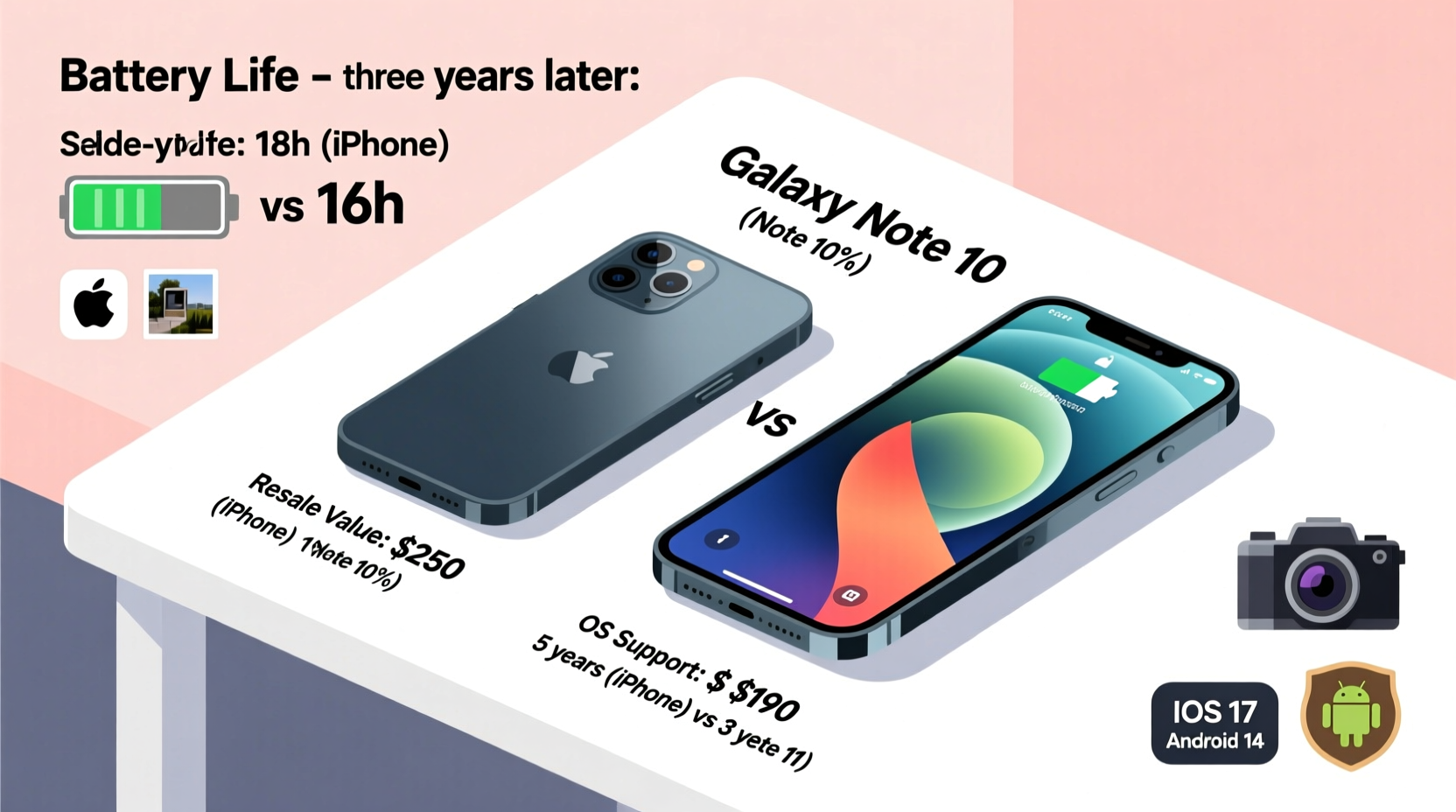
The iPhone 11 was powered by Apple’s A13 Bionic chip, built on a 7nm process with exceptional efficiency and raw power for its time. Even by 2024 standards, the A13 continues to handle iOS 17 smoothly, including multitasking, app launches, and augmented reality features. iOS updates remain optimized for older chips, and Apple’s tight hardware-software integration ensures consistent performance over time.
In contrast, the Galaxy Note 10 ran on either the Exynos 9825 (in Europe) or Snapdragon 855 (in the U.S.), both of which were top-tier Android chips in 2019. However, by 2022, Samsung ended major OS updates for the Note 10, capping it at Android 12 with One UI 4. While security patches trickled through early 2023, the phone no longer receives official support. This means outdated apps, potential compatibility issues, and growing security risks.
Software Experience and Updates
Apple’s update policy gives the iPhone 11 a decisive edge. Launched with iOS 13, it received updates through iOS 17, released in late 2023. That’s five full years of major OS upgrades—each bringing new features, privacy tools, and performance improvements. Users still benefit from features like Stage Manager on iPad-like devices, enhanced Focus modes, and improved Siri integration.
The Galaxy Note 10, despite being a flagship, stopped receiving major Android updates after Android 12. Samsung typically offers three years of OS updates for flagships, and the Note 10 hit that limit in 2022. Without ongoing feature enhancements or modern interface refinements, the user experience feels increasingly dated, especially when compared to newer One UI versions.
“Longevity in smartphones isn’t just about how long the battery lasts—it’s about how long the software keeps evolving.” — David Lin, Mobile Analyst at TechHorizon
Camera Performance Over Time
Both phones had strong cameras in 2019, but their trajectories have diverged. The iPhone 11’s dual-camera system (wide and ultra-wide) benefited from consistent computational photography improvements. Features like Night mode, Deep Fusion, and Smart HDR have been refined across iOS updates, meaning even older hardware captures better photos today than it did at launch.
The Galaxy Note 10 featured a single rear camera (12MP wide + 12MP telephoto + 16MP ultra-wide on the Note 10+) and impressive low-light processing at the time. However, without recent software enhancements, its image processing lacks the dynamic range and noise reduction seen in current Samsung models. Additionally, third-party apps like Instagram and Snapchat may optimize less aggressively for older Galaxy flagships now.
| Feature | iPhone 11 (2024) | Galaxy Note 10 (2024) |
|---|---|---|
| Latest OS | iOS 17 | Android 12 (One UI 4) |
| Security Updates | Active (as of 2024) | Ended (early 2023) |
| Battery Health Support | Yes (replaceable with calibration) | No official health reporting |
| App Optimization | Strong (iOS ecosystem) | Declining (Android fragmentation) |
| S Pen Functionality | N/A | Full support, but limited app integration |
Real-World Use Case: Maria’s Upgrade Dilemma
Maria, a freelance graphic designer based in Austin, needed a reliable secondary phone for client calls and quick sketches. In early 2023, she considered both a refurbished iPhone 11 ($240) and a Galaxy Note 10+ ($190). She valued the S Pen for jotting down ideas but also relied heavily on iCloud for syncing notes and calendars.
She chose the iPhone 11. Though it lacked a stylus, the seamless integration with her MacBook and iPad made workflows faster. She could sketch using third-party styluses on supported apps, and the continued iOS updates meant her device stayed compatible with Adobe Creative Cloud updates. After six months, she reported smoother performance and fewer app crashes than expected. “I didn’t realize how much I’d miss automatic updates until I tried going back to an unsupported Android,” she said.
Battery Life and Hardware Durability
Original battery capacity is critical at this stage. The iPhone 11 came with a 3,110mAh battery and excellent power management. Even with aging batteries, iOS allows users to view battery health and replace batteries affordably (~$69 at Apple), restoring near-original performance.
The Galaxy Note 10’s 3,500mAh battery (Note 10+: 4,300mAh) was competitive, but Samsung doesn’t offer transparent battery health metrics on older models. Third-party replacements exist, but recalibration and quality vary. Many Note 10 units now suffer from rapid drain, especially with background sync and location services active.
Build quality favors the Note 10 slightly—its glass-and-metal frame feels more premium, and the flat display is easier to protect. But the iPhone 11’s aerospace-grade aluminum and IP68 rating have proven durable in real-world drops and spills, particularly with cases.
Value Proposition in 2024
Priced similarly in the used market—between $180 and $260—the iPhone 11 delivers greater long-term value. It supports modern accessories, works with AirPods, Apple Watch, and Find My network, and benefits from App Store optimization. Its cameras still hold up well for social media and video calls.
The Galaxy Note 10’s strongest selling point remains the S Pen. For note-takers, artists, or professionals who rely on precise input, it offers functionality the iPhone 11 can’t match without third-party accessories. However, lack of updates, declining app support, and higher risk of obsolescence make it a riskier investment.
Checklist: Choosing Between iPhone 11 and Galaxy Note 10 in 2024
- ✅ Confirm software version: Is the device on the latest possible OS?
- ✅ Check battery health: Below 80% = reduced lifespan
- ✅ Verify update status: No security patches? Higher vulnerability
- ✅ Assess ecosystem fit: Do you use Apple or Google services daily?
- ✅ Test core functions: Camera, Bluetooth, speaker, charging port
- ✅ Consider future resale: iPhones generally retain value longer
Frequently Asked Questions
Can the Galaxy Note 10 run WhatsApp in 2024?
Yes, but with caveats. WhatsApp officially supports Android 5.0 and above, so the Note 10 can install and run it. However, future updates may drop support for older Android versions, potentially leaving the device behind.
Is the iPhone 11 waterproof after three years?
The iPhone 11 has an IP68 rating (up to 2 meters for 30 minutes), but water resistance degrades over time, especially after drops or repairs. It’s best not to rely on it for swimming or submersion now.
Can I use the S Pen with the iPhone 11?
Not natively. You’d need a third-party capacitive stylus, which lacks pressure sensitivity and palm rejection. For serious drawing, consider an iPad with Apple Pencil instead.
Final Verdict: The iPhone 11 Still Holds the Edge
Three years later, the iPhone 11 emerges as the more practical and future-ready choice. Its combination of sustained software support, consistent performance, and deep ecosystem integration makes it a smarter long-term buy—even at a slightly higher price. While the Galaxy Note 10 was a powerful device in its prime, its discontinuation from updates and shrinking app relevance limits its usefulness today.
For users prioritizing reliability, security, and everyday functionality, the iPhone 11 remains a better deal. The Galaxy Note 10 shines only for niche users who deeply value the S Pen and are comfortable accepting technological limitations.




 浙公网安备
33010002000092号
浙公网安备
33010002000092号 浙B2-20120091-4
Comments
No comments yet. Why don't you start the discussion?