
For many long-time iPhone users, the iPhone 6 Plus was a landmark device—Apple’s first true large-screen offering, marking a shift toward phablets. Released in 2014, it remained a reliable daily driver for years thanks to solid build quality and iOS support. But nearly a decade later, those still clinging to the 6 Plus face a critical question: Is upgrading to the iPhone 11 truly worthwhile, or is this just a case of “bigger” being mistaken for “better”?
The answer isn’t just about screen size or aesthetics. It's about performance, longevity, security, camera quality, and how well your phone fits into today’s digital ecosystem. Let’s break down the key differences and real-world implications of moving from the iPhone 6 Plus to the iPhone 11.
Performance: Night and Day Difference
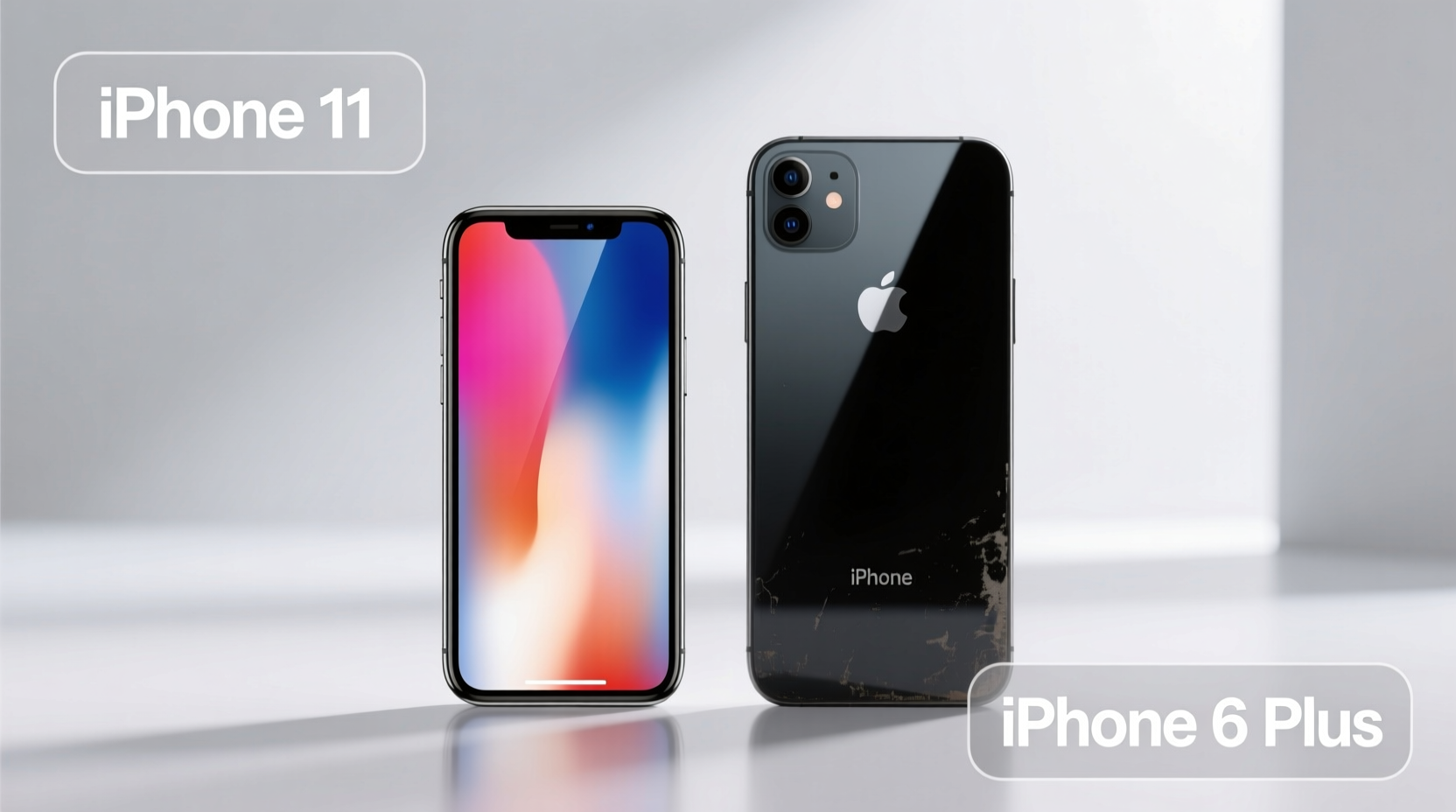
The most immediate change you’ll notice when switching from the iPhone 6 Plus to the iPhone 11 is speed. The 6 Plus runs on Apple’s A8 chip with 1GB of RAM. While revolutionary in 2014, that hardware struggles today with multitasking, app launches, and even basic web browsing on modern sites.
In contrast, the iPhone 11 features Apple’s A13 Bionic chip—one of the fastest mobile processors of its time—with 4GB of RAM. This means apps open instantly, animations are fluid, and background processes don’t cause lag. Even after years of use, the iPhone 11 handles iOS updates and demanding applications like video editing or augmented reality with ease.
iOS has evolved significantly since 2014. Features like Siri shortcuts, on-device machine learning, and advanced photo processing require far more computing power than the A8 can deliver. The iPhone 11 not only keeps up—it anticipates your needs.
Camera Quality: From Decent to Outstanding
The iPhone 6 Plus featured a single 8MP rear camera with basic autofocus and no optical image stabilization (OIS) in low light. While it took acceptable photos in daylight, indoor shots were often blurry or grainy.
The iPhone 11 changed the game with a dual-camera system: a 12MP wide lens and a 12MP ultra-wide lens. More importantly, it introduced Night mode, Deep Fusion, Smart HDR, and improved OIS. The difference in photo quality—especially in low light—is dramatic.
Selfies also saw a major leap. The 6 Plus had a 1.2MP front camera; the iPhone 11 upgraded to a 12MP TrueDepth camera with 4K video recording and slofie capabilities. For anyone who uses FaceTime, shares photos, or records videos, this is a massive improvement.
“Smartphone photography isn’t just about megapixels—it’s about computational imaging. The A13 Bionic enables features that make average lighting look professional.” — David Kim, Mobile Photography Analyst at TechLens
Battery Life and Charging: Real-World Endurance
The iPhone 6 Plus was praised for its battery life in 2014, offering around 10–12 hours of mixed usage. By 2024 standards, however, even a new 6 Plus battery would struggle to last a full day with moderate use.
The iPhone 11 improves on this significantly. Despite a smaller physical battery (3,110mAh vs. 2,915mAh), efficiency gains from the A13 chip and optimized iOS allow for up to 17 hours of video playback. In real-world use, most users get through a full day with room to spare—even with GPS, streaming, and social media.
Additionally, the iPhone 11 supports fast charging (up to 50% in 30 minutes with an 18W adapter, sold separately) and Qi wireless charging. The 6 Plus lacks both, limiting convenience and flexibility.
Durability, Design, and Software Support
Design-wise, both phones have aluminum bodies, but the iPhone 11 features tougher glass (both front and back) and better water resistance (IP68 rating vs. none on the 6 Plus). This means the iPhone 11 can survive accidental drops into water up to 2 meters deep for 30 minutes—something the 6 Plus cannot claim.
Software support is another critical factor. The iPhone 6 Plus stopped receiving iOS updates with iOS 12. While it still functions, it lacks modern security patches, privacy tools, and app compatibility. Many newer apps either won’t install or run poorly on iOS 12.
The iPhone 11 launched with iOS 13 and is compatible with iOS 17, with expectations of iOS 18 support in 2024. That means at least five years of updates—a crucial advantage for security, functionality, and resale value.
Comparison Table: iPhone 11 vs iPhone 6 Plus
| Feature | iPhone 6 Plus | iPhone 11 |
|---|---|---|
| Release Year | 2014 | 2019 |
| Processor | A8 Chip | A13 Bionic |
| Rear Camera | 8MP (Single) | 12MP Wide + 12MP Ultra-Wide |
| Front Camera | 1.2MP | 12MP TrueDepth |
| Battery Life (Video) | Up to 14 hours | Up to 17 hours |
| Charging | Lightspeed (slow) | Fast & Wireless Charging |
| Water Resistance | None | IP68 (2m for 30 mins) |
| iOS Support | Ended at iOS 12 | Up to iOS 17+ (expected) |
| Storage Options | 16/64/128GB | 64/128/256GB |
Real-World Example: Sarah’s Upgrade Journey
Sarah had been using her iPhone 6 Plus since 2015. She loved the size and didn’t see a reason to upgrade—until she tried to use a grocery delivery app that required facial authentication. The app wouldn’t run. Then, her banking app started crashing during login. Photos from her daughter’s birthday party were blurry due to poor low-light performance.
After switching to the iPhone 11, she noticed immediate improvements: apps loaded instantly, night photos looked vibrant, and she could finally use Face ID instead of typing passwords. Most importantly, her phone no longer felt like a bottleneck in her daily routine.
“I thought I was saving money by holding onto my old phone,” Sarah said. “But I was actually wasting time and missing moments. Upgrading gave me back hours each week.”
Checklist: Is It Time to Upgrade?
Ask yourself the following questions. If you answer “yes” to three or more, the iPhone 11—or a similar modern device—is likely a worthwhile upgrade:
- Does your phone take more than 5 seconds to open common apps?
- Do you avoid taking photos in dim lighting?
- Does your battery die before the end of the day?
- Have you stopped receiving iOS updates?
- Do certain apps fail to install or crash frequently?
- Is your phone slow to connect to Wi-Fi or Bluetooth?
- Are you unable to use FaceTime in HD or record quality videos?
Frequently Asked Questions
Can the iPhone 6 Plus still be used in 2024?
Technically, yes—but with major limitations. It runs outdated software, lacks security updates, and many modern apps won’t function properly. It’s suitable only for basic calling and texting at this point.
Is the iPhone 11 still a good buy in 2024?
Absolutely. While newer models exist, the iPhone 11 remains capable of handling everyday tasks, offers excellent camera performance, and will likely receive iOS updates through 2025. Refurbished units are available at affordable prices.
Does screen size matter more than performance?
Screen size is subjective. Some prefer larger displays for media and reading. However, performance affects every interaction. A smooth, responsive interface enhances usability far more than extra inches ever could. The iPhone 11 proves that smarter engineering beats sheer size.
Conclusion: Bigger Isn’t Better—Better Is Better
The iPhone 6 Plus was groundbreaking in its time, but technology has moved on. The iPhone 11 isn’t just a larger phone—it’s a fundamentally superior device in every measurable way. The upgrade isn’t about screen real estate; it’s about capability, reliability, and staying connected in a world that demands more from our devices.
If you’re still using an iPhone 6 Plus, consider what you’re sacrificing: slower performance, weaker security, outdated cameras, and limited app access. The iPhone 11 bridges the gap between legacy and modern smartphone experiences without breaking the bank.




 浙公网安备
33010002000092号
浙公网安备
33010002000092号 浙B2-20120091-4
Comments
No comments yet. Why don't you start the discussion?