
For millions still holding onto an iPhone 7, the question isn’t whether their device works—it does. The real issue is whether upgrading to an iPhone 11 in 2024 makes practical sense. After all, Apple continues to support older devices with iOS updates, and many users report their iPhone 7s still handling daily tasks like messaging, browsing, and even light gaming. But technology evolves quickly, and what feels adequate today may fall short tomorrow. This article breaks down every major difference between the iPhone 7 and iPhone 11 to help you decide if the jump is truly worth it—especially now, years after both phones launched.
Performance and Hardware: A Generational Leap
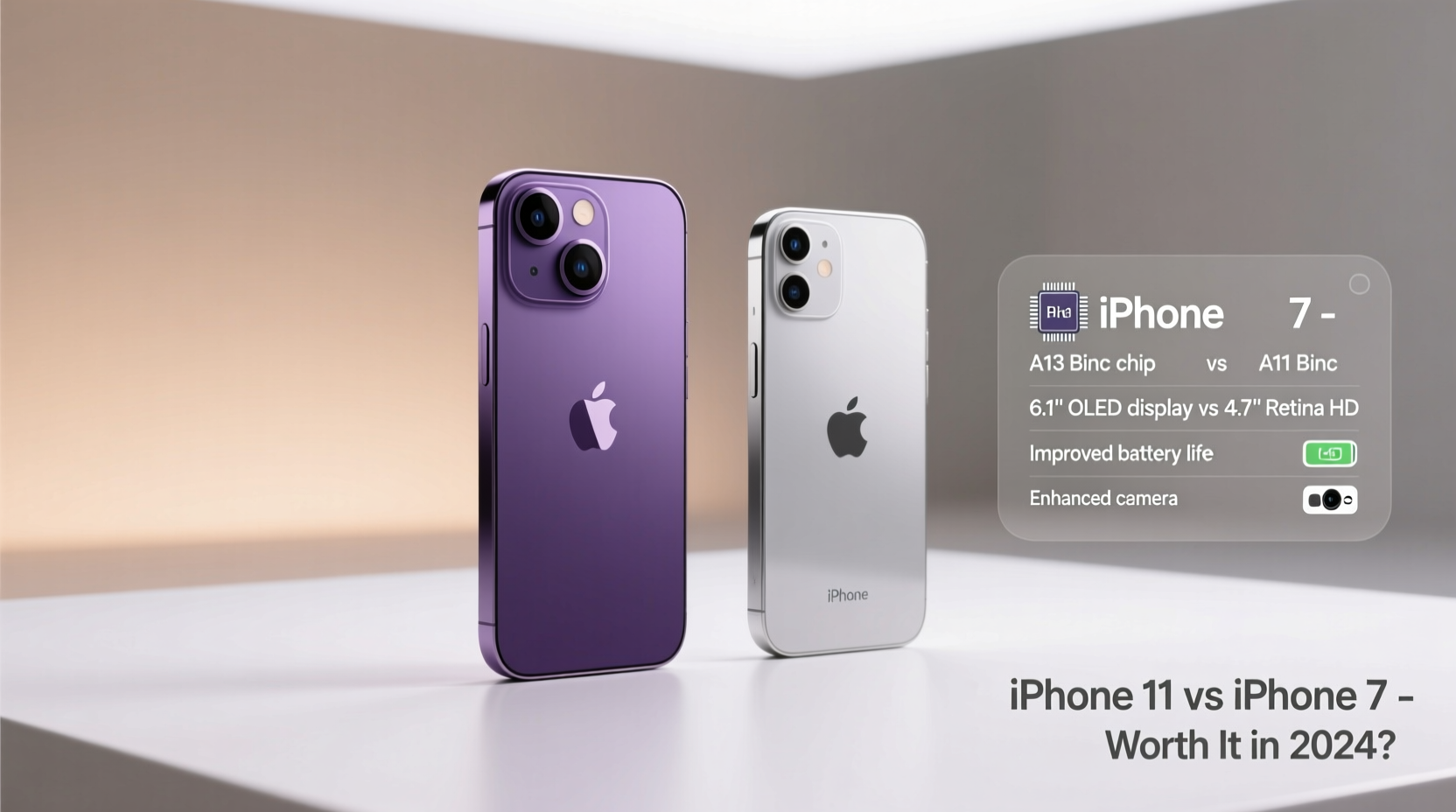
The most significant difference between the iPhone 7 and iPhone 11 lies under the hood. The iPhone 7 runs on Apple’s A10 Fusion chip, a solid performer in its time but now several generations behind. In contrast, the iPhone 11 features the A13 Bionic chip—one of Apple’s most efficient and powerful processors, still capable of handling modern apps and multitasking with ease.
Benchmarks show the A13 delivers nearly twice the CPU performance and over three times the graphics power of the A10. This means smoother app launches, faster photo editing, better augmented reality experiences, and longer software relevance. iOS updates are becoming more demanding, and while the iPhone 7 can run iOS 17, it often struggles with animations, background app refresh, and newer features like Live Text or enhanced Siri intelligence.
Camera Comparison: From Good to Great
The camera systems on these two phones reflect a major shift in Apple’s mobile photography strategy. The iPhone 7 has a single 12MP rear camera with f/1.8 aperture—a respectable shooter for its era, capable of solid daylight photos and decent low-light performance with digital stabilization. However, it lacks Night Mode, Portrait Mode (software-based), and advanced computational photography.
The iPhone 11 changed the game with a dual-camera setup: a 12MP wide lens and a 12MP ultra-wide lens. This allows for greater creative flexibility, including zoomed-out landscape shots and dynamic perspective adjustments. More importantly, the iPhone 11 introduced Night Mode, which dramatically improves low-light photography without flash. Combined with Smart HDR and Deep Fusion, the iPhone 11 captures richer detail, better color accuracy, and more balanced exposures across lighting conditions.
“Smartphone photography isn’t just about megapixels anymore—it’s about how the hardware and software work together. The A13 Bionic enables computational photography that the A10 simply can’t match.” — David Kim, Mobile Imaging Analyst at TechLens Review
Battery Life and Charging: Real-World Impact
Battery degradation is inevitable, especially for iPhone 7 owners who’ve had their devices since 2016. Even with a battery replacement, the original design limited capacity to around 1,960 mAh. In practice, this translates to 8–10 hours of mixed usage, often less as batteries age.
The iPhone 11 packs a 3,110 mAh battery and far more power-efficient components. Apple rated it for up to 17 hours of video playback, and real-world testing shows 12–14 hours of screen-on time under normal use. That’s nearly double the endurance of a well-maintained iPhone 7.
Additionally, the iPhone 11 supports fast charging (up to 50% in 30 minutes with an 18W adapter, sold separately) and Qi wireless charging—features absent from the iPhone 7. While the iPhone 7 charges via Lightning, it maxes out at 5W with the standard charger, making full recharges slow and inconvenient.
Durability, Design, and Longevity
Both phones feature aluminum bodies and glass fronts, but the iPhone 11 improves on durability with better water resistance (IP68 vs IP67). This means it can survive submersion up to 2 meters for 30 minutes, compared to 1 meter for the iPhone 7—useful protection against rain, spills, or accidental drops in sinks.
Design-wise, the iPhone 11 retains the Touch ID-less, bezel-reduced look introduced with the iPhone X. It uses Face ID for secure unlocking, which is faster and more reliable than the aging fingerprint sensor on the iPhone 7—especially when wearing masks or in humid conditions.
| Feature | iPhone 7 | iPhone 11 |
|---|---|---|
| Chipset | A10 Fusion | A13 Bionic |
| Rear Cameras | 12MP (Single) | 12MP Wide + 12MP Ultra-Wide |
| Front Camera | 7MP | 12MP TrueDepth with 4K video |
| Battery Life (Video) | Up to 14 hrs | Up to 17 hrs |
| Charging | Limited 5W, no wireless | Faster charging, Qi wireless |
| Water Resistance | IP67 (1m for 30min) | IP68 (2m for 30min) |
| Biometric Security | Touch ID | Face ID |
| Storage Options | 32GB, 128GB, 256GB | 64GB, 128GB, 256GB |
Real-World Example: Maria’s Upgrade Decision
Maria, a freelance photographer and part-time teacher, used her iPhone 7 for six years. She replaced the battery twice and avoided iOS updates after 15.4 due to lag. Her biggest frustration? Missing shots in dimly lit classrooms because the camera couldn’t focus quickly enough. Editing Lightroom presets took over a minute to apply, and FaceTime calls would drop unexpectedly during school pickups.
After switching to a used iPhone 11 in early 2024, she noticed immediate improvements: faster photo processing, stable video calls, and the ability to shoot in near-darkness using Night Mode. “It felt like going from dial-up to broadband,” she said. “I didn’t realize how much I was compromising until I upgraded.”
Is the Upgrade Worth It in 2024?
The answer depends on your needs and expectations. If you're satisfied with basic functionality—calls, texts, social media, and occasional photos—the iPhone 7 might still suffice. However, consider these factors:
- You’re experiencing frequent app crashes or long load times.
- Your battery dies before lunchtime, even after a replacement.
- You want to use modern features like AR apps, AirDrop enhancements, or SharePlay.
- You take photos regularly and want better quality without carrying a separate camera.
- You plan to keep your next phone for 2+ years and need future-proofing.
Checklist: Should You Upgrade?
Answer “yes” to two or more of these, and the iPhone 11 upgrade is likely worthwhile:
- Does your iPhone 7 take more than 10 seconds to open heavy apps like Instagram or Google Maps?
- Have you noticed increased app crashes or system freezes?
- Do you charge your phone more than once a day?
- Are you unable to install the latest iOS version?
- Do you wish your photos looked better in low light?
- Do you want wireless charging or better water resistance?
Frequently Asked Questions
Can the iPhone 7 still run iOS 17?
Yes, the iPhone 7 and 7 Plus are compatible with iOS 17. However, performance may be sluggish, particularly with multitasking, animations, and newer features like StandBy mode or improved autocorrect.
Is the iPhone 11 waterproof?
The iPhone 11 has an IP68 rating, meaning it’s dust-tight and can withstand being submerged in up to 2 meters of water for 30 minutes. It’s not fully waterproof under all conditions, but it offers strong protection against spills and rain.
Will apps stop working on the iPhone 7 soon?
While core apps still function, developers are increasingly optimizing for A12 and newer chips. Over time, some apps may drop support for older devices. For example, TikTok and Snapchat have already reduced functionality on pre-A11 iPhones.
Conclusion: Time to Move Forward
The iPhone 7 was a landmark device in Apple’s history—the first to remove the headphone jack, improve water resistance, and deliver a brighter Retina display. But five years of technological progress have made the iPhone 11 a vastly superior choice for anyone serious about staying connected, productive, and creative in 2024.
Upgrading isn’t just about better specs; it’s about reclaiming time, reducing frustration, and accessing tools that enhance everyday life. Whether it’s capturing memories in stunning clarity, enjoying longer battery life, or simply having a phone that keeps up with your pace, the iPhone 11 delivers tangible benefits that go beyond numbers.




 浙公网安备
33010002000092号
浙公网安备
33010002000092号 浙B2-20120091-4
Comments
No comments yet. Why don't you start the discussion?