
For millions of iPhone 7 Plus owners still holding onto a device released in 2016, the question isn’t just about desire—it’s about practicality. Is upgrading to the iPhone 11, now several years old itself, still a worthwhile move in today’s smartphone landscape? With app demands growing, iOS updates becoming more resource-intensive, and mobile photography expectations rising, clinging to an older device can feel increasingly limiting. Yet, the iPhone 7 Plus was built to last, and many units still function reliably. This article breaks down the real differences between these two models—not just on paper, but in everyday use—and helps you decide whether making the jump makes financial and functional sense.
Performance: A Generational Leap
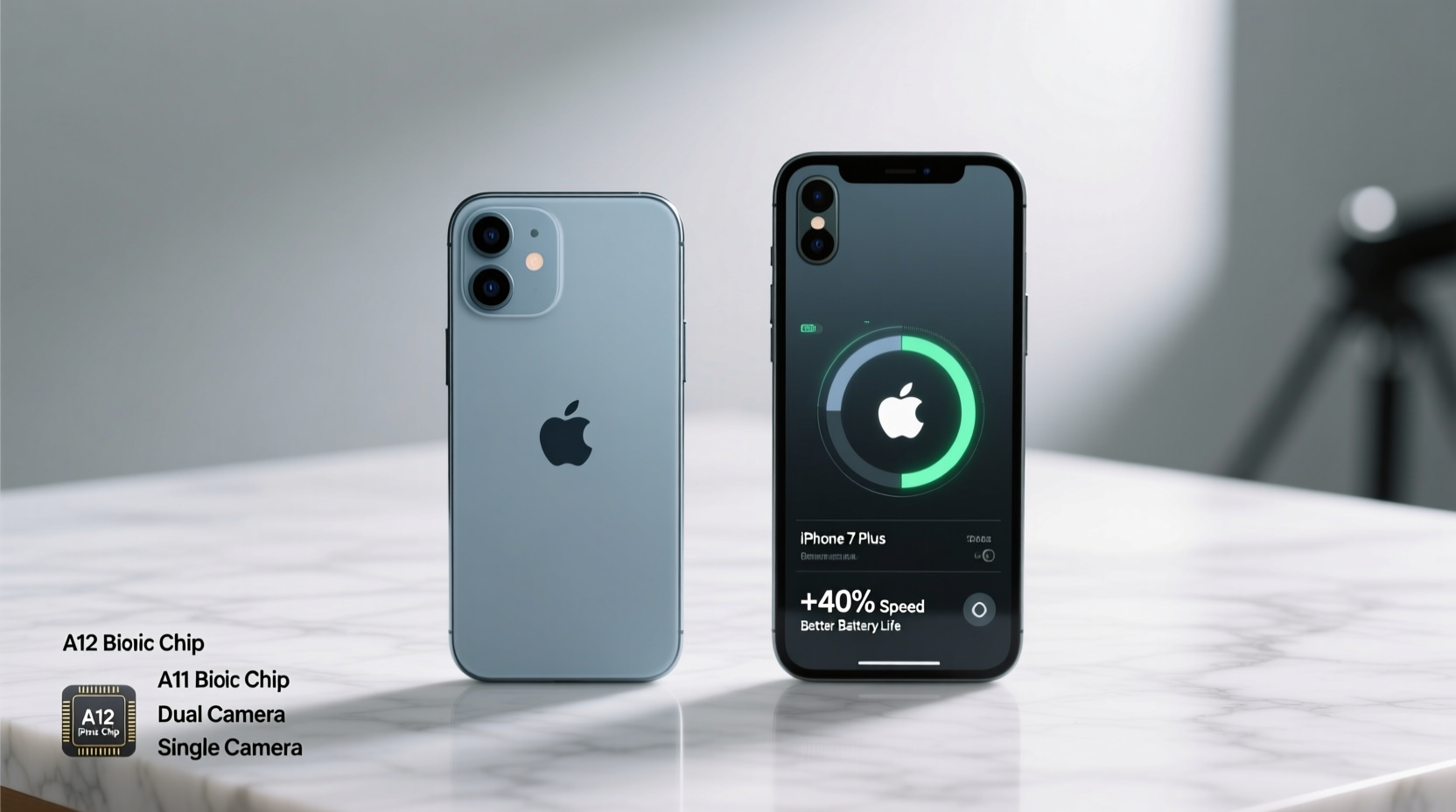
The most significant upgrade from the iPhone 7 Plus to the iPhone 11 lies under the hood. The iPhone 7 Plus runs Apple’s A10 Fusion chip, a solid performer in its time but now struggling with modern multitasking, augmented reality apps, and even some newer versions of iOS. In contrast, the iPhone 11 features the A13 Bionic chip—one of Apple’s most efficient and powerful processors, still capable of handling iOS 17 smoothly.
Real-world impact is immediate. Apps launch faster, background switching is seamless, and games like Genshin Impact or Call of Duty Mobile run at higher frame rates without throttling. Even routine tasks—scrolling through social media, loading maps, or editing photos—feel noticeably snappier on the iPhone 11.
Camera Comparison: Night Mode and Beyond
Photography has evolved dramatically between these two models. The iPhone 7 Plus introduced dual cameras with optical zoom and portrait mode, which was revolutionary in 2016. But the iPhone 11 brings computational photography into the mainstream with Night mode, Deep Fusion, and Smart HDR.
Night mode alone transforms low-light photography. Where the iPhone 7 Plus produces grainy, dark images after sunset, the iPhone 11 captures bright, detailed shots with accurate colors—even in near-darkness. Deep Fusion enhances texture and detail in mid-to-low light, while Smart HDR balances highlights and shadows far more effectively than the older model.
The front-facing camera also sees a major upgrade—from 7MP on the 7 Plus to 12MP on the iPhone 11, supporting 4K video and slo-mo selfies. For users who regularly take video calls, record content, or share moments on social media, this difference is tangible.
“Even without changing user habits, moving from iPhone 7 Plus to iPhone 11 typically results in a 30–50% improvement in photo quality across lighting conditions.” — David Lin, Mobile Imaging Analyst at TechPulse Insights
Battery Life and Charging: Practical Daily Differences
Battery degradation is inevitable in phones over five years old. Even if your iPhone 7 Plus shows 80% health, actual performance often falls short due to inconsistent power delivery and heat sensitivity. Apple rated the 7 Plus for up to 13 hours of video playback; the iPhone 11 offers up to 17 hours—a meaningful increase in real use.
More importantly, the iPhone 11 supports faster charging (with a compatible adapter) and Qi wireless charging—neither of which the 7 Plus offers. While the 7 Plus uses Lightning, upgrading allows access to a broader ecosystem of charging pads and accessories.
| Feature | iPhone 7 Plus | iPhone 11 |
|---|---|---|
| Chipset | A10 Fusion | A13 Bionic |
| Rear Cameras | Dual 12MP (Wide + Telephoto) | Dual 12MP (Ultra-Wide + Wide) |
| Front Camera | 7MP | 12MP |
| Low-Light Performance | No Night Mode | Night Mode with AI processing |
| Video Recording | 4K at 30fps | 4K at 60fps, extended dynamic range |
| Battery Life (Video Playback) | Up to 13 hours | Up to 17 hours |
| Charging | Wired only (slow charge) | Wired + Wireless, Fast Charging supported |
| Water Resistance | IP67 (up to 1m for 30 min) | IP68 (up to 2m for 30 min) |
Real-World Example: Sarah’s Upgrade Decision
Sarah, a freelance photographer and part-time rideshare driver, used her iPhone 7 Plus for nearly six years. She relied on it for navigation, client communication, and capturing portfolio shots. By 2023, she noticed delays when switching between Maps and messaging apps, frequent app crashes, and poor photo quality in dimly lit venues.
She considered buying a refurbished iPhone 11 for $299. After testing one at a local reseller, she found that GPS response improved, apps loaded instantly, and her night shots were usable without editing. Within three weeks, she upgraded. “It felt like getting a new job tool,” she said. “I’m not just catching up—I’m finally keeping pace.”
Her experience reflects a broader trend: professionals and casual users alike benefit significantly from moving beyond the A10 platform when their workflow depends on reliability and responsiveness.
Is It Worth Upgrading in 2024?
The answer depends on your usage patterns and expectations. Here’s a checklist to help you decide:
- Do apps frequently crash or freeze on your iPhone 7 Plus?
- Have you noticed slower performance since the last iOS update?
- Are you unable to install newer apps due to compatibility issues?
- Do you struggle with poor photo quality, especially indoors or at night?
- Is your battery life less than 5 hours of active use?
- Do you want wireless charging or better water resistance?
If you answered yes to two or more of these, upgrading to the iPhone 11—or even a newer budget model—will likely improve your daily experience. The iPhone 11 remains available through certified refurbishers and carriers at competitive prices, often under $300, making it a cost-effective middle ground.
Frequently Asked Questions
Can the iPhone 7 Plus still run the latest iOS?
The iPhone 7 Plus supports up to iOS 16. It does not receive iOS 17 or later updates. While it still functions, lack of future security patches and feature updates limits long-term viability.
How much faster is the iPhone 11 than the iPhone 7 Plus?
Geekbench scores show the A13 Bionic is roughly 2.5x faster in single-core performance and 3x in multi-core tasks. Real-world usage reflects this: app launches, photo processing, and system animations are significantly smoother.
Is the iPhone 11 waterproof?
The iPhone 11 has an IP68 rating, meaning it can survive submersion up to 2 meters for 30 minutes. The iPhone 7 Plus is IP67-rated (1 meter for 30 minutes), offering less protection against accidental spills or rain exposure.
Final Verdict: To Upgrade or Not?
For users still relying on an iPhone 7 Plus in 2024, the decision to upgrade should be framed not as luxury, but as necessity. Technology evolves, and so do our digital demands. Messaging apps require more memory, social platforms prioritize high-resolution video, and navigation tools consume more processing power—all areas where the iPhone 11 outperforms its predecessor decisively.
The iPhone 11 isn’t the newest phone on the market, but it strikes a rare balance: modern performance, excellent camera capabilities, strong software support (expected through 2026), and affordable pricing on the secondary market. If your iPhone 7 Plus is showing signs of strain, upgrading now can save you frustration and deliver years of reliable service.




 浙公网安备
33010002000092号
浙公网安备
33010002000092号 浙B2-20120091-4
Comments
No comments yet. Why don't you start the discussion?