
The evolution of the iPhone has brought subtle but meaningful changes in design, performance, and user experience. When comparing the iPhone 11 and the iPhone X, one of the most noticeable differences is the screen size. But beyond the numbers, does that difference actually influence how you use your phone every day? For many users, screen size isn’t just about specs—it’s about comfort, readability, multitasking, and long-term satisfaction. This article breaks down the real-world implications of screen size between these two models, backed by practical insights and user behavior.
Screen Specifications: The Numbers Behind the Difference
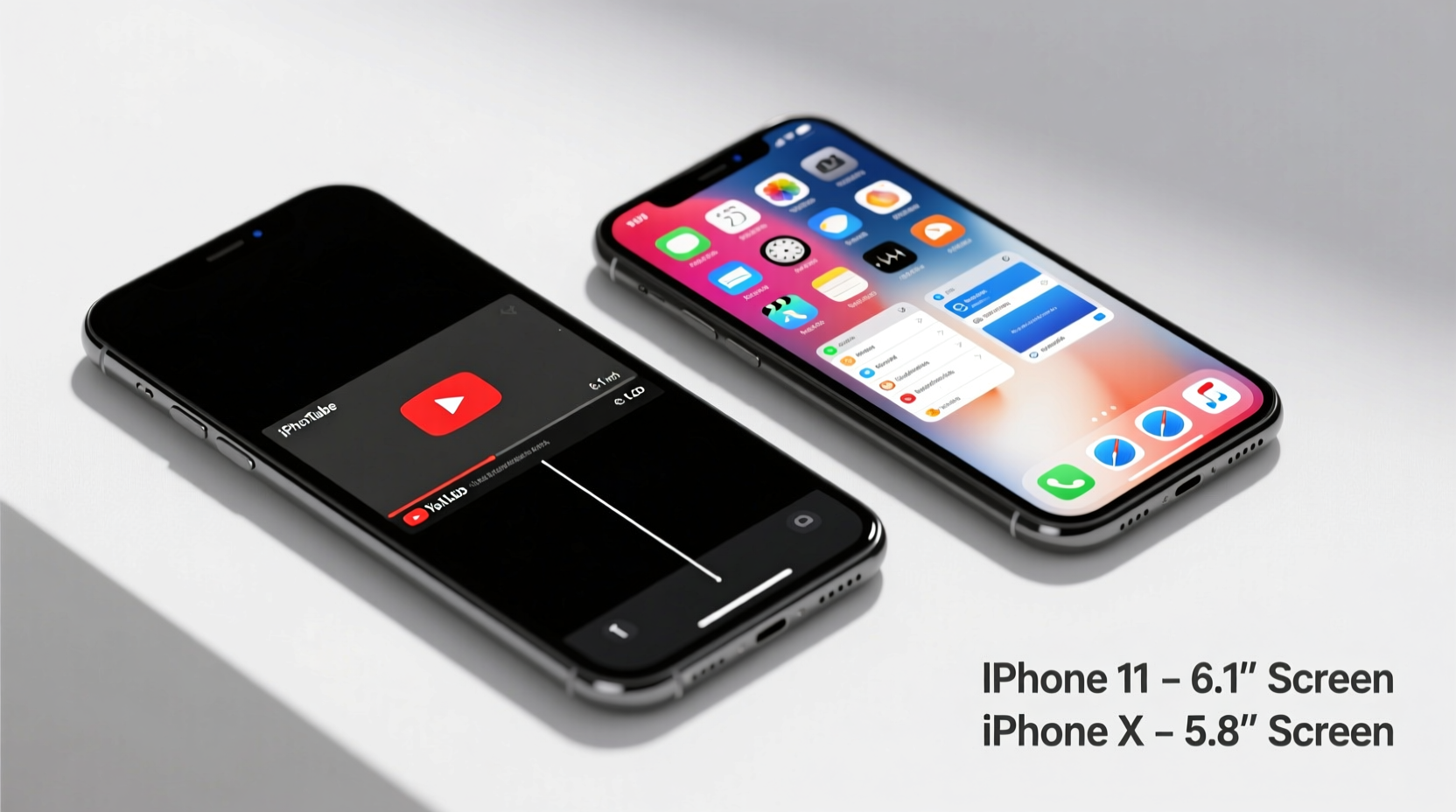
The iPhone X, released in 2017, features a 5.8-inch Super Retina OLED display with a resolution of 2436 x 1125 pixels. In contrast, the iPhone 11, launched in 2019, comes with a slightly larger 6.1-inch Liquid Retina LCD display at 1792 x 828 pixels. On paper, the iPhone 11 offers more screen real estate, but the technologies differ—OLED versus LCD—which affects color depth, contrast, and power efficiency.
| Feature | iPhone X | iPhone 11 |
|---|---|---|
| Display Size | 5.8 inches | 6.1 inches |
| Display Type | Super Retina OLED | Liquid Retina LCD |
| Resolution | 2436 x 1125 px | 1792 x 828 px |
| PPI (Pixels Per Inch) | 458 | 326 |
| Aspect Ratio | 19.5:9 | 19.5:9 |
While the iPhone 11’s screen is physically larger, the OLED panel on the iPhone X delivers deeper blacks and better contrast, making media viewing more immersive despite the smaller size. However, the extra 0.3 inches on the iPhone 11 translates to more visible content in apps, emails, and web pages—especially beneficial for reading and navigation.
Real-World Usability: How Screen Size Impacts Daily Tasks
Screen size influences more than just aesthetics—it shapes how we interact with our devices. A larger screen allows for bigger touch targets, which can improve typing accuracy and reduce accidental taps. For users with larger fingers or those who type quickly, this can make a tangible difference.
In messaging apps like iMessage or WhatsApp, the iPhone 11 displays more conversation history without scrolling. Web browsing becomes smoother as more of the page loads into view, reducing the need to pinch and zoom. Video calls on FaceTime or Zoom also benefit from the expanded canvas, offering a clearer view of participants.
However, the iPhone X’s compact form factor still holds appeal. It fits more comfortably in one hand, especially for users with smaller palms. Swiping up from the bottom bezel-less interface feels more natural when the screen doesn’t stretch too far across the thumb’s reach zone.
“Display size should align with your primary usage. If you consume a lot of media or multitask across apps, even half an inch makes a functional difference.” — David Lin, Mobile UX Designer at Bay Area Tech Studio
Mini Case Study: Two Users, Two Preferences
Consider Sarah, a freelance writer who reads manuscripts and edits documents on her phone during commutes. She upgraded from an iPhone X to an iPhone 11 and noticed immediate benefits: fewer line breaks per screen, easier text selection, and less zooming when reviewing PDFs. The extra screen space reduced fatigue during extended sessions.
On the other hand, James, a photographer who values portability and precision, stuck with his iPhone X. He appreciated the tighter dimensions for quick photo reviews in the field and found the OLED colors truer to life when editing images on the go. Despite the smaller screen, he rarely watches videos or browses long articles, so the trade-off made sense.
Their experiences highlight a key truth: screen size matters most when it aligns with your habits. There’s no universal “better”—only what works best for your lifestyle.
Performance and Battery: Hidden Trade-Offs
A larger screen typically demands more power. Yet, the iPhone 11 outperforms the iPhone X in battery life despite its bigger display, thanks to a more efficient A13 Bionic chip and a larger battery capacity (3110 mAh vs. 2716 mAh). Apple optimized hardware and software synergy to offset the energy cost of the increased screen size.
- iPhone X: Up to 13 hours video playback
- iPhone 11: Up to 17 hours video playback
This means the iPhone 11 not only gives you more screen but sustains it longer. For heavy users—those streaming music, using GPS, or gaming—the combination of screen size and endurance is a significant advantage.
Checklist: Choosing Based on Your Needs
Before deciding between the iPhone 11 and iPhone X, ask yourself the following questions. Check off what applies to your routine:
- Do I spend more than 30 minutes daily watching videos or reading on my phone? ☐
- Do I often reply to long emails or edit documents? ☐
- Is one-handed use important when walking or commuting? ☐
- Do I prioritize deep blacks and vibrant contrast in photos and movies? ☐
- Am I sensitive to phone weight or pocket bulk? ☐
- Do I value longer battery life over absolute display quality? ☐
If you checked more items in the first three, the iPhone 11’s larger screen likely suits you. If the latter three resonate more, the iPhone X remains a strong contender despite its age.
Frequently Asked Questions
Is the iPhone 11 screen significantly harder to reach with one hand?
For most users, yes—especially those with smaller hands. The top corners require a stretch or a shift to two-handed use. However, iOS gestures are designed to minimize top-screen interaction, so daily navigation remains manageable.
Does the iPhone X’s OLED justify keeping it over the newer iPhone 11?
If display quality is your top priority—especially for photo review or dark-mode browsing—then yes. OLED provides superior contrast and true blacks. But keep in mind that the iPhone 11 supports advanced features like Night mode and improved water resistance, which may outweigh display preferences.
Can screen size affect eye strain over time?
Indirectly, yes. A larger screen allows for better text scaling and reduces the need to squint or zoom. Combined with proper brightness settings and regular breaks, it can contribute to more comfortable long-term use.
Conclusion: Screen Size Matters—But Context Matters More
The iPhone 11’s larger screen does offer measurable advantages in content visibility, multitasking, and media consumption. However, the iPhone X counters with superior display technology and a more compact build. Whether screen size \"really matters\" depends entirely on how you use your phone.
For digital readers, commuters, and media consumers, the extra 0.3 inches on the iPhone 11 enhances daily usability. For photographers, minimalists, or those who value pocketability, the iPhone X’s sleek profile and OLED clarity remain compelling.
Rather than chasing specs, focus on alignment: does the device fit your habits, not just your expectations? Technology serves us best when it disappears into our routines—smooth, intuitive, and unnoticed. Choose the screen that helps you forget you’re even looking at one.




 浙公网安备
33010002000092号
浙公网安备
33010002000092号 浙B2-20120091-4
Comments
No comments yet. Why don't you start the discussion?