
When Apple released the iPhone 11 in 2019, it positioned the device as a more accessible alternative to the premium iPhone XS Max from the previous year. While both phones deliver solid performance and build quality, one of the most debated aspects has been whether the iPhone 11’s newer camera system justifies upgrading from the iPhone XS Max—especially for users who prioritize photography. The answer isn’t always straightforward, but by examining sensor technology, computational photography, low-light capabilities, and real-world usability, a clearer picture emerges.
Camera Hardware: A Closer Look
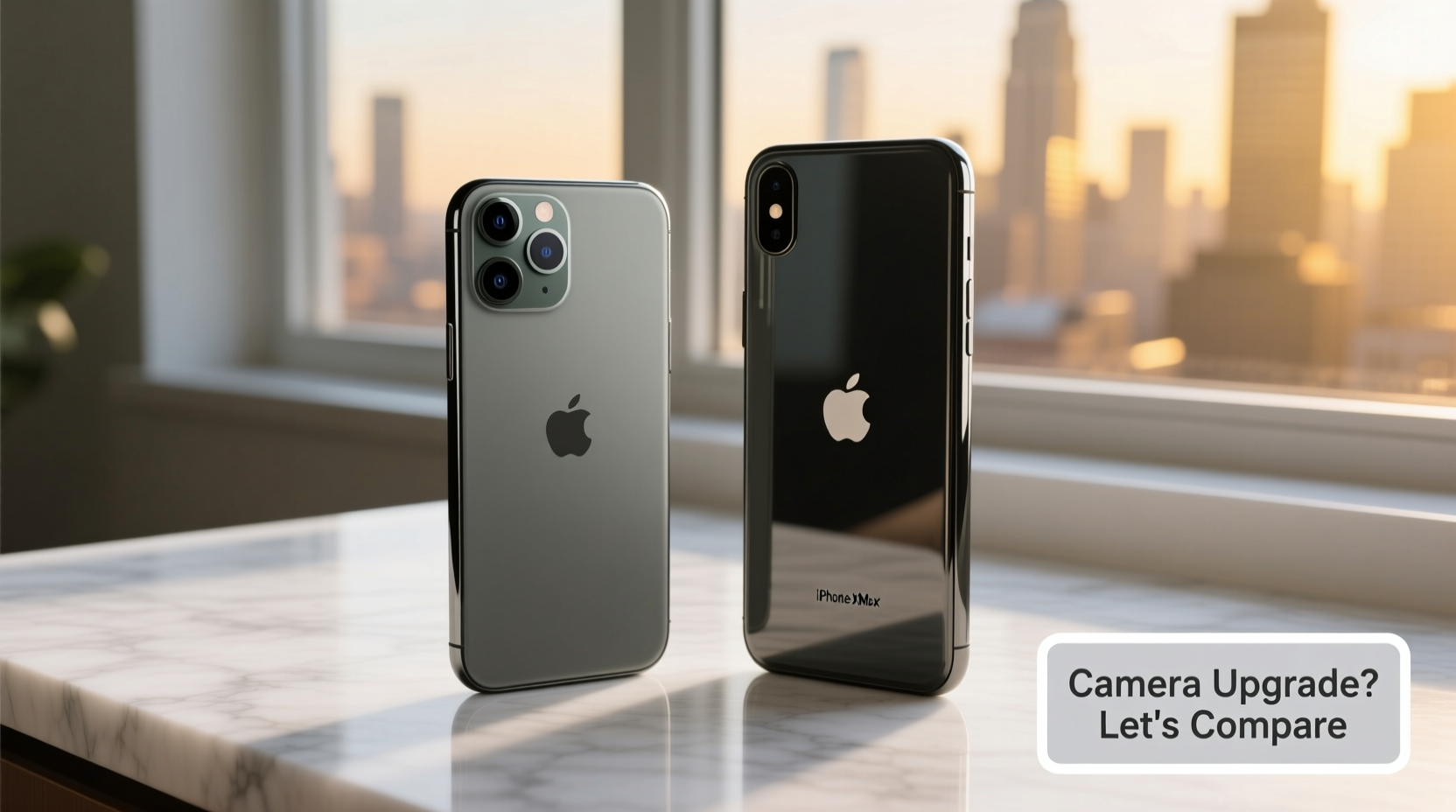
The iPhone XS Max features a dual-camera setup with a 12MP wide lens (f/1.8) and a 12MP telephoto lens (f/2.4), supporting 2x optical zoom and portrait mode with depth control. It was Apple’s flagship imaging solution at the time and produced excellent dynamic range and color accuracy.
In contrast, the iPhone 11 introduced a new ultra-wide lens (12MP, f/2.4) alongside a similarly specified wide lens (12MP, f/1.8). Notably, the telephoto lens was retained only on the iPhone 11 Pro models—not the base iPhone 11. This means the iPhone 11 lacks optical zoom, relying instead on digital cropping and software enhancement.
Computational Photography: Where iPhone 11 Shines
The real leap between these two devices lies not in hardware alone, but in software. The iPhone 11 runs on the A13 Bionic chip, which powers advanced machine learning algorithms that enhance photo quality in ways the A12-powered XS Max cannot match.
One standout feature is Night Mode. Introduced with the iPhone 11, this mode automatically activates in low-light environments, capturing multiple exposures over 1–3 seconds to produce brighter, more detailed images with reduced noise. The XS Max, despite receiving iOS updates, does not support Night Mode due to hardware and processing limitations.
“Night Mode fundamentally changed how we capture dimly lit scenes. It's not just about brightness—it’s about preserving texture and natural color.” — David Kim, Mobile Imaging Analyst at TechVision Labs
Additionally, Smart HDR on the iPhone 11 is significantly improved. It analyzes faces, textures, and lighting conditions across the frame to balance highlights and shadows more intelligently than the first-generation Smart HDR on the XS Max.
Low-Light Performance Comparison
In side-by-side tests conducted in indoor restaurants, city streets at dusk, and poorly lit rooms, the iPhone 11 consistently outperforms the XS Max. Shadows reveal more detail, skin tones remain accurate, and noise is minimized even when pushing exposure in post-processing.
The wider aperture on the XS Max helps, but without Night Mode and the faster image signal processor, it often produces darker images with crushed blacks and blown-out highlights. The iPhone 11 compensates for its lack of telephoto with superior stabilization and longer shutter times made possible by motion detection and gyro input.
Real-World Example: Concert Photography
Sophia, a music blogger based in Austin, used her iPhone XS Max for concert photography throughout 2019. After switching to the iPhone 11, she noticed a dramatic improvement in backstage and stage-edge shots where lighting is erratic.
\"I used to rely heavily on flash or external lights, but now I can shoot handheld during acoustic sets and get usable images,\" she said. \"The clarity in dark corners of venues is something my old phone simply couldn’t deliver—even with manual editing apps.\"
Zoom and Portrait Capabilities: Trade-offs to Consider
While the iPhone 11 wins in low light and wide-angle flexibility, the XS Max maintains strengths in specific areas:
- Optical Zoom: The 2x telephoto allows tighter framing without quality loss.
- Portrait Mode Consistency: On the XS Max, edge detection for hair and glasses is slightly more refined in controlled lighting.
- Lens Quality: The f/1.8 wide lens on the XS Max uses a six-element design compared to the five-element lens on the base iPhone 11, potentially offering better sharpness at maximum aperture.
However, the iPhone 11 introduces Quick Take video recording—allowing users to switch instantly from photo to video by holding down the shutter button. This responsiveness adds practical value for spontaneous moments.
Detailed Feature Comparison
| Feature | iPhone 11 | iPhone XS Max |
|---|---|---|
| Wide Camera | 12MP, f/1.8, 5-element lens | 12MP, f/1.8, 6-element lens |
| Secondary Lens | Ultra-Wide (12MP, f/2.4) | Telephoto (12MP, f/2.4, 2x zoom) |
| Night Mode | Yes (Auto on Wide & Ultra-Wide) | No |
| Smart HDR | Second Generation (A13-enhanced) | First Generation (A12) |
| Deep Fusion | Yes (mid-lighting optimization) | No |
| Video Recording | 4K @ 60fps, Extended Dynamic Range up to 60fps | 4K @ 60fps, HDR up to 30fps |
| Quick Take Video | Yes | No |
Should You Upgrade? A Practical Checklist
Deciding whether to move from the iPhone XS Max to the iPhone 11 depends on your priorities. Use this checklist to evaluate your needs:
- Do you often take photos in dim lighting (restaurants, evening walks)? → iPhone 11 preferred
- Do you value wide-angle shots for landscapes or group selfies? → iPhone 11 adds versatility
- Do you regularly use optical zoom for portraits or distant subjects? → XS Max remains better
- Are you interested in future-proof software features and longer iOS support? → iPhone 11 has longer update runway
- Is battery life a concern? → iPhone 11 lasts up to 1 hour longer
Frequently Asked Questions
Can the iPhone XS Max be updated to use Night Mode?
No. Despite running the same iOS versions, Night Mode requires specific hardware calibration and sensor data processing only available on iPhone 11 and later models. Apple did not backport this feature.
Is the ultra-wide lens on the iPhone 11 worth losing the telephoto?
For most casual photographers, yes. The ultra-wide opens creative possibilities for architecture, travel, and tight-space photography. However, users who frequently shoot portraits or wildlife may miss the optical zoom.
Does Deep Fusion make a visible difference?
Yes, particularly in mid-to-low light with textured subjects like fabric, foliage, or hair. It enhances fine detail while suppressing noise, resulting in more lifelike images. It operates automatically and is unavailable on the XS Max.
Final Verdict: Is the Upgrade Worth It?
The iPhone 11’s camera system represents a meaningful evolution in mobile photography, not because of radical hardware changes, but due to smarter software and enhanced computational capabilities. For users coming from the iPhone XS Max, the decision hinges on usage patterns.
If you value vibrant low-light performance, greater scene flexibility with the ultra-wide lens, and access to modern features like Night Mode and Deep Fusion, the upgrade is absolutely worthwhile—even if you sacrifice optical zoom.
On the other hand, if your photography leans toward portraiture, close-ups, or you already have a well-lit environment most of the time, the XS Max still delivers professional-grade results. Its color science and lens rendering remain highly respected.
Conclusion
The iPhone 11 doesn’t just improve upon the XS Max—it redefines what’s possible in everyday smartphone photography through intelligent processing and user-centric design. While the XS Max was built for refinement, the iPhone 11 was engineered for adaptability. Whether the upgrade makes sense for you depends less on specs and more on how you use your phone to capture life.




 浙公网安备
33010002000092号
浙公网安备
33010002000092号 浙B2-20120091-4
Comments
No comments yet. Why don't you start the discussion?