
When Apple released the iPhone 11 in 2019, it positioned the device as a more affordable successor to the premium iPhone XS Max from the year before. For users still on the XS Max—or considering an upgrade from an older model—the question remains: does the iPhone 11 offer enough meaningful improvements to justify switching? While the XS Max was a flagship powerhouse with a sleek design and top-tier display, the iPhone 11 brought notable advancements in battery life, camera capabilities, and pricing. But is “newer” always better?
This comparison dives deep into real-world performance, user experience, and long-term value to help you decide whether stepping down in screen size and build quality for gains in efficiency and cost savings makes sense.
Design and Build: Premium vs Practical
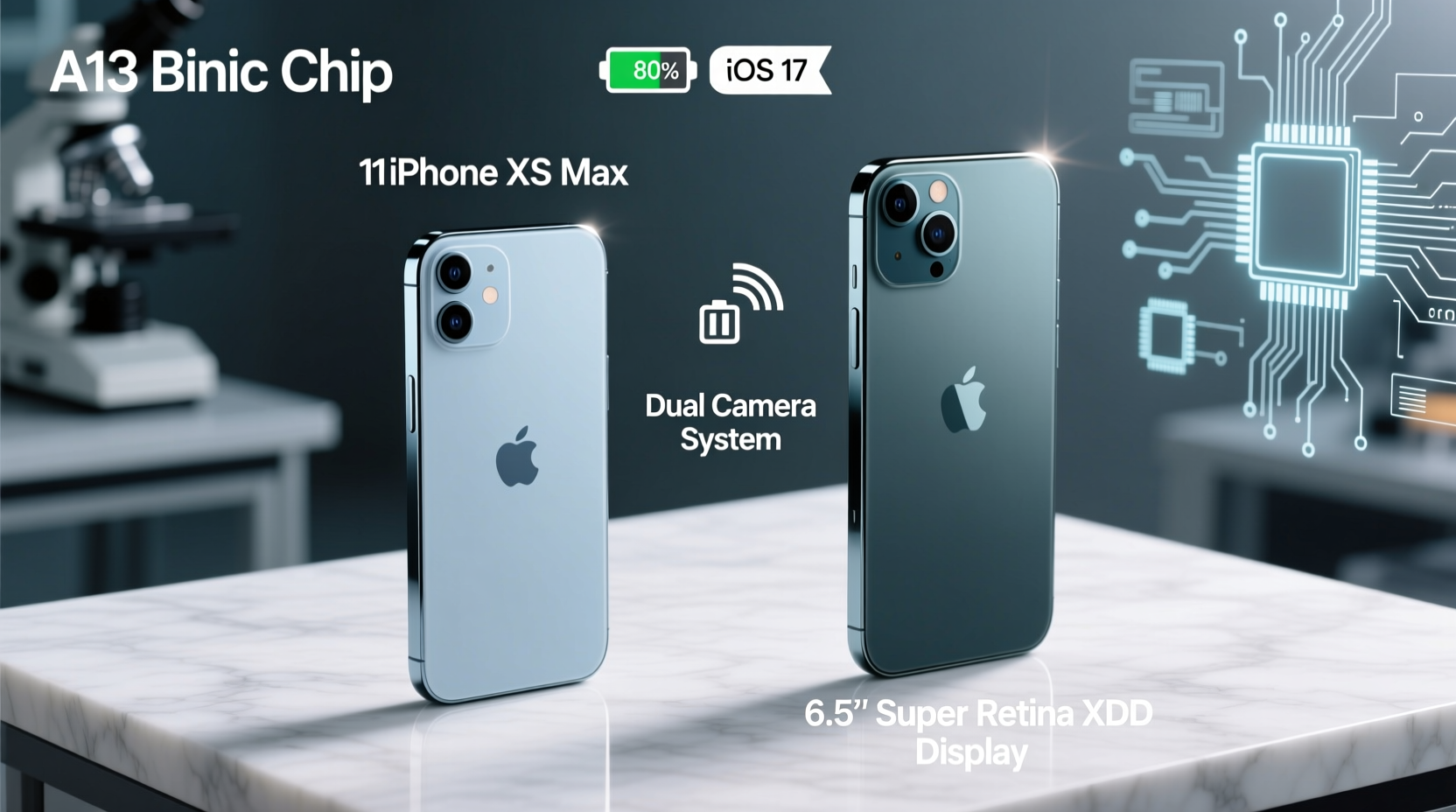
The iPhone XS Max represented the peak of Apple’s pre-2020 design language—stainless steel frame, glass back, and an edge-to-edge OLED Super Retina display measuring 6.5 inches. It felt luxurious in hand, though its weight (208 grams) made it one of the heaviest iPhones ever made.
In contrast, the iPhone 11 adopted a more utilitarian approach. It uses aluminum instead of stainless steel, reducing the weight to 194 grams. The 6.1-inch Liquid Retina LCD display lacks the deep blacks and infinite contrast of OLED but benefits from improved brightness and durability. Apple also introduced new color options like green, purple, and yellow, appealing to a younger, fashion-conscious audience.
While the XS Max wins on prestige and screen technology, the iPhone 11 offers better grip and slightly improved water resistance (IP68 up to 6 meters for 30 minutes, compared to 2 meters on the XS Max).
Performance and Software Longevity
Both phones are powered by Apple’s A-series chips—the XS Max with the A12 Bionic, and the iPhone 11 with the A13 Bionic. On paper, the A13 is faster, delivering approximately 20% better CPU performance and 30% better GPU efficiency. In real-world usage, this translates to smoother multitasking, quicker app launches, and better gaming performance.
More importantly, the iPhone 11 benefits from being part of a newer generation. Apple typically supports its devices with iOS updates for five to six years. Since the iPhone 11 launched after the XS Max, it will likely receive support until 2025 or beyond, whereas the XS Max may stop receiving major updates sooner.
“Even with powerful hardware, software support lifespan is what determines a phone’s true longevity.” — David Lin, Mobile Technology Analyst at TechPulse Weekly
Camera Comparison: Dual vs Dual+Ultra Wide
This is where the iPhone 11 pulls significantly ahead. The XS Max features a dual-camera system: 12MP wide and 12MP telephoto lenses. It excels in portrait mode and optical zoom (up to 2x), but lacks an ultra-wide lens.
The iPhone 11 introduces a 12MP ultra-wide lens (f/2.4, 120-degree field of view), expanding creative possibilities. Combined with the same 12MP wide lens (now f/1.8), it captures more scenery in landscape shots and performs better in low light thanks to Smart HDR and Night Mode—features absent on the XS Max at launch.
Night Mode, in particular, gives the iPhone 11 a dramatic edge in dim environments. While the XS Max can take excellent photos in daylight, its low-light performance is noticeably weaker without computational photography enhancements that were later patched in via software.
| Feature | iPhone XS Max | iPhone 11 |
|---|---|---|
| Rear Cameras | 12MP Wide + 12MP Telephoto | 12MP Wide + 12MP Ultra-Wide |
| Front Camera | 7MP TrueDepth | 12MP TrueDepth |
| Night Mode | No (added later via update) | Yes (native support) |
| Video Recording | 4K up to 60fps | 4K up to 60fps + Extended Dynamic Range |
| Slow Motion | 1080p at 240fps | 1080p at 240fps |
Battery Life and Charging Efficiency
One of the most criticized aspects of the XS Max was its underwhelming battery life. Despite its large form factor, it offered only about 10–11 hours of screen-on time under moderate use.
The iPhone 11 improves dramatically here. Apple claims up to 17 hours of video playback—roughly 4–5 hours more than the XS Max in real-world mixed usage. This gain comes from both a larger battery and the power efficiency of the A13 chip.
Charging speeds remain similar: both support 18W fast charging (with compatible adapter sold separately) and Qi wireless charging. However, the iPhone 11 ships with a faster 18W charger in some regions during promotional periods, while the XS Max originally came with a 5W brick.
Real-World Example: Daily Commuter Use
Sarah, a marketing executive in Chicago, upgraded from her XS Max to the iPhone 11 in late 2020. Her day involves constant email checking, navigation through Google Maps, and video calls on Zoom. On the XS Max, she needed to charge midday using a portable battery pack. After switching to the iPhone 11, she found herself reaching the end of the workday with 25–30% battery remaining—even with heavier usage.
“I didn’t think battery could make such a difference,” she said. “Not having to carry a power bank anymore feels like a small liberation.”
Pricing and Value Proposition
At launch, the iPhone XS Max started at $1,099, while the iPhone 11 began at $699—a staggering $400 difference. Even today, used or refurbished models reflect this gap. You can find a well-maintained iPhone 11 for under $300, while the XS Max often sells for $350–$450 despite being older.
For budget-conscious consumers, the iPhone 11 offers superior value. You get newer hardware, longer software support, better cameras, and longer battery life at a lower price point. Unless you specifically crave the OLED display or larger screen, the XS Max no longer justifies its premium.
Checklist: Should You Upgrade?
- ✅ Are you on an iPhone XS Max and experiencing short battery life?
- ✅ Do you want Night Mode and ultra-wide photo capabilities?
- ✅ Is software support until 2025+ important to you?
- ✅ Are you paying more than $100 extra for the XS Max on the used market?
- ✅ Do you prefer OLED displays and don’t mind sacrificing battery?
If you answered “yes” to the first three and “no” to the last two, the iPhone 11 is almost certainly the better choice.
Frequently Asked Questions
Can the iPhone 11 last until 2025?
Yes. Given Apple's track record, the iPhone 11 is expected to receive iOS updates through at least iOS 18 or 19, putting its usable lifespan well into 2025. Performance remains solid for everyday tasks, social media, and even moderate gaming.
Is the screen on the iPhone 11 worse than the XS Max?
In technical quality, yes. The LCD panel doesn’t match the OLED’s contrast or true blacks. However, many users find the brighter display and reduced risk of burn-in acceptable trade-offs. For non-professional viewing, the difference is subtle in daily use.
Does the iPhone 11 feel cheap compared to the XS Max?
Some users report that the aluminum frame feels less premium than stainless steel. However, it also makes the phone lighter and less prone to fingerprint smudges. Over time, practicality often outweighs perceived luxury.
Final Verdict: Is the Upgrade Worth It?
The iPhone 11 isn’t just “newer”—it’s objectively better in nearly every functional category that matters to most users. It outperforms the XS Max in battery life, camera versatility, processing efficiency, and long-term software support—all at a significantly lower price.
The only compelling reasons to stick with or choose the XS Max are a strong preference for OLED displays, a need for optical zoom, or an attachment to the larger footprint and metallic finish. For everyone else, the iPhone 11 delivers more value, modern features, and a longer viable lifespan.
Technology upgrades should be measured not by release date, but by tangible improvements in daily usability. By that standard, the iPhone 11 proves that sometimes, stepping down in size and prestige means stepping up in real-world performance.




 浙公网安备
33010002000092号
浙公网安备
33010002000092号 浙B2-20120091-4
Comments
No comments yet. Why don't you start the discussion?