
The iPhone XR was a standout in Apple’s 2018 lineup, praised for delivering flagship-level performance at a more accessible price. When the iPhone 11 launched in 2019, it replaced the XR as Apple’s mid-tier offering, bringing notable upgrades — especially to the camera system. For users still on the XR, the question remains: is upgrading to the iPhone 11 truly worthwhile for improved photo quality? The answer depends on how you use your phone and what kind of photos matter most to you.
Camera Hardware: A Clear Step Up
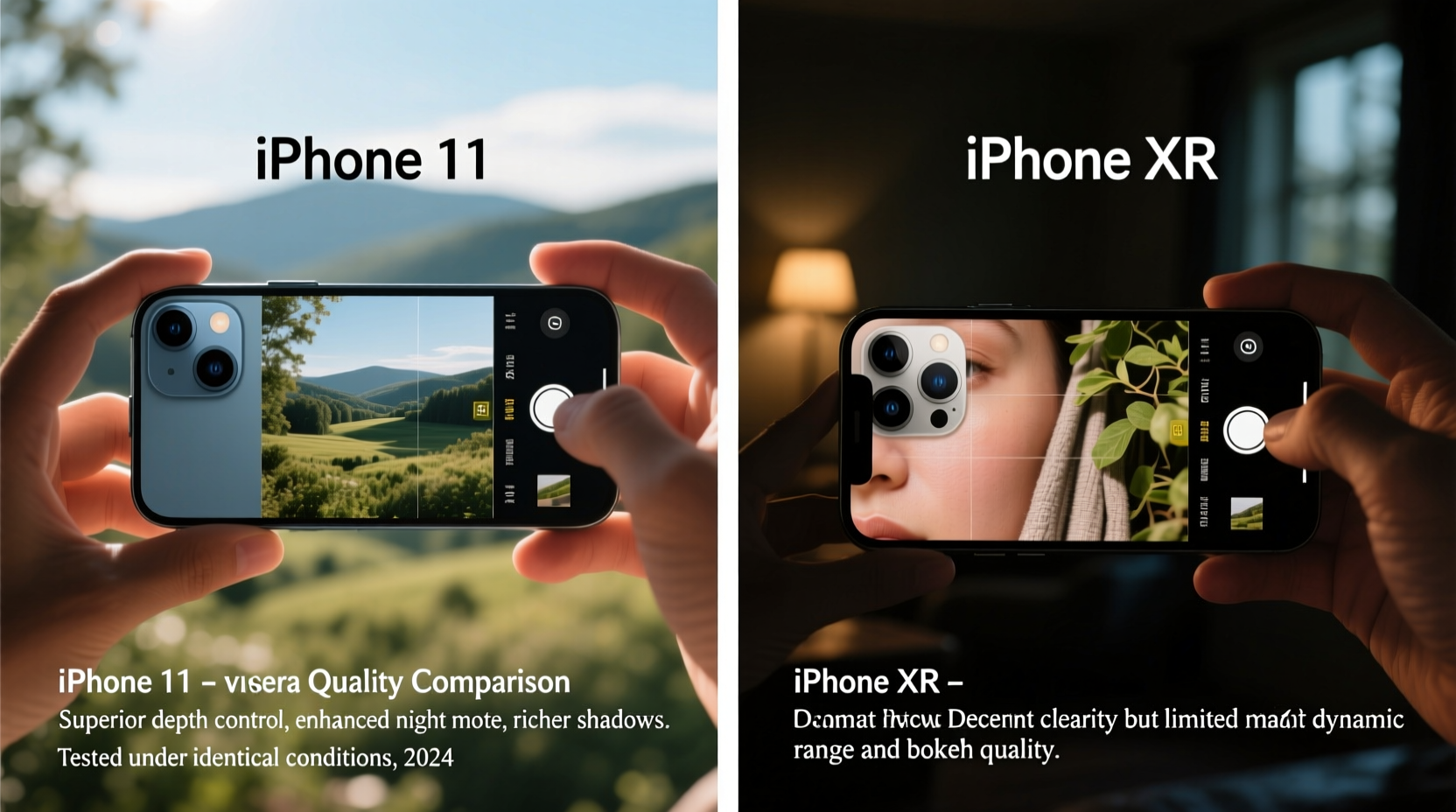
The most fundamental difference between the iPhone 11 and XR lies in their camera hardware. The iPhone XR features a single 12MP wide-angle rear camera with an f/1.8 aperture. While capable, it lacks optical zoom and depth-sensing capabilities beyond software-based Portrait Mode tricks. In contrast, the iPhone 11 introduces a dual-camera setup: a 12MP wide lens (same f/1.8) and a new 12MP ultra-wide lens with an f/2.4 aperture. This second lens opens up creative possibilities, allowing users to capture landscapes, architecture, or group shots with significantly more context.
The addition of the ultra-wide lens isn’t just about fitting more into the frame. It changes how photographers approach composition. Instead of stepping back or cropping later, users can instantly switch lenses to preserve perspective and detail.
Low-Light Performance: Night Mode Makes a Difference
One of the most impactful upgrades in the iPhone 11 is the introduction of Night mode. This feature automatically activates in dim lighting conditions, using multi-frame exposure stacking and advanced stabilization to produce brighter, clearer, and more balanced low-light photos. The iPhone XR has no equivalent; its camera relies solely on standard exposure settings, which often result in dark shadows, blown-out highlights, or excessive noise.
In practical terms, this means that indoor dinners, evening walks, or concerts captured on the iPhone 11 will retain far more usable detail than those taken on the XR. Night mode adjusts exposure time based on stability — up to 3 seconds — and intelligently corrects for hand movement, making handheld night photography genuinely viable.
“Night mode on the iPhone 11 was a game-changer. For the first time, average users could take publishable low-light photos without a tripod.” — David Kim, Mobile Photography Instructor at SF Media Arts
Image Quality Comparison: Side-by-Side Analysis
To assess whether the upgrade is worth it, consider these key areas where image quality differs:
- Dynamic Range: Both phones use Smart HDR, but the iPhone 11 benefits from a newer image signal processor and improved tone mapping. This results in better shadow recovery and highlight preservation, particularly in high-contrast scenes like sunsets or backlit portraits.
- Color Accuracy: Apple refined color science between the XR and 11. The iPhone 11 produces slightly warmer skin tones and more natural greens in foliage, aligning closer to professional standards.
- Zoom Capability: The XR only supports digital zoom up to 5x, which degrades quality quickly. The iPhone 11 adds 2x optical zoom out (via cropping the ultra-wide) and improved computational zoom up to 5x, maintaining sharper details.
- Portrait Mode: The iPhone 11 expands Portrait Mode to all rear cameras and includes six lighting effects (natural, studio, contour, stage, stage mono, high-key mono). The XR limits Portrait Mode to the main camera and offers only four effects.
Detailed Camera Feature Comparison
| Feature | iPhone XR | iPhone 11 |
|---|---|---|
| Rear Cameras | 12MP Wide (f/1.8) | 12MP Wide (f/1.8) + 12MP Ultra-Wide (f/2.4) |
| Night Mode | No | Yes (on both front and rear cameras) |
| Optical Zoom | None | 1x Wide, 2x crop (Ultra-Wide), Digital up to 5x |
| Portrait Mode Lenses | Main camera only | Main and Ultra-Wide (rear); TrueDepth front) |
| Smart HDR Generation | 1st Gen | 2nd Gen (better motion handling, finer gradation) |
| Video Recording | 4K up to 60fps | 4K up to 60fps + Extended dynamic range (1080p at 60fps) |
Real-World Example: Travel Photography Upgrade
Consider Sarah, a frequent traveler who used her iPhone XR for two years to document trips across Europe and Southeast Asia. She loved the portability and ease of use but often regretted not capturing wider cityscapes or dimly lit temples clearly. After upgrading to the iPhone 11, she noticed immediate improvements. During a visit to Kyoto, she used Night mode to photograph a lantern-lit garden path — a scene that would have been nearly black on her XR. With the ultra-wide lens, she captured full façades of narrow temples without stepping into traffic. The extra lens and smarter software didn’t just improve image quality — they expanded her creative confidence.
This scenario reflects a broader trend: the iPhone 11 doesn’t merely enhance pixels; it enables new types of photography previously reserved for higher-end models or dedicated cameras.
When the Upgrade Might Not Be Worth It
Despite the advantages, the iPhone 11 camera upgrade may not justify the cost for everyone. If your primary use involves well-lit environments, casual snapshots, or social media sharing (where compression masks subtle differences), the XR continues to perform admirably. Its single-lens system still produces vibrant, sharp images in daylight, and Portrait Mode works reliably for people and pets.
Additionally, if budget constraints are significant, investing in accessories like external lenses or learning manual editing techniques might yield comparable satisfaction at lower cost. Apps like Halide or ProCamera allow greater control over focus, exposure, and white balance, helping maximize the XR’s existing hardware.
Checklist: Should You Upgrade?
- Do you frequently take photos in low light? → iPhone 11 wins with Night mode
- Do you wish you could fit more into your frame without moving back? → Ultra-wide lens helps
- Are you frustrated by blurry or noisy zoomed-in shots? → iPhone 11 offers better computational zoom
- Do you value creative flexibility in portrait lighting and angles? → More options on iPhone 11
- Is your current XR still fast and reliable for daily tasks? → You might delay upgrade
Frequently Asked Questions
Can the iPhone XR take good photos in daylight?
Absolutely. The XR’s 12MP sensor performs very well in bright conditions. Photos exhibit accurate colors, strong dynamic range, and excellent autofocus. For users who mostly shoot outdoors or in well-lit interiors, the difference between XR and 11 is minimal during the day.
Does the ultra-wide camera reduce image quality?
Slightly. The ultra-wide lens has a smaller aperture (f/2.4) and captures less light than the main camera, so images may appear grainier in low light. However, in daylight, the difference is negligible, and distortion near edges is corrected automatically by software.
Is Night mode available on the front camera of the iPhone 11?
Yes. The iPhone 11 was the first model to bring Night mode to the front-facing TrueDepth camera, allowing dramatically better selfies in dark environments — a major advantage over the XR.
Final Verdict: Who Benefits Most From the Upgrade?
For photographers who value versatility, low-light capability, and creative control, the iPhone 11 represents a meaningful leap over the XR. The dual-camera system and Night mode aren’t incremental tweaks — they redefine what’s possible with smartphone photography. Casual users who primarily share daytime photos on social media may find the XR still sufficient.
Ultimately, the decision hinges on your photographic needs. If you’ve ever looked at a photo from your XR and thought, “I wish I could see more,” “It’s too dark,” or “This zoom looks pixelated,” then the iPhone 11 addresses those frustrations directly. The upgrade isn’t just about better pictures — it’s about capturing moments that were previously out of reach.




 浙公网安备
33010002000092号
浙公网安备
33010002000092号 浙B2-20120091-4
Comments
No comments yet. Why don't you start the discussion?