
If you're still using an iPhone XR and have been eyeing the iPhone 11, you’re not alone. Apple released both models within a year of each other, and the differences aren’t always obvious at first glance. The iPhone 11 launched in 2019 as the successor to the XR, promising better performance, improved cameras, and longer battery life. But does that translate into a meaningful upgrade for someone already satisfied with their XR?
The answer depends on how you use your phone, what you value most in a device, and whether the improvements align with your daily needs. Let’s break down the key differences, assess real-world impact, and help you determine if upgrading is truly worth it—or if your XR still has plenty of life left.
Design and Display: Subtle but Noticeable Differences
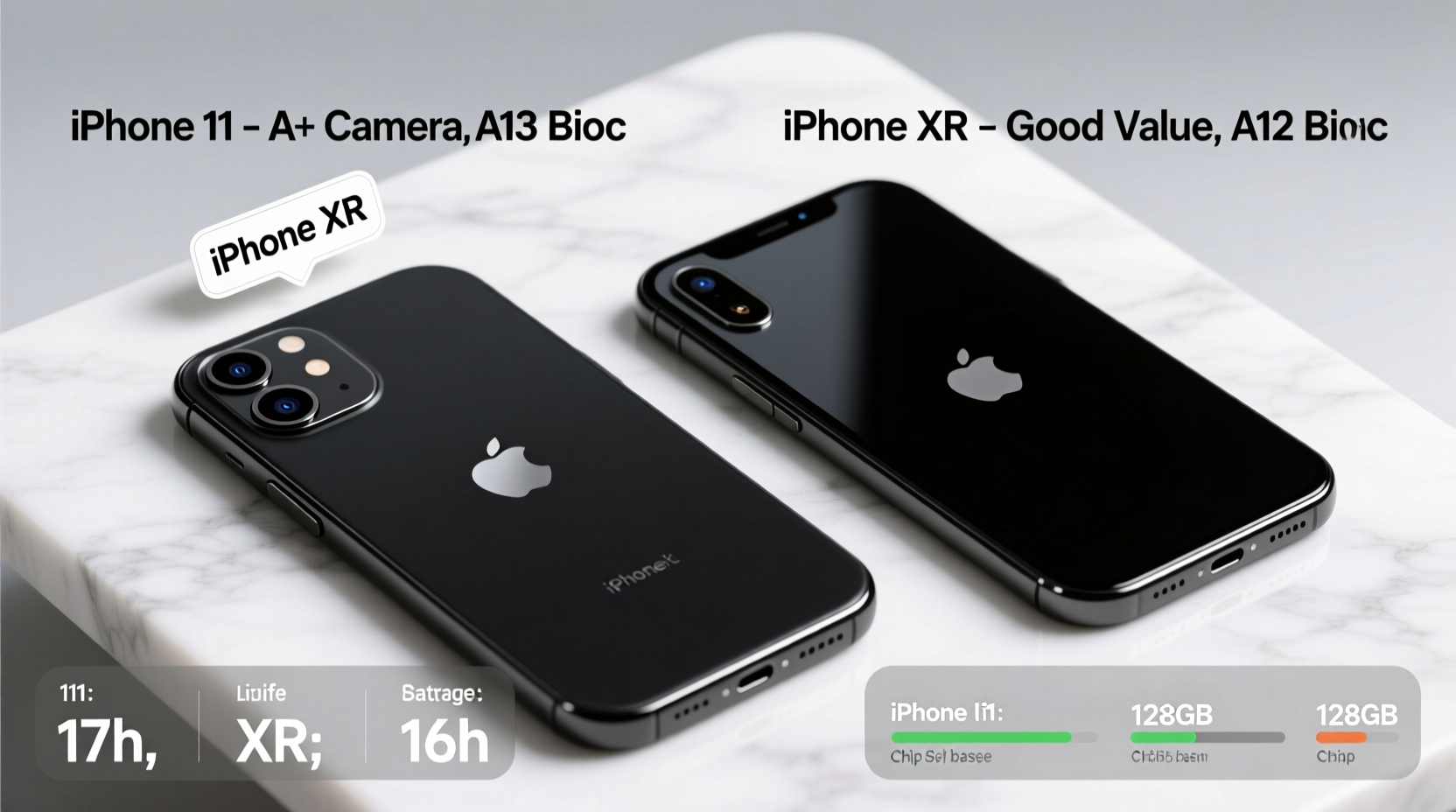
At first glance, the iPhone 11 and XR look nearly identical. Both feature a 6.1-inch Liquid Retina LCD display, aluminum frame, glass back, and Face ID. However, there are subtle upgrades in materials and construction.
The iPhone 11 uses a slightly more durable front glass and improved water resistance (IP68 vs IP67), meaning it can survive up to 2 meters underwater for 30 minutes—compared to 1 meter for the XR. While this won't matter in everyday use, it adds peace of mind if you're accident-prone around water.
The display brightness is also marginally better on the iPhone 11, peaking at 625 nits versus 543 nits on the XR. This makes outdoor visibility slightly clearer under direct sunlight, though not dramatically so.
Performance: A Meaningful Leap Under the Hood
The most significant upgrade lies beneath the surface. The iPhone 11 runs on the A13 Bionic chip, while the XR uses the A12. On paper, this might seem like a minor generational jump—but in practice, it translates to noticeably smoother performance.
Apple claims the A13 is 20% faster than the A12 in CPU tasks and up to 30% faster in GPU performance. Real-world usage confirms this: app launches are snappier, multitasking feels more fluid, and graphics-intensive games run with fewer hiccups.
For users who rely on demanding apps—like video editors, mobile gamers, or those using AR tools—the extra processing power matters. Even general responsiveness, especially after prolonged use, tends to hold up better on the iPhone 11 over time.
“Every generation of Apple’s silicon brings not just speed, but efficiency. That means longer-term usability and better software support.” — David Kim, Mobile Hardware Analyst at TechPulse Insights
Camera Improvements: More Than Just Megapixels
This is where the iPhone 11 pulls ahead decisively. The XR has a single 12MP rear camera with excellent color accuracy and dynamic range. It was praised at launch, but the iPhone 11 introduces a second ultra-wide lens (12MP, f/2.4), expanding creative possibilities.
With dual cameras, you gain:
- Ultra-wide shots (perfect for landscapes, architecture, and group photos)
- Improved Night mode (available on both wide and ultra-wide lenses)
- Better portrait mode with depth control
- Enhanced Smart HDR for more balanced lighting
Night mode is a standout feature absent on the XR. In low-light conditions, the iPhone 11 automatically activates Night mode, capturing brighter, cleaner images with less noise. For users who take photos indoors, at night, or in dimly lit restaurants, this is a game-changer.
Front-facing cameras also see a bump—from 7MP on the XR to 12MP on the 11—with support for 4K video recording and slofie (slow-motion selfies).
Real Example: Sarah’s Concert Dilemma
Sarah attends a lot of live music events and loves capturing moments with her phone. On her XR, concert photos often came out dark, grainy, or overly shadowed. After upgrading to the iPhone 11, she noticed immediate improvements. Night mode automatically engaged in low light, preserving stage colors and facial details. She even captured wide-angle shots of the entire band without stepping back—something impossible with the XR’s fixed lens.
For casual photographers, the XR still takes great photos in daylight. But if you regularly shoot in challenging lighting or want more creative control, the iPhone 11’s camera system delivers measurable value.
Battery Life and Charging: Incremental Gains
Apple advertised the iPhone 11 with “one additional hour” of battery life compared to the XR. Independent tests confirm this—typical usage sees about 6–7 hours of screen-on time for the XR and 7–8 for the 11.
While not revolutionary, that extra hour can make a difference during travel, long workdays, or when you forget your charger. The iPhone 11 also supports faster charging (up to 50% in 30 minutes with an 18W adapter), though Apple still ships it with a slow 5W charger in the box.
Both phones lack 3D Touch, use Lightning ports, and support wireless charging. So unless you’re constantly pushing your battery to the limit, this improvement alone isn’t a compelling reason to upgrade.
Detailed Comparison Table
| Feature | iPhone XR | iPhone 11 |
|---|---|---|
| Release Year | 2018 | 2019 |
| Chipset | A12 Bionic | A13 Bionic |
| Rear Cameras | 12MP Wide (f/1.8) | 12MP Wide (f/1.8) + 12MP Ultra-Wide (f/2.4) |
| Front Camera | 7MP | 12MP (with 4K video) |
| Night Mode | No | Yes |
| Battery Life (Screen-On Time) | ~6–7 hours | ~7–8 hours |
| Water Resistance | IP67 (1m for 30 mins) | IP68 (2m for 30 mins) |
| Faster Charging Support | No (without third-party adapter) | Yes (requires 18W+ adapter) |
| Starting Storage | 64GB | 64GB |
When Should You Upgrade?
Upgrading from the iPhone XR to the iPhone 11 makes sense only if specific pain points affect your current experience. Consider moving forward if:
- You frequently take photos in low light and are frustrated by poor results.
- You wish you had more flexibility in framing shots (e.g., wider angles).
- You notice lag when switching between apps or using performance-heavy tools.
- You want slightly better battery endurance and improved durability.
However, if your XR still performs well, holds a charge through the day, and meets your photography needs, the upgrade offers incremental—not transformative—benefits.
FAQ: Common Questions Answered
Is the iPhone XR still supported by Apple?
Yes. As of 2024, the iPhone XR continues to receive iOS updates and security patches. It supports iOS 17 and is expected to get iOS 18, likely making it supported through at least 2025.
Can I notice the performance difference in daily use?
For basic tasks like texting, browsing, and social media, the difference is minimal. However, heavy multitaskers, gamers, or those using photo/video editing apps will feel the iPhone 11’s smoother operation.
Do I need the ultra-wide camera?
It depends on your photography habits. If you rarely shoot landscapes, architecture, or large groups, the ultra-wide lens may go underused. But once you start experimenting with it, many find it quickly becomes essential.
Final Verdict: Stick With Your XR—Or Make the Jump?
The iPhone 11 is objectively better than the XR in almost every category: processor, camera, battery, and durability. But \"better\" doesn’t always mean \"worth upgrading.\"
If you're happy with your XR—if it handles your apps, takes photos you’re satisfied with, and lasts through your day—you’re not missing out on a life-changing upgrade. The improvements are evolutionary, not revolutionary.
On the other hand, if you’ve started feeling limitations—especially in photography or performance—the iPhone 11 offers real, usable enhancements that justify the switch. And since both phones now sell at similar used prices, the cost barrier is lower than ever.
“The sweet spot for upgrading isn’t when a new phone exists—it’s when your current one no longer serves your needs.” — Lena Torres, Consumer Tech Advisor
Conclusion: Make the Decision That Suits Your Life
Technology evolves fast, but smart ownership means knowing when to upgrade—and when to hold steady. The iPhone XR remains a capable, reliable smartphone years after its release. The iPhone 11 improves upon it thoughtfully, but not drastically.
Assess your actual usage, not just the specs. If your XR still works well, keep using it. If you’re hitting limits, the 11 is a logical next step. Either way, you’re in good company.




 浙公网安备
33010002000092号
浙公网安备
33010002000092号 浙B2-20120091-4
Comments
No comments yet. Why don't you start the discussion?