
The iPhone 11 remains a popular choice for users seeking reliable performance at a lower price point. Despite being several years old, demand persists—especially in markets like India. However, many consumers notice a striking difference: the same model costs significantly less in Hong Kong. For example, a 64GB iPhone 11 retails for around HK$3,999 (approximately ₹37,500), while in India, it’s priced closer to ₹43,900—even for refurbished or older stock. This gap raises important questions: Why does this happen, and is it worth buying an iPhone 11 from Hong Kong instead?
The answer lies in a mix of taxation policies, import duties, currency dynamics, and regional pricing strategies. Understanding these factors helps buyers make informed decisions—not just about cost savings, but also long-term usability, warranty, and compliance.
Taxation and Import Duty: The Core Price Drivers
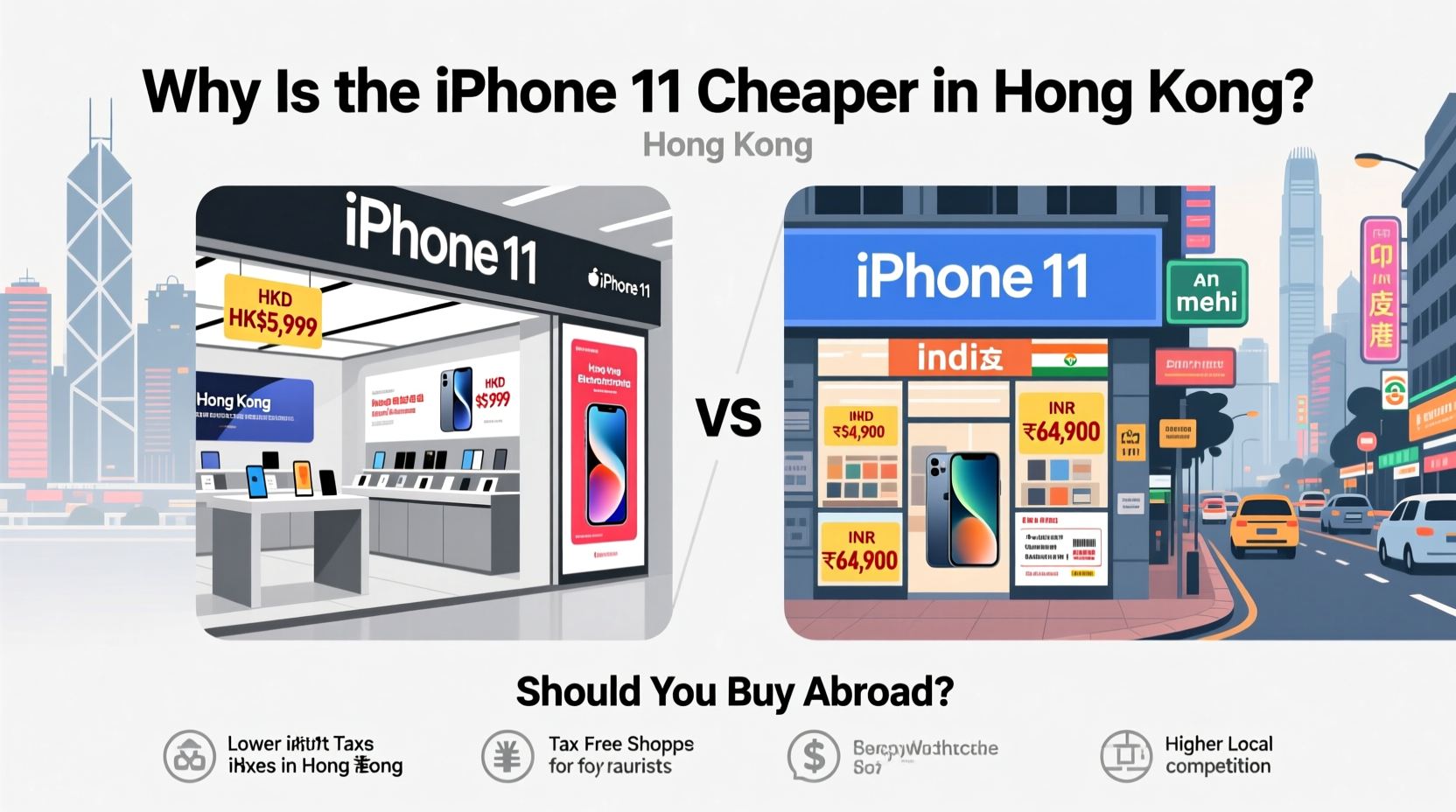
One of the most significant reasons behind the iPhone 11’s lower price in Hong Kong is its tax structure—or lack thereof. As a Special Administrative Region of China with a free-market economy, Hong Kong imposes no sales tax, value-added tax (VAT), or general excise duty on consumer electronics. This makes it one of the cheapest places globally to purchase smartphones, cameras, and laptops.
In contrast, India applies multiple layers of taxation:
- GST (Goods and Services Tax): 18% on mobile phones
- Basic Customs Duty (BCD): Up to 20% on imported phones
- Additional cess and regulatory fees
These charges are passed directly to consumers, inflating retail prices. Even though Apple assembles some iPhones in India now, the iPhone 11 is largely considered legacy stock, often imported in smaller batches, meaning it still attracts high import duties.
Currency and Regional Pricing Strategy
Apple uses regional pricing models based on purchasing power, competition, and economic conditions. While the U.S. serves as a baseline, prices in Asia vary widely. Hong Kong benefits from a strong, stable currency (HKD) tied closely to the U.S. dollar, allowing Apple to maintain competitive USD-equivalent pricing without local inflationary pressure.
India, however, faces higher inflation and currency volatility (INR vs. USD). To maintain margins amid fluctuating exchange rates, Apple—and its partners—build in buffer pricing. Additionally, Apple competes with aggressive local brands like Xiaomi, Realme, and Samsung’s budget lines, which influences how they position older models like the iPhone 11.
“Regional pricing isn’t just about cost—it’s about perceived value and market positioning. In Hong Kong, low taxes allow Apple to offer premium devices at near-global base prices.” — Arjun Mehta, Tech Market Analyst at AsiaInsight Group
Price Comparison: iPhone 11 in Hong Kong vs. India
| Region | iPhone 11 (64GB) | Taxes Included? | Warranty Type | Charger Included? |
|---|---|---|---|---|
| Hong Kong | HK$3,999 (~₹37,500) | No VAT/Sales Tax | International (limited) | Yes (Type-G plug) |
| India | ₹43,900 (refurbished/new) | Includes 18% GST + import duties | Domestic (Apple India) | No (since 2020 policy) |
As shown, the price difference can exceed ₹6,000—even before considering potential discounts or promotions in Hong Kong. However, the Indian version includes official warranty coverage and compatibility with local networks and support channels.
Should You Buy an iPhone 11 from Hong Kong?
Purchasing an iPhone 11 from Hong Kong can save money, but it comes with trade-offs. Here's what to consider:
Advantages
- Lower upfront cost: Save up to 15% compared to Indian retail.
- New condition: Phones bought from authorized resellers are factory sealed.
- Charger included: Unlike in India, Hong Kong units still come with a wall adapter.
Risks and Limitations
- No local warranty: Apple’s warranty is region-specific. Service centers in India may refuse repairs for foreign-purchased devices.
- Network compatibility issues
- No official customer support: No access to Apple India helplines or Genius Bar appointments.
- Import declaration required: Bringing a phone into India may require customs clearance and duty payment if not carried personally.
Real Example: A Buyer’s Experience
Rohan, a student returning from a trip to Hong Kong, purchased an iPhone 11 for ₹38,000 at a local Apple Store. Back in Mumbai, he found the same model listed at ₹44,000. Excited by the savings, he activated the phone without issue. However, six months later, when the screen cracked, he visited an Apple Authorized Service Provider. After inspection, they refused repair, citing “device not covered under India warranty.” Rohan ended up paying ₹9,200 for an out-of-warranty screen replacement—erasing nearly all his initial savings.
This case illustrates that short-term savings can lead to long-term costs if warranty and serviceability aren’t factored in.
Step-by-Step Guide: How to Safely Buy Abroad
If you're determined to buy an iPhone 11 from Hong Kong, follow this checklist to minimize risk:
- Verify your travel plans: Only bring one device for personal use to avoid customs scrutiny.
- Purchase from an authorized Apple reseller: Ensure the box is sealed and receipt is issued.
- Check IMEI and network bands: Confirm the model number (e.g., A2111) supports Indian LTE bands (B3, B5, B8, B40).
- Back up purchase documents: Keep receipt, passport copy, and boarding pass in case customs asks.
- Declare if required: If questioned at customs, declare the device honestly. Personal-use imports under ₹50,000 are usually duty-free.
- Test immediately: Check functionality, battery health, and originality via Settings > General > About.
- Consider extended protection: Buy third-party insurance in India to cover future repairs.
FAQ: Common Questions Answered
Can I use a Hong Kong iPhone 11 in India without issues?
Yes, technically. Most functions work fine, including calls, data, Wi-Fi, and apps. However, ensure the model supports Indian 4G/LTE bands. The A2111 (sold in Hong Kong) lacks support for Reliance Jio’s VoLTE on Band 5, which may cause call quality issues.
Will Apple India service a Hong Kong-purchased iPhone 11?
Generally, no. Apple’s warranty is region-locked. Out-of-warranty repairs are possible but expensive and not guaranteed. Some third-party providers may offer service, but parts might be non-OEM.
Is it legal to bring a phone from Hong Kong to India?
Yes, as long as it’s for personal use and declared if asked. Travelers are allowed to carry one personal electronic device duty-free under baggage rules. Commercial import (e.g., buying online and shipping) risks customs seizure and penalties.
Final Verdict: Is It Worth It?
The iPhone 11 is indeed cheaper in Hong Kong than in India—often by a noticeable margin. But the decision to buy abroad shouldn’t be based solely on price. Consider your need for warranty, network reliability, and long-term support. For tech-savvy users who travel frequently and understand the risks, importing can be a smart move. For most average consumers, especially those prioritizing peace of mind, buying locally—even at a higher price—is the safer, more sustainable choice.
Technology investments should balance cost, convenience, and longevity. Saving ₹5,000 today isn’t worthwhile if it leads to ₹10,000 in repair costs tomorrow.




 浙公网安备
33010002000092号
浙公网安备
33010002000092号 浙B2-20120091-4
Comments
No comments yet. Why don't you start the discussion?