
For years, the iPhone 6s was a benchmark of durability, reliability, and user satisfaction. Its compact form made it easy to handle, and iOS updates kept it functional well into the late 2010s. But as Apple introduced the iPhone 12 mini in 2020, many 6s owners faced a decision: should they finally upgrade? And if so, does the smaller iPhone 12 mini justify the leap—not just in technology, but in value and usability?
This isn’t just about specs or speed. It’s about how a new device fits into your life when you’ve already found comfort in an older one. The 12 mini promised modern power in a familiar size, but is that enough to warrant change? Let’s break down what’s improved, what’s been lost, and whether this upgrade truly makes sense.
Design and Physical Experience
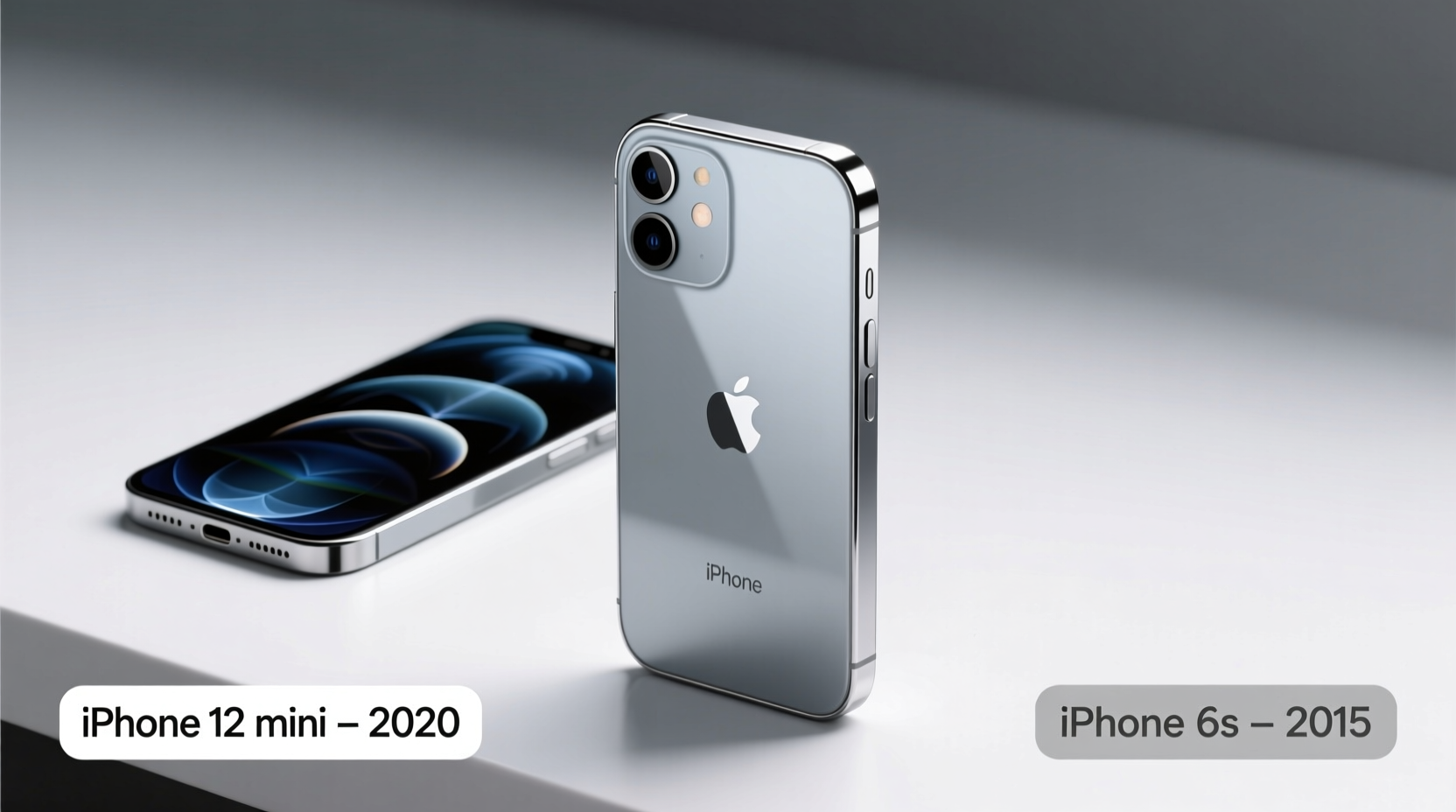
The iPhone 6s set a standard for comfortable single-handed use. Measuring 5.44 x 2.64 x 0.28 inches and weighing 4.55 oz, it was compact without feeling cramped. The rounded edges and chamfered aluminum band gave it a premium feel that aged gracefully.
The iPhone 12 mini, while slightly taller at 5.18 inches, is narrower (2.53 inches) and lighter at 4.76 oz. Despite being newer, it maintains a rare balance—modern bezel-less design with a footprint close to the 6s. However, the flat-edge stainless steel frame changes the tactile experience. It feels more rigid and precise, but less forgiving in the hand during extended use.
The 12 mini uses Ceramic Shield front cover, which Apple claims offers better drop resistance than any smartphone glass before. For users who still rely on their 6s without a case, this could be a major durability upgrade. Meanwhile, the 6s’s aluminum back is prone to dents and scratches over time—a known issue after six-plus years of ownership.
Performance and Software Longevity
Under the hood, the gap between these devices is enormous. The iPhone 6s runs on the A9 chip, once powerful but now struggling with multitasking and modern app demands. In contrast, the 12 mini features the A14 Bionic—Apple’s first 5nm processor, capable of handling augmented reality, machine learning tasks, and 4K video editing with ease.
Benchmarks show the A14 outperforming the A9 by over 4x in CPU tasks and nearly 6x in GPU performance. This isn’t theoretical; real-world usage reflects smoother animations, faster app launches, and longer-term software support. While the 6s stopped receiving iOS updates after iOS 15, the 12 mini supports iOS 17 and will likely receive updates through 2025 or beyond.
“Upgrading from a 6s to a 12 mini is like switching from a flip phone to a smartphone—it's not just faster, it's fundamentally more capable.” — Jordan Lee, Mobile Tech Analyst at GadgetScope
If you’ve noticed your 6s freezing when opening Messages or lagging during FaceTime calls, those frustrations vanish on the 12 mini. Apps load instantly, background processes run smoothly, and even Safari handles complex websites without throttling.
Display, Camera, and Daily Functionality
The display difference is stark. The 6s has a 4.7-inch LCD with 750 x 1334 resolution and a 1400:1 contrast ratio. The 12 mini upgrades to a 5.42-inch Super Retina XDR OLED panel with 2340 x 1080 resolution and a 2,000,000:1 contrast ratio. Blacks are deeper, colors are richer, and HDR content looks dramatically better.
For photography, the improvement is equally significant. The 6s has a 12MP rear camera without optical image stabilization (OIS), while the 12 mini includes OIS, Night mode, Deep Fusion, and Smart HDR 3. Low-light photos on the 12 mini are usable; on the 6s, they’re often grainy and underexposed.
| Feature | iPhone 6s | iPhone 12 mini |
|---|---|---|
| Display | 4.7” LCD, 750x1334 | 5.42” OLED, 2340x1080 |
| Processor | A9 | A14 Bionic |
| Rear Camera | 12MP, no OIS | 12MP, OIS + Night Mode |
| Front Camera | 5MP | 12MP, Night Mode, 4K video |
| Biometrics | Fingerprint (Touch ID) | Face ID |
| Storage Options | 16/32/64/128GB | 64/128/256GB |
| Battery Life | ~13 hours mixed use | ~15–17 hours mixed use |
| Charging | 5W, Lightning | 20W fast charging, MagSafe compatible |
Despite its smaller battery (8.57Wh vs. 6s’s 6.91Wh), the 12 mini lasts longer due to efficiency gains in the A14 and OLED panel. It also supports wireless charging and faster wired charging—conveniences absent on the 6s.
Real User Experience: A Case Study
Consider Maria, a teacher who’s used her iPhone 6s since 2016. She values simplicity, keeps her home screen minimal, and avoids bulky phones. Her 6s started slowing down in 2022—apps crashed, messages delayed, and she couldn’t join Zoom meetings reliably. She considered switching to Android but worried about ecosystem disruption.
In early 2023, she upgraded to the 12 mini. Initially frustrated by the lack of Touch ID, she adapted to Face ID within two weeks. She immediately noticed improvements: her school’s grading app loaded in seconds, she could record classroom videos in 4K, and her students complimented her clearer selfies. Most importantly, she didn’t sacrifice portability. “It fits in my apron pocket just like the old one,” she said. “But everything else feels like magic.”
Maria’s story reflects a broader trend: users clinging to the 6s aren’t resisting change—they’re resisting bulk. The 12 mini answers that concern directly.
Is the Upgrade Worth It? A Practical Checklist
Before making the switch, ask yourself the following:
- Do apps frequently crash or freeze on your 6s?
- Have you stopped receiving iOS updates?
- Is your battery life below 70% health?
- Do you struggle with low-light photos?
- Are you using an adapter for headphones or accessories?
- Do you want access to modern features like Face ID, MagSafe, or 5G?
If three or more apply, the upgrade is likely justified. The 12 mini preserves the physical accessibility of the 6s while delivering a decade of technological progress.
Frequently Asked Questions
Can I use my old cases and accessories with the 12 mini?
No. The 12 mini has a completely different form factor, flat edges, and a centered dual-camera layout. Your 6s case won’t fit, and screen protectors are incompatible due to the curved OLED edges.
Is Face ID better than Touch ID for quick access?
It depends on context. Face ID works seamlessly when holding the phone naturally, but fails with masks, hats, or lying down. Touch ID was more consistent in varied conditions. Many users miss the tactile certainty of fingerprint scanning.
Does the 12 mini have good battery life despite its size?
Yes, but with caveats. Apple rates it for up to 15 hours of video playback. In real-world use, expect 10–12 hours of screen-on time. Heavy users may need to charge midday, but fast charging helps mitigate this.
Final Verdict: A Worthy Evolution
The iPhone 12 mini isn’t just a newer version of the 6s—it’s a reimagining. It honors the spirit of compact iOS devices while embracing modern standards. Yes, you lose Touch ID and gain a stiffer design. But you gain a vibrant display, vastly superior cameras, all-day battery, and years of future software support.
For loyal 6s users hesitant to grow their phone size, the 12 mini is the closest thing to a spiritual successor. It proves that small phones can still pack flagship power. If your current device is showing its age, the upgrade isn’t just worth it—it might reignite your love for mobile tech.




 浙公网安备
33010002000092号
浙公网安备
33010002000092号 浙B2-20120091-4
Comments
No comments yet. Why don't you start the discussion?