
When Apple introduced the iPhone 12 mini in 2020, it reignited a long-standing debate: can a truly compact smartphone still deliver in an era dominated by larger screens? Positioned as a modern throwback to the days of single-handed use, the 12 mini promised flagship performance in a pocketable form. But how does it stack up against its predecessor, the iPhone 11 — a device praised for its balance of size, battery life, and value? For users weighing portability against practicality, the choice isn’t always straightforward.
Design and Size: The Compact Advantage
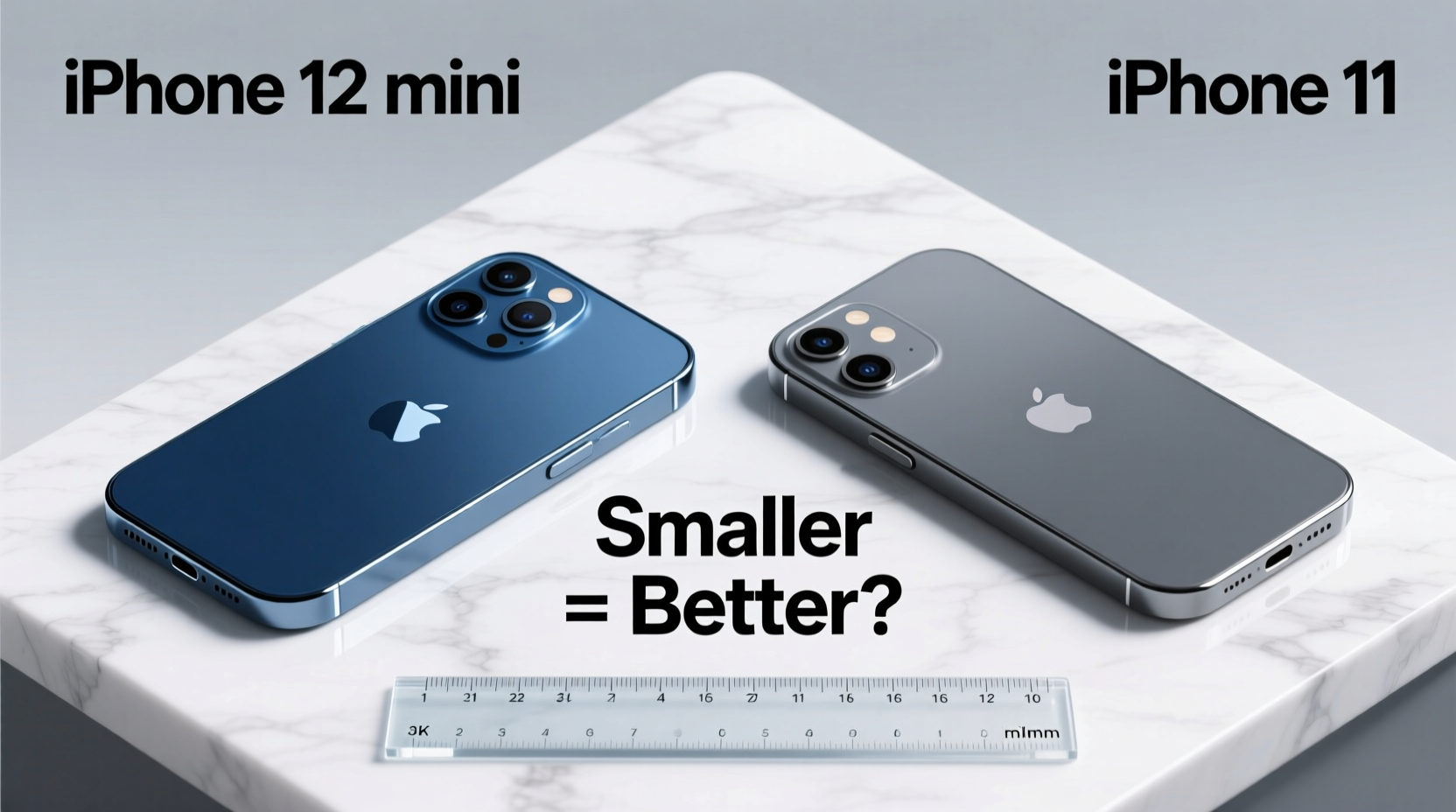
The most immediate difference between the iPhone 12 mini and the iPhone 11 is their physical footprint. The 12 mini measures just 5.18 x 2.53 x 0.30 inches and weighs 4.76 ounces, making it the smallest iPhone Apple has produced in recent years. In contrast, the iPhone 11 is slightly larger at 5.94 x 2.98 x 0.33 inches and 6.84 ounces. While these differences may seem minor on paper, they translate into a noticeably more compact experience with the 12 mini.
This smaller frame makes the 12 mini ideal for users who prioritize one-handed operation, slip their phone into tight pockets, or simply dislike the heft of modern smartphones. Its flat aluminum edges and ceramic shield front also give it a more premium feel than the rounded aluminum and glass design of the iPhone 11.
Display and Visual Experience
The 12 mini features a 5.4-inch Super Retina XDR OLED display, while the iPhone 11 uses a 6.1-inch Liquid Retina HD LCD screen. This distinction affects not only screen real estate but also image quality. OLED panels deliver deeper blacks, higher contrast ratios, and better overall color accuracy compared to LCDs. For media consumption, photo editing, or reading in bright sunlight, the 12 mini offers a superior visual experience despite its smaller size.
However, the trade-off is screen space. Users accustomed to the iPhone 11’s larger canvas may find multitasking, typing, or watching videos on the 12 mini slightly more cramped. Those with larger hands or vision needs might appreciate the extra room on the iPhone 11.
“Smaller phones force us to reevaluate what we actually need from our screens. Sometimes less surface area means fewer distractions.” — David Lin, Mobile Usability Researcher at UX Lab Group
Performance and Software Longevity
Under the hood, the iPhone 12 mini runs on Apple’s A14 Bionic chip, the first 5nm processor in any smartphone at the time of its release. The iPhone 11, while still powerful, uses the previous-generation A13 Bionic. Benchmarks show the A14 delivers around 15–20% faster CPU and GPU performance, which translates into smoother app launches, better gaming performance, and improved machine learning capabilities.
More importantly, the A14 chip ensures longer software support. As of 2024, both devices run iOS 17, but the 12 mini is expected to receive updates through at least 2026, potentially extending to 2027. The iPhone 11, having launched in 2019, may stop receiving major OS updates sooner, likely by 2025.
| Feature | iPhone 12 mini | iPhone 11 |
|---|---|---|
| Chipset | A14 Bionic | A13 Bionic |
| Display Type | OLED (Super Retina XDR) | LCD (Liquid Retina HD) |
| Screen Size | 5.4 inches | 6.1 inches |
| Resolution | 2340 x 1080 | 1792 x 828 |
| Battery Life (Video Playback) | 15 hours | 17 hours |
| 5G Support | Yes (mmWave & Sub-6) | No |
| Water Resistance | IP68 (6m for 30 min) | IP68 (2m for 30 min) |
Battery Life: The Hidden Trade-Off
Despite its technological advantages, the iPhone 12 mini suffers from one critical limitation: battery life. Apple rates it for up to 15 hours of video playback, whereas the iPhone 11 manages 17 hours. In real-world mixed usage — including social media, messaging, navigation, and streaming — many 12 mini users report needing to charge by late afternoon, especially with 5G enabled.
The iPhone 11, with its larger chassis, accommodates a bigger battery and doesn’t carry the power demands of 5G. As a result, it often lasts a full day or more under moderate use, making it more reliable for travelers, busy professionals, or anyone without consistent access to charging.
Real-World Use Case: Commuter vs. Creator
Consider two users: Maya, a city commuter who walks 45 minutes to work daily and values pocketability, and James, a freelance photographer who uses his phone for editing, client calls, and GPS navigation throughout the day.
For Maya, the iPhone 12 mini is a dream. It fits comfortably in her coat pocket, doesn’t strain her hand during transit, and the OLED screen enhances her podcast and audiobook experience. She charges it nightly and rarely pushes battery limits.
James, however, struggles with the 12 mini. After a morning of Lightroom edits and location scouting, his battery drops below 30%. He carries a portable charger, but the added bulk defeats the purpose of a small phone. On the iPhone 11, he gets through most days without anxiety, appreciating the larger screen for image previews and the longer endurance.
This contrast illustrates that “better” depends entirely on lifestyle. Smaller isn’t inherently superior — it’s situational.
Camera Capabilities: More Than Megapixels
Both phones feature dual 12MP rear cameras: wide and ultra-wide. The 12 mini benefits from sensor improvements, Night mode on all lenses, and Dolby Vision HDR video recording up to 4K at 30fps — a feature absent on the iPhone 11. Photos from the 12 mini generally exhibit better dynamic range, sharper details in low light, and more accurate skin tones.
The iPhone 11 remains capable, especially in daylight, but lacks consistency in darker environments and doesn’t support advanced video formats. For casual photographers, the difference may be negligible. For enthusiasts or content creators, the 12 mini’s camera system offers meaningful upgrades.
Checklist: Choosing Between iPhone 12 mini and iPhone 11
- ✅ Do you prefer a phone that fits easily in small pockets or one hand? → Lean toward 12 mini
- ✅ Do you want the longest possible software support? → Choose 12 mini (A14 chip)
- ✅ Is 5G connectivity important for your carrier or future-proofing? → 12 mini only
- ✅ Do you regularly run out of battery before bedtime? → iPhone 11 may suit you better
- ✅ Are you a content creator or frequent video recorder? → 12 mini offers Dolby Vision and better low-light shots
- ✅ Do you value screen size for reading, gaming, or multitasking? → iPhone 11 provides more real estate
Frequently Asked Questions
Is the iPhone 12 mini still worth buying in 2024?
Yes, if you prioritize size and don’t mind shorter battery life. It runs the latest iOS versions smoothly and supports modern features like MagSafe and 5G. However, availability is limited since Apple discontinued it after the iPhone 13 series launch.
Can the iPhone 11 handle modern apps and games?
Absolutely. The A13 chip remains competent for everyday tasks, social media, and even demanding games. Most apps are optimized to run efficiently on older hardware, though future titles may eventually drop support.
Which phone has better durability?
The iPhone 12 mini has an edge with IP68 rating at 6 meters (vs. 2 meters on iPhone 11) and Ceramic Shield front cover, which Apple claims offers four times better drop protection. Both have glass backs, so using a case is recommended.
Conclusion: Smaller Isn’t for Everyone — But It Has Its Place
The iPhone 12 mini represents a bold experiment in minimalism — proving that flagship power can fit in a tiny package. But its compromises, especially in battery life, make it unsuitable as a universal recommendation. The iPhone 11, while slightly outdated, remains a remarkably balanced device: large enough for comfort, efficient enough for longevity, and priced attractively in the used or refurbished market.
Ultimately, choosing between them isn’t about which is objectively better, but which aligns with your daily habits. If you value pocketability and cutting-edge internals, the 12 mini shines. If you need reliability, screen space, and endurance, the iPhone 11 holds its ground.




 浙公网安备
33010002000092号
浙公网安备
33010002000092号 浙B2-20120091-4
Comments
No comments yet. Why don't you start the discussion?