
When Apple introduced the iPhone 12 lineup in 2020, it marked a return to flat-edged design and included a new, compact model: the iPhone 12 mini. At 5.4 inches, it was the smallest iPhone since the iPhone SE (2016), promising flagship performance in a pocketable form. But with its size came questions—did Apple go too far? Was the trade-off between portability and usability worth it? Comparing the iPhone 12 mini and iPhone 12 reveals that while both share core features, the difference in screen real estate and battery life may tip the scale for most users.
Design and Physical Dimensions
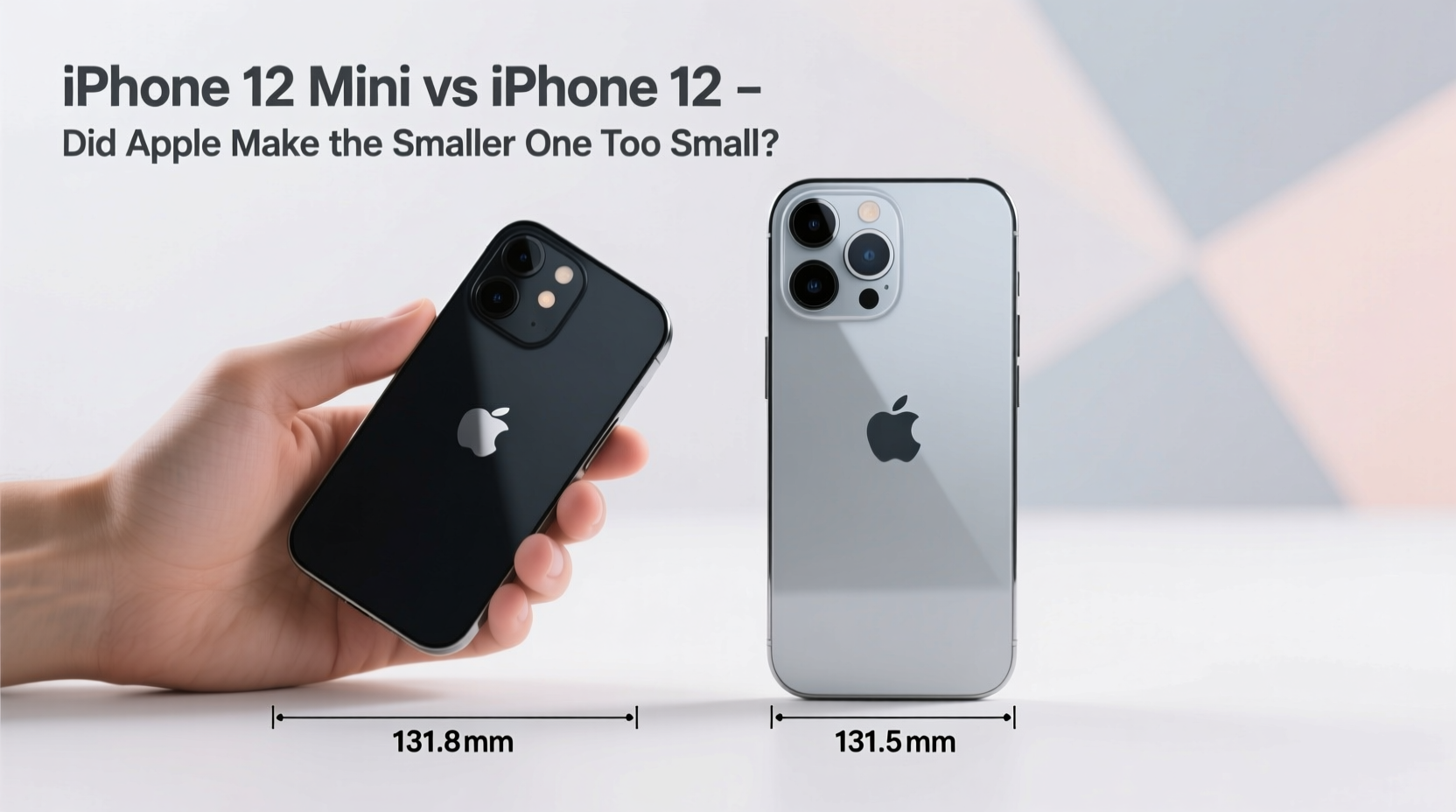
The most immediate difference between the iPhone 12 and iPhone 12 mini lies in their physical footprint. The iPhone 12 mini measures 131.5 x 64.2 x 7.4 mm and weighs just 135 grams, making it significantly more compact than the standard iPhone 12, which is 146.7 x 71.5 x 7.4 mm and 164 grams. That 15mm reduction in height and nearly 8mm in width translates into a device that truly fits in tighter pockets and feels lighter in hand.
Both models feature aerospace-grade aluminum edges and Ceramic Shield front cover, offering identical durability and IP68 water resistance. The flat sides give them a retro feel reminiscent of the iPhone 4, appealing to those who prefer precise grip over curved edges. However, the mini’s reduced size means less room for your fingers when typing or swiping, especially with larger hands.
Display and Usability Trade-offs
The iPhone 12 mini’s 5.4-inch Super Retina XDR OLED display is technically impressive—sharp, vibrant, and energy-efficient. But its diagonal measurement doesn’t tell the full story. Due to the taller aspect ratio and notch placement, the usable screen area is noticeably smaller than the iPhone 12’s 6.1-inch panel. This impacts multitasking, gaming, video consumption, and even basic web browsing.
For example, Safari tabs are harder to tap without misselections, and landscape mode on apps often results in cramped interfaces. In contrast, the iPhone 12 offers more breathing room for split-screen interactions, photo editing, and reading long articles. While both screens have the same pixel density (476 ppi), the larger canvas makes a tangible difference in daily comfort.
“The mini proves that not all compromises are equal. You gain portability but lose immersion.” — David Pierce, The Verge
Performance and Battery Life: The Hidden Cost of Size
Under the hood, both phones are powered by Apple’s A14 Bionic chip—the fastest smartphone processor at launch. They support 5G, have identical dual-camera systems (12MP wide and ultra-wide), and run iOS with the same speed and efficiency. There is no performance gap between the two devices in day-to-day tasks or intensive applications like video editing or AR gaming.
Where they diverge is battery life. Despite improvements in efficiency, the iPhone 12 mini packs a 2,227 mAh battery compared to the iPhone 12’s 2,815 mAh. Real-world usage shows this isn't trivial: the mini averages around 12–14 hours of mixed use, while the standard model can stretch to 17–19 hours. Heavy users—those streaming music, using GPS, or working remotely—often find themselves charging the mini twice a day.
| Feature | iPhone 12 mini | iPhone 12 |
|---|---|---|
| Display Size | 5.4 inches | 6.1 inches |
| Weight | 135g | 164g |
| Battery Capacity | 2,227 mAh | 2,815 mAh |
| Video Playback (Apple rated) | 15 hours | 17 hours |
| Charging | MagSafe, Qi, Lightning | MagSafe, Qi, Lightning |
| Storage Options | 64GB, 128GB, 256GB | 64GB, 128GB, 256GB |
A Real-World Example: Commuter vs. Creator
Consider two users: Maya, a city commuter who values minimalism and walks everywhere, and Jordan, a freelance photographer who shoots and edits on the go.
Maya finds the iPhone 12 mini ideal. She uses it mainly for messaging, transit apps, and occasional photos. The small size slips easily into her jacket pocket, and she charges nightly. She appreciates the crisp display and doesn’t mind shorter battery life because she rarely exceeds moderate usage.
Jordan, however, struggles with the mini. Editing RAW photos in Lightroom becomes tedious on the smaller screen, and the limited battery means carrying a power bank during shoots. After three weeks, Jordan switches back to the iPhone 12, citing better ergonomics and longer endurance as critical for creative work.
This contrast illustrates a key insight: the “right” size depends heavily on how you use your phone, not just what you want it to look like.
Who Should Choose the Mini—and Who Shouldn’t
The iPhone 12 mini wasn’t designed for everyone. It carved out a niche for users who prioritize form factor over function. Here’s a checklist to help decide whether it suits your lifestyle:
📋 Checklist: Is the iPhone 12 mini right for you?- You regularly carry your phone in tight pockets (jeans, slim jackets)
- You dislike large phones and prefer one-handed operation
- Your primary activities are calls, texts, social media, and light browsing
- You charge your phone multiple times a day without issue
- You value design minimalism and lightweight construction
- You consume a lot of video or read long documents
- You edit photos or videos on your phone
- You travel frequently or spend long stretches away from outlets
- You have larger hands or wear gloves often (touch targets matter)
- You want the best balance of size and capability
Expert Insight: The Market for Compact Phones
Despite strong initial sales, Apple discontinued the mini line after the iPhone 13 mini. Industry analysts point to low adoption rates among mainstream users as the reason.
“Compact phones are loved by enthusiasts, but they represent a tiny fraction of the market. Battery life and screen size are non-negotiables for most consumers.” — Ben Bajarin, Creative Strategies
The data supports this. According to Consumer Intelligence Research Partners (CIRP), the iPhone 12 mini accounted for only about 6% of iPhone 12 series sales. While praised by reviewers for its build and performance, the usability limitations proved too great for mass appeal.
Frequently Asked Questions
Is the iPhone 12 mini still worth buying in 2024?
Only if you specifically want a small phone and can accept shorter battery life. While it runs the latest iOS versions well, newer budget iPhones like the SE (2022/2023) offer similar compactness with lower prices, and Android alternatives like the Samsung Galaxy S23 Mini provide better battery optimization.
Can the iPhone 12 mini handle gaming and multitasking?
Yes, thanks to the A14 chip, it handles demanding games and app switching smoothly. However, the small screen makes extended gaming uncomfortable, and frequent charging may interrupt gameplay sessions.
Why did Apple discontinue the mini line?
Low sales volume. Despite praise from tech critics, most consumers opted for larger models with better battery life. Apple shifted focus to Pro models and larger displays, aligning with market trends.
Conclusion: Balancing Innovation With Practicality
The iPhone 12 mini was a bold experiment—a high-end smartphone shrunk without sacrificing internal components. It succeeded technically but stumbled practically. For a select group of users, it remains one of the best small phones ever made. But for the majority, the trade-offs in battery and screen space outweigh the benefits of compactness.
Apple didn’t necessarily make the mini “too small”—they revealed how few people were willing to compromise on modern smartphone essentials for size. The lesson isn’t that small phones are obsolete, but that they must offer compelling reasons to choose them beyond nostalgia or aesthetics.




 浙公网安备
33010002000092号
浙公网安备
33010002000092号 浙B2-20120091-4
Comments
No comments yet. Why don't you start the discussion?