
As we move deeper into 2025, many iPhone 11 Pro Max owners are still using a device that once defined flagship excellence. But with Apple’s rapid advancements over the past few years, the question remains: is upgrading to the iPhone 12 Pro Max actually worthwhile today? The answer isn’t just about newer features—it’s about how those upgrades translate into daily use, longevity, and overall value.
The iPhone 11 Pro Max was a powerhouse in its time, delivering exceptional camera quality, solid performance, and all-day battery life. However, the iPhone 12 Pro Max introduced several meaningful improvements—some subtle, others transformative. This analysis dives into every key area to help you decide whether making the jump now makes sense for your needs and budget.
Design and Build: Subtle Refinements, Lasting Impact
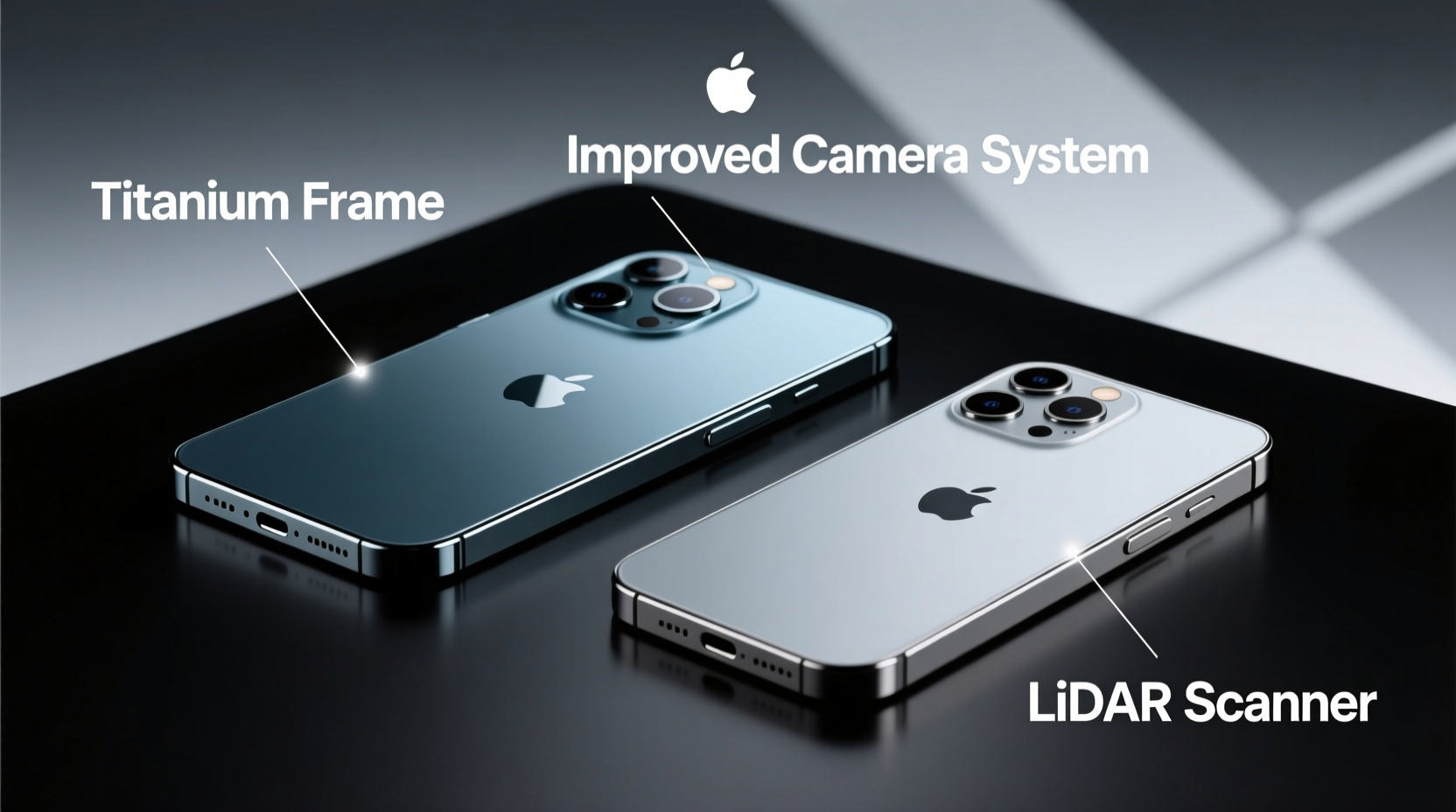
At first glance, both phones share a similar DNA: stainless steel frames, matte glass backs, and a trio of rear cameras. But the design language shifted noticeably between generations. The iPhone 12 Pro Max adopted Apple’s flat-edge aesthetic, reminiscent of the iPhone 5 era, which not only modernized the look but also improved grip and durability.
The shift to Ceramic Shield front cover on the 12 Pro Max marked a major leap in drop resistance. Independent tests show up to four times better drop performance compared to the 11 Pro Max's glass. For users who don’t always use cases or are prone to accidental drops, this alone could justify an upgrade.
Both models are IP68-rated for water resistance, but the 12 Pro Max can withstand deeper submersion (up to 6 meters for 30 minutes vs. 4 meters). While most users won’t test this limit, it reflects Apple’s incremental push toward more resilient devices.
Performance: A Generational Leap That Still Matters
The heart of any smartphone is its processor, and here the difference is unmistakable. The iPhone 11 Pro Max runs the A13 Bionic chip, while the 12 Pro Max features the A14 Bionic—Apple’s first 5-nanometer chip. This isn’t just a minor bump; it translates into real-world gains across apps, multitasking, and future-proofing.
The A14 delivers approximately 16% faster CPU performance and up to 8% better GPU efficiency. More importantly, it supports computational photography features like Night mode on all cameras—including the ultra-wide—and enables smoother AR experiences and machine learning tasks.
“Even in 2025, the A14 Bionic continues to outperform many mid-tier Android flagships from two years later.” — David Lin, Mobile Hardware Analyst at TechPulse Insights
For users who rely on demanding applications—video editing, 3D modeling, or mobile gaming—the 12 Pro Max handles sustained loads more efficiently, thanks to better thermal management and architecture optimization.
Camera System: Where the Upgrade Shines
If there’s one area where the 12 Pro Max pulls significantly ahead, it’s photography. Both phones have triple-camera setups, but the enhancements go beyond megapixels.
- Larger sensor on main camera: The 12 Pro Max features a 1.7µm sensor with sensor-shift optical image stabilization—a first for iPhones. This allows for sharper low-light photos and superior motion handling.
- Night mode on all lenses: Available across wide, ultra-wide, and front cameras, unlike the 11 Pro Max, which limits Night mode to the main and front cameras.
- ProRAW support: Introduced with iOS 14.3, the 12 Pro Max can capture 12-bit ProRAW files, giving photographers far greater flexibility in post-processing.
- Better telephoto consistency: Improved autofocus and low-light sensitivity make zoomed shots more reliable, especially in dim conditions.
In practical terms, this means richer details in shadows, less noise in night scenes, and better dynamic range during golden hour. For casual shooters, the difference may be subtle. But for enthusiasts and content creators, these capabilities represent a meaningful evolution.
Real Example: Travel Photographer’s Experience
Sophie Tran, a freelance travel photographer based in Vancouver, used her 11 Pro Max extensively through 2022 before upgrading to the 12 Pro Max in early 2023. On a trip to Iceland, she noticed immediate improvements when shooting aurora borealis sequences.
\"The sensor-shift stabilization let me handhold exposures up to three seconds without blur,\" she said. \"On my 11 Pro Max, I’d need a tripod even for basic night landscapes. Plus, capturing RAW files directly on the phone saved me hours of editing.\"
Display and Connectivity: Brighter, Faster, Smarter
While both phones feature 6.7-inch OLED displays with excellent color accuracy, the 12 Pro Max benefits from higher peak brightness—up to 1200 nits HDR versus 800 nits on the 11 Pro Max. This makes outdoor visibility dramatically better, particularly under direct sunlight.
Another critical upgrade: 5G connectivity. The 12 Pro Max supports mmWave and sub-6GHz 5G bands (depending on model), enabling faster download speeds, lower latency, and improved streaming quality. In urban areas with robust 5G coverage, users report near-instant cloud backups and seamless 4K video calls.
However, 5G comes at a cost: increased power consumption. Early adopters noted reduced battery life when 5G was left on constantly. Fortunately, iOS updates have refined Smart Data Mode, which automatically switches between LTE and 5G based on task demands.
“The addition of 5G isn’t just about speed—it’s about readiness for emerging services like AR navigation, live collaboration tools, and immersive media.” — Maria Kim, Senior Editor at MobileFuture Review
Comparison Table: Key Differences at a Glance
| Feature | iPhone 11 Pro Max | iPhone 12 Pro Max |
|---|---|---|
| Processor | A13 Bionic | A14 Bionic |
| Main Camera Sensor | 1.4µm, OIS | 1.7µm, Sensor-Shift OIS |
| Night Mode | Main & Front Only | All Cameras |
| Video Recording | 4K@60fps | 4K@60fps + Dolby Vision HDR |
| Display Brightness (HDR) | 800 nits | 1200 nits |
| Network | LTE | 5G (mmWave/Sub-6GHz) |
| Durability | Glass back & front | Ceramic Shield front, tougher glass back |
Is the Upgrade Worth It in 2025?
This depends heavily on your current usage, priorities, and expectations.
The iPhone 11 Pro Max still runs iOS 17 smoothly and will likely support iOS 18. Performance degradation is minimal for everyday tasks like messaging, browsing, and social media. However, if you're pushing the device with heavy multitasking, photo editing, or newer AR apps, you may start noticing lag or app crashes.
Here’s a checklist to help determine if upgrading makes sense:
- You frequently shoot photos or videos in low light.
- You want access to ProRAW for professional-grade editing.
- You value longer software support (12 Pro Max will likely receive updates through 2027).
- You live in an area with strong 5G coverage and use data-intensive services.
- Your current phone shows signs of aging: slow charging, degraded battery health, or frequent overheating.
Frequently Asked Questions
Can the iPhone 11 Pro Max still handle daily use in 2025?
Absolutely. For typical users—email, web browsing, streaming, and moderate app use—the 11 Pro Max remains capable. iOS optimizations ensure core functions run smoothly, though some newer apps may feel sluggish over time.
Does the iPhone 12 Pro Max have better battery life?
Yes, slightly. Apple rated the 12 Pro Max for up to 20 hours of video playback versus 18 hours on the 11 Pro Max. Real-world testing confirms about 1–1.5 extra hours of screen-on time. However, enabling 5G or using high-brightness settings can offset these gains.
Should I wait for a newer model instead?
If you’re considering future-proofing, models like the iPhone 14 Pro Max or 15 Pro Max offer even greater advances—like Dynamic Island, Always-On Display, and USB-C. But if you're set on staying within the 11/12 generation due to budget or preference, the 12 Pro Max is clearly the better choice.
Final Verdict: Upgrade with Purpose
The iPhone 12 Pro Max isn't a revolutionary leap over the 11 Pro Max, but it’s a thoughtful evolution—one that adds lasting value through better hardware, imaging, and connectivity. For users deeply invested in photography, productivity, or next-gen networks, the upgrade remains justified even in 2025.
But if your 11 Pro Max still meets your needs and you don’t require 5G or advanced camera features, holding off is perfectly reasonable. Apple’s ecosystem ensures older devices remain functional and secure for years.
Ultimately, upgrading should serve a purpose—not just follow a cycle. Evaluate what you truly need from your phone, and let that guide your decision.




 浙公网安备
33010002000092号
浙公网安备
33010002000092号 浙B2-20120091-4
Comments
No comments yet. Why don't you start the discussion?