
Choosing between a premium iPhone and a budget-friendly Android device often comes down to more than just price. The iPhone 12 Pro Max and Samsung Galaxy Note 10 Lite represent two very different philosophies in smartphone design—one focused on high-end performance and long-term software support, the other on affordability and stylus functionality. As both devices age, the question remains: does the iPhone 12 Pro Max still justify its higher cost over the more accessible Note 10 Lite?
This analysis dives into real-world usage, longevity, ecosystem benefits, and practical trade-offs to help you decide which phone offers better value today—especially if you're considering buying one secondhand or holding onto your current device.
Performance and Longevity: Built to Last
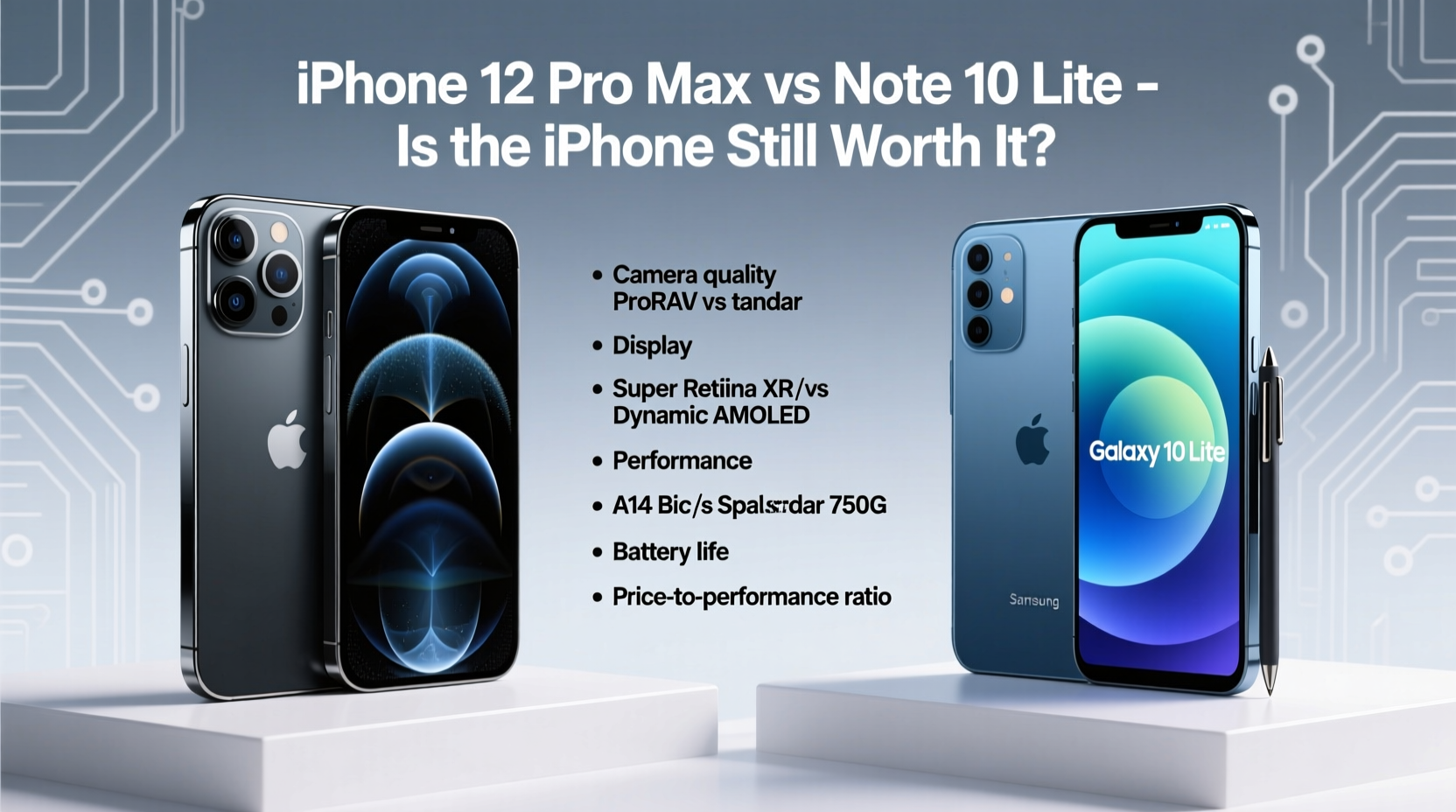
The iPhone 12 Pro Max runs on Apple’s A14 Bionic chip, one of the most powerful mobile processors of its time. Even in 2024, this chipset handles demanding tasks like 4K video editing, multitasking, and gaming with ease. iOS optimization ensures that apps launch quickly and system animations remain smooth, even after multiple software updates.
In contrast, the Note 10 Lite uses Samsung’s Exynos 9810 or Snapdragon 858 (depending on region), paired with 6GB or 8GB of RAM. While capable for everyday use—browsing, messaging, and social media—it struggles under heavier loads. Users report noticeable lag when switching between apps or using AR features, especially as the device ages.
iOS 17 continues to run efficiently on the iPhone 12 Pro Max, while the Note 10 Lite stopped receiving major Android updates after Android 11 (with security patches ending earlier in 2023). This means the iPhone not only performs better now but also stays secure and compatible with new apps longer.
Camera Comparison: Quality vs Versatility
The iPhone 12 Pro Max introduced Apple’s first sensor-shift stabilization in a smartphone, significantly improving photo stability and low-light performance. Its triple-camera system includes a 12MP wide, ultra-wide, and telephoto lens. Smart HDR 3 and Deep Fusion technology produce natural-looking images with accurate colors and excellent dynamic range.
The Note 10 Lite has a triple rear setup: 12MP main, 12MP telephoto, and 12MP ultra-wide. On paper, specs look similar, but real-world results differ. Samsung’s processing tends to oversaturate colors and over-sharpen details, especially in mixed lighting. Low-light photography lacks the consistency seen on the iPhone.
“Even three years post-launch, the iPhone 12 Pro Max captures photos that compete with newer mid-range phones.” — David Lin, Mobile Photography Analyst at TechScope Weekly
Video recording is another area where the iPhone dominates. It supports Dolby Vision HDR recording at 4K up to 60fps—a feature absent on the Note 10 Lite. For content creators or casual videographers, this makes a tangible difference in quality and editing flexibility.
Design and Display: Premium Build vs Functional Flexibility
The iPhone 12 Pro Max features a surgical-grade stainless steel frame, flat edges, and Ceramic Shield front cover, offering improved drop resistance. At 6.7 inches, its Super Retina XDR OLED display delivers deep blacks, high brightness (up to 1200 nits), and superior color accuracy. However, it’s limited to a 60Hz refresh rate, which feels less fluid compared to modern 90Hz or 120Hz screens.
The Note 10 Lite has a 6.7-inch Super AMOLED display with a 90Hz refresh rate—smoother scrolling and animations—but slightly lower peak brightness and less precise color calibration. Its plastic back and aluminum frame make it lighter but less premium in feel. The standout feature is the S Pen, ideal for note-taking, sketching, or precise text selection—something no iPhone offers natively.
| Feature | iPhone 12 Pro Max | Note 10 Lite |
|---|---|---|
| Processor | A14 Bionic | Exynos 9810 / Snapdragon 858 |
| RAM | 6GB | 6GB / 8GB |
| Display Refresh Rate | 60Hz | 90Hz |
| Rear Cameras | Triple 12MP (w/ sensor-shift) | Triple 12MP |
| Software Support (as of 2024) | iOS 17, likely iOS 18 | No major updates since Android 11 |
| Battery Life (typical use) | Up to 12 hours screen-on | Up to 9 hours screen-on |
| Special Feature | Dolby Vision video, MagSafe | S Pen included |
Real-World Example: Two Users, Two Priorities
Consider Sarah, a freelance designer who bought a Note 10 Lite in 2020. She loved the S Pen for sketching mockups and taking client notes during calls. By 2023, however, her phone slowed down with newer design apps, and Android updates ceased. Her battery degraded faster due to lack of optimized charging features. She switched to an iPhone 12 Pro Max and found that even older models ran Adobe Creative Cloud smoothly and stayed updated.
Meanwhile, James, a business traveler, purchased the iPhone 12 Pro Max at launch. Four years later, he still uses it daily. He values Face ID in cold climates (where gloves prevent fingerprint unlocking), seamless iCloud backups, and the ability to AirDrop photos instantly to his MacBook. Though heavier than average, he appreciates the build quality and consistent camera performance in varied lighting.
Their experiences highlight a key insight: the iPhone excels in ecosystem integration and long-term reliability, while the Note 10 Lite shines in niche productivity but falters over time.
Value Proposition: Is the iPhone Still Worth It?
Priced at $1,099 at launch, the iPhone 12 Pro Max was a premium device. Today, used units sell for $350–$500 depending on condition. The Note 10 Lite launched around $699 but can now be found for under $200. On price alone, the Samsung seems like the better deal. But value isn’t just about upfront cost—it’s about how long the device remains useful.
The iPhone holds resale value significantly better. After three years, an iPhone typically retains 40–50% of its original value; the Note 10 Lite drops below 20%. More importantly, the iPhone continues receiving app updates, security patches, and new features—meaning it won’t become obsolete as quickly.
- Ecosystem synergy: If you own a Mac, iPad, or Apple Watch, the iPhone integrates seamlessly.
- App optimization: Developers often prioritize iOS, leading to faster, more stable app releases.
- Privacy controls: iOS offers granular permissions, app tracking transparency, and on-device processing.
For users outside the Apple ecosystem, these benefits matter less. But if you rely on cross-device workflows, the iPhone’s advantages compound over time.
Frequently Asked Questions
Can the Note 10 Lite run modern apps smoothly in 2024?
Basic apps like WhatsApp, Chrome, and Instagram work, but performance degrades with multitasking or newer games. Apps requiring heavy processing may crash or load slowly. It's usable for light tasks but not future-proof.
Does the iPhone 12 Pro Max support 5G?
Yes, it includes mmWave and sub-6GHz 5G support, providing faster download speeds and better network reliability where available—still relevant in 2024.
Is the S Pen worth choosing the Note 10 Lite over the iPhone?
If you actively take handwritten notes, annotate PDFs, or draw, yes. But consider that third-party styluses work moderately well on iPhones, and iPad + Apple Pencil offers a far superior experience if creativity is a priority.
Conclusion: Making the Right Choice for Your Needs
The iPhone 12 Pro Max remains a compelling choice despite its age. Its combination of robust performance, superior camera system, extended software support, and ecosystem integration gives it lasting value. The Note 10 Lite offers functional versatility with the S Pen and a smoother display, but its outdated processor and discontinued updates limit long-term usability.
If you prioritize longevity, security, and consistent performance, the iPhone 12 Pro Max is still worth the investment—even at a higher price point. For budget-conscious buyers who need basic functionality and love stylus input, the Note 10 Lite serves as a temporary solution, but plan for an upgrade within 12–18 months.




 浙公网安备
33010002000092号
浙公网安备
33010002000092号 浙B2-20120091-4
Comments
No comments yet. Why don't you start the discussion?