
When Apple released the iPhone 12 Pro in 2020, it arrived with a new design language, 5G connectivity, and improved internals over its predecessor. But for users still satisfied with the iPhone 11 Pro, the question remains: does the upgrade offer meaningful improvements, or is it just incremental? For those weighing cost against performance, camera quality, longevity, and future-proofing, a clear breakdown is essential.
The iPhone 11 Pro set a high bar when it launched in 2019—excellent battery life, a powerful A13 Bionic chip, and one of the best triple-camera systems on any smartphone at the time. The iPhone 12 Pro built on that foundation but introduced key changes that could justify an upgrade—or leave some wondering if they’re paying for features they won’t use.
Design and Build: Refined, Not Revolutionized
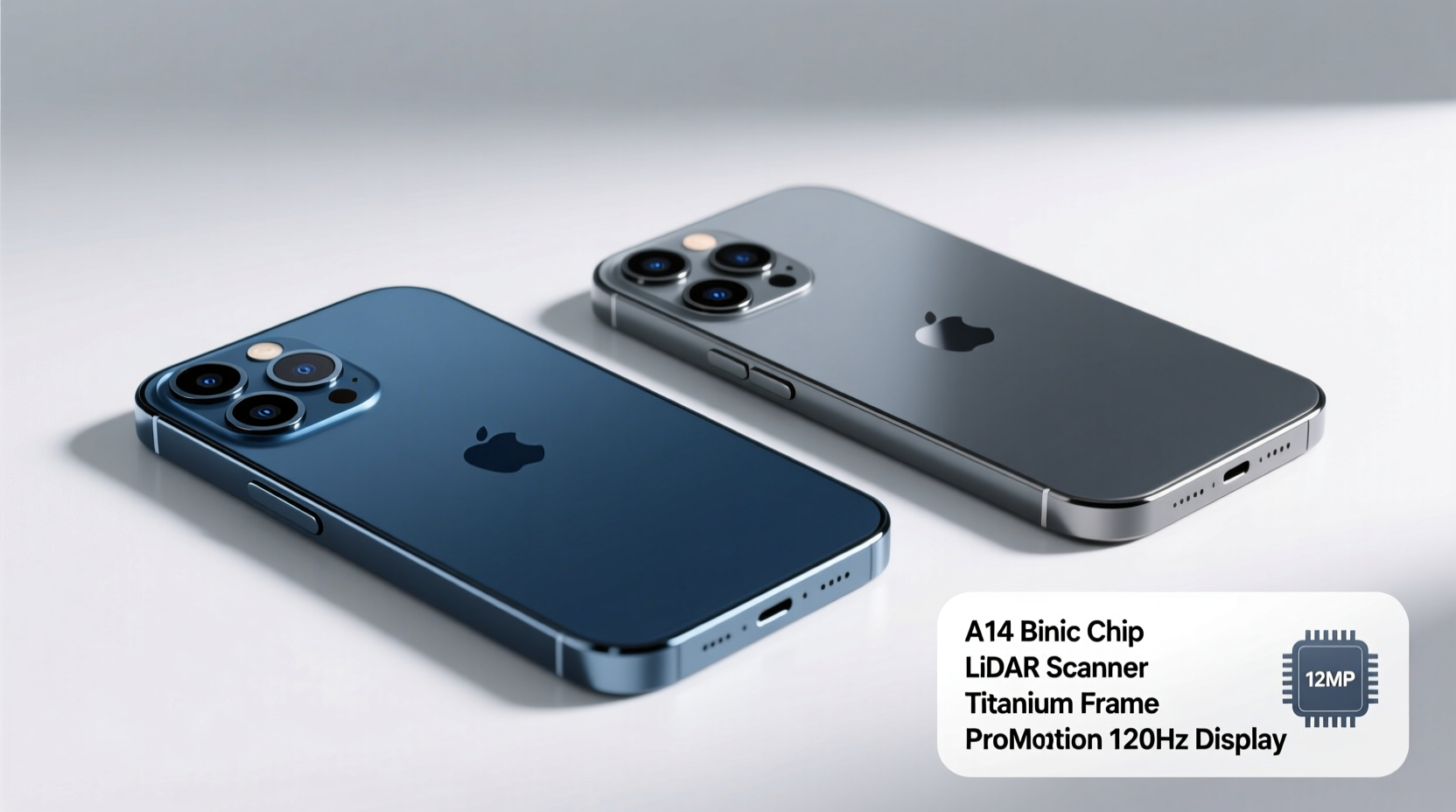
Both phones share a similar premium aesthetic: stainless steel frames, matte glass backs, and IP68 water resistance. However, the most noticeable change is in the design language. The iPhone 12 Pro adopts flat aluminum-style edges reminiscent of the iPhone 5, giving it a more modern, squared-off look compared to the rounded frame of the 11 Pro.
In terms of durability, Apple upgraded the front glass on the 12 Pro to Ceramic Shield, which the company claims offers four times better drop protection. This isn't just marketing fluff—real-world tests from independent labs like Consumer Reports have shown measurable improvements in screen resilience.
While both models are similarly sized, the 12 Pro is slightly lighter (187g vs. 188g) despite housing a larger battery and supporting 5G. This reflects Apple’s efficiency in component miniaturization and material engineering.
Performance: A Generational Leap Under the Hood
The iPhone 12 Pro is powered by the A14 Bionic chip, the first smartphone processor built on a 5nm process. Compared to the A13 in the 11 Pro, this brings about a 16% improvement in CPU performance and a 10% gain in GPU speed, according to Apple’s internal benchmarks. Independent testing by Geekbench confirms these gains, with the A14 scoring around 15–20% higher in multi-core tasks.
More importantly, the A14 improves machine learning capabilities and energy efficiency. This means not only faster app launches and smoother multitasking but also longer battery life under equivalent usage—despite the added strain of 5G connectivity.
“Every new generation of Apple’s silicon delivers real-world benefits in responsiveness and longevity.” — Mark Soyer, Senior Analyst at TechInsight Group
If you rely heavily on photo editing, augmented reality apps, or mobile gaming, the 12 Pro will feel noticeably snappier. Even two years after release, iOS updates continue to optimize for the A14’s neural engine, making it a safer long-term investment.
Camera Comparison: Subtle Improvements, Real Impact
On paper, the camera specs between the 11 Pro and 12 Pro look nearly identical: triple-lens setup (wide, ultra-wide, telephoto), Night mode on all lenses, and Dolby Vision video recording. But the devil is in the details—and the sensor upgrades matter.
The 12 Pro features larger sensors and improved optics, particularly on the main wide lens. Combined with the A14’s enhanced image signal processor, this results in better dynamic range, reduced noise in low light, and more accurate color reproduction. In head-to-head comparisons, the 12 Pro consistently captures richer shadows and retains highlight detail in bright scenes.
| Feature | iPhone 11 Pro | iPhone 12 Pro |
|---|---|---|
| Chip | A13 Bionic | A14 Bionic |
| Rear Cameras | Triple 12MP | Triple 12MP (improved sensors) |
| Front Camera | 12MP TrueDepth | 12MP TrueDepth (Night mode + Deep Fusion) |
| Video Recording | 4K HDR | 4K Dolby Vision HDR |
| Battery Life (Video Playback) | 18 hours | 20 hours |
| Connectivity | LTE only | 5G capable |
| Display Protection | Standard Glass | Ceramic Shield |
The addition of Deep Fusion to the front-facing camera also makes selfies sharper and more natural-looking, especially in indoor lighting. For content creators, the ability to record Dolby Vision video gives the 12 Pro a professional edge—few smartphones can match its out-of-the-box video quality.
Real-World Example: A Photographer’s Perspective
Consider Sarah Lin, a freelance travel photographer who used the iPhone 11 Pro for client work throughout 2019–2020. When she upgraded to the 12 Pro ahead of a trip to Iceland, she noticed immediate differences during golden hour shoots. “The way the 12 Pro handled the contrast between snow and sky was remarkable,” she said. “I had to do less editing in Lightroom, which saved me hours per project.”
She also appreciated the improved Smart HDR, which preserved details in fast-moving wildlife shots—a task where the A14’s faster processing made a tangible difference. While her 11 Pro still took great photos, the 12 Pro reduced post-processing time significantly, translating into higher productivity.
Battery and Connectivity: Future-Proofing Your Device
Battery life on the 12 Pro is rated at up to 20 hours of video playback, compared to 18 hours on the 11 Pro. Real-world usage shows a smaller gap—about 30–45 minutes more under mixed conditions—but the bigger story is 5G support.
While 5G networks were still rolling out when the 12 Pro launched, their availability has expanded rapidly. If you live in a metropolitan area or travel frequently, 5G can mean faster downloads, smoother streaming, and better video call quality. However, 5G also drains the battery faster, so Apple includes a Smart Data mode that automatically switches to LTE when 5G isn’t needed.
For users planning to keep their phone for three or more years, 5G readiness adds long-term value. LTE-only devices may face limitations as carriers eventually phase out older networks.
Is the Upgrade Worth It? A Practical Checklist
Before deciding, consider your current needs and usage patterns. Here’s a checklist to guide your decision:
- ✅ Are you still happy with your 11 Pro’s performance?
- ✅ Do you need 5G for work or frequent large file transfers?
- ✅ Do you create video content and want Dolby Vision support?
- ✅ Is better low-light photography important to you?
- ✅ Are you concerned about screen durability?
- ✅ Can you get a trade-in or discounted price on the 12 Pro?
If you answered “yes” to three or more, the upgrade makes practical sense. If not, your 11 Pro likely still has 1–2 years of strong performance left, especially with continued iOS support.
Frequently Asked Questions
Can the iPhone 11 Pro still run the latest iOS updates?
Yes. As of 2024, the iPhone 11 Pro supports iOS 17, and Apple typically provides software updates for five years. You can expect support through at least 2025.
Does the iPhone 12 Pro charge faster than the 11 Pro?
Not significantly. Both support 18W fast charging and MagSafe (on 12 Pro). However, the 12 Pro includes MagSafe alignment magnets, enabling easier attachment of wireless chargers and accessories.
Is the price difference justified?
At launch, the 12 Pro was $100 more than the 11 Pro. Today, used or refurbished 12 Pros are often priced within $150 of a well-maintained 11 Pro. For many, the combination of 5G, better cameras, and improved durability justifies the modest premium.
Final Verdict: Who Should Upgrade?
The iPhone 12 Pro isn’t a revolutionary leap, but it’s a thoughtful evolution. For power users, content creators, or anyone prioritizing future-proofing, the upgrade delivers tangible benefits. The A14 chip ensures smoother performance for years, the camera system extracts more detail in challenging conditions, and 5G readiness keeps you ahead of network transitions.
However, if you’re on a tight budget, rarely push your phone’s limits, or plan to upgrade again in 12–18 months, holding onto the 11 Pro remains a smart choice. It’s still a powerful, capable device that handles daily tasks with ease.
Ultimately, the decision hinges on how much you value longevity, connectivity, and marginal improvements in media quality. For some, that’s worth the investment. For others, patience pays off.




 浙公网安备
33010002000092号
浙公网安备
33010002000092号 浙B2-20120091-4
Comments
No comments yet. Why don't you start the discussion?