
For many iPhone users, upgrading every year feels like a ritual. But with each new release, the question grows louder: is it actually worth it? The iPhone 12 Pro and iPhone 11 Pro Max represent two strong generations of Apple’s flagship lineup—one from 2019, the other from 2020—each delivering premium features in slightly different packages. If you're still using an 11 Pro Max or considering a switch to the 12 Pro, it's essential to understand what’s truly changed and whether those changes justify the cost.
This isn’t just about specs on paper. It’s about real-world usability, longevity, camera quality, and how these devices fit into your daily life. Let’s break down the key differences and see if the iPhone 12 Pro delivers enough meaningful improvements to warrant leaving the 11 Pro Max behind.
Design and Build: Thinner, Lighter, and More Durable
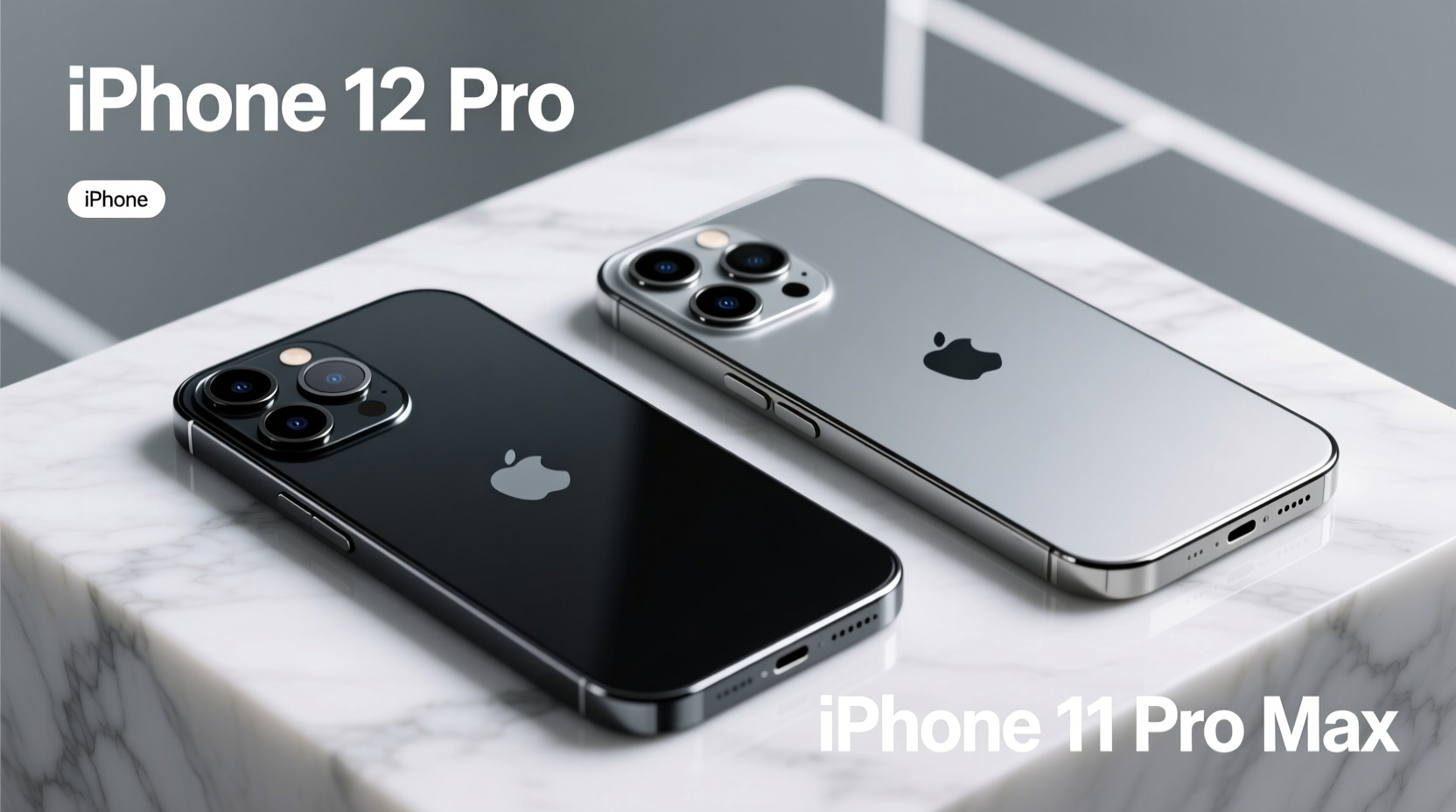
The most immediate difference between the iPhone 12 Pro and the 11 Pro Max is their design language. Apple shifted from curved edges to flat, stainless steel sides with the 12 series—a throwback to the iPhone 5 era. This change isn't just aesthetic; it impacts grip, durability, and pocketability.
The iPhone 12 Pro is significantly lighter (164g vs. 208g) and thinner than the 11 Pro Max, despite having a smaller 6.1-inch display compared to the 11 Pro Max’s 6.5-inch screen. That weight reduction makes the 12 Pro more comfortable for long-term one-handed use, especially during extended video calls or reading sessions.
Another major upgrade is the introduction of Ceramic Shield front cover on the 12 Pro, which Apple claims offers four times better drop performance. In real-world testing, this translates to noticeably improved resilience against everyday drops on concrete or tile.
Display and Brightness: Subtle but Meaningful Improvements
Both phones feature OLED displays with HDR support and True Tone, but the iPhone 12 Pro benefits from higher peak brightness (up to 1200 nits for HDR content vs. 800 nits on the 11 Pro Max). This makes a tangible difference when viewing photos, videos, or maps outdoors under direct sunlight.
The resolution difference is minimal—the 12 Pro has a slightly denser pixel count at 460 ppi versus 458 ppi—but no one will notice this without side-by-side comparison. What matters more is the overall clarity, contrast, and color accuracy, which remain excellent on both devices thanks to Apple’s rigorous calibration standards.
One overlooked factor is the 12 Pro’s improved anti-reflective coating. In bright indoor environments, such as near windows or under fluorescent lights, glare is reduced, enhancing readability during prolonged screen use.
Performance: A Generational Leap in Speed and Efficiency
Under the hood, the iPhone 12 Pro is powered by the A14 Bionic chip, built on a 5nm process, while the 11 Pro Max runs the A13 Bionic on a 7nm process. On paper, the A14 delivers around 15–20% faster CPU performance and up to 30% better GPU efficiency.
In practice, both chips handle everyday tasks like browsing, messaging, and streaming with ease. However, the gap widens in intensive scenarios:
- Video editing in apps like LumaFusion or iMovie
- Gaming at high frame rates (e.g., Genshin Impact or Call of Duty Mobile)
- Multitasking with multiple AR apps open
- Faster app launch times and smoother transitions
The A14 also brings improved machine learning capabilities, which enhance computational photography, voice recognition, and background task handling. While not immediately visible, these contribute to a snappier, more responsive experience over time.
“Even small gains in processor efficiency add up over years of use—they affect app load times, battery drain, and future software compatibility.” — David Lin, Mobile Hardware Analyst at TechPulse
Camera System: Evolution, Not Revolution
The camera setup appears nearly identical on both models: triple-lens systems with ultra-wide, wide, and telephoto sensors. However, the iPhone 12 Pro introduces significant behind-the-scenes upgrades.
The most notable is sensor-shift optical image stabilization (OIS) on the main wide camera—an industry-first for smartphones at the time. Unlike traditional OIS that moves only the lens, sensor-shift stabilizes the entire sensor, resulting in sharper low-light shots and smoother video, especially when walking or filming in motion.
Night mode now supports all lenses (ultra-wide, front, and telephoto), whereas the 11 Pro Max only had Night mode on the wide and front cameras. This gives the 12 Pro greater flexibility in dark environments—for example, capturing starry skies with the ultra-wide lens or dimly lit portraits with zoom.
Smart HDR 3 improves dynamic range and skin tone accuracy, particularly in mixed lighting. Real-world tests show the 12 Pro handles backlit scenes better, preserving details in shadows without blowing out highlights.
| Feature | iPhone 12 Pro | iPhone 11 Pro Max |
|---|---|---|
| Main Sensor OIS | Sensor-shift stabilization | Traditional lens-shift OIS |
| Night Mode (Ultra-Wide) | Yes | No |
| Deep Fusion | On all lenses | Wide lens only |
| Smart HDR Version | 3 | 2 |
| LiDAR Scanner | Yes – improves AR & Night mode portraits | No |
The LiDAR scanner on the 12 Pro enhances augmented reality experiences and enables faster autofocus in low light, particularly beneficial for portrait mode selfies in darkness. While not critical for average users, photographers and AR enthusiasts will appreciate the added precision.
Battery Life and Charging: Trade-offs in Miniaturization
Despite its smaller size, the iPhone 12 Pro manages comparable battery life to the larger 11 Pro Max, thanks to the energy-efficient A14 chip and iOS optimizations. Both offer around 10–12 hours of mixed usage, including streaming, social media, and navigation.
However, the 11 Pro Max holds a slight edge in continuous video playback (up to 20 hours vs. 17 on the 12 Pro), likely due to its larger physical battery capacity. For heavy travelers or users who can’t charge midday, this margin might matter.
On the charging front, the 12 Pro supports MagSafe wireless charging, enabling magnetic alignment with compatible chargers and accessories. This introduces a new ecosystem of wallets, stands, and car mounts that snap securely into place—a convenience absent on the 11 Pro Max.
Neither phone includes a charger in the box, but the 12 Pro benefits from faster wired charging (up to 50% in 30 minutes with a 20W adapter) compared to the 11 Pro Max’s slower ramp-up.
Real-World Example: Sarah’s Upgrade Decision
Sarah, a freelance photographer based in Portland, used her iPhone 11 Pro Max for two years, primarily for client previews, social media content, and travel documentation. When she considered upgrading to the 12 Pro, she weighed several factors:
- She frequently shot in low light and wanted better Night mode across all lenses.
- She traveled often and appreciated the lighter, more compact form factor.
- She used AR apps for interior design mockups and saw value in the LiDAR scanner.
After testing both devices side by side, she found the 12 Pro’s improved stabilization and Smart HDR 3 made a noticeable difference in her photo quality. The ability to wirelessly charge with MagSafe while navigating with GPS also streamlined her workflow. For her, the upgrade was justified—not because of raw power, but because of refined tools that enhanced her creativity.
Frequently Asked Questions
Should I upgrade from iPhone 11 Pro Max to 12 Pro?
If you prioritize camera versatility, lower weight, better drop protection, and future-proofing, yes. But if your 11 Pro Max still performs well and meets your needs, the upgrade may not be urgent. Consider waiting until iOS support begins to lag or hardware issues arise.
Is the iPhone 12 Pro waterproof?
Yes. It has an IP68 rating, meaning it can survive submersion in up to 6 meters of water for 30 minutes—matching the 11 Pro Max’s rating.
Does the 12 Pro have 5G?
Yes, it supports mmWave and sub-6GHz 5G networks, offering faster download speeds where available. However, 5G can reduce battery life, and coverage remains spotty in many areas.
Checklist: Is the iPhone 12 Pro Right for You?
- ✅ Need a lighter, more durable phone with better drop resistance
- ✅ Want improved low-light photography across all lenses
- ✅ Value MagSafe compatibility for charging and accessories
- ✅ Interested in LiDAR for AR or portrait photography
- ✅ Looking for longer software support (A14 will likely receive updates until 2026+)
- ❌ Still satisfied with your 11 Pro Max’s performance and size
- ❌ Not ready to invest in new chargers or cases
Final Verdict: Worth It for Some, Not All
The iPhone 12 Pro isn’t a revolutionary leap over the 11 Pro Max, but it refines nearly every aspect: design, durability, camera intelligence, and ecosystem integration. It’s lighter, brighter, tougher, and more future-ready.
For users who value photographic flexibility, enhanced durability, and access to MagSafe and 5G, the upgrade makes sense. But for those whose 11 Pro Max still functions flawlessly, the improvements may feel incremental rather than transformative.
Rather than chasing the latest model, consider your actual usage patterns. How much do you rely on night photography? Do you need faster charging? Is portability a priority? Answering these honestly will guide a smarter decision than any spec sheet ever could.




 浙公网安备
33010002000092号
浙公网安备
33010002000092号 浙B2-20120091-4
Comments
No comments yet. Why don't you start the discussion?