
At first glance, the iPhone 12 Pro and iPhone 13 Pro appear nearly identical. Both feature flat aluminum edges, a ceramic shield front, and a minimalist triple-camera layout on the back. Apple maintained the same overall design language across these two generations, making it difficult for the average user to distinguish between them without closer inspection. But is it truly impossible to tell them apart just by sight? The answer lies in the details—small but meaningful changes that reveal themselves upon careful observation.
Design Evolution: Subtle but Strategic Changes
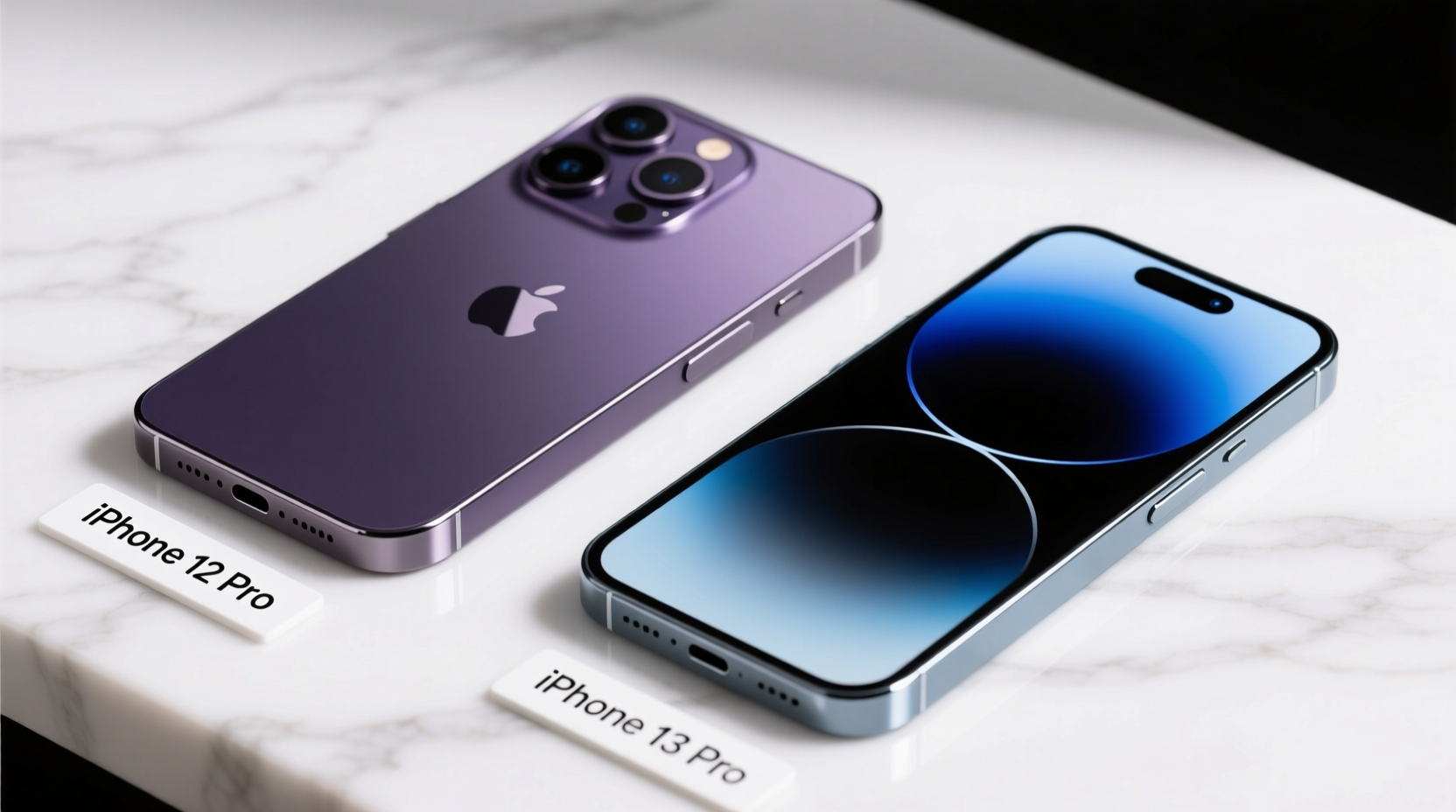
The iPhone 12 Pro introduced the flat-edge design reminiscent of the iPhone 5, marking a shift from the curved edges of previous models. When the iPhone 13 Pro arrived, Apple kept that same industrial design but made several micro-adjustments. The most noticeable difference is the camera module. On the iPhone 13 Pro, the camera bump is larger and more squared off, with the lenses arranged diagonally within a single large housing. In contrast, the iPhone 12 Pro’s cameras are set in a smaller, more compact square array with slightly more space between the sensors.
The placement of the lenses also shifted slightly. On the 13 Pro, the ultra-wide lens moved down and to the left, creating a distinct diagonal pattern. This change wasn’t just aesthetic—it accommodated a larger sensor and improved low-light performance. To an untrained eye, this might look like a minor repositioning, but once you’ve seen both side by side, the layout becomes a reliable visual identifier.
Dimensions and Weight: Hard to Spot, But Real
While both phones share a 6.1-inch Super Retina XDR display, their physical profiles differ slightly. The iPhone 13 Pro is marginally thicker and heavier than its predecessor. It measures 7.65 mm in thickness compared to the 12 Pro’s 7.4 mm, and it weighs 204 grams versus 189 grams. These differences are measurable but not immediately obvious when holding just one device. However, if you place them side by side or switch between them rapidly, the added heft of the 13 Pro becomes perceptible.
The increased thickness accommodates a larger battery and improved internal components. While you won’t notice this during casual use, the extra bulk can affect how the phone feels in hand—especially for users accustomed to the sleeker 12 Pro.
Detailed Comparison Table
| Feature | iPhone 12 Pro | iPhone 13 Pro |
|---|---|---|
| Release Year | 2020 | 2021 |
| Display Size | 6.1 inches | 6.1 inches |
| Weight | 189 g | 204 g |
| Thickness | 7.4 mm | 7.65 mm |
| Camera Layout | Square cluster, upright alignment | Larger housing, diagonal lens placement |
| Front Sensor Notch | Standard notch | 20% smaller notch |
| Battery Life (Video Playback) | 17 hours | 22 hours |
| ProMotion Display | No (60Hz only) | Yes (120Hz adaptive refresh rate) |
Front-Facing Clues: The Notch Tells a Story
One of the most overlooked visual cues is the size of the front-facing notch. The iPhone 13 Pro features a 20% smaller notch compared to the 12 Pro. This reduction was achieved through internal component rearrangement, allowing Apple to reclaim a small amount of screen real estate. While the difference isn't dramatic, it's visible when comparing both devices directly—especially when viewing full-screen content or using Face ID in landscape mode.
The smaller notch doesn’t enhance functionality on its own, but it does contribute to a slightly more modern aesthetic. Users upgrading from the 12 Pro often report that the reduced notch makes the 13 Pro feel “cleaner” and more up-to-date, even if they can’t pinpoint why.
“Apple’s design philosophy is about refinement, not revolution. The 13 Pro isn’t meant to look drastically different—it’s meant to feel like the next logical step.” — David Lin, Senior Tech Analyst at MobileInsight Group
Color Options and Finish: A Matter of Taste
Both models launched with similar color palettes—Graphite, Silver, Gold, and Pacific Blue. However, the 13 Pro’s Pacific Blue was noticeably deeper and more saturated than the 12 Pro’s version, which leaned slightly greenish. Additionally, Apple introduced a new matte finish on the 13 Pro that resists fingerprints better than the 12 Pro’s coating. While this doesn’t help with identification from a distance, it affects the perceived quality when handling the device under bright light.
If you’re examining a used device, check for smudges. A phone that stays cleaner with regular use is more likely to be a 13 Pro, thanks to its improved oleophobic coating.
Real-World Example: The Secondhand Market Test
Consider Mark, a tech enthusiast shopping for a lightly used iPhone on a resale platform. He found two listings labeled simply as “iPhone Pro, 6.1 inch.” One was $50 cheaper than the other. Without clear model names, he asked sellers for photos of the back and front. The first photo showed a compact camera square and a wider notch—the iPhone 12 Pro. The second revealed the larger, diagonal camera module and slimmer notch. Even though both looked premium, Mark recognized the 13 Pro’s updated design and opted for the slightly more expensive model, knowing it offered better battery life and display technology.
This scenario plays out daily in online marketplaces. Buyers who know what to look for avoid overpaying for older hardware disguised as current-gen.
Step-by-Step Guide: How to Visually Identify Your iPhone Model
- Check the camera module: Is it a tight square or a larger, diagonal arrangement? Diagonal = iPhone 13 Pro.
- Inspect the front notch: Compare its width. A noticeably thinner notch indicates the 13 Pro.
- Feel the weight: If possible, hold it. The 13 Pro is 15 grams heavier—a small but detectable difference.
- Observe the screen behavior: Scroll quickly through a webpage. If the motion looks smoother, it may have a 120Hz ProMotion display (13 Pro only).
- Look at the model number: Go to Settings > General > About > Model Name. But remember, we’re focusing on visual cues only here.
Frequently Asked Questions
Can you tell the difference between iPhone 12 Pro and 13 Pro in low light?
Not reliably. In dim lighting, the camera layout and notch size become harder to distinguish. Touch and weight are better indicators in such conditions.
Do both phones have the same screen size and resolution?
Yes, both have a 6.1-inch OLED display with 2532 x 1170 resolution. However, the 13 Pro includes ProMotion technology with adaptive 120Hz refresh rates, making scrolling visibly smoother.
Is the SIM tray different?
No, both models use a dual SIM setup (nano-SIM + eSIM) with identical tray design. The SIM tray alone won’t help identify the model.
Final Verdict: Yes, You Can Tell—If You Know Where to Look
The iPhone 12 Pro and 13 Pro are designed to look almost identical, preserving brand consistency and user familiarity. However, Apple did introduce key visual and tactile upgrades that allow for differentiation. The camera layout is the most reliable indicator, followed by the reduced notch size and slightly thicker profile. While casual observers might not notice, informed users can confidently identify each model with a few seconds of inspection.
Understanding these nuances isn’t just useful for tech enthusiasts—it matters for buyers, sellers, and anyone navigating the secondhand market. A well-informed decision can save money, prevent misidentification, and ensure you get the features you expect.




 浙公网安备
33010002000092号
浙公网安备
33010002000092号 浙B2-20120091-4
Comments
No comments yet. Why don't you start the discussion?