
For many long-time iPhone users, the iPhone 6s Plus was a landmark device—durable, reliable, and surprisingly capable even years after its release. But as we move further into 2024, holding onto a phone launched in 2015 raises real questions about usability, security, and performance. If you're still using an iPhone 6s Plus and considering a jump to something modern like the iPhone 12 Pro, the decision isn't just about nostalgia—it's about whether the upgrade delivers tangible benefits that justify the cost.
The answer, in short: yes, it’s not only worth it but likely overdue. The technological gap between these two devices spans nearly a decade of innovation. Let’s break down exactly what you gain—and what trade-offs exist—when making this leap today.
Performance: A Quantum Leap in Speed and Efficiency
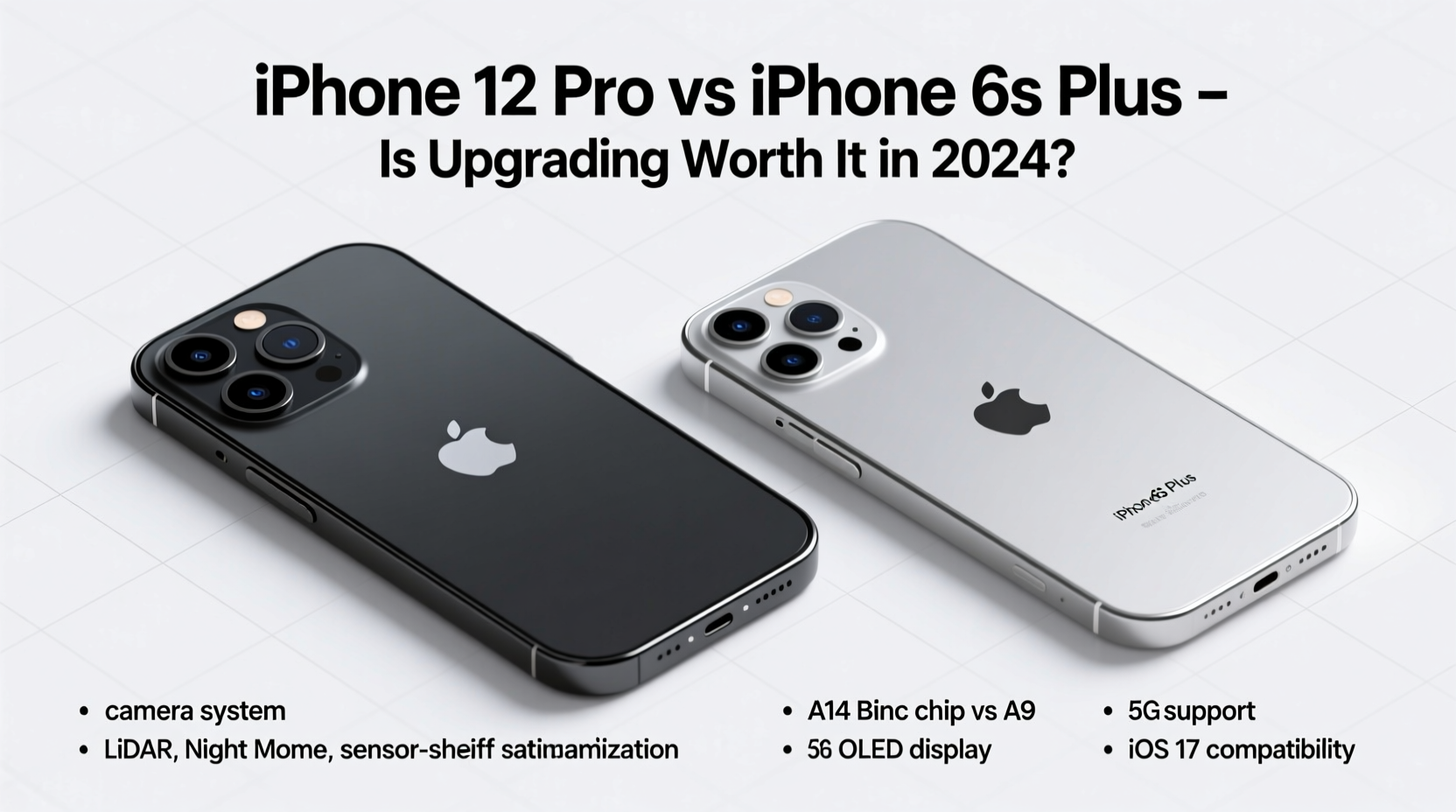
The most immediate difference you’ll notice when switching from the iPhone 6s Plus to the iPhone 12 Pro is raw performance. The 6s Plus runs on Apple’s A9 chip with 2GB of RAM, which was impressive in 2015. Today, however, it struggles with multitasking, app launches, and even basic web browsing on complex sites.
In contrast, the iPhone 12 Pro features Apple’s A14 Bionic chip—the first smartphone processor built on a 5-nanometer process. It offers roughly six times the CPU performance and ten times the graphics power of the A9. This means apps open instantly, games run smoothly at high frame rates, and iOS 17 (and beyond) operates without lag or stutter.
Moreover, the 6s Plus no longer receives iOS updates. It topped out at iOS 15, missing critical security patches, privacy features, and compatibility with newer versions of popular apps. The iPhone 12 Pro supports iOS 17 and is expected to receive updates through at least 2026, ensuring long-term reliability and protection.
Camera Capabilities: From Decent to Professional Grade
The camera systems between these phones reflect entirely different eras of mobile photography. The iPhone 6s Plus has a single 12MP rear camera with basic autofocus and no optical image stabilization. Low-light performance is poor, and video maxes out at 1080p at 30fps. While it was adequate for its time, today’s standards demand far more.
The iPhone 12 Pro introduces a triple-camera system: a 12MP wide, ultra-wide, and telephoto lens. Combined with Night mode across all lenses, Deep Fusion image processing, Smart HDR 3, and Dolby Vision video recording up to 4K at 60fps, the photographic leap is dramatic. You can capture professional-looking photos in near-darkness, shoot cinematic-quality videos, and edit them directly on the device.
“Mobile photography has evolved from capturing moments to creating content. The tools available on devices like the iPhone 12 Pro empower everyday users to produce work once reserved for professionals.” — Lena Torres, Mobile Imaging Specialist
If you use your phone for social media, remote work, or simply want better family photos, the camera upgrade alone justifies the switch.
Battery Life and Charging: Modern Convenience Meets Longevity
Battery degradation is inevitable, especially on a device as old as the 6s Plus. Even if replaced, the original design limits capacity and efficiency. Most 6s Plus units today offer only 4–5 hours of screen time under moderate use—a significant constraint in a world where smartphones are central to communication, navigation, and productivity.
The iPhone 12 Pro provides up to 17 hours of video playback and consistently delivers 6–8 hours of screen-on time depending on usage. More importantly, it supports fast charging (up to 50% in 30 minutes with a 20W adapter) and MagSafe wireless charging, offering flexibility the 6s Plus never had.
Charging Comparison
| Feature | iPhone 6s Plus | iPhone 12 Pro |
|---|---|---|
| Fast Charging | No | Yes (with 20W+ adapter) |
| Wireless Charging | No | Yes (Qi & MagSafe) |
| Max Screen Time | ~5 hours | ~7–8 hours |
| Charging Port | Lightning | Lighting (no USB-C) |
While both use Lightning ports (a point of frustration for some), the 12 Pro integrates seamlessly with modern charging ecosystems, reducing downtime and increasing convenience.
Design and Display: Moving Into the Modern Era
The iPhone 6s Plus featured a 5.5-inch LCD display with thick bezels and a home button. By today’s standards, that screen feels cramped and outdated. The iPhone 12 Pro, meanwhile, packs a 6.1-inch Super Retina XDR OLED display with slimmer bezels, edge-to-edge viewing, and dramatically better contrast, brightness, and color accuracy.
OLED technology enables true blacks, HDR support, and improved outdoor visibility. The flat aluminum edges and ceramic shield front cover also enhance durability. Though slightly heavier, the 12 Pro feels more refined and aligned with contemporary smartphone ergonomics.
Additionally, the removal of the home button means Face ID integration—Apple’s secure facial recognition system. It works faster and more reliably than Touch ID, especially when wearing masks or gloves.
Real-World Example: Sarah’s Upgrade Journey
Sarah, a freelance graphic designer in Chicago, used her iPhone 6s Plus for over six years. She relied on it for client calls, photo references, and managing her portfolio. By late 2023, she noticed apps crashing, slow uploads, and inability to export videos in acceptable quality for Instagram Reels.
After upgrading to the iPhone 12 Pro, her workflow transformed. She could shoot mockups in natural light with studio-level clarity, edit videos directly on her phone using LumaFusion, and share them instantly. “It wasn’t just about having a newer phone,” she said. “It was about being able to do my job effectively again.”
Her experience underscores a broader truth: older iPhones may still turn on, but they often hinder productivity and creativity in subtle yet impactful ways.
Checklist: Is It Time to Upgrade?
Use this checklist to evaluate your readiness to move from the 6s Plus to a modern device like the iPhone 12 Pro:
- ✅ Does your phone struggle to run basic apps like Messages, Safari, or WhatsApp?
- ✅ Have you stopped receiving iOS updates?
- ✅ Is your battery drained within half a day?
- ✅ Do photos come out blurry or dark, especially indoors?
- ✅ Are you unable to use newer features like FaceTime enhancements, SharePlay, or AR apps?
- ✅ Do you rely on your phone for work, learning, or staying connected with family?
If three or more apply, upgrading isn’t just beneficial—it’s necessary for maintaining digital independence and functionality.
Frequently Asked Questions
Can the iPhone 6s Plus still be used in 2024?
Technically, yes—but with major limitations. It won’t receive new iOS updates, many apps are dropping support for iOS 15 and earlier, and performance bottlenecks make everyday tasks frustrating. Security vulnerabilities also increase over time without patches.
Is the iPhone 12 Pro still a good choice in 2024?
Absolutely. Despite being released in 2020, the iPhone 12 Pro remains powerful and fully supported. It handles iOS 17 flawlessly and offers a premium build, excellent cameras, and future-proof software support. On the refurbished or secondhand market, it represents strong value compared to newer Pro models.
Should I consider a non-Pro model instead?
If budget is a concern, the iPhone 12 or iPhone 13 offer similar performance and design at lower prices. However, losing the telephoto lens and matte stainless steel finish may matter if you prioritize photography or premium feel.
Conclusion: Take the Leap With Confidence
Upgrading from an iPhone 6s Plus to an iPhone 12 Pro in the current year isn’t merely a luxury—it’s a practical step toward reclaiming speed, security, and capability in your digital life. The advancements in processing power, camera quality, battery life, and software support create a user experience that’s not just faster, but fundamentally different.
You’re not just getting a new phone; you’re gaining access to tools that enhance how you communicate, create, and stay organized. Whether you're a casual user or someone who depends on their phone daily, the investment pays off in reduced frustration, increased productivity, and peace of mind.




 浙公网安备
33010002000092号
浙公网安备
33010002000092号 浙B2-20120091-4
Comments
No comments yet. Why don't you start the discussion?