
For many iPhone 7 Plus owners, the decision to upgrade has been delayed by loyalty to a device that once defined flagship performance. But as we move deeper into 2024, the technological gap between Apple’s 2016 powerhouse and its 2020 flagship, the iPhone 12 Pro, has widened significantly. While the 7 Plus was praised for its dual-camera system and solid build, newer models have redefined what an iPhone can do. So, is making the jump from the 7 Plus to the 12 Pro still worthwhile today?
The answer isn’t just about hardware—it’s about usability, longevity, software support, and real-world experience. Let’s break down the key differences and evaluate whether this upgrade delivers meaningful improvements or simply offers marginal gains.
Performance and Software Experience
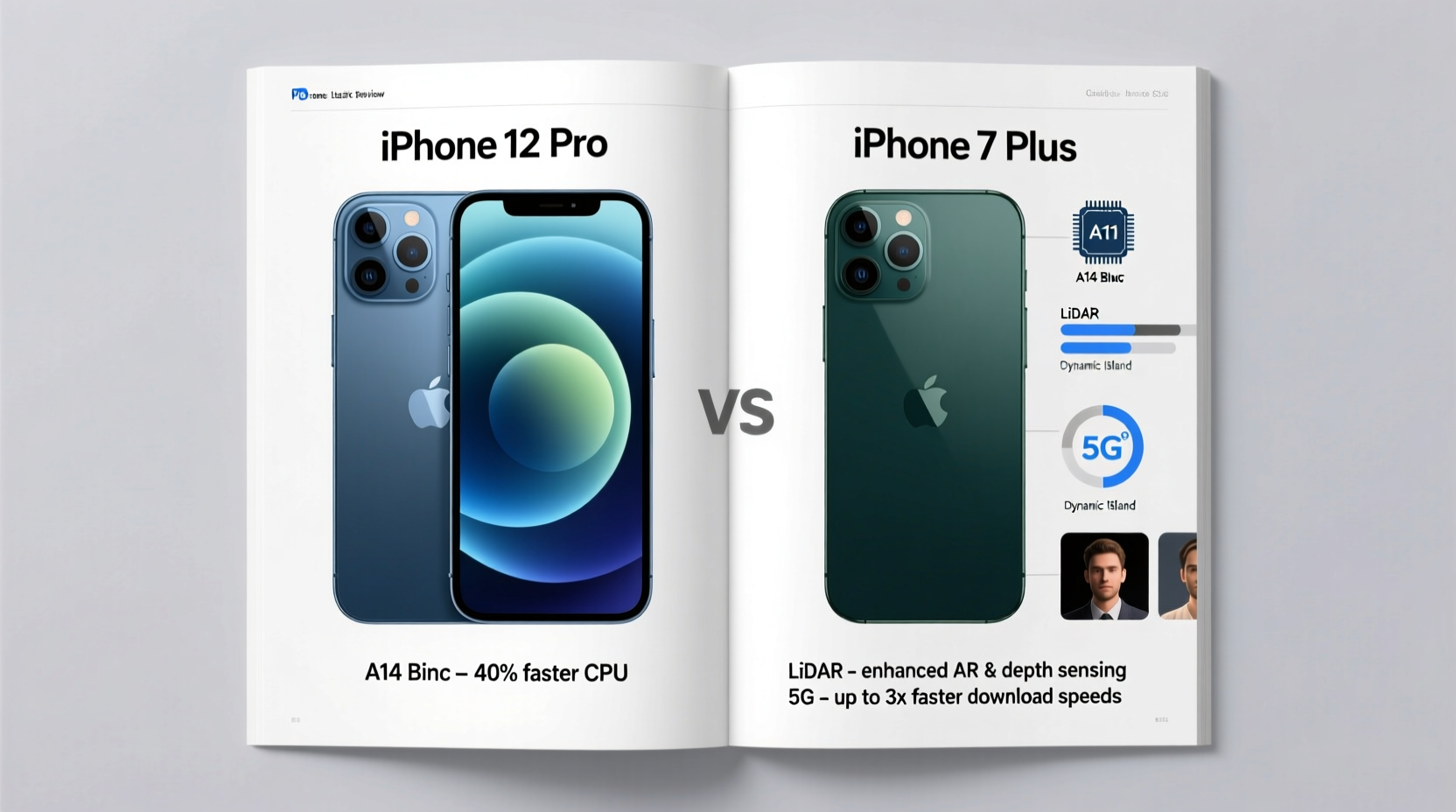
The most immediate difference between the iPhone 7 Plus and the iPhone 12 Pro lies under the hood. The 7 Plus runs on Apple’s A10 Fusion chip, which was impressive in 2016 but now struggles with modern apps and multitasking. In contrast, the iPhone 12 Pro features the A14 Bionic chip—one of the first 5nm processors in smartphones—delivering up to 50% faster CPU performance and twice the GPU speed.
This leap translates into tangible benefits: smoother app launches, quicker photo processing, better AR experiences, and seamless handling of iOS 17. While the 7 Plus maxed out at iOS 15, the 12 Pro supports iOS 17 and is expected to receive updates through at least 2025. That means continued access to new security patches, features like Live Text, and enhanced privacy controls.
Camera Capabilities: A Generational Leap
The camera is where the iPhone 12 Pro truly outshines its predecessor. The 7 Plus introduced portrait mode and optical zoom, which were groundbreaking at the time. However, the 12 Pro brings triple-lens versatility: a 12MP wide, ultra-wide, and telephoto lens, all with Night mode support.
In low-light conditions, the 12 Pro captures images with more detail, dynamic range, and color accuracy. Its Deep Fusion and Smart HDR 3 technologies process textures and shadows far beyond what the 7 Plus can achieve. Video recording sees even greater improvement—the 12 Pro supports Dolby Vision HDR recording at 4K up to 60fps, while the 7 Plus maxes out at 1080p.
“Smartphone photography isn't just about megapixels anymore—it's computational imaging. The A14 enables real-time scene analysis that older chips simply can't handle.” — David Lin, Mobile Imaging Analyst at TechPulse Insights
Detailed Feature Comparison
| Feature | iPhone 7 Plus (2016) | iPhone 12 Pro (2020) |
|---|---|---|
| Processor | A10 Fusion | A14 Bionic (5nm) |
| RAM | 3GB | 6GB |
| Display | 5.5” LCD, 1080p | 6.1” Super Retina XDR OLED, 2532×1170 |
| Refresh Rate | 60Hz | 60Hz |
| Rear Cameras | Dual 12MP (wide + telephoto) | Triple 12MP (wide, ultra-wide, telephoto) |
| Front Camera | 7MP | 12MP TrueDepth |
| Video Recording | 1080p @ 60fps | 4K @ 60fps + Dolby Vision HDR |
| Battery Life | ~13 hours video playback | ~17 hours video playback |
| Charging | Wired only (no fast charging out of box) | Fast charging (20W), MagSafe compatible |
| Water Resistance | IP67 (1m for 30 mins) | IP68 (6m for 30 mins) |
| 5G Support | No | Yes (mmWave & sub-6GHz) |
| iOS Support (as of 2024) | Up to iOS 15 | Supports iOS 17, future updates likely |
Real-World Impact: A User’s Journey
Consider Mark, a freelance photographer who relied on his iPhone 7 Plus for client previews and social media content. By 2022, he noticed delays in exporting videos, inconsistent autofocus in dim lighting, and frequent app timeouts when using editing tools like Lightroom Mobile. After upgrading to the iPhone 12 Pro, his workflow transformed. He could shoot in Dolby Vision, edit directly on-device without lag, and transfer files over 5G networks in seconds. His client turnaround time improved by nearly 40%, not because of skill—but because the hardware finally matched his professional demands.
This scenario illustrates a broader truth: upgrades matter most when they remove friction from your daily tasks. For casual users, the change may feel subtle. But for those relying on their phones for creativity, communication, or productivity, the generational shift is transformative.
Is It Worth Upgrading in 2024?
The question isn’t just technical—it’s economic and practical. The iPhone 7 Plus is six years old. Even if it still powers on, battery degradation, slower performance, and lack of security updates pose real risks. Meanwhile, used or refurbished iPhone 12 Pro units are widely available for $300–$400, making them a cost-effective step into modern iOS capabilities.
Here’s a checklist to help you decide:
- Does your phone struggle with basic apps? If Safari, Messages, or Maps regularly freeze or crash, hardware is holding you back.
- Are you missing out on features? No Night mode, no Face ID, no high-quality video—these aren’t luxuries but standard tools today.
- Do you want longer software support? The 12 Pro will likely get one or two more iOS updates than the 7 Plus ever did.
- Is battery life under two hours screen-on time? Aging batteries degrade capacity and can cause unexpected shutdowns.
- Are you using cloud backups effectively? Upgrading is smoother if your data syncs across devices via iCloud.
Frequently Asked Questions
Will my accessories work with the iPhone 12 Pro?
Most Lightning cables and headphones will work, but cases won’t be compatible due to different dimensions and camera layout. Wireless chargers and MagSafe accessories offer new convenience, though they require additional investment.
Can the iPhone 12 Pro last another 4 years?
Possibly. With proper care, optimized settings, and eventual battery replacement, the 12 Pro can remain functional through 2027, especially as Apple continues supporting A14 devices in upcoming iOS versions.
Is the camera worth the upgrade alone?
If you frequently take photos in low light, shoot video, or use portrait mode creatively, yes. The 12 Pro’s advanced optics, Night mode on all lenses, and ProRAW support offer professional-grade flexibility the 7 Plus lacks entirely.
Final Verdict: Time to Move Forward
Sticking with the iPhone 7 Plus in 2024 means accepting limitations: outdated software, sluggish performance, poor low-light photography, and no 5G connectivity. While it was a remarkable device in its time, technology has evolved. The iPhone 12 Pro represents a complete modern smartphone experience—faster, safer, more capable, and built for the next few years of iOS innovation.
Upgrading isn’t just about having the latest gadget; it’s about reclaiming efficiency, enjoying richer media, and staying secure in an era of increasing digital threats. Whether you're a creative professional, a busy parent, or someone who values reliability, the jump from the 7 Plus to the 12 Pro delivers real, lasting value.




 浙公网安备
33010002000092号
浙公网安备
33010002000092号 浙B2-20120091-4
Comments
No comments yet. Why don't you start the discussion?